

Quick answer: Winter holidays, celebrated mostly in the Northern Hemisphere between December and February, include Hanukkah, Christmas, Kwanzaa, New Year celebrations, and Lunar New Year. Other seasonal observances include Yalda Night, Dongzhi, Three Kings Day, and regional harvest festivals like Pongal. Traditions vary by community and can involve worship, reflection, special foods, and time with family. Exact dates often depend on the religious or cultural calendar a community follows.
Somewhere, a family is passing around a plate of fried dough while they light candles one by one. Somewhere else, relatives are gathered around a table counting down to midnight, or sharing a bowl of sticky rice dumplings before the shortest day of the year gives way to longer light. These scenes repeat across the world every winter, shaped by different histories, calendars, and beliefs.
This guide introduces a selection of holidays and observances that take place roughly between December and February. It isn’t a complete list of the world’s celebrations, and it doesn’t suggest that everyone within a country, culture, or religion marks these occasions the same way. Instead, it’s a starting point for understanding why these traditions matter to the people who observe them.
For many readers, this season also means staying close to family who live far away. Later in this guide, we’ll share some practical ways to celebrate across borders, including how Remitly can help you send support to loved ones when it matters most.

What counts as a winter holiday?
“Winter holiday” is a broad term that groups together several different kinds of observances. Some are rooted in religious belief, others in cultural heritage, and some in the rhythm of the seasons themselves.
| Type of celebration | Examples |
| Religious | Hanukkah, Christmas |
| Cultural and community | Kwanzaa |
| Seasonal and solstice | Yalda Night, Dongzhi |
| New Year | Shōgatsu, Lunar New Year |
| Harvest | Pongal |
These categories often overlap, and the holidays themselves don’t share a single origin. Many follow lunar or lunisolar calendars, which means their dates on the Gregorian calendar shift from year to year. Grouping them together by season is a matter of convenience, not evidence of a shared history.
It’s also worth noting that “winter” reflects a Northern Hemisphere perspective. In much of the Southern Hemisphere, these same months fall during summer, so holidays like Christmas can mean a beach barbecue instead of snow.

Winter holidays at a glance
Here’s a quick reference before we look at each celebration in more detail.
| Holiday | Usual timing | Communities or places associated with it |
| Hanukkah | Dates vary, often November or December | Jewish communities worldwide |
| Yalda Night | Around the December solstice | Iran, Afghanistan, and diaspora communities |
| Dongzhi | Around the December solstice | Chinese communities and related regional observances |
| Christmas | December 25 for many; January dates in some traditions | Christian communities worldwide, with broader cultural participation |
| Kwanzaa | December 26–January 1 | African American communities and other participants |
| Gregorian New Year | December 31–January 1 | Observed internationally |
| Shōgatsu | Centers on January 1 and the following days | Japan |
| Three Kings Day | January 6 | Many Christian communities, including in Spain and Latin America |
| Pongal | Usually mid-January | Tamil communities, especially in Tamil Nadu |
| Lunar New Year | Dates vary, generally January or February | Several East and Southeast Asian communities and diasporas |
These dates and traditions aren’t exclusive to the places listed. Communities around the world observe them in their own ways, often shaped by local history and migration.
Hanukkah: Eight nights of light

Hanukkah is a Jewish holiday that commemorates the rededication of the Second Temple in Jerusalem after its recapture during the Maccabean Revolt. According to tradition, a small amount of oil meant to last one day burned for eight, which is why the holiday lasts eight nights.
Each night, families light an additional candle on a hanukkiah, often referred to as a Hanukkah menorah, until all eight branches (plus the helper candle, or shamash) are lit. Foods fried in oil, like latkes and sufganiyot, are common in many households, as a nod to the miracle of the oil. Children often play dreidel, a spinning-top game with Hebrew letters on each side.
Hanukkah isn’t a Jewish version of Christmas, and gift-giving isn’t its defining feature. Its dates follow the Hebrew calendar, which is lunisolar, so it falls on different Gregorian dates each year, usually sometime in November or December.
Yalda Night and Dongzhi: Marking the December solstice
Several cultures mark the December solstice, the longest night of the year, though the customs attached to it differ significantly.
Yalda Night
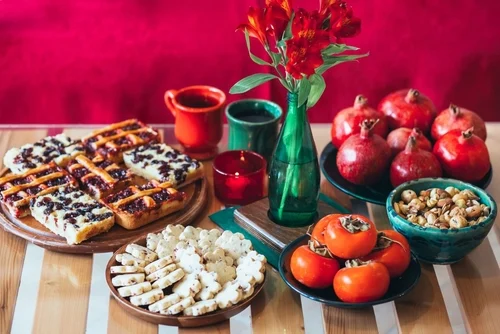
Yalda Night, observed by Iranian, Afghan, and diaspora communities, celebrates the triumph of light over darkness as the nights begin to shorten again. Families often gather late into the night, reciting poetry (especially the work of the 14th-century poet Hafez), telling stories, and sharing fruits like pomegranates and watermelon, whose red color is said to symbolize the glow of dawn.
Dongzhi

Dongzhi, observed in Chinese communities and related regional traditions, also centers on the winter solstice and the idea of returning light. Families often gather for a meal, and foods like tangyuan (sweet rice dumplings) or dumplings are common, though the specific dishes vary by region and household.
While both holidays fall around the same time of year and emphasize gathering with family, they stem from distinct cultural traditions rather than shared origins, and neither should be understood as a version of Christmas.
Christmas: One holiday, many traditions

Christmas commemorates the birth of Jesus Christ for Christian communities, though its cultural reach extends well beyond religious observance in many parts of the world.
Celebrations vary widely:
- Mexico: Las Posadas, a nine-night reenactment of Mary and Joseph’s search for shelter, leads up to Christmas Eve gatherings.
- Philippines: Simbang Gabi, a series of pre-dawn Masses, builds toward Noche Buena, a Christmas Eve feast shared with family.
- Germany: Advent customs and Christmas markets fill the weeks leading up to the holiday.
- Australia: Christmas falls in the middle of summer, so backyard barbecues and beach visits are common alongside more traditional customs.
Some Christian communities, including many Orthodox churches, observe Christmas in January, depending on whether they follow the Julian or Gregorian calendar. Not all Orthodox Christians use the same date, so it’s worth asking rather than assuming.
Want to go deeper? Explore our guides on Which Countries Celebrate Christmas?, Las Posadas, Simbang Gabi, and Noche Buena.
Kwanzaa: Community, heritage, and shared principles

Kwanzaa is a cultural celebration created in 1966 to honor African heritage and African American culture and community. It’s observed from December 26 through January 1.
Each day of Kwanzaa highlights one of the Nguzo Saba, or Seven Principles, which include unity, self-determination, collective work and responsibility, cooperative economics, purpose, creativity, and faith. Families often light candles on a kinara, a seven-branched candleholder, and set aside time for reflection, storytelling, and gathering.
Kwanzaa is a cultural rather than religious observance, and it isn’t celebrated by all African Americans. It also isn’t a continent-wide African holiday or a required substitute for Christmas; many households that celebrate Kwanzaa celebrate Christmas as well.
New Year celebrations: Different calendars, different customs
The turn of the year is marked in different ways depending on which calendar a community follows.
December 31 and January 1

In much of the world, New Year’s Eve and New Year’s Day involve countdowns, fireworks, special meals, and reflection on the year ahead. In the Philippines, Media Noche is a midnight feast on New Year’s Eve, distinct from the Christmas Eve meal known as Noche Buena.
Shōgatsu in Japan
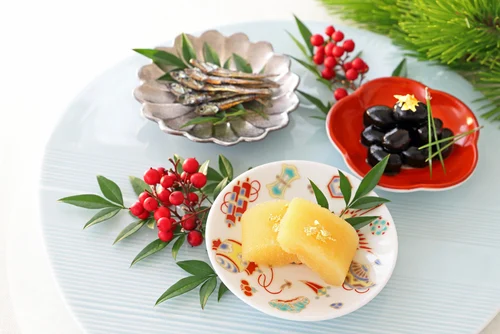
Shōgatsu, the Japanese New Year, centers on January 1 and the days that follow. Families often share special foods called osechi ryori, and many people make the first shrine or temple visit of the year, known as hatsumode. Not every household observes the same religious customs, as Shōgatsu blends Shinto, Buddhist, and secular traditions depending on the family.
Lunar New Year

Lunar New Year isn’t one single celebration. It includes distinct holidays such as the Chinese Spring Festival, Vietnamese Tết, and Korean Seollal, each with its own foods, customs, and meanings. “Chinese New Year” isn’t an accurate label for every community’s celebration, since Tết and Seollal have their own names, histories, and traditions.
Pongal: Giving thanks for the harvest

Pongal is a harvest festival celebrated by Tamil communities, particularly in Tamil Nadu, India, usually in mid-January. It’s a time to give thanks for a successful harvest and for the sun, which plays a central role in the celebration.
The festival takes its name from the dish prepared during it: a sweet rice dish cooked with newly harvested rice, milk, and jaggery, traditionally allowed to boil over as a symbol of abundance. Pongal is included in this guide because it falls within the December–February timeframe, not because its seasonal meaning matches a Northern Hemisphere winter. In Tamil Nadu, this is harvest season, not winter in the way it’s experienced elsewhere.
Three Kings Day: Continuing the Christmas season

Three Kings Day, also known as Epiphany, falls on January 6 and commemorates the visit of the Magi to the infant Jesus in many Christian traditions.
Customs vary widely. In Spain and across much of Latin America, Three Kings Day is often a bigger gift-giving occasion than Christmas itself, with children leaving out shoes or hay for the Magi’s camels. Special breads, like the Rosca de Reyes, are common in several countries. Different Christian traditions place varying emphasis on Epiphany, so it may be treated as a minor observance or a major celebration depending on the community.
How to share holiday traditions across borders

Celebrating with loved ones who live in another country takes a little more intention, but it’s worth the effort. A few ideas:
- Ask loved ones which dates and customs matter to them. Even within the same country or religion, families observe things differently.
- Coordinate calls using their local date and time, especially around solstice or lunar observances where dates shift each year.
- Share recipes, stories, or family photos to feel closer even when you’re apart.
- Learn what a greeting means before using it, so it lands the way you intend.
- Ask whether a contribution toward preparations would be helpful. Holiday meals and gatherings can be costly, and an offer to help often means more than a gift.
Sending holiday support with Remitly
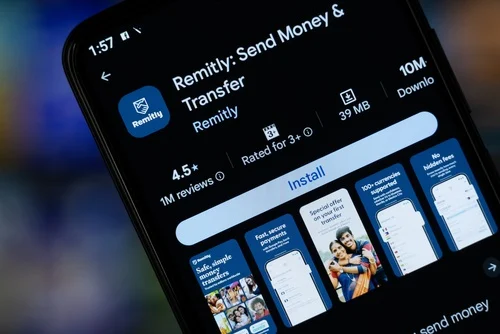
For many families, the holidays also mean sending money home to help with celebrations, travel, or everyday needs.
Plan around when your loved one needs the funds
Shopping, travel, and preparations often happen well before the actual celebration date. Check your recipient’s preferred delivery method, and keep an eye on any holiday hours that might affect when funds become available at a bank or cash pickup location.
Review the available options
Before you send, take a moment to review:
- The delivery methods available for your destination.
- The applicable fee and exchange rate.
- The amount your recipient will receive.
- The estimated arrival time.
We make this information clear before you confirm your transfer, so there are no surprises.
Send and track your transfer
Sending money with Remitly is easy. Choose your destination and amount, enter your recipient’s details, select a payment and delivery option, review your quote, and confirm. From there, you can track your transfer every step of the way.
Explore your options for sending money to loved ones abroad
Fees, exchange rates, delivery times, and available payment and delivery methods vary by destination and transfer details. Review the information shown before confirming your transfer, and check holiday hours with the receiving bank or cash pickup location.
Frequently asked questions
What holidays are celebrated in winter around the world?
Holidays observed during the Northern Hemisphere’s winter include Hanukkah, Christmas, Kwanzaa, New Year celebrations, and Lunar New Year, along with observances like Yalda Night, Dongzhi, Three Kings Day, and Pongal.
Which winter holidays aren’t Christmas?
Hanukkah, Kwanzaa, Yalda Night, Dongzhi, Shōgatsu, Lunar New Year, and Pongal are all distinct holidays with their own origins and meanings, unrelated to Christmas.
Do all countries have winter in December?
No. December through February falls during summer in much of the Southern Hemisphere, including Australia, South Africa, and most of South America.
Why do some holiday dates change each year?
Holidays like Hanukkah and Lunar New Year follow lunar or lunisolar calendars, which don’t align exactly with the 365-day Gregorian calendar, so their dates shift from year to year.
Is Lunar New Year the same everywhere?
No. The Chinese Spring Festival, Vietnamese Tết, and Korean Seollal are distinct holidays, each with its own customs, foods, and traditions, even though they fall around the same time.
Why do some Christians celebrate Christmas in January?
Some Orthodox Christian churches follow the Julian calendar rather than the Gregorian calendar, which places their Christmas observance in January. Not all Orthodox communities follow the same date.
How can I celebrate with family in another country?
Ask what matters most to them, coordinate around their local time zone, share recipes or photos, and consider contributing toward their celebration, whether through a gift, a call, or sending money home.
Learning what matters to the people you celebrate with
Winter brings together an enormous range of traditions, each shaped by its own history, calendar, and community. Sharing a season doesn’t mean sharing the same customs, and that’s part of what makes this time of year so rich. The best way to honor someone else’s celebration is simple: ask what it means to them, and listen.


