
Quick answer: Christmas traditions vary widely from country to country, shaped by timing, food, gifts, and religious observance. In Mexico, many families take part in Las Posadas processions and a Christmas Eve meal. In the Philippines, Simbang Gabi Masses lead into a late-night Noche Buena feast. In Germany, Advent markets and calendars fill the weeks before Christmas Eve. In Spain, children wait for gifts from the Three Kings on January 6. In Australia, summer heat means backyard barbecues instead of snow. Customs also differ within countries and even between households.
Familiar celebrations, different details
In one household, children wake up early on Christmas morning to tear open presents under the tree. In another, halfway around the world, the family’s biggest celebration happened the night before, over a long Christmas Eve dinner that stretched past midnight. Both households call it Christmas. Both are right.
That’s the thing about this holiday: the date on the calendar might be shared, but the way people mark it rarely is. Some families gather around candlelight and carols for nine straight nights before December 25. Others wait until January to exchange gifts. Some spend the day at the beach.
This guide walks through a selection of Christmas traditions from around the world, including Mexico, the Philippines, Colombia, Germany, Spain, Finland, Ghana, Japan, and Australia. It’s not a complete account of every country or every household, but it offers a window into the different ways people celebrate, and a few ideas for connecting with loved ones who celebrate differently than you do.
Christmas traditions around the world at a glance
| Country | Traditions to explore |
| Mexico | Las Posadas and Christmas Eve gatherings |
| Philippines | Simbang Gabi and Noche Buena |
| Colombia | Novena de Aguinaldos |
| Germany | Advent calendars, wreaths, and Christmas markets |
| Spain | Nativity scenes, seasonal sweets, and Three Kings celebrations |
| Finland | Christmas Eve meals, sauna, and family time |
| Ghana | Church services, shared meals, and family visits |
| Japan | Illuminations, Christmas cake, and fried chicken |
| Australia | Summer gatherings, seafood, salads, and roast meals |
These are recognizable examples of each country’s traditions, not universal practices followed by every family. Below, we take a closer look at each one.
Mexico: Las Posadas and Christmas Eve gatherings
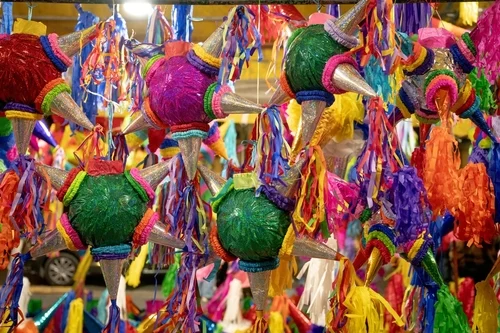
In many Mexican communities, the Christmas season includes Las Posadas, a tradition held from December 16 to December 24. According to Mexico’s National Commission of Natural Protected Areas, Las Posadas trace back to the colonial era, when Spanish missionaries introduced “misas de aguinaldo,” outdoor Masses held in the nine days leading up to Christmas. Over time, the tradition moved from churches into neighborhoods and homes.
During Las Posadas, groups go from house to house singing songs that reenact Mary and Joseph’s search for shelter in Bethlehem. Those who open their doors offer food, and in many celebrations, piñatas and treats follow. Each of the nine nights builds toward December 24, when many families gather for a Christmas Eve meal that can stretch late into the night, with dishes that vary by region and household.
It’s worth noting the distinction here: Las Posadas refers to the nine days of processions leading up to Christmas, while Christmas Eve itself, Nochebuena, is often treated as a separate, central celebration.
Want to go deeper? Check out our full guide to Las Posadas traditions for more detail on how this nine-day celebration unfolds.
The Philippines: Dawn Masses and a Christmas Eve meal
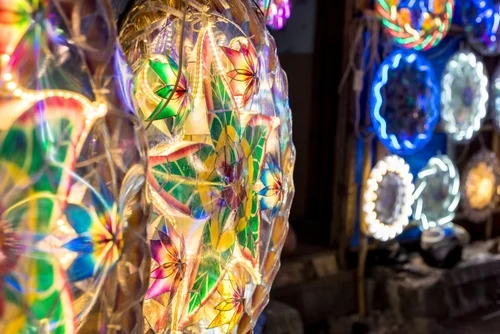
Philippine Christmas traditions often begin well before December 25. Simbang Gabi, a series of nine dawn Masses, starts on December 16 and continues through Christmas Eve. In some communities, these Masses are held in the evening instead, making them more accessible for families balancing work and school schedules.
The season’s main event for many Filipino families is Noche Buena, a meal shared late on Christmas Eve or around midnight once Mass has ended. Tables might include dishes like hamon (a sweet cured ham), queso de bola (a ball-shaped cheese), pancit noodles, or other family favorites passed down through generations. As with most traditions on this list, menus and religious participation vary from household to household.
For a closer look at how these celebrations typically unfold, see our guides to Simbang Gabi and Noche Buena.
Colombia: Nine days of prayer, music, and gathering

Colombia’s Novena de Aguinaldos runs parallel to Mexico’s Posadas in timing, but with its own distinct character. From December 16 through December 24, families and friends gather each evening for nine consecutive nights of prayer, Christmas carols, and conversation, according to Colombia’s official tourism brand.
The novena is often hosted at a different home each night, with guests reading prayers aloud from a shared booklet in honor of Mary, Joseph, and the journey to Bethlehem. Food plays a central role too. Natilla, a milk-based custard, and buñuelos, fried dough balls, are two treats commonly served during these gatherings. As with similar traditions elsewhere, the exact format of the novena varies between communities and households.
Germany: Advent traditions and Christmas markets

German Christmas preparations stretch across the entire Advent season rather than concentrating on December 25 alone. Advent wreaths, which have been a German tradition for nearly 200 years, hold four candles, one lit on each of the four Sundays leading up to Christmas, according to the German National Tourist Board. Advent calendars serve a similar countdown function, with many families opening one small surprise each day starting December 1.
Christmas markets open in late November in cities and towns throughout the country, offering gingerbread, roasted chestnuts, mulled wine, and handcrafted ornaments. Baking is another hallmark of the season. Cinnamon stars, gingerbread Lebkuchen, and Christmas stollen (a fruit-and-nut bread) are common sights in German kitchens throughout December.
For many German families, Christmas Eve, rather than Christmas Day, is the primary occasion for gift-giving and gathering.
Spain: Nativity scenes and gifts from the Three Kings

In Spain, the Christmas season extends well past December 25. Many homes, churches, and public spaces display belenes, elaborate nativity scenes that can range from simple tabletop setups to large walk-through displays, according to Spain’s official tourism board. Turrón, a nougat-like sweet made with almonds and honey, is a seasonal staple found on dessert tables throughout the holidays.
Gift-giving customs differ significantly from household to household. While some families exchange presents on Christmas Day, many wait for January 6, Epiphany, when the Three Kings (Melchior, Caspar, and Balthazar) are said to deliver gifts overnight. The night before, on January 5, cities across Spain host elaborate parades welcoming the Three Kings into town.
One quick clarification: the tradition of eating 12 grapes at midnight is a New Year’s Eve custom, not a Christmas Day one, so don’t mix the two up if you’re planning a trip around the holidays.
Finland: Christmas Eve, sauna, and a slower pace

For many Finnish families, Christmas Eve, not Christmas Day, is the heart of the celebration. According to Visit Finland, many households spend the day gathering with loved ones, and a Christmas sauna is a common part of the evening routine for many families.
Food traditions include an oven-baked ham, a variety of fish dishes, root vegetable casseroles, and rice porridge, often served for breakfast. Glögi, a spiced mulled wine, is a popular drink throughout the season, often paired with gingerbread cookies. While Santa Claus is strongly associated with Finland in folklore, it’s worth remembering that not every Finnish celebration takes place in a snowy cottage in Lapland; plenty of families celebrate in cities and towns across the country.
Learn more about Christmas in Finland and its regional variations.
Ghana: Church services, music, and family visits

Christmas in Ghana brings together religious observance and family connection. According to the Ghana News Agency, Christians across the country mark the day with church services, picnics, and family visits, often dressed in their best traditional clothing. Ghana’s diverse ethnic groups each bring their own touches to the celebration, from food to music.
Shared meals are a central part of the day, along with decorations, music, and a generally festive atmosphere in homes and neighborhoods. As with many countries on this list, how people celebrate can differ significantly by region, community, and family, so it’s worth keeping in mind that any single description only captures part of the picture.
Japan: Illuminations, cake, and a different seasonal atmosphere

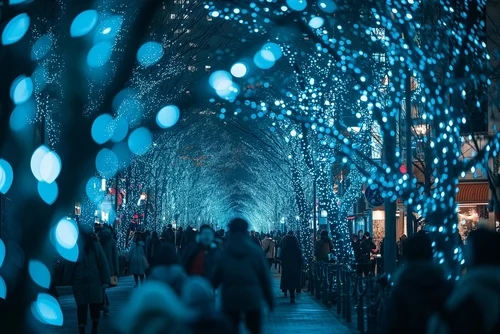
Christmas in Japan looks and feels different from celebrations elsewhere, largely because December 25 isn’t a national holiday there. Instead, Christmas has taken on its own identity, shaped by illuminated light displays in major cities and a few distinctly Japanese customs.
Christmas cake, often a light sponge cake topped with strawberries and whipped cream, is a seasonal favorite found in bakeries throughout December. Fried chicken has also become a widely recognized part of the season for many, a custom that grew out of a decades-old marketing campaign and has since become a familiar seasonal tradition. For some, Christmas Eve has also become an occasion for romantic dates and social gatherings, while Christian communities in Japan mark the day with religious services.
It’s worth distinguishing Christmas from Shōgatsu, Japan’s New Year celebration, which carries far greater cultural weight in the country.
Australia: Christmas during summer

December falls during summer in Australia, which shapes the holiday in some distinctive ways. For some families, that means outdoor gatherings or trips to the beach. For others, it’s less about sand and more about adapting the traditional menu to warmer weather, with seafood and fresh salads served alongside a more traditional roast.
Desserts like pavlova, a meringue-based treat topped with fruit and cream, and Christmas pudding both make appearances on Australian tables, sometimes on the same one. Religious services and gift exchanges remain part of the day for many families, even as the setting looks different from the snowy scenes often associated with the holiday elsewhere. Not every Australian celebration happens at the beach, but the warm-weather backdrop is one of the clearer ways the country’s Christmas stands apart.
Why do Christmas dates and gift-giving days differ?
Part of what makes global Christmas traditions so varied comes down to timing. Some households treat December 24 as the main event, with gift-giving and family meals happening that evening. Others reserve the bigger celebration for December 25 itself. In Spain and several other countries, the season doesn’t wrap up until January 6, when Three Kings traditions extend the celebration further into the new year.
Religious calendars play a role too. Many Orthodox Christian communities celebrate Christmas on December 25, following the same calendar used by Western churches, but some Orthodox communities observe it in January instead, based on older church calendars. It’s worth noting that there’s no single date that applies to all Orthodox Christians everywhere.
For a deeper explanation of how these dates and observances vary, take a look at our guide, Which Countries Celebrate Christmas?

How to share Christmas traditions across borders
If you have family or friends celebrating Christmas in another country, a little planning can go a long way toward making the day feel connected, even from a distance.
- Ask what matters to them. Dates, dishes, and customs vary even within the same country, so a quick conversation can tell you a lot about how your loved ones celebrate.
- Coordinate around their time zone. A video call scheduled around their local Christmas Eve or Christmas Day, rather than yours, shows you’re thinking of their celebration specifically.
- Prepare a shared recipe. Cooking the same dish your family abroad is preparing, even from a distance, is a simple way to feel connected over a meal.
- Exchange photos or recordings. A quick video of your own celebration, or a few photos from the day, can help bridge the distance.
- Ask if a contribution would help. Sometimes the most meaningful gesture is practical, whether that’s helping cover the cost of a special ingredient, a gift, or travel to see family.
As one contributor who grew up celebrating Las Posadas in central Mexico put it, “The piñata was always the loudest part of the night, but the quiet moments before, when everyone was singing at the door, are what I remember most now that I live abroad.”
Sending Christmas support abroad with Remitly

If you’re supporting loved ones celebrating Christmas in another country, a little planning makes the process smoother.
Plan around preparations
Money for ingredients, travel, or gifts is often needed before the celebration itself, not on the day. Check when your recipient actually needs the funds, and factor in any opening hours for the bank or pickup location on their end, especially around the holidays, when hours can shift.
Review your destination’s options
Delivery methods, fees, exchange rates, the amount your recipient receives, and estimated arrival times all vary depending on where you’re sending money and how. Remitly lets you check these details before you send, so you know what to expect. Once your transfer is on its way, you can track it from start to finish.
Explore your options for sending money to loved ones abroad. Get started with Remitly.
Fees, exchange rates, delivery times, and available payment and delivery methods vary by destination and transfer details. Review the information shown before confirming your transfer, and check holiday hours with the receiving bank or cash pickup location.
Frequently asked questions
How is Christmas celebrated differently around the world?
Christmas traditions differ in timing, food, religious observance, and gift-giving customs. Some countries emphasize Christmas Eve, others focus on Christmas Day, and some, like Spain, extend celebrations into early January.
Which countries focus on Christmas Eve?
Mexico, Colombia, Germany, and Finland are among the countries where many families treat Christmas Eve, rather than Christmas Day, as the primary occasion for gathering and gift-giving.
What foods are eaten at Christmas in other countries?
Christmas foods vary widely: Noche Buena spreads in the Philippines may include hamon and queso de bola, German tables often feature stollen and gingerbread, Finnish meals include ham and rice porridge, and Australian Christmas tables may include seafood, salads, and pavlova alongside a roast.
Do all countries exchange gifts on December 25?
No. In Spain, many families wait until January 6 for gifts from the Three Kings. In other countries, Christmas Eve is the main gift-giving occasion instead of Christmas Day.
Where is Christmas celebrated in summer?
Australia celebrates Christmas during its summer season, which shapes outdoor gatherings, lighter meals, and seasonal desserts like pavlova.
How is Christmas different from New Year in Japan?
Christmas in Japan isn’t a national holiday and has taken on its own customs, like illuminated light displays, Christmas cake, and fried chicken. Shōgatsu, Japan’s New Year celebration, carries much greater cultural significance and involves different traditions entirely.
How can I celebrate with relatives in another country?
Ask your relatives which dates and customs matter most to them, schedule a call around their time zone, prepare a shared recipe, exchange photos, and consider whether a financial contribution toward their celebration would help.
Finding meaning in how others celebrate
Christmas traditions around the world share a common thread: they bring people together, even when the details look nothing alike. Whether that means a nine-day novena in Colombia, a summer barbecue in Australia, or a quiet Christmas Eve sauna in Finland, learning what makes another family’s celebration meaningful is its own kind of connection. You don’t have to share the same customs to share in the spirit behind them.