


Quick answer: Christmas is celebrated in countries across every inhabited continent, including the United States, Mexico, Colombia, Germany, the Philippines, India, Indonesia, South Africa, and Australia. Celebrations can be religious, cultural, or both. December 25 is the most familiar date, but some Christian communities observe Christmas in January. A country doesn’t need a Christian majority or an official Christmas holiday for its people to celebrate.
A family in the Philippines gathers for Noche Buena at midnight. Shoppers in Germany wander between wooden stalls at a Christmas market, mugs of mulled wine in hand. In Australia, Christmas lunch might happen on the beach, under a sun that has nothing in common with the snowy scenes on holiday cards. Christmas looks different almost everywhere it’s celebrated, and that’s part of what makes it such a fascinating holiday to explore.
This raises a natural question: what does it actually mean for a country to “celebrate Christmas”? Is it about religion, culture, or official recognition on a public holiday calendar? The answer, as you’ll see, is usually some combination of the three.
This guide walks through how Christmas is observed in representative countries around the world, explains why celebration dates don’t always fall on December 25, and looks at why public holiday status doesn’t tell the whole story. It also offers a few ideas for connecting with loved ones abroad during the season, wherever and whenever they celebrate.

What does it mean for a country to celebrate Christmas?
Christmas participation generally takes one of three overlapping forms:
| Type of observance | What it means |
| Religious | Christian communities commemorate the birth of Jesus |
| Cultural | People participate through meals, decorations, gifts, or gatherings |
| Official | Christmas is recognized on a public holiday calendar |
These categories often overlap, but not always. Japan offers a clear example. Christmas has a highly visible cultural presence there, with decorations appearing in stores as early as October and couples marking December 24 or 25 with romantic dinners. Yet Christmas isn’t a national holiday in Japan, and only around 1% of the population identifies as Christian (japan.travel, 2021).
Public holiday status isn’t proof that everyone in a country celebrates Christmas, and its absence doesn’t mean nobody does. Each form of observance tells only part of the story.

Which countries celebrate Christmas around the world?
Christmas is marked in some form on every inhabited continent. The following table highlights representative examples; it isn’t a complete list, and it doesn’t suggest that participation or traditions look the same from country to country.
| Region | Examples of countries where Christmas is celebrated |
| North America | United States, Canada, Mexico |
| South America | Brazil, Colombia, Argentina |
| Europe | United Kingdom, Germany, France, Italy, Spain |
| Africa | South Africa, Ghana, Nigeria, Kenya |
| Asia | Philippines, India, Indonesia, Japan |
| Oceania | Australia, New Zealand |
Here’s a closer look at how Christmas takes shape in a few of these countries.
Mexico: Las Posadas and Christmas Eve gatherings

In Mexico, the days leading up to Christmas are marked by Las Posadas, a tradition that traditionally runs from December 16 through December 24. Posadas reenact Mary and Joseph’s search for shelter in Bethlehem, with processions, songs, and gatherings that move from house to house each night (gob.mx, 2019). Many families cap off the season with a Christmas Eve meal, though exactly how that evening unfolds varies by region and household.
Colombia: Novenas, music, and gathering together

Colombia’s Novena de Aguinaldos is a nine-night tradition of prayer, music, and food that runs from December 16 to December 24. Families and friends take turns hosting, reading from a shared prayer book, singing carols, and sharing festive dishes like natilla and buñuelos (Colombia.co, 2024). Not every Colombian household follows the novena in the same way, but it remains one of the country’s most recognizable Christmas customs.
Germany: Advent traditions and Christmas markets

German Christmas traditions often begin well before December 25. Advent wreaths, lit one candle per week, and Advent calendars help count down the days. Christmas markets, a fixture in cities like Nuremberg, Dresden, and Berlin, offer roasted almonds, mulled wine, and handmade gifts (Germany Travel). For many households, December 24 carries particular significance as the evening gifts are exchanged, though regional customs, like Saxony’s costumed “miners” processions, add local variation.
The Philippines: Simbang Gabi and Noche Buena
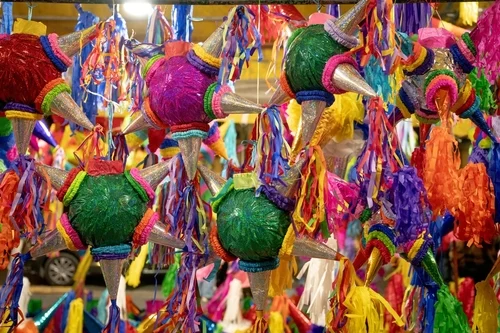
In the Philippines, the season includes Simbang Gabi, a series of nine dawn Masses held in the days before Christmas, and Noche Buena, the festive meal shared after midnight Mass on Christmas Eve. Both traditions emphasize family and community, bringing relatives together for food and faith during the final stretch before Christmas Day.
India and Indonesia: Christmas in diverse societies

Christmas in India is celebrated by Christian communities throughout the country, with church services, decorations, and festive foods. The states of Goa and Kerala, home to significant Christian populations, have especially visible celebrations (incredibleindia.gov.in). In Indonesia, Christmas customs reflect both Christian faith and local cultural influences, varying from region to region rather than following a single national pattern (Indonesia.travel). Neither country should be thought of as celebrating Christmas uniformly; both are religiously and culturally diverse.
South Africa: Christmas in the Southern Hemisphere

December 25 is recognized as a public holiday in South Africa (South African Government). Because South Africa sits in the Southern Hemisphere, Christmas there falls during summer, a useful reminder that Christmas doesn’t always mean cold weather and snow. Celebrations often include outdoor meals and gatherings suited to the warmer season.
Australia: A summer Christmas

Like South Africa, Australia celebrates Christmas in the middle of summer. Warm weather shapes many Australian Christmas traditions, from beach outings to backyard barbecues standing in for the traditional roast dinner (Study Australia). Celebrations still vary by region and household, but the summer setting is a defining feature of an Australian Christmas.
Do all countries celebrate Christmas on December 25?
No. The date Christians observe Christmas depends partly on which church calendar their tradition follows.
| Common civil-calendar date | Who may observe Christmas then |
| December 25 | Many Catholic, Protestant, and Orthodox communities |
| January 6 | The Armenian Apostolic Church, with local exceptions |
| January 7 | Some Orthodox and other Eastern Christian communities following the Julian calendar for Christmas |
This difference comes down to calendars. Some Orthodox Christian communities follow the Julian calendar, where December 25 currently corresponds to January 7 on the Gregorian calendar most countries use today (Greek Orthodox Archdiocese of America). It’s worth noting that many Orthodox Christians actually celebrate on December 25, since not all Orthodox churches use the Julian calendar for fixed feast days.
The Armenian Apostolic Church observes the Nativity on January 6, combining it with the celebration of Christ’s baptism, known as Theophany (armenianchurch.us). This is a distinct tradition from the Eastern Orthodox communities who celebrate on January 7.
It’s worth being careful here: no single date applies to an entire country, and January 6 Epiphany celebrations observed in many Western Christian traditions are not the same as the Armenian Church’s January 6 Nativity feast. If you’re thinking ahead to a Christmas season beginning in December 2026, any January observances connected to it would fall in January 2027.

Are there countries where Christmas isn’t a national holiday?
Japan is a useful example here, and it isn’t the only one. A country can have a highly visible, commercially popular Christmas season without recognizing December 25 as an official public holiday.
A few distinctions are worth keeping in mind:
- Public holiday recognition and personal or community observance are separate questions. One doesn’t determine the other.
- Christian communities can and do celebrate Christmas in countries where it isn’t a nationwide holiday.
- Commercial decorations, sales, and seasonal marketing don’t necessarily reflect the scale of religious observance in a given country.
- Local laws and customs around religious practice vary significantly and can shape how, or whether, Christmas is publicly observed.
It’s inaccurate to describe Christmas as “banned” in a given country or to produce a list of countries that supposedly don’t celebrate it. Such claims rarely hold up to scrutiny; observance is usually more a question of degree than an on-or-off switch.

How to share Christmas traditions across borders
If you have loved ones celebrating Christmas in another country, a few simple habits can help you stay connected to their experience:
- Ask which dates matter to their household. Don’t assume December 25 is the only significant day. Some families prioritize Christmas Eve, a novena, or a January observance instead.
- Learn their traditions rather than assuming they mirror yours. A conversation about how they celebrate can reveal customs you’ve never encountered.
- Coordinate calls across time zones. A little planning goes a long way toward catching everyone awake and available.
- Share recipes, photos, or stories. Exchanging small pieces of your own traditions can make the distance feel smaller.
- Ask if a practical contribution would help. Sometimes the most meaningful gift is support with holiday shopping, travel costs, or preparations.
Sending support abroad during Christmas with Remitly
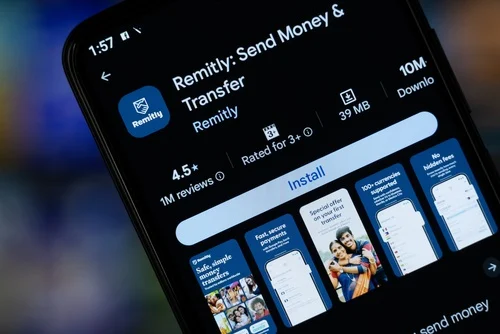
For many families, Christmas includes a practical dimension: making sure loved ones abroad have what they need for holiday shopping, travel, or preparations.
Plan around your recipient’s celebration
Before sending money, it helps to check the date that matters most to your recipient’s household, along with their local time and the hours of their bank or pickup location. Holiday schedules can affect when funds are available, so a little advance planning makes the process smoother for everyone.
Review the options for your destination
Remitly offers multiple delivery methods, including bank deposit, cash pickup, and mobile wallet, depending on where you’re sending money. Availability varies by destination, so it’s worth checking which options apply to your recipient’s country before you start.
Check the details before sending
Sending money with Remitly follows a few straightforward steps:
- Sign in or create a Remitly account.
- Select the destination and send amount.
- Choose an available delivery method.
- Enter the recipient’s required details and select a payment method.
- Review the fee, exchange rate, amount received, and estimated arrival.
- Confirm and track the transfer.
Fees, exchange rates, and delivery times depend on your destination and the details of your transfer, so review everything shown before confirming.
Explore your options for sending money to loved ones abroad
Fees, exchange rates, delivery times, and available payment and delivery methods vary by destination and transfer details. Review the information shown before confirming your transfer, and check holiday hours with the receiving bank or cash pickup location.
Frequently asked questions (FAQs)
Which countries celebrate Christmas?
Christmas is celebrated in some form across every inhabited continent, including countries like the United States, Mexico, Colombia, Germany, the Philippines, India, Indonesia, South Africa, and Australia. These are representative examples rather than a complete list, and participation within each country varies.
Is Christmas celebrated in every country?
Not uniformly. Religious, cultural, and official observance differ from country to country, and even within a single country, participation can vary widely among communities and households.
Do non-Christian countries celebrate Christmas?
Yes, in many cases. Populations are diverse, and a country’s majority religion doesn’t describe every resident. Christian communities can celebrate Christmas even in countries where Christianity isn’t the majority faith, and Christmas can also take on cultural or commercial significance beyond religious observance.
Which communities celebrate Christmas in January?
The Armenian Apostolic Church observes the Nativity on January 6. Some Orthodox and other Eastern Christian communities that follow the Julian calendar observe Christmas on January 7.
Do all Orthodox Christians celebrate on January 7?
No. Many Orthodox Christians celebrate on December 25, since not every Orthodox church uses the Julian calendar for fixed feast days like Christmas.
Where is Christmas celebrated in summer?
Countries in the Southern Hemisphere, such as South Africa and Australia, celebrate Christmas during their summer season, which shapes traditions like outdoor meals and warm-weather gatherings.
Is Christmas always a public holiday?
No. In some countries, like Japan, Christmas has a visible cultural presence without being an official public holiday. Public holiday status and personal or community observance are separate matters.
Learning how loved ones celebrate
Christmas takes on different meanings depending on where, and with whom, it’s celebrated. Dates shift with church calendars, traditions vary by region and household, and public holiday status tells only part of the story. Taking the time to understand how the people you care about actually celebrate, rather than assuming their traditions match your own, is one of the simplest ways to feel closer to them during the season, wherever they call home.


