

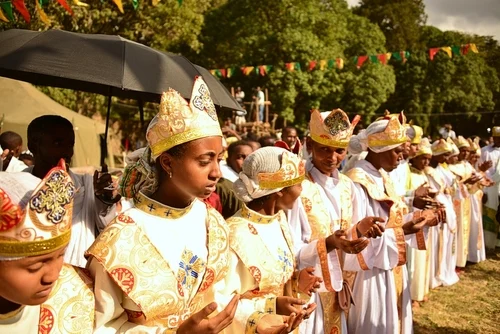
TL;DR: Timkat is the Ethiopian Orthodox celebration of Epiphany, held each year on January 19 (January 20 in leap years). The festival commemorates the baptism of Jesus Christ in the Jordan River and features colorful processions, all-night vigils, and ceremonial water blessings. Ethiopian communities around the world, including across the United States, mark the occasion with music, traditional dress, and family gatherings.
Every January, streets across Ethiopia come alive with color. Priests in ornate robes carry replicas of the Ark of the Covenant through crowds of singing, dancing worshippers. Families dress in white and travel long distances to witness the blessing of the waters. This is Timkat, Ethiopia’s Orthodox celebration of Epiphany, and it’s one of the most significant religious festivals in the country’s calendar.
For members of the Ethiopian diaspora living in the United States, Timkat is more than a religious observance. It’s a thread connecting them to home, to family traditions, and to a community that spans continents. Whether you’re Ethiopian American, married into an Ethiopian family, or simply curious about global traditions, understanding Timkat offers a window into one of the world’s oldest Christian cultures.

What does Timkat celebrate?
Timkat commemorates the baptism of Jesus Christ in the Jordan River by John the Baptist. The name itself comes from the Ge’ez word for baptism. Ethiopian Orthodox Tewahedo Christians consider this one of the holiest events in the liturgical year, ranking alongside Christmas (Gena) and Easter (Fasika) in significance.
The celebration always falls on January 19, except in the year following a leap year, when it shifts to January 20. This is because the Ethiopian calendar, which differs from the Gregorian calendar used in the US, follows its own system of leap years.
How is Timkat celebrated in Ethiopia?
Timkat unfolds over two main days, though festivities often begin the evening before.
The eve of Timkat: Ketera
The celebration starts with Ketera, held on January 18. Priests carry the Tabot, a replica of the Ark of the Covenant representing the Ten Commandments, from each church to a nearby body of water, often a river, lake, or pool. This procession is accompanied by singing, drumming, and dancing, with worshippers dressed in traditional white garments called netela. The Tabot remains near the water overnight, watched over by clergy and the faithful who keep vigil until dawn.
The main event: Timkat Day
On January 19, the crowd gathers at the water’s edge before sunrise. A priest blesses the water, and in a moment that marks the heart of the celebration, worshippers are sprinkled with or immerse themselves in the blessed water. This act symbolizes a renewal of baptismal vows and spiritual purification.
Afterward, the Tabots are returned to their churches in another jubilant procession. The celebration continues with feasting, music, and in many regions, the playing of Ganna, a traditional stick-and-ball game similar to field hockey.
Where Timkat is celebrated most vividly
While Timkat is observed throughout Ethiopia, the city of Gondar is particularly famous for its celebrations. The historic Fasilides Bath, built in the 17th century, becomes the centerpiece of festivities as thousands gather to witness the water blessing ceremony. In fact, UNESCO has recognized Timkat as part of Ethiopia’s Intangible Cultural Heritage, highlighting its historical and cultural importance.

How do Ethiopian Americans celebrate Timkat in the United States?
Ethiopian Orthodox communities across the US, from Washington, D.C. to Seattle to Los Angeles, hold their own Timkat observances. These typically include church services, processions around the block or parking lot (since natural bodies of water for the traditional ceremony aren’t always accessible), and community feasts featuring dishes like doro wat, injera, and tej.
For many Ethiopian immigrants, Timkat serves as an opportunity to pass down traditions to children born in the US, reinforcing cultural identity while building community bonds far from home. It’s also a time when extended families, scattered across different cities or even countries, find ways to reconnect, whether through phone calls, video chats, or sending support to relatives celebrating in Ethiopia.
Why does Timkat matter to the Ethiopian diaspora?
For Ethiopians living abroad, holidays like Timkat carry extra weight. Distance from home can make cultural touchpoints feel more precious, not less. Celebrating Timkat in the US, even in modified form, helps maintain a sense of belonging and continuity across generations.
Choose to prioritize community celebrations if staying culturally connected matters more to your family than maintaining strict adherence to traditional observance locations. Many diaspora communities have found creative ways to honor the spirit of Timkat even without access to Ethiopia’s rivers and historic baths, proving that tradition can adapt without losing meaning.
Keeping traditions alive across distance
Holidays like Timkat remind us how deeply connected families remain, even when oceans separate them. For the millions of Ethiopians living outside their homeland, celebrations like this one are a chance to honor heritage, strengthen community ties, and share traditions with the next generation.
If you have Ethiopian friends, neighbors, or colleagues, late January is a meaningful time to ask about their Timkat traditions. You might be invited to witness a celebration that has endured for centuries, and discover a story about faith, resilience, and community worth sharing.

Frequently Asked Questions
When is Timkat celebrated?
Timkat is celebrated annually on January 19, except in the year following a leap year, when it falls on January 20. This date follows the Ethiopian Orthodox calendar.
What is the difference between Timkat and Christmas in Ethiopia?
Timkat commemorates the baptism of Jesus Christ, while Ethiopian Christmas, known as Gena, celebrates his birth. Gena is observed on January 7, roughly two weeks before Timkat, making January a particularly significant month in the Ethiopian Orthodox calendar.
Why do people get sprinkled with water during Timkat?
The water blessing ceremony symbolizes a renewal of baptismal vows. Worshippers believe the blessed water carries spiritual significance, and being sprinkled with or immersed in it represents purification and recommitment to their faith.
Is Timkat only celebrated in Ethiopia?
No. Ethiopian Orthodox communities around the world, including in the United States, Canada, and parts of Europe, hold Timkat celebrations. These often include church services, processions, and community gatherings, even when local geography doesn’t allow for the traditional riverside ceremony.
What foods are associated with Timkat celebrations?
Timkat celebrations often include traditional Ethiopian dishes such as doro wat (spicy chicken stew), injera (sourdough flatbread), and tej (honey wine). Food plays a central role in bringing families and communities together during the festivities.


