

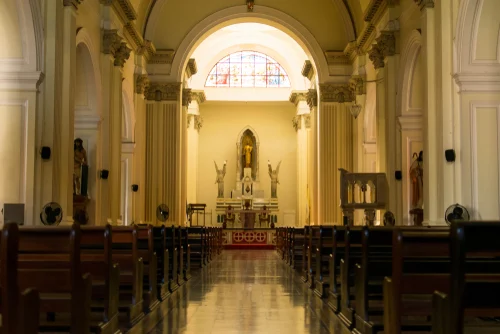
TL;DR: La Gritería (“the Shouting”) is Nicaragua’s boisterous December 7 celebration honoring the Virgin Mary’s Immaculate Conception. Participants visit flower-covered altars, shout “¿Quién causa tanta alegría?,” and receive treats like candy, fruit, and nacatamales in return. Nicaraguan communities across the US, from Miami to Louisiana, keep the tradition alive.
If you’ve never heard someone shout a question at a flower-covered altar and get handed a bag of candy in response, La Gritería might be one of the most joyful traditions you’ve never heard of. Celebrated every December 7 in Nicaragua, this holiday blends religious devotion with street-party energy, and it’s spread far beyond Nicaragua’s borders thanks to immigrant communities who’ve carried it with them to cities across the United States.
For families who’ve relocated to the US, La Gritería isn’t just a nice tradition to remember. It’s a way to stay connected to home, to pass culture down to kids born far from Nicaragua, and to mark one of the most meaningful days of the year with people who understand why it matters. At Remitly, we see this kind of connection every day. Families send money, memories, and traditions across borders, and holidays like La Gritería are a powerful reminder of why that connection matters so much.
This guide breaks down what La Gritería is, where it comes from, how it’s celebrated, and how Nicaraguan communities in the US keep the spirit alive.
What does La Gritería mean?
La Gritería translates to “the Shouting” in English. The name comes directly from what happens on the night of December 7: people walk from altar to altar shouting a call-and-response chant and receive gifts in exchange for their enthusiasm.
La Gritería marks the final day of La Purísima, a nine-day novena of prayer and devotion honoring the Immaculate Conception of the Virgin Mary. “La Purísima” means “the purest one,” a direct reference to Mary. While La Purísima is the quieter, prayerful lead-up, La Gritería is the celebration that caps it off, and it’s loud, festive, and communal in a way that feels closer to a block party than a church service.

What do people shout during La Gritería?
The call-and-response at the heart of La Gritería is simple but powerful. Participants shout, “¿Quién causa tanta alegría?” which means “Who causes so much joy?” The crowd answers, “¡La Concepción de María!” — “The Conception of Mary!”
According to Louisiana Folklife, one account traces this exact exchange back to December 7, 1857, when Monsignor Giordano Carranza asked the question to a crowd of La Purísima celebrants in León, Nicaragua, and the response stuck. From that point on, the shout became the defining feature of the holiday.
Where did La Gritería come from?
Like many long-running cultural traditions, La Gritería’s exact origins are debated, and no single account is considered definitive.
One version, documented by Louisiana Folklife, traces La Purísima back to León in the early 1700s. Monks at the San Francisco convent reportedly used candy and fruit to draw children and believers to sing in front of an image of the Virgin Mary. Over time, the custom moved into private homes, with families building their own altars, and it eventually spread across the country.
Veneration of Mary in Nicaragua runs deeper still. One account places the arrival of a Marian image in El Viejo as early as 1562, underscoring just how long devotion to the Virgin has shaped Nicaraguan religious life.
Whatever the precise history, La Gritería as it’s practiced today, with its altars, its shout, and its exchange of gifts, took shape over generations and became a fixture of Nicaraguan identity by the 19th century.

How is La Gritería celebrated in Nicaragua?
On the evening of December 7, families across Nicaragua set up elaborate altars in their homes, often decorated with blue and white (Nicaragua’s national colors, also associated with the Virgin Mary), fresh flowers like madroño and lilies, candles, palm fronds, and a statue of Mary wearing a golden crown.
Fireworks mark the start of the celebration, sometimes as early as 6 a.m., and the main event kicks off in the evening. Starting around 6 p.m., people of all ages walk door to door, pausing at each altar to shout the call-and-response and sing traditional songs such as “Por Eso El Cristianismo” and “Escucha Oh Tierna Madre.” Many hosts print small booklets so visitors can follow along with the lyrics.
In return for their singing, visitors receive small gifts: fruit, candy, toys, noisemakers, sugar cane, rice and beans, fresh juices, and drinks. According to the Quixote Center, one of the most prized treats is the nacatamal, a large tamale filled with pork, rice, and potatoes, wrapped in plantain leaves and steamed. The celebration continues until hosts run out of treats or singers run out of songs.
Some cities add their own flair. In León, a giant puppet called La Gigantona, adapted from Spanish tradition, pokes fun at colonizers and parades through the streets alongside El Enano, a smaller figure representing indigenous people. In Granada, altars often spill out onto the street itself rather than staying indoors.
How do Nicaraguan communities celebrate La Gritería in the US?
Nicaraguan immigrants have carried La Gritería with them to US cities, adapting it to fit new communities while preserving its core meaning.
In Sweetwater, a Nicaraguan-heavy suburb of Miami, HipLatina reports that altars appear not just in homes but in Nicaraguan-owned businesses, and locals keep traditional foods like nacatamales and fresco de cacao (a cacao-based drink) on hand for visitors. Hialeah, Florida has also embraced Nicaraguan heritage: in August 2023, St. John the Apostle Parish hosted a “Gritería Chiquita” tied to the Assumption feast, with processions, marimba music, and folkloric dance, and the city officially proclaimed a “Nicaragua Day”. That event is a separate August tradition linked to León’s Cerro Negro volcano, distinct from the December 7 Gritería, but it reflects the same spirit of public celebration.
In Kenner, Louisiana, St. Jerome Catholic Church has adapted the holiday for a community that can’t easily travel altar to altar. Instead of multiple stops, the parish sets up one central altar with a choir, opens with a Spanish Mass, and replaces street fireworks with the popping of blue and white balloons. Around 250 people typically attend, and gifts include a cacao drink, meat pie, ajote en miel (pumpkin cooked in molasses and honey), bags of Nicaraguan candies, and fresh fruit. In recent years, organizers have started including staples like rice, beans, and oil to support families facing hardship.
For many participants, the holiday carries weight well beyond nostalgia. Do you have to be Catholic to take part in La Gritería?
No. While La Gritería is rooted in Catholic devotion to the Virgin Mary, HipLatina notes that you don’t need to be Catholic to enjoy the celebration. The communal spirit, music, food, and festive atmosphere make it accessible to neighbors, friends, and visitors of any background who want to experience Nicaraguan culture.

How can you respectfully take part in or host a Gritería-style gathering?
If you want to experience the spirit of La Gritería without a Nicaraguan heritage of your own, a few respectful approaches can help:
- Attend a community event. Parishes and cultural organizations in cities with large Nicaraguan populations, including Miami, Los Angeles, and parts of Louisiana, often welcome visitors to public celebrations.
- Learn the chant. Understanding the meaning behind “¿Quién causa tanta alegría?” and “¡La Concepción de María!” helps you appreciate the moment rather than just observe it.
- Support Nicaraguan-owned businesses. Many bakeries and restaurants prepare traditional treats like nacatamales around this time of year.
- Ask before joining a private altar. Home altars are often family affairs; a respectful question about joining goes a long way.
FAQ: La Gritería, explained
What does “La Gritería” mean?
La Gritería means “the Shouting” in English. It refers to the call-and-response tradition where participants shout a question at altars honoring the Virgin Mary and receive treats in response.
When is La Gritería celebrated?
La Gritería takes place every year on December 7, marking the final day of the nine-day La Purísima novena. The related Catholic feast of the Immaculate Conception falls the next day, December 8.
What do you shout during La Gritería?
Participants ask, “¿Quién causa tanta alegría?” (“Who causes so much joy?”). The crowd responds, “¡La Concepción de María!” (“The Conception of Mary!”).
What kind of treats do people receive?
Common gifts include fruit, candy, toys, noisemakers, sugar cane, rice and beans, fresh juices, and nacatamales, a traditional steamed tamale filled with pork, rice, and potatoes.
Is La Gritería only for Catholics?
No. While the holiday has Catholic roots, people of any background are welcome to take part in the music, food, and community spirit.
How is La Gritería different from Las Posadas?
La Gritería is specific to Nicaragua and centers on a single night of altar visits and a distinct call-and-response chant honoring the Immaculate Conception. Las Posadas, celebrated in Mexico and other countries, reenacts Mary and Joseph’s search for lodging over nine nights leading up to Christmas. Both involve community processions, but the traditions, timing, and meaning differ.


