

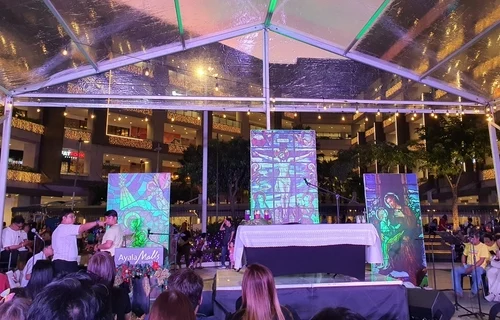
Quick answer: Simbang Gabi (also known as Misa de Gallo or Misa de Aguinaldo) is a Filipino Catholic tradition of nine dawn Masses that prepare the faithful for Christmas. Traditional dawn Masses run December 16–24, 2026, while anticipated evening celebrations commonly begin December 15 and run through December 23, depending on the parish. If you’re sending support to loved ones in the Philippines this season, plan around when they need the funds and check your transfer estimate before confirming.
There’s something unmistakable about Simbang Gabi: the early alarm, the walk to church while it’s still dark outside, the familiar faces gathered in the pews, and maybe something warm to eat afterward. For many Filipino families, these details are woven into the memory of Christmas itself. If you’re in the U.S., you might celebrate Simbang Gabi at a nearby parish, join a livestream, or simply think of family back home attending their own dawn Mass. Either way, staying connected to the tradition and to the people who share it with you is part of what makes the season meaningful.
This guide covers two things. First, what Simbang Gabi actually is, when it falls in 2026, and the traditions that go with it. Second, practical guidance for sending money to the Philippines if supporting your loved ones’ December plans is part of how you’re staying connected this year.

What is Simbang Gabi?
Simbang Gabi means “night Mass,” though the tradition is most closely associated with dawn worship rather than evening services. It’s a nine-day Catholic devotion, or novena, observed in the lead-up to Christmas.
Each Mass in the novena centers on prayer, anticipation, and community, as parishioners prepare spiritually for the celebration of Christ’s birth. You may also hear the tradition called Misa de Gallo, or “Rooster’s Mass,” a reference to the early hour at which the Masses are traditionally held, timed to the rooster’s crow at dawn.
Simbang Gabi isn’t limited to the Philippines. Filipino communities across the U.S. also observe the Simbang Gabi tradition, with many parishes hosting their own nine-evening Mass series to serve Filipino and Filipino American congregations. It’s worth noting that participation in Simbang Gabi, like any religious observance, varies by individual and family. Not every Filipino household observes the novena, and that’s part of the diversity within Filipino communities.

When is Simbang Gabi in 2026?
Dates for Simbang Gabi follow a consistent annual pattern, though the specific format—dawn or evening—depends on the parish.
| Observance | 2026 dates |
| Traditional dawn Masses | Wednesday, December 16–Thursday, December 24 |
| Common anticipated evening schedule | Tuesday, December 15–Wednesday, December 23 |
| Christmas Eve | Thursday, December 24 |
| Christmas Day | Friday, December 25 |
Many parishes, particularly those in colder climates, have shifted to evening and dawn Mass schedules to make the tradition more accessible during winter months. This customary date pattern reflects how the tradition is typically observed, not a confirmed program for any specific parish. If you’re planning to attend, confirm the exact dates and times with your local church, since individual schedules can vary.

What traditions are associated with Simbang Gabi?
Attending Mass with family and community
For many, Simbang Gabi is as much about who you’re with as the Mass itself. Making time to attend, whether with parents, children, or extended family, is a way of carrying the season’s spirit forward together. Of course, participation depends on personal circumstances, work schedules, and what’s available at your parish, so there’s no single “right” way to take part.
Bibingka and puto bumbong after Mass
Two foods are closely tied to this season: bibingka and puto bumbong.
Bibingka is a baked rice cake made from galapong, a glutinous rice batter, often topped with coconut, cheese, or salted egg. Puto bumbong is a purple rice delicacy, traditionally steamed in bamboo tubes and served with grated coconut and sugar. Both are commonly sold at food stalls outside churches after Mass, though availability varies by parish and location.
These foods aren’t just treats. They’re part of what makes the post-Mass gathering feel complete, especially when shared with the people you walked to church with.
Carrying traditions across generations
Simbang Gabi is also a tradition that families pass down. Parents introduce children to the early mornings and the Masses they grew up attending, while those further from home find ways to share the experience with relatives abroad, whether through a phone call, a shared recipe, or simply talking about what the season meant to them growing up.
How to stay connected during Simbang Gabi from the U.S.
Living far from the Philippines doesn’t mean missing out on the season entirely. A few ways to stay connected during Simbang Gabi:
- Check whether a nearby parish offers Simbang Gabi Masses.
- Coordinate a family call around everyone’s schedule.
- Prepare or share a familiar seasonal food, like bibingka or puto bumbong.
- Join a parish livestream if one is available.
- Ask your loved ones what would make their December easier.
Financial support is one possible way to contribute during this season, alongside time, conversation, and shared traditions. It’s a personal choice, not an obligation that comes with living abroad.

What to know before sending money to the Philippines during Simbang Gabi
Ask when your family needs to use the money
The date of the celebration and the date your loved ones need to use the funds aren’t always the same. They might need money for groceries ahead of a family gathering, transportation to and from Mass, a contribution toward holiday expenses, or everyday household costs. These are examples, not assumptions. The best way to know is to ask.
Coordinate across time zones
The Philippines is ahead of the U.S., and the exact time difference depends on which U.S. time zone you’re sending from. Before you send, confirm your recipient’s local date and the time that works best for them to check their phone or visit a pickup location.
Check Christmas holiday hours
In 2026, the Philippines observes several holidays around Christmas. December 24 is an additional special non-working day, December 25 is a regular holiday, and the weekend follows on December 26–27 (Supreme Court E-Library). These holidays don’t shut down digital transfers nationwide, but individual bank branches and cash pickup locations may have adjusted hours. If your recipient plans to pick up cash or visit a branch, it’s worth confirming hours in advance.
Review the full transfer details
Before confirming any transfer, check the amount you’re sending in USD, the applicable transfer fee, the USD-to-PHP exchange rate, the pesos your recipient will receive, and the estimated delivery time. Exchange rates shift, so there’s no reliable way to predict the “best day” to send. Reviewing the live estimate before you confirm is the most accurate way to know what your recipient will get.

Send money to the Philippines for the Christmas season with Remitly
Sending support to the Philippines during Simbang Gabi is one way to be part of the season, even from a distance. Here’s how our service fits into your plans.
Choose a delivery method that works for your loved one
| Delivery method | What to consider |
| Bank deposit | Confirm your recipient’s bank and account details |
| Mobile wallet | Check supported wallets, recipient details, and wallet requirements |
| Cash pickup | Choose a convenient location and confirm collection hours |
| Home delivery | Check whether it’s available for your recipient’s address |
We offer these delivery options for the Philippines, with availability depending on location and transfer details. Our delivery options in the Philippines include banks such as BDO and BPI, wallets such as GCash and Maya, and cash pickup providers such as M. Lhuillier and Cebuana Lhuillier.
Check the available speed before sending
Available transfer speeds depend on your specific transfer. In some cases, Express delivery with a debit or credit card may be an option. Payment method, delivery method, transaction review, and system availability can all affect how quickly funds arrive. We recommend reviewing the estimate shown at checkout rather than assuming a fixed delivery time, since no transfer can be guaranteed to arrive before a specific Mass or gathering.
Review the rate, fee, and pesos delivered
We show you the applicable rate, fee, and amount your recipient will receive before you confirm your transfer. The fee depends on factors including the amount sent, your payment method, and your chosen delivery option. New customers may qualify for a welcome offer, subject to current terms.
Track your transfer and keep your family informed
Once your transfer is on its way, you can track its progress through the app or website, with notifications available depending on your settings. This makes it easier to let your recipient know when their funds are ready to access, so they can plan around it.
How to send with Remitly
- Sign in or create a Remitly account.
- Choose the Philippines and enter your send amount.
- Select an available delivery method.
- Enter your recipient’s required information.
- Choose an available U.S. payment method.
- Review the fee, rate, pesos delivered, and estimated arrival.
- Confirm and track your transfer.
Check your rate and available delivery options for sending money to the Philippines.
A practical scenario: Suppose you’re in the U.S. and want to help cover groceries for a family gathering planned after the final dawn Mass on December 24. Your relative tells you they plan to shop on December 22 and prefers a supported mobile wallet. Before sending, you confirm their wallet details and review the delivery estimate shown at checkout. The takeaway: plan your transfer around when your loved one actually needs to make their purchases, not around the date of the celebration itself.
Delivery times depend on payment and delivery method, transaction review, and system availability. Fees, exchange rates, delivery options, and sending limits may vary and are subject to change. Review your transfer details before confirming, and check holiday hours with the receiving bank or cash pickup location.

Frequently asked questions about Simbang Gabi
What does Simbang Gabi mean?
Simbang Gabi translates to “night Mass.” It refers to a nine-day Catholic novena observed before Christmas, traditionally held at dawn, though many parishes now hold it in the evening.
When does Simbang Gabi start and end in 2026?
Traditional dawn Masses run from Wednesday, December 16 through Thursday, December 24, 2026. Many parishes offering anticipated evening Masses begin on December 15.
Can Simbang Gabi be celebrated in the evening?
Yes. Many parishes, especially those in regions with cold winters, hold anticipated evening Masses instead of dawn services to make the tradition more accessible.
Why are there nine Masses?
The novena format reflects the nine days of prayerful preparation leading up to Christmas, a structure rooted in the tradition’s origins among early Filipino Catholic communities.
What foods are associated with Simbang Gabi?
Bibingka, a baked rice cake, and puto bumbong, a steamed purple rice delicacy, are the two foods most closely tied to the tradition. Both are often sold outside churches after Mass, though availability varies.
Can I attend Simbang Gabi in the U.S.?
Yes. Filipino communities in many U.S. cities hold their own Simbang Gabi Masses. Check with a nearby parish to see if the tradition is observed in your area.
When should I send money to the Philippines for Christmas?
Timing depends on when your recipient actually needs the funds, the delivery estimate for your transfer, and their access to your chosen delivery method. Confirming these details with your loved ones before sending is the best way to plan.
Staying close to the people who matter, wherever you are
Simbang Gabi is a tradition built on preparation, community, and faith, and it travels well across distance when families make the effort to stay connected. Whether that means a shared phone call, a plate of bibingka, or help covering holiday expenses, the goal is the same: being present for the people who matter, even from thousands of miles away.
If sending support is part of your plans this season, take a few minutes to confirm what your loved ones need and when they need it. Then check your transfer details before you send, so you know exactly what to expect.


