

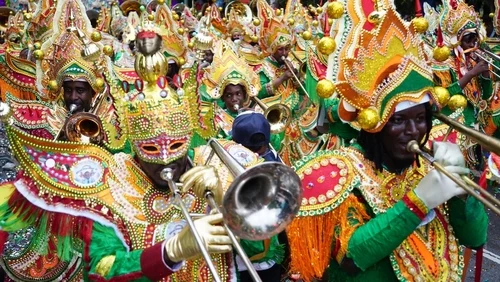
Quick answer: Jonkonnu (also spelled Junkanoo in the Bahamas) is a vibrant Caribbean street festival featuring masked dancers, drummers, and elaborate costumes, celebrated primarily in Jamaica, the Bahamas, and Belize around December 26 and New Year’s. Rooted in West African and Caribbean heritage, the festival blends music, dance, and community pride into one of the region’s most anticipated holiday traditions.
If you’ve ever scrolled through social media in late December and seen footage of dancers in towering, feathered headdresses moving through the streets to the beat of goombay drums, you’ve witnessed Jonkonnu. For many Caribbean families, this isn’t just a performance. It’s a connection to history, identity, and community that gets passed down year after year.
Whether you grew up with Jonkonnu as a childhood memory or you’re learning about it for the first time, this guide breaks down what the festival is, where it comes from, and why it still matters today.

What does Jonkonnu celebrate?
Jonkonnu celebrates Caribbean resilience, cultural identity, and community. The festival traces its roots back to West African masquerade traditions, which enslaved Africans brought with them to the Caribbean and adapted into a new form of expression. Over generations, it evolved into a uniquely Caribbean celebration that honors both African heritage and the shared history of the islands.
Today, Jonkonnu serves as a reminder of how culture survives and transforms. Families use the holiday season to reconnect with tradition, pass stories down to younger generations, and celebrate together as a community.
When and where is Jonkonnu celebrated?
Jonkonnu takes place primarily around December 26 (Boxing Day) and continues through New Year’s. The festival goes by different names depending on the location:
- Jamaica: Known as Jonkonnu, celebrated with masked dancers portraying characters like the Horsehead, the Devil, and the Pitchy-Patchy figure, whose costume is made from strips of colorful fabric.
- The Bahamas: Known as Junkanoo, this version has grown into one of the largest and most elaborate celebrations in the region, with massive parades in Nassau featuring intricately designed costumes made from crepe paper and cardboard.
- Belize: Jonkonnu is celebrated with similar masquerade traditions, often incorporating local Garifuna and Creole cultural influences.
Each location has developed its own distinct style, but the core elements remain the same: masked performers, rhythmic drumming, and a street parade that invites the whole community to participate.

What happens during a Jonkonnu celebration?
A typical Jonkonnu celebration includes several key elements that make it instantly recognizable:
- Masked dancers. Performers wear elaborate masks and costumes representing specific characters, each with its own movements and meaning. These characters often include traditional figures like King and Queen, the Devil, and various animal masks.
- Drumming and music. Goombay drums, fifes, and other percussion instruments drive the energy of the parade, setting the rhythm for dancers and drawing crowds into the celebration.
- Street parades. Communities gather along main streets as performers move through in a procession, often stopping to dance for onlookers or at specific homes and businesses.
- Community participation. Jonkonnu isn’t a spectator-only event. Neighbors, families, and friends join in, turning the celebration into a shared community experience rather than a formal performance.
Why does Jonkonnu matter today?
Jonkonnu matters because it keeps Caribbean heritage alive for new generations, both on the islands and within the diaspora. As more Caribbean families settle abroad in countries like the United States, Canada, and the United Kingdom, traditions like Jonkonnu become even more meaningful. They offer a tangible way to stay connected to home, especially during the holiday season when being far from family can feel most difficult.
For many in the Caribbean diaspora, celebrating Jonkonnu abroad, or supporting family members back home as they celebrate, is a way of honoring where they come from while building a life somewhere new. Community organizations in cities with large Caribbean populations, such as Miami, New York, and Toronto, often host their own Jonkonnu-inspired events to keep the tradition visible and accessible.

How can you experience Jonkonnu if you’re not in the Caribbean?
If you live outside Jamaica, the Bahamas, or Belize, you can still experience Jonkonnu through diaspora community events, cultural festivals, and local Caribbean associations that organize celebrations around the December holidays. Many cities with significant Caribbean populations host smaller-scale parades, performances, or cultural showcases featuring Jonkonnu-style masquerade and music.
Watching documentaries, attending Caribbean cultural centers, or connecting with Caribbean community groups online are also accessible ways to learn more about the tradition and its history.
Celebrating connection, wherever you are
Jonkonnu is a celebration of history, identity, and togetherness; values that resonate far beyond the Caribbean’s shores. For families spread across different countries, the holiday season often becomes a time to reconnect, whether that means traveling home, calling loved ones, or finding ways to celebrate traditions together even while apart.
If you have family celebrating Jonkonnu back home this season, staying close to them, no matter the distance, is what makes the holidays meaningful.
Frequently Asked Questions
What is the difference between Jonkonnu and Junkanoo?
Jonkonnu and Junkanoo refer to the same masquerade tradition, but the names vary by country. Jamaica and Belize typically use “Jonkonnu,” while the Bahamas uses “Junkanoo.” Both describe a street festival featuring masked dancers, drumming, and parades around the December holidays.
When does Jonkonnu take place?
Jonkonnu is celebrated primarily on December 26 (Boxing Day) and continues through New Year’s, though some communities extend celebrations throughout the holiday season.
Where did Jonkonnu originate?
Jonkonnu originated from West African masquerade traditions that enslaved Africans brought to the Caribbean. Over time, it evolved into a distinct Caribbean celebration tied to cultural identity and community resilience.
Is Jonkonnu only celebrated in Jamaica?
No. Jonkonnu is celebrated in Jamaica, the Bahamas (as Junkanoo), and Belize, with each country developing its own costumes, characters, and traditions while sharing the same core masquerade roots.
Can Jonkonnu be celebrated outside the Caribbean?
Yes. Many Caribbean diaspora communities in cities like Miami, New York, and Toronto host Jonkonnu-inspired events during the holiday season to keep the tradition alive for families living abroad.


