Key Highlights
-
The ukrainian alphabet uses the cyrillic script. This is the writing system for the ukrainian language.
-
There are 33 letters in the alphabet, and each one mostly matches its own sound when you say it.
-
There are some unique letters in ukrainian, like Ґ, Є, І, and Ї, which make it different from russian.
-
If you learn the alphabet, you get to read, speak, and understand grammar of the language better.
-
Some letters might look like what australians have seen before, but the sounds can be their own and different.
-
The alphabet goes back to early slavic writing and is also used in many religious texts.
Introduction
If you want to know about the ukrainian alphabet, you are making a smart move into the ukrainian language. The writing system uses cyrillic script, but it is not the same as russian or many other slavic languages. There are some letters that might look like ones you have seen, but their sounds may be different and can surprise you. For Australians learning a new script, this can be a bit hard at first. But when you learn the alphabet, reading and saying words in the ukrainian language get easier and make more sense.
Overview of the Ukrainian Alphabet
The ukrainian alphabet is the main writing system used for the official language of ukraine. It is part of the cyrillic script group, which you will also find in many other slavic languages. The letters of the ukrainian alphabet cover all the sounds people use every day for talking and writing in ukrainian.
One thing that makes it good for those learning it is that it is mostly phonetic. This means that in most cases, you get one clear sound for each letter, so pronunciation is more steady than when you learn english. If you want to really understand it, you should start by learning how the alphabet is set up and a little about where it comes from.
Number of Letters and Structure
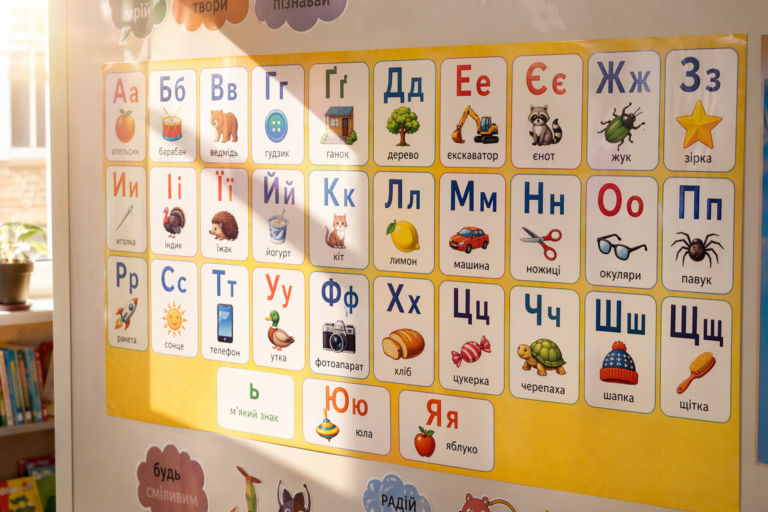
The modern ukrainian alphabet has 33 letters. In the ukrainian cyrillic alphabet, there are 22 consonants, 10 vowels, and one special character called the soft sign, which is shown as ь. Like in English, every letter can be upper or lower case.
This system can feel simple because most of the letters have only their own sound. This means that reading is easier for new learners. When you know what sound a letter makes, you can say the word with more confidence than you do with English.
You will find some symbols in the cyrillic alphabet sound like english letters Australians know, but a few are new. Sometimes you see new letters in foreign words, but they still use the ukrainian sound rules. The clear set-up is why most people say the alphabet is easier to read than they think.
The Cyrillic Script and Ukrainian Evolution
The story of the ukrainian alphabet starts in the 9th century. Back then, saints cyril and methodius wanted people to read religious texts better. So they put together a new alphabet for slavic languages. Their first try was the glagolitic alphabet.
Not long after, their followers came up with the cyrillic script. This was much easier to use. It used a lot from the greek alphabet, too. The cyrillic alphabet got tied to old church slavonic. That was the first kind of written slavic language you could see in parts of the slavic world.
Over the years, the cyrillic script changed as people made it fit the way folks talked. In ukraine, they set it up so the ukrainian language was easier to write and read. That is why, even though it started in the same place, the ukrainian alphabet made its own path and style.
Unique Features of Ukrainian Letters
At first, many Ukrainian letters may look the same as letters in the normal cyrillic script. But the alphabet has some unique letters and special characters. These make the written style of Ukrainian different. They are not just changes in what you see. They also show real sound patterns in the language.
For Australians, this is important because some letters do not match what you expect in English. The symbol might seem simple, but the sound can be new. The next parts will talk about these unique and special characters. You will see why they are important in real ukrainian text.
Distinct Ukrainian Characters Explained
Some of the most important ukrainian letters are not used in modern Russian. These unique letters show sounds that belong to Ukrainian itself. If you want to read ukrainian text well, you should learn these early.
Each of these special ukrainian letters has its own sound. It is easy to spot them after you know their look, and you will find them in common words. Their english equivalents are close guides, but not exact matches.
-
Ґ, ґ: sounds like “g” in “go”
-
Є, є: sounds like “ye” in “yes”
-
І, і: sounds like “ee” in “machine”
-
Ї, ї: sounds like “yi” or “yee” in “yield”
These unique letters help ukrainian look and sound different than russian. Once you recognise them, you will read smoother and your pronunciation will feel less random.
Special Letters Not Found in English or Russian
The ukrainian language has some letters and symbols that you might not know if you speak English. Some letters are only in Ukrainian, not in Russian. Other letters show sounds that English does not write the same way.
One letter is known as the soft sign. The soft sign does not have its own sound, but it makes the letter just before it softer. There is also the apostrophe in ukrainian. The apostrophe keeps each sound apart in some words. When people learn ukrainian, they see letters like Ї that give a yi sound, and groups of letters for sounds like shch.
-
Ї makes a sound like yi or yee
-
Щ is like the shch sound
-
Ь is called the soft sign and makes the previous consonant softer
-
The apostrophe keeps different sounds from going together
These parts help make ukrainian pronunciation clear. It makes ukrainian stand out from both English and Russian.
Pronunciation Guide for Australian Learners
If you are learning the ukrainian language in Australia, it is a good idea to start with the alphabet. The ukrainian alphabet is pretty clear, because most sounds match with how you spell a word. That means you will not get as many surprises as you do in english.
But some vowels and consonants can trip you up. You may find it hard to get a few phonemes right, and some letters that look like they do in english are not always the same in ukrainian. Listening a lot, using simple ipa guides, and saying the sounds often will help you get a good ukrainian accent early on.
Vowel Sounds and Their Nuances
The modern Ukrainian language has ten vowels, and these are mostly steady when you say them. This is not like English, where vowel sounds can change a lot. In Ukrainian, a vowel will often keep its own sound no matter where you find it in a word. That makes it easier to work out each syllable once you get the basics.
Here are the main vowels: А, Е, И, І, О, and У. There are also Я, Ю, Є, and Ї, and each one starts with a y sound. For a lot of new learners, the hardest bit is to tell the difference between И and І, as these can sound pretty close the first time you hear them.
-
А = “ah”
-
Е = “e” like in “set”
-
И = short sound, close to “i” in “kit”
-
І = clear “ee” like in “see”
-
Я, Ю, Є, Ї = ya, yu, ye, yi
To get better at it, say each vowel out loud while you read short words. If you say them by the syllable and keep trying, you will lock in the sound pattern.
Consonants, Soft Signs, and Stress Patterns
Many consonants in the Ukrainian language are quite easy for English speakers. For example, Б sounds like b. П is like p. М is the same as m. But, there are little things in Ukrainian that change meaning and the way words flow.
The soft sign is key here. It does not make a sound by itself. This letter makes the sound before it soft. That really matters for both pronunciation and grammar. You should also focus on where the stress goes in a word, as it shapes how words sound in the full phrase.
-
Б sounds like b
-
П sounds like p
-
М sounds like m
-
Ь will soften the preceding consonant
-
Soft sounds feel a little like you add a gentle y
A good example is ль. It is a lot like the softer l sound in “million.” Listen again and again, repeat often, and do not push yourself to go too fast. These points are important for clear pronunciation in Ukrainian.
Ukrainian Alphabet vs. Russian Alphabet
Because both ukrainian and russian use the cyrillic script, their alphabets can look the same when you first see them. But there are some small differences that really stand out. These changes can impact how the words are spelled, how they sound, and the way the language feels overall.
The letters of the ukrainian alphabet have symbols that you will not see in Russian. Russian also uses cyrillic letters that ukrainian leaves out. If you are learning either language, seeing these small differences early will help you not mix up words or the pronunciation.
Key Differences in Letters
A practical way to compare the ukrainian alphabet and russian alphabet is to focus on the letters unique to each one. Both belong to the same cyrillic script family, but their cyrillic letters do not fully match.
Ukrainian uses four letters that Russian does not. Russian also keeps several letters that Ukrainian leaves out. These small differences shape how each language sounds and how words are written.
|
Alphabet |
Letters |
|---|---|
|
Ukrainian |
Ґ, Є, І, Ї |
|
Russian |
Ё, Ы, Э, Ъ |
For Australians learning either ukrainian or russian, this table is a handy checkpoint. If you memorise these letter groups early, the two alphabets become much easier to tell apart.
Pronunciation and Usage Comparisons
The biggest difference between the two systems is not just the letters. It’s also about how you say the letters. Some sounds are said in a different way in the ukrainian language and russian. Even when the way of writing looks close, it is not the same. This can make a big change to how people hear words if they are from there.
Here is a good example. The letter Г in ukrainian is read like a soft “h”. The ukrainian language has another letter, Ґ, for a hard “g” sound. In russian, you do not see this split. These different sounds, or phonemes, are a big reason why these two languages should not be seen as the same.
This becomes really important when you start talking. If you want to say names or simple phrases or even the essential ukrainian greetings the right way, it helps to know the right alphabet and sound. Even a small change in pronunciation can make you sound more real or not to the people around you.
Learning and Memorising Tips for Australians
For new learners, the ukrainian alphabet might look a bit odd at first. But it gets easier if you split it into small groups. English speakers often do better when they use a mix of reading, listening, and writing, instead of just trying to learn it by heart.
It helps to practise a little bit every day, rather than doing a long study session once a week. Try some practical study tricks like flashcards, writing the letters down by hand, and using your keyboard in ukrainian. This will help the alphabet to stick in your mind. The next two sections talk about easy ways for Australians to build up confidence with the alphabet, so you won’t get overwhelmed.
Practical Study Strategies and Mnemonics
If you are getting used to a new script, it helps more to practise than just read. Try to write each letter by hand. Say the sound out loud. Start to read short words quickly. That can help you connect the shape, the sound, and how you write it in your memory.
Mnemonics for english speakers can make it easy to spot false friends. For example, you can remember that the Ukrainian letter В has a v sound, not b, and the letter Н is n, not h. When learning the ukrainian alphabet, take it slow. Go one tricky symbol at a time—it is better than trying to get through the whole thing at once.
-
Use flashcards every day
-
Write letters in a notebook by hand
-
Learn one confusing letter at a time
-
Listen to native speech and copy it
-
Put an alphabet chart where you study
If you use these ways to study the ukrainian alphabet, things can stay simple. You can also avoid mistakes that many english speakers make in the beginning.
Online Tools and Apps for Practice
Digital help can make it much easier when you start to practise early. There are many online tools and language apps for the ukrainian language. These offer things like alphabet drills, charts you can print, and video lessons. These are good if you need short sessions you can do again and again.
An app can also help you with writing and knowing letters. The best ones will let you hear a sound, see the letter, and even type or trace it. If you put a Ukrainian keyboard on your device, you will get more practise in real life each day.
-
Use digital flashcards to review
-
Try video lessons that teach letter sounds
-
Add a Ukrainian keyboard for practise with typing
-
Pick an app that has alphabet drills
-
Listen to songs and look for the letters in the lyrics
It is good to use online tools along with handwriting. This way, the ukrainian alphabet will stay with you for a long time.
Conclusion
To sum up, knowing the Ukrainian alphabet is important if you are in Australia and want to learn more about the ukrainian language and culture. The alphabet has its own style with special letters and its own way to say them. It gives you a good look into Ukraine and its language history. You can get a good start by learning how many letters there are, how they look, and the ways that the ukrainian alphabet is not the same as the russian one. Use things like fun memory tricks and online tools to help you remember and practise. Enjoy the learning and have a go with ukrainian! If you have any questions or want help, you can ask anytime.
Frequently Asked Questions
How can I type Ukrainian letters on my computer or phone?
You can type the ukrainian alphabet by adding a ukrainian keyboard or ukrainian keyboard layout in your device settings. After that, you can switch when you want. Some devices give you a phonetic keyboard layout. This makes it easy for beginners to type letters. You use the Latin keys you already know, not the russian keyboard.
keyboard layout, russian keyboard, ukrainian keyboard layout, ukrainian, alphabet, russian, keyboard
Are there unique sounds in Ukrainian not found in English?
Yes. The ukrainian language has some sounds that you won’t find in English. These sounds can seem new to english speakers. The cyrillic script and cyrillic alphabet use letters like Ї and the soft sign. In ukrainian, these show sounds or let you know how to soften a word. English does not show these sounds in the same way or use an alphabet that marks softening patterns each time in pronunciation.
What is the history behind the Ukrainian alphabet?
The Ukrainian alphabet comes from early ways of writing for Slavic languages. Back in the 9th century, people like Saints Cyril and Methodius started using systems to write down religious texts. The cyrillic script, which came from the greek alphabet and was first used for Old Church Slavonic, changed over time. It soon turned into new styles like the ukrainian alphabet.