Key Highlights
-
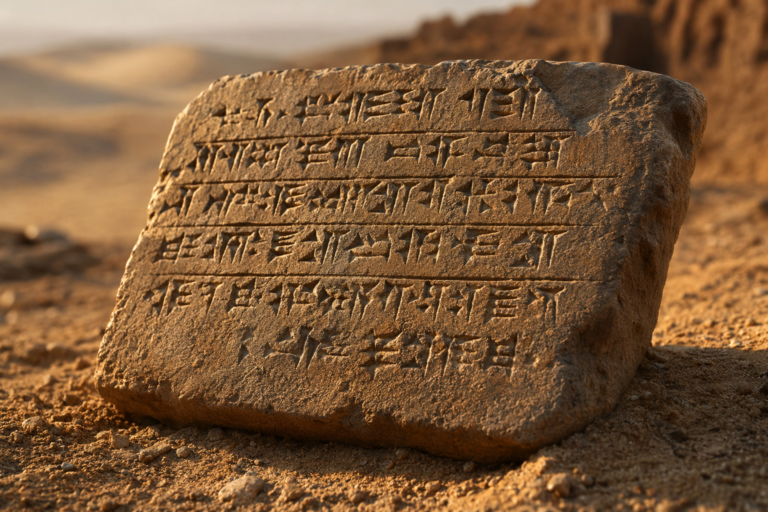
Old Persian cuneiform was a formal writing system for the Persian Empire. People used it mostly for royal messages.
-
The old persian language is part of the Iranian language family. Later, it turned into middle persian.
-
This cuneiform script from ancient Persia is not the same as the older Mesopotamian scripts. It looks like it was made up on purpose in that country.
-
The Behistun inscription is the most well-known sign of persian cuneiform. It is a key thing we have to study the past.
-
Scholars get to read old persian by looking at these old inscriptions, by copying what is there, and by checking the language with others.
-
Digital tools and the Unicode Standard help people see and type old persian characters easily now.
Introduction
Old Persian cuneiform might seem strange at first, but its story makes sense once you learn a bit about it. People used it in the Persian Empire, mostly for royal writing tied to leaders like Darius. For Australians who like language, history, or old styles of writing, old persian gives you a clear way to connect with one of the world’s big, early empires. To see why it matters, you should look at where this script started and how it showed up for the first time.
The Origins of Old Persian Cuneiform
Old persian became the language for the rulers of Achaemenid and its writing form turned into one of the most well-known scripts in old Iran. People used the old persian script when doing things for royals, and we can first see it in clear writings from the 6th century BC, mostly when Darius was king.
What makes this cuneiform script different is that it was not copied right from what people in Mesopotamia used. The old persian writing system looks like it was made on purpose. There is talk about when the work started, if it was when Cyrus was king or if it began fully with Darius. This helps it stand out in the story of the persian alphabet.
Development and Early Use in Ancient Persia
Old Persian cuneiform is how people wrote the old persian language in the time of the Achaemenid kings. You often spot it on things like seals, clay tablets, and what is left on walls as inscriptions. This script goes from left to right, and that stands out since many people think of cuneiform scripts as following one, fixed way.
People first used cuneiform script with the court, using it to put out public statements about power. The achaemenid kings wrote their names, titles, big wins, and right to rule with it. So, ancient persian writing was not just about art. It let them show their authority in a way that could last for many years.
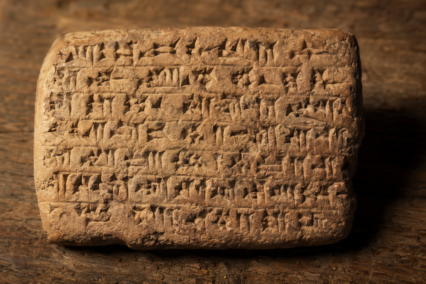
People also found that the old persian language was used for more than big displays. Some backing comes from the research done on clay tablets from Persepolis. This study points out that the persian cuneiform helped keep records for officials and could be practical, not just for grand carvings. When you ask how people used cuneiform script in ancient persian times, it is fair to say that it played a role in both how the persian kings looked and also mattered for the office work and bit of everyday admin.
Key Figures Behind Its Creation
Most talks about old persian cuneiform script start with king darius. The oldest big text around is the behistun inscription. It is from 522 BC. Darius talks about a new kind of writing in that inscription. Because of this, a lot of people link the script to him and his time.
But the story is not simple. Some experts think old persian writing was used before darius. It may have started with cyrus the great, even before darius showed it. Looking at what we know, the safest tip is that this script got made in the 6th century bc in the early achaemenid court.
Later kings kept the script alive. Son xerxes and other persian rulers used it in royal, big writings. By carrying on like that, they showed the script was not just a quick try. It became part of their royal style and how they showed their power.
Timeline of Old Persian Cuneiform Adoption
If you want a quick timeline, old persian cuneiform appears in written form during the rise of the Achaemenids. The clearest early milestone is the reign of Darius in the 6th century BC, when the script is firmly visible in major royal inscriptions.
There is also a wider language history to keep in mind. Old Persian later developed into Middle Persian by about 300 BCE. So the script belongs to a defined stage in the history of the Persian Empire and the persian language.
|
Period |
What happened |
|---|---|
|
Early Achaemenid period |
Possible beginnings of the script, perhaps under Cyrus the Great |
|
522 BC |
Behistun inscription of Darius provides the oldest major attested Old Persian text |
|
Reign of Darius |
Old persian cuneiform gains strong royal visibility |
|
Reign of Xerxes and later rulers |
Continued use in inscriptions across the empire |
|
By c. 300 BCE |
Old Persian evolves towards Middle Persian |
Historical Context and Importance
Old persian inscriptions matter because they hold the real words from Achaemenid rulers. With the persian cuneiform script, leaders showed their names, titles, what they believed, and their claims to power. These things were put on monuments, so they lasted for a long time. This gives historians something rare. They get texts that are linked right to the state.
The Behistun inscription stands out, as it shows the same text in Old Persian, Elamite, and Babylonian. For the history of the persian language, this is both a record from the government and a big step forward for reading and comparing later on. The next parts will show how this mattered around the empire.
Role in the Achaemenid Empire
In the achaemenid empire, the old persian script was tied strongly to royal power. The rulers mostly used it for important inscriptions. These messages showed their family line, made their rule look right, and called on the gods’ support. This helped the persian empire tell people in its lands who was in charge.
Titles meant a lot. When a ruler said he was the king of kings, it was not just to praise himself. That phrase showed how things were run, with one man standing over many places and people. Putting that on stone gave their claim real strength and made sure it lasted.
This is why old persian cuneiform mattered so much. It was not only about writing—old persian script told people who the king was, helped keep old stories alive, and showed who was in control. Other languages might have been used for jobs in the office, but old persian was special in the big, proud picture of achaemenid rule.
Old Persian in Royal Inscriptions
Old Persian can still be read today mostly because of royal writings. The cuneiform inscriptions are seen on monuments, royal seals, and other important items from the Achaemenid world. These were never relaxed or random notes. They were done carefully to last a long time.
The famous one is the Behistun inscription of King Darius. It is carved way up high on a big limestone cliff. It tells the story of his rule there, in a very bold and easy to see way. The fact that this message is written in more than one language makes it super important for both history and for figuring out these scripts.
You can find old Persian material in areas now called Iran, Armenia, Bahrain, Iraq, Turkey, and Egypt. The pieces found among the ruins of Persepolis matter a lot. All these royal cuneiform inscriptions help us see how far-reaching Achaemenid power was by using writing.
Influence on Persian Language Evolution
Old Persian is the first stage of the persian language that we see in writing. This is what gives it a lot of value. Every old persian text lets people who study language look at how words, sounds, and grammar changed over many years during Iran’s history.
By around 300 BCE, Old Persian turned into Middle Persian. Later on, modern persian came about, mostly after Persians started using the Arabic alphabet when Islam came. The way they wrote changed, but the persian language still kept going. That steady flow is one of the big things people notice in Persian history.
So, what did the old persian script do? It showed the oldest clear proof for a language that later became Middle Persian and, after that, modern persian. The cuneiform writing did not last, but it kept safe the first step in a long, connected language story.
Understanding the Script
To get Old Persian cuneiform, you should see it as its own writing system. It’s not just another type of the Mesopotamian cuneiform. The old persian script has wedge-shaped symbols. But, it is more simple and set out than the older types. This way, it is easier to show what makes the old persian script special.
You can split it into a few parts. There are sounds, a small group of symbols for words, and some number marks. All of these different signs helped with king’s notes and at times, with some work records. Next, you should look at how the writing system is put together in itself and see how it works beside other types.
Structure and Symbol Inventory
The old persian cuneiform writing system used a pretty small set of symbols. In old persian texts, there were 36 signs for sounds and 8 for whole words. This is why the persian cuneiform script can seem easier to use compared to other cuneiform writing systems that often had a lot more signs.
Most of the time, its symbols showed sounds instead of tricky word groups. The writing had vowels and consonant symbols, so people could write names, titles, and what they wanted to say clearly. This system was also written left to right, which is worth noticing.
Using a smaller set of symbols is one big thing that makes old persian stand out from other groups that used cuneiform writing system nearby. This writing did not come from the older Mesopotamian style little by little. It looks more like it was built on purpose, just for the persian language and for kings to use.
Syllabary and Logograms Explained
Old Persian cuneiform script is called mainly syllabic. This means that most of the signs show parts of words as they sound, not whole words. If you want to see where it fits next to different alphabets and old scripts, it sits between a basic alphabet and a tougher sign system.
At the same time, this cuneiform script also uses something called logograms. These marks show the whole word or idea at once. But in the old persian language, using logograms was not a must. Scribes could mostly use sounds to write words. They added word-signs only where they wanted.
This mix of both ways makes the old persian cuneiform script special. It had enough order to show the persian language well. But it did not need the huge list of signs like other writing systems did. For people reading it today, this helped a lot. That’s one big reason why scholars were able to break the code of the cuneiform writing system.
Comparison with Other Cuneiform Systems
Old Persian cuneiform stood alongside other big writing ways in the ancient Near East. The main ones were Elamite and Babylonian. You can see that at Behistun, where the same piece of text shows up in three languages. Still, the persian script was not just copied from other nearby systems.
There are things that make it different in the wider cuneiform writing system. Its design is tighter, and it was mostly for royal Achaemenid use. That gives it a feeling that is not like the thick or old traditions from Mesopotamia.
-
Old Persian cuneiform had fewer signs than Elamite and Babylonian writing systems.
-
The persian script was written left to right.
-
Its use was closely linked to royal writings in the Achaemenid world.
-
It looks like it was made on purpose and not just a follow-on from Mesopotamian ways.
-
Its sounds were set up in a neater way than in many older cuneiform forms.
Decipherment and Translation
The decipherment of old persian was a big success in the study of ancient writing. Scholars had cuneiform inscriptions with many royal names. They also had texts in different languages. This let them start matching the signs to sounds and words with more faith in their guesses.
Today, translation takes more steps. Experts use their knowledge of old persian, the sign values they know, grammar, and the context from old inscriptions. They also get help from photos, copies, and computer tools for text. If you want to know how this grew over time, it helps to look at the main people and big finds that played a part.
The Story of Decipherment
The decipherment of Old Persian did not happen quickly. It took a lot of careful work. People first made copies of the cuneiform inscriptions. Carsten Niebuhr was one of the first to do this, so later scholars had better material to work from.
After that, Georg Friedrich Grotefend made good progress. He looked for royal names and saw patterns in the inscriptions. Christian Lassen also helped make the readings better. Because of all this careful work, old stone shapes turned into something we can read.
Sir Henry Rawlinson is well known because he worked on the Behistun inscription. He studied the text on the cliff, which had more than one language. This helped everyone be more sure about the translation and pushed the work forwards. The reason people can translate Old Persian today is that these researchers worked hard to figure out sign values and how the language works.
Major Archaeological Discoveries
The Behistun inscription is the most notable find for old Persian. It sits high on a limestone cliff in western Iran and is above an old road. Its huge size stands out, and it has three types of writing, which made it key for reading the script.
There are other finds at the ruins of Persepolis. Inscriptions from this place keep royal language and formal messages safe, while items from the archives show much more of how writing was used. These discoveries help us see more than just what’s written on one big stone.
Clay tablets add new detail as well. The University of Chicago studied the Persepolis Administrative Archives and found old Persian clay tablets. These show that writing at the time may not have been just for the royal scenes. People want to know where else cuneiform inscriptions have been found. They turn up in more places, but the Behistun inscription and Persepolis are still the main sites.
Modern Approaches to Translation
Modern translation begins when we have a clear reading for each sign and take a close look at the old persian text. People who work on this compare different writings, check the grammar, and focus on repeated groups of words, mainly those linked to names of kings and their royal titles. The context is important all through the process.
They use ways to show the language that everyone understands. Systems for transliteration and the International Phonetic Alphabet let researchers talk about how sounds and words be used, without confusion. This is needed because old writing does not always line up with how we want to spell things now.
Digital tools make sharing what we find and go over it with others simpler. The Unicode Standard helps signs of old persian show the same on every computer, and digital fonts let people print and compare the texts well. This does not take away from knowing the old persian text, but it supports modern translation and lets more people see the work.
Features Distinguishing Old Persian Cuneiform
Old Persian is known for how simple its cuneiform script is. A lot of people think it would be harder, but the old persian script uses only a small set of different signs. It mixes sounds with just a few special marks, called logograms. The writing goes from left to right, so this helps make old persian look neat.
The way the signs look is also important. In the old persian script, there are wedge shapes, like the slanted wedge. These help people spot the script on old stones and other things. If you want to know more, it’s a good idea to look at the different signs, how numbers work, and see how old persian is not the same as Elamite and Babylonian.
Unique Elements of the Script
One thing that stands out about the old persian cuneiform script is the small number of symbols it used. There were not hundreds of signs to learn. Instead, the system had a much more limited set. This made old persian cuneiform easier and tied each shape to a sound in the language.
The way the script looks is important too. You get to see that slanted wedge – it’s the thing in the style that you notice right away. The old persian inscriptions have a clear and open look because of how the wedges are lined up. They look even and neatly spaced compared to other cuneiform script styles. You can see that bit of order in the writing, sometimes before you even know what the different signs stand for.
These different signs had a job to do. They were meant to show royal old persian out in public spaces, like on big monuments. That is one reason why the old persian cuneiform script feels like it has a focus. It wasn’t something that many separate groups in old times used for anything they wanted. The script is made to fit the needs of the Achaemenid kings, so it connects strongly to that part of the past.
Numerals and Their Usage
Numbers were a part of the old persian script, but they are not often the first thing that people see. In old inscriptions, numbers helped people show how many things there were or count something. They used these old persian numerals with other sounds and sign writing called cuneiform.
This is important because it tells us the old persian script was not just a simple list with names of old kings. There was more to it. Just like in many ways of ancient persian writing, people needed it to share normal or daily stuff as well. It also matches what we know from tablets, which show there was use outside just big events or ceremonies.
If you look at scripts from other places from the same time, old persian had less different kinds of symbols and was more simple. The numerals in old persian were just one piece in the whole system made for that job and language. So, the big thing that stands out for this old persian script is how it keeps things clear by not having too many options, instead of being full of many types.
How Old Persian Script Differs from Elamite and Babylonian Scripts
If you look at old persian script and compare it to the elamite script and babylonian script, the biggest thing that stands out is the way each was made. Old persian is more compact and made for a clear use. The other two scripts come from older, bigger cuneiform writing system traditions. These had longer histories and used more different signs.
There is also a difference in what people did with each script. Old persian was mostly for the Achaemenid kings, but elamite and babylonian writing system had more uses in the government and for stories. This does not make old persian less important. It just means the old persian cuneiform writing system had a smaller role but was easy for everyone to see.
-
Old persian used fewer different signs than elamite and babylonian.
-
It was linked to just one main language, not many.
-
People wrote it from left to right.
-
Old persian script seems to have been made on purpose in the Achaemenid time.
-
The way it looks is smoother and more regular than the older ones found in other places.
Accessing and Using Old Persian Cuneiform Today
You do not have to go up to a cliff in Iran now to see old persian cuneiform. The Unicode Standard supports this script now, so you can see its signs on new devices. This is a big help for students, people working on research, and other readers in Australia who want to know more about the script. You do not need special programs anymore.
But, having access on your device is not the same as being good at reading it. Old persian does not use the same system as modern persian. You can’t just match every letter over from names you use every day by using what is here. Still, having digital fonts and ways to show the script online makes it much simpler. Now, people can look at different sign shapes, compare old writings, and start to see how the script is put together.
Unicode, Online Tools, and Digital Fonts
The Unicode Standard has changed the way people find old persian cuneiform. Now the signs are all coded into one standard digital system. This helps them show up the same way in books, research tools, and any learning material online. This makes it a lot easier to study than before, when you just had printed drawings to go on.
If you want to know if there is an online tool you can use to type Old Persian characters, the info we have can only be careful. Unicode and new digital fonts make it possible to use old persian script on a computer, but there is no single typing tool listed here. What we can say is, any online tool would need to use that shared Unicode standard.
There are some main points for practical use today:
-
The Unicode Standard makes Old Persian signs show up the same everywhere.
-
Digital fonts help you read the script the same way you do other texts.
-
Online tools get their support from the unicode standard.
-
Scholars can share old persian cuneiform writings more easily and correctly across different devices.
-
Learners have a good way to see, check, and look at sign forms without needing the real stone carvings.
Conclusion
To sum up, Old Persian Cuneiform is an interesting writing system. It helps us know more about the long history of ancient Persia and the way language changed over time. By learning about where it comes from, what it looks like, and why it mattered, we get to see why this writing was so special. It also lets us feel close to the history of the Achaemenid Empire.
With some new online tools, you can now look at Old Persian Cuneiform easier. These can help you learn more, find new facts, and see why it was so important for old-time talking. If you want to learn more about this writing system, you can try using some of the websites or tools made to teach Old Persian and Persian Cuneiform.