Key Highlights
-
Mayan writing was a smart writing system used by the ancient Maya.
-
This Mayan script used hieroglyphic writing with signs for words, sounds, and ideas.
-
The system was used to keep track of big parts of Maya culture. These were things like the rulers, important dates, and different rituals.
-
Maya writers wrote on codices, ceramics, murals, and stone monuments.
-
A lot went missing after the Spanish conquest. That’s when many of their books got destroyed.
-
Even now, people who study history have figured out a lot of Mayan writing.
Introduction
The Mayan writing system stands out as one of the great things made by the ancient Maya. If you ever want to know how people in Mesoamerica wrote down history, what they believed, and things about their kings, maya writing will give you the answer. It was not just some easy way with pictures. It was a writing system in which signs showed whole words, sounds, and ideas. For Australians who are interested in old ways of life, mayan writing is a good way to learn how the ancient maya saw their world.
Origins of the Mayan Writing System
Mayan writing was a system of writing made by the ancient Maya in Mesoamerica. It showed up around 300 BCE. After that, it became the most advanced writing system in the Americas. The script used glyphs that stood for words, sounds, parts of words, or ideas.
This system of writing probably started with the Olmecs. The Olmecs had the first writing system in the region. The Maya took what the Olmecs did and made it better. Writing was important for the elites. It helped them to keep track of dates, rulers, and things that mattered to their beliefs. To really know how mayan writing grew and changed, it is good to see how the script formed and what evidence we still have now.
How and why the Maya developed their hieroglyphic script
The Maya came up with hieroglyphic writing that did much more than just name things or show who owned what. Their mayan script let them write down events and also write the names of rulers. It tied together leaders and religious power. This means the maya script was used for everyday things and also for holy ceremonies.
Another big reason for having the script was about who had power. Only a few people, mostly top leaders, got to learn reading and writing. They thought it was one way to talk with the gods. This made the mayan script very important in Maya courts and in temple life. It was also a way to keep their ruling families and records going strong.
As time went on, the maya script got more detailed. This was because the Maya wanted to be clear about names, dates, places and how words were spoken. Just using pictures could not do the job. Their hieroglyphic writing grew out of their need for good records in their temples, in their history, and for the royal way of life.
Evidence of early writing before Spanish contact
Yes, the Maya had a writing system long before the spanish conquest happened. They started to use writing as early as 300 BCE. This is many years before spanish forces set foot in Maya regions. That means the maya civilization kept written records deep in their own history.
During the Classic Period, which was about 250 to 900 CE, this writing system was clear and fully used. Inscriptions, which you could see carved on buildings, steps, and monuments, showed up in many places. The Maya used their writing to talk about rulers, dates, and big events.
Later on, early spanish priests and christian missionaries destroyed a lot of these writings. But they could not remove all clear proof. Codices that still exist, stone carvings, and painted surfaces all show the writing system was an important part of maya civilization long before any spanish conquest.
Main Features of Mayan Hieroglyphs
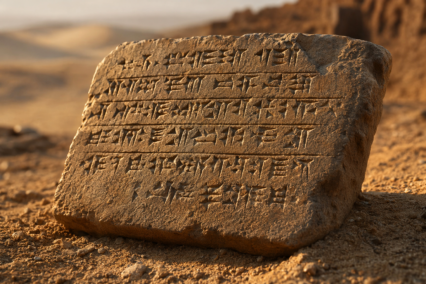
The mayan writing system used a lot of symbols. People call these mayan glyphs or maya hieroglyphs. Some signs showed a full word. Others stood for a sound, a place name, a god, or even someone’s ideas. This mix helped make their system of writing more flexible. It was not just simple pictures.
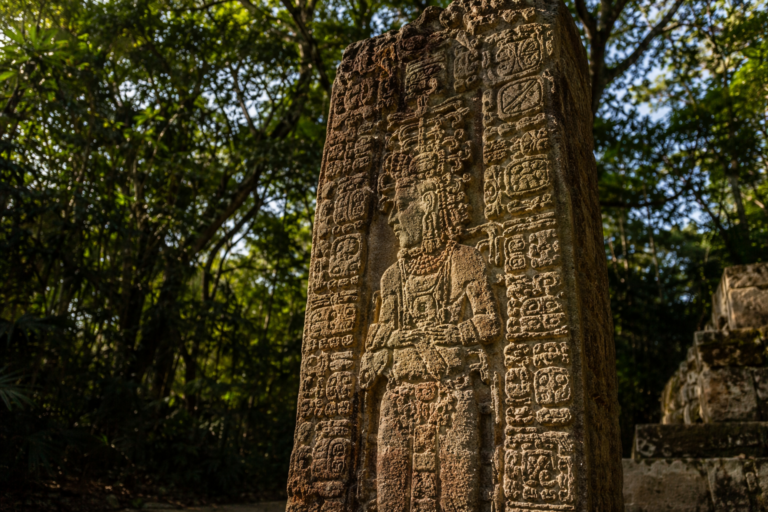
When people made mayan inscriptions, they put them in pairs of columns. You would read the writing from left to right. Then you’d go from top to bottom. Some signs were used on their own. Other signs worked together to help you know the sound or meaning. To understand this writing system better, it is a good idea to split up the script into its main building blocks.
Understanding logograms and syllabic signs
One big reason the Maya writing system worked so well was because it used both logograms and syllabic glyphs. Logograms stood for full words or things. Syllabic glyphs shown sounds you say when you talk. Having both gave scribes many ways to show the same idea in their writing.
This was important as Maya hieroglyphs were not stuck with only one way to write. You could write a word as one logogram, as a few syllabic parts, or have a mix of both. That is why the script could show names, titles, and how locals spoke much better than a system with just pictures.
Key parts included:
-
Logograms for whole words or things
-
Syllabic glyphs for talking sounds
-
Phonetic marks to help people read
-
Different signs for gods, place names, and everyday words
Core principles of Mayan glyph writing
Mayan writing mixed pictures with words. Maya glyphs sat in blocks. Some called these blocks cartouches. These blocks were like short sentences. One block might have a few signs or a lot. It all depended on what the writer wanted to say.
There was a set way to read the maya script. The writing system used vertical columns in pairs. People read it from left to right, then top to bottom. Often, the first bit of the text was a date. This happened because time and keeping records meant a lot to the Maya.
Mayan writing also had a flexible style. It could show a word in different ways. It used whole-word signs, sound signs, or both at the same time. This feature made the maya script easy to use and rich. It also explains why it took people a long time to work out what the symbols meant.
The writing system, mayan writing, maya script, and maya glyphs all worked together in these different ways.
Materials and Tools Used by the Maya for Writing
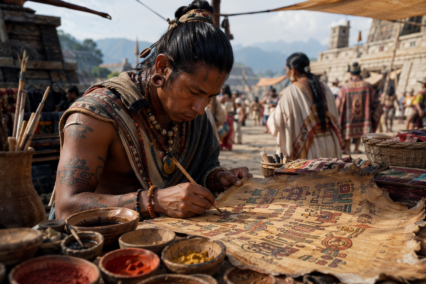
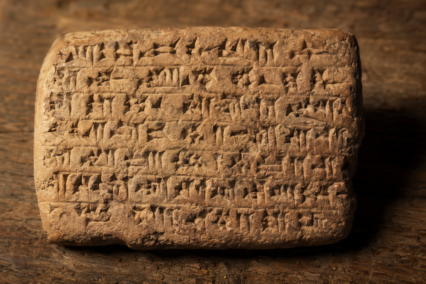
Mayan writing was seen on a lot of things, not just stone. The ancient Maya put their script on codices, ceramics, walls, staircases, and big monuments. This shows the mayan script was used in daily life, politics, and special rituals.
Some things were painted, and others were carved in. Bark-paper books mattered a lot, but most got destroyed later. The script was used on many surfaces, so looking at these tools and spaces helps you see how Maya scribes did their work.
Codices, ceramics, monuments, and murals
The Maya wrote on a wide range of surfaces. Their maya books, known as codices, carried astronomical and prophetic material. Ceramics could hold painted texts, while monuments preserved public statements about rulers and events. Murals added writing to larger painted scenes.
Stone inscriptions on monuments and staircases are especially valuable today because they lasted. By contrast, many codices were fragile and did not survive. Even so, the surviving range tells us that maya writing was used in both portable records and fixed public displays.
|
Surface |
Typical use in maya writing |
|---|---|
|
Codices |
Astronomical observations and prophecies |
|
Ceramics |
Painted texts and likely named or recorded contents |
|
Monuments |
Royal history, dates, and public records |
|
Murals |
Text placed within larger visual scenes |
Writing instruments, pigments, and surfaces
The record shows the ancient maya wrote on many surfaces. They used bark paper, stone, ceramics, cloth, deerskin, and also walls. For the bark paper, people took the inner bark from the wild fig tree. They stripped, boiled, and beat it into sheets. This paper was used for many maya books.
Stone knives were used to get paper from the bark. More information still remains about finished writing surfaces than about every writing tool they used. Still, it’s clear the mayan script was carved and also painted. That means scribes and artisans used more than one way to write.
Pigments were important too when painting in codices, murals, and on ceramics. Different surfaces called for different ways to use the paint. The use of bark sheets, carvings in stone, and painted plaster shows how clever the ancient maya were in keeping their written work safe.
Purposes and Uses of Mayan Writing
The mayan writing was not just for decoration. The writing system helped the ancient maya write down names of rulers, big events, important dates, what people believed, and predictions. So, the maya writing system was used by both their government and in their religion.
The mayan writing kept people’s identity safe, too. Names of people, places, and their gods could all be written in this system, and that gave the script both a personal and a political use. To really know how the maya writing system worked, it helps to look at what was used in daily records and what was used for special or royal talks.
Historical records, calendars, and personal stories
Many old texts show that the Maya used writing to keep track of time and memory. They carved stories in stone that told about rulers’ families and big events. Dates were often used, and the maya calendar shaped how the Maya set up and understood things.
Writing a name for people and places was important too. That matters, as mayan words and place names help us know about politics, family links, and where people were from. Even if we do not know the whole story, a name and date can still tell us plenty.
Common types of records were:
-
History about rulers and families
-
Dates on events that matched the maya calendar
-
Names of places and gods
-
Signs of someone’s story, like titles, names, and what they did
Religious texts and political communication
Maya writing held a strong and sacred place in society. The elite used this kind of writing as a way to talk with the gods, so religious books were a big part of mayan hieroglyphic writing. The codices that are left mostly talk about things like watching the stars and making prophecies. This shows there was a close link between writing and ritual knowledge.
At the same time, this script helped with political messages. Leaders wrote on public monuments to show their royal family history, large events, and prove they should rule. In the classic period, it let rulers show their power in a clear and long-lasting way. One carved monument could reach a lot of people over many years.
These roles often came together. A king’s power was more than politics. It was sacred too, so maya writing was used in temples and in royal courts. That’s why the Maya made such a complex and detailed system for hieroglyphic writing.
Decipherment and Modern Understanding
For a long time, people did not know what the mayan script meant. Then, when modern people started to figure out what it said, everything changed. They found out that maya hieroglyphic writing was more than just signs or art. It was a full language with its own sound signs and word signs.
These days, we can read a lot of maya glyphs now. People who study it can now read about 80 to 85 per cent of the writing system. Because of this, people now know more about the royal histories, important dates, and place names used by the Maya. The story of how we worked that out is just as exciting as the mayan script itself.
How historians and linguists cracked the Mayan code
It took a long time to work out how to read the maya script. Back in the sixteenth century, Diego de Landa wrote down twenty-seven maya characters. He tried to match them up with Spanish letters. His de landa alphabet did not work well because he thought the script was like the latin alphabet. Even though it was not right, his notes were still handy in the end.
People started to try and read the maya script in the 1830s. But it was slow going for over a hundred years. Things changed in the 1950s. A Russian linguist found out that the writing used sounds and whole words together, not just one simple way.
Later, there were more big steps. Experts looked at old texts like the grolier codex. They checked these with carved writing found at maya sites. When they could spot names, dates, and patterns that kept showing up, they started to get more of what the writing said.
Progress and challenges in interpreting Mayan script
Modern understanding of the mayan script is much better now than it was before. People can read a big part of it, mostly the history of the royal families, dates, and many names. This new knowledge has changed how experts look at the maya. It is now based on proof, not just guesses.
But there are still some things we do not know. Not every sign has been worked out, and some maya glyphs can be read in more than one way. People who wrote things could use different mixes to show a word, which makes it great for them but harder for us now.
Another big problem is loss. A lot of books were destroyed. The documents we do have are not even. Even so, people are still learning more. Our understanding gets better when people compare old books, the things built on monuments, and look at script from different places.
Comparing Mayan Writing with Other Mesoamerican Systems
Mayan writing grew as part of a bigger world of mesoamerican writing. It did not happen alone. The Olmecs likely had a say in how it started. Other groups like the Aztecs also used signs and wrote books. So, the Maya took up many habits found in the area near them.
But their system of writing is more complex than the others. People say it is the only mesoamerican writing system that shows spoken language in such a deep and clear way. If you compare mayan writing to other systems, you can really see how it stands out as the only one that goes this far.
Key similarities and differences with neighbouring cultures
Across Mesoamerica, the way people wrote things would mix both images and ideas. The ancient Maya did what other cultures in the area—like the Aztecs—did. They all used books and visual signs in public. So, it makes sense to look at what these groups had in common.
The main thing that set the Maya apart is how much they improved their system of writing. Their maya script brought together logograms—which stand for whole words—and signs for each part of a word. By mixing these, scribes were able to record speech, people’s names, and grammar in a precise way. It meant the ancient maya could share more detail with their system compared to others used in the area.
Here are some helpful things to compare:
-
Both Maya and Aztec traditions used books and pictures as signs
-
Maya script used both word symbols and smaller sound signs
-
Maya writings often gave a close look at their royal families and history
-
The ancient maya system of writing is often seen as the most advanced in the region
What makes Mayan writing unique in ancient world context
What makes mayan writing special is how it mixes art and language so well. The signs look great, but they also work as a real writing system. This mix helped the maya civilization write exact names, dates, and events with a strong ceremonial feel.
Many old scripts were tricky to use, but maya writing was the most advanced system found in the Americas. It was not just something to help people remember things. It showed speech with syllabic and logographic signs. This gave it more power than a simple set of symbols.
Its survival is also important. When the Spanish destroyed much of it, some inscriptions and codices still made it through. People were able to read the writing system again. That puts mayan writing in a special spot in world history.
Conclusion
The Mayan writing system gives us a good look into the culture and history of ancient Mesoamerica. When you learn about where it comes from, its main points, and why the Maya used it, you can see how they shared ideas, remembered their beliefs, and wrote down what happened each day. The Mayan hieroglyphs are detailed, and they show the smart ways the Maya used tools and materials for their writing. As people keep working to read and know more about this special script, it becomes clear that the Mayan writing system helps us understand the past even better. If you want to know more or have questions, you can always ask for more resources or have a chat about it!
Frequently Asked Questions
Can we read and translate Mayan writing today?
Yes, they can read most mayan writing now. Researchers have figured out about 80 to 85 per cent of the maya script. Names, dates, and royal records are a big part of what they know. Work with Yucatec Maya and other maya languages has helped them get a better feel for the sounds and meaning.
Are there any Mayan books or codices still in existence?
Yes. There are four maya books that still exist from before other groups arrived. These surviving maya books are the Dresden Codex, Madrid Codex, Paris Codex, and Grolier Codex. They are very important for those who want to know more about maya writing. People use them to study things like maya astronomy, rules for ceremony, and what they thought about the future.
Can you give a simple example of a word or phrase in Maya hieroglyphs?
A clear example is the Maya word for west, chik’in. In maya hieroglyphs, it can use signs that have to do with k’in, which means sun, and chi, tied to being finished. This tells us that maya script can make mayan words by using both sound and meaning, a lot like a glossary of maya sounds.