Key Highlights
-
The Etruscan alphabet came from the greek alphabet, and it was made to fit the etruscan language.
-
It moved across the italian peninsula when people got together through trade and shared writing systems.
-
People wrote etruscan inscriptions both for everyday life and for important events, and we can still see these today.
-
The script helps us see how the Etruscans, greek people, and the later latin alphabet are all connected.
-
Australian learners can look at letter shapes, see artefacts, and try some easy practice ways to get better using the etruscan language.
Introduction
The Etruscan alphabet gives us a good look at the Etruscan language and the people who spoke it. For people in Australia, it is an easy way to see an old writing style from the Italian Peninsula. The Etruscan script looks a lot like early Greek writing. But over time, it made its own shapes and sounds. If you want to know how older writing changed between cultures, this is a good place to start.
The Origins and Historical Context of the Etruscan Alphabet
Most of what we know shows that etruscan writing started when people in the region of etruria on the italian peninsula met greek people who already used the alphabet. The oldest etruscan writing is from about 700 BCE, which came after the first greek things were already written down. This timing tells us the script was more likely taken from the greeks. It was not made up by the etruscans on their own.
The alphabet then became a big part of etruscan civilization in the region of etruria. People are still not sure about the real origins of the etruscans, though. Some stories say they came from anatolia, but other clues say they have a local italian background. The next parts will talk more about these influences.
Early Influences and Cultural Roots
At its roots, the Etruscan alphabet was a version of the greek alphabet that the Etruscans made their own. The people in ancient Italy got a way to write down their own language because of this system. If you look at early Etruscan writing, you can spot the shapes of ancient greek letters. That is why it can seem a bit familiar when you first see it.
Before all this, the phoenician alphabet played a big role in shaping greek writing. The Greeks took ideas from Phoenician signs. They changed and used these signs, then shared a western style of writing with other groups. This matters because Etruscan writing was part of a bigger Mediterranean story. It was not something that happened separate from other places.
In ancient italy, meeting greek colonists made a big difference for the Etruscans. The euboean greeks had colonies near the Bay of Naples. They probably brought over a western Greek way of writing, and the Etruscans used it to build their own system. So, what did the Etruscan alphabet do? It gave the Etruscans the tool to write their own language, shaped out of writing examples from other cultures but made to fit for Etruscan people.
Archaeological Discoveries and Geographic Dispersion
Archaeology gives us clear proof that the script was real and used often by people. You can still see Etruscan inscriptions on tablets, bits of stone, and other things today. This shows that the alphabet was not just an idea—it was something people used. These finds help people see where the Etruscan civilization was spread across all kinds of places.
You can find the script not just in the regions of Etruria but in other places, too. There is proof it showed up in southern Italy and Etruria Padana. This means people, ideas, and goods moved about quite a bit in those days. All of this fits a world where trade was strong and where people came together.
-
The Marsiliana Tablet is a well-known early example from the 7th century BC.
-
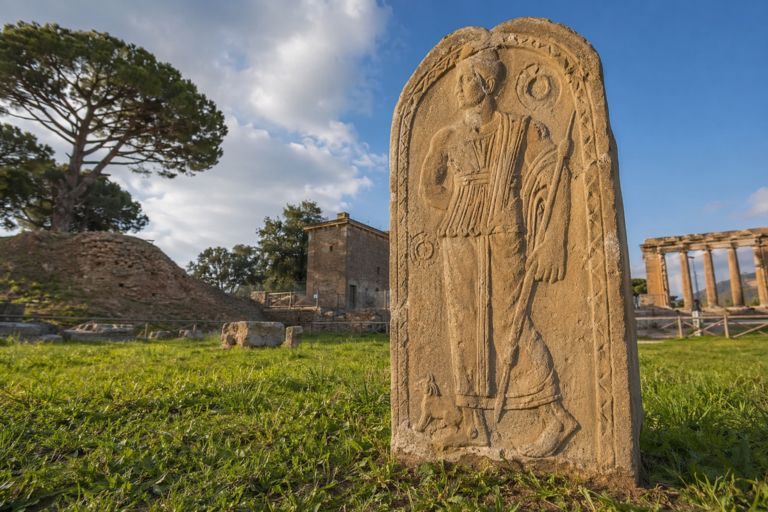
The Lemnos Stele, made in the 6th century BC, shows a script and way of speaking that is much the same.
-
Stays scattered across central Italy show us that writing held a proper place in Etruscan life.
Understanding the Structure of the Etruscan Alphabet
When you look at the Etruscan script, you can see that it is part of a bigger group of writing systems, but it is not the same as Greek or Latin. Some of the letters stayed the same, some changed a bit, and some were not used as much later on.
People talk about the first number of letters in the Etruscan script, and they often use early models like the Marsiliana one. The info we have says the Etruscans took a set of letters that was already there. They did not make a new script from scratch. If you want to understand this better, you should look at the number of letters and the main parts of the script next.
Number of Letters and Script Features
A simple answer is that the earliest Etruscan alphabet followed a Greek-derived model with many inherited signs, though not all stayed useful in the etruscan language. As the script developed, certain letters mattered more than others. This is why learners often see early and later forms described differently.
One of the key script features is adaptation. The alphabet was borrowed, then adjusted to fit local sounds. Some letters appear inverted compared with Greek forms, and over time the gap between the two scripts grew wider.
Here is a simple text table for orientation:
|
Feature |
Etruscan Example |
|---|---|
|
Source model |
Western Greek alphabet |
|
Earliest clear date |
Around 700 BCE |
|
Number of letters |
Early set based on a larger Greek-style sequence |
|
Shape changes |
Some letters appear inverted |
|
Development |
Letter use narrowed as the script adapted to the etruscan language |
Unique Sounds and Writing Styles
Not every letter that was borrowed matched the sounds in the etruscan language. This often happens in old writing systems. You can take a script from another culture, but the way people speak shapes which signs are kept. This is one reason the etruscan language and Greek became different as time went by.
Another thing to know is about how it looks. When you first look at an etruscan text, it can seem a lot like Greek. But if you look more closely, you will see habits that stand out. Inverting letters and using some signs but not others gave the script its own style. This is why reading the etruscan language is its own skill, even if some letter shapes look like what we know.
Is it possible to write modern words with the etruscan script? In a basic way, yes, you can copy some modern sounds using old signs from the etruscan language. But this would be only for learning, not true use, since the script was made for the etruscan language, not for modern languages.
Comparing the Etruscan Alphabet with Greek and Latin Scripts
The etruscan script is an important link. It comes after the greek alphabet and before the latin alphabet. This spot in history helps people who want to learn about writing systems. It shows how things can change shape and goal when they move between cultures.
Greek letters were the main base. But people who used etruscan script changed this base to fit what they needed. Later, the latin alphabet grew when the Romans took and changed the etruscan script. The next parts will go over the big differences, what the systems share, and how they still have an effect today.
Key Differences and Similarities
The biggest thing that is the same is ancestry. The Etruscans did not make a new alphabet. Instead, they took one from the Greek alphabet in the west and changed it a bit, so the first letters looked like part of the same family. This is why, when you look at the Etruscan signs and the Greek alphabet next to each other, they often look a lot alike.
But there was also a big difference because of sound. The Etruscan language did not use all the same sounds as Greek. That means some letters were not as useful, while others had to be shaped from what they got. Then, when Latin came, it changed again to fit Roman ways of speaking.
-
The Greek alphabet gave the first shapes for the letters.
-
The Etruscans made the letters work for their own language.
-
Latin took ideas from the Etruscan language, then changed some signs again to suit how Romans talked.
So, when you compare the Etruscan alphabet to Greek or Latin, you see that Etruscan stands as something in the middle. It is not just a copy or something brand new. It is its own script, while still showing where it comes from.
Influence on the Roman Alphabet
The link between the Etruscan alphabet and the Roman alphabet is direct and important in history. The Romans took on the etruscan script at a time when Etruscan power was strong in early Rome. Because of this, Etruscan writing became a main source of the latin alphabet.
This does not mean the Romans kept everything exactly the same. Their language sounded different, so they used some letters, dropped others, and brought back forms that Etruscans did not use much. This shows the course of its simplification as it moved from Greek, to Etruscan, then to Roman use.
The main thing to know now is clear. If you write with the Roman alphabet today, you are using something made over a long time. Greek rules shaped Etruscan writing. Etruscan writing turned into the Roman alphabet, which then spread to Europe and further.
Reading and Translating the Etruscan Alphabet Today
These days, people are often able to read the letters of etruscan writing, even though what a full etruscan text means might still not be clear. This is a big difference. It is much easier to see the signs than to bring back a language when there is only some of its grammar and words left.
So, how do people try to understand the script now? They compare the etruscan text and look at regular names and phrases. They also use longer writings if they can find them. Over time, study has helped people know more about the etruscan language, but it is still not known as well as Greek or Latin.
Modern Scholarly Approaches to Interpretation
People who study old writing start with what’s clear. They look at letters that turn up again and again, plus names and set ways of writing. The next thing they do is compare these pieces of writing from different times and places. This way, folks have learned a lot about knowledge of etruscan, even if there’s still a lot we don’t know.
Another good way to get more out of old texts is by looking at long bits of writing and items that stay in great nick. If experts have more than just a word or two, they can check things like word order, grammar, and patterns in how things are said. So, every new find that is a good-sized bit of writing is a big deal.
Modern projects keep things organised for this area of work. People often give a lot of credit to helmut rix for helping knowledge of etruscan go a lot further, especially for his work called nuovi lineamenti di lingua etrusca. More books coming out, even from places like cambridge university press, has helped open up solid research for many people who want to learn more.
Examples of Surviving Inscriptions and Artifacts
Yes, there are still Etruscan inscriptions out there, and these help us know most of what we do about the Etruscan people. You can see etruscan inscriptions on things like tablets, stelae, and different objects. Some have only short and quick messages, but some are what people call long texts when you look at the rest we have.
Some objects are important because they show the early alphabet that was used or they show how there were cultural links with others. Some objects also help because they have etruscan text in a place that can be dated, so we get a good idea of when they were made. All of these finds help us see that the alphabet is more than just a bunch of signs.
-
The Marsiliana Tablet has an early version of the alphabet. People often use it for learning.
-
The Lemnos Stele is well known because you can see a close link in the way the words are written, and the language they used.
-
The Tomb of Orcus is talked about a lot, as it is one place with an etruscan inscription that survived.
These pieces matter when we talk about long texts and the Tomb of Orcus or when we study any important etruscan text.
Practical Learning Tips for Australian Learners
If you want to learn Etruscan in Australia, try to keep things easy. First, learn the letters. Then, look at how some shapes match Greek and early Latin letters. This helps you see patterns, so you don’t have to remember each shape on its own. Good guides for study can make it feel less hard.
Keep in mind, this is not the same as studying modern languages where you have full word lists or talk with people each day. Here, you want to know the Etruscan letters, spot forms that come up a lot, and link signs to what happened in history. The next bits will show you how to practise and pick which tools to use.
How to Practice Writing Etruscan Letters
The best way to start is by copying clear letter forms from trusted examples. Do not go straight into translation. First, put your attention on the shape, order, and how each form matches with other scripts. This helps you build your confidence and stops you mixing Greek, Roman, and Etruscan signs together.
After that, try writing short rows of letters by hand. Even in modern times, handwriting will help you remember the forms much more than just reading passively. Each time you copy the shapes with care, the etruscan script will soon start to feel less strange, and more organised.
-
Copy an early alphabet sequence, like the Marsiliana model.
-
Compare every sign with Greek and Latin letter shapes that look the same.
-
Rewrite a short etruscan script sample line so you can notice forms that repeat.
This type of practice is good if you are a beginner. It fits well into short sessions to study the etruscan script in modern times.
Useful Resources and Study Guides for Beginners
For people who are new to the etruscan language, the best help does not come from high-tech apps. You get more from good books and things you see in museums. The etruscan language is not fully understood, so look for study guides that show what is not certain. This lets you be clear about what is known and what is not. Guides that talk about the facts in a thorough way are much better than simple charts.
It is also good to find materials that put the alphabet and writing into the bigger Mediterranean world. When you compare it to Greek, Phoenician, and Roman ways of writing, you get why the script looks how it does. This helps a lot if you know any modern languages or have learned older writing before.
-
Introductory study guides on etruscan history and inscriptions
-
Museum images that show important artefacts like tablets and stelae
-
Academic works connected with Helmut Rix and language research with clear methods
Start with small bits, keep working on it, and use known examples to build your skills.
Conclusion
To sum up, the Etruscan alphabet is more than just old writing. It is a way to learn about an ancient people, their language, and their way of life. For those in Australia, learning about where the Etruscan alphabet comes from, how it is put together, and how it is like Greek and Latin, can help you build your language skills. It can also help you see why these ancient scripts matter.
Try writing some Etruscan letters, and use guides or books you find helpful. You will get to know this topic better and might pick up a new interest. If you want to learn even more, talk with others who feel the same or look for a community of people interested in old scripts.
Want to go further with your interest? You can book a free consultation to learn more about the Etruscan alphabet.