Key Highlights
-
The ogham alphabet is an old alphabet connected to the irish language and irish culture.
-
People think it showed up in the 4th century, and you can still see it today on many an ogham stone.
-
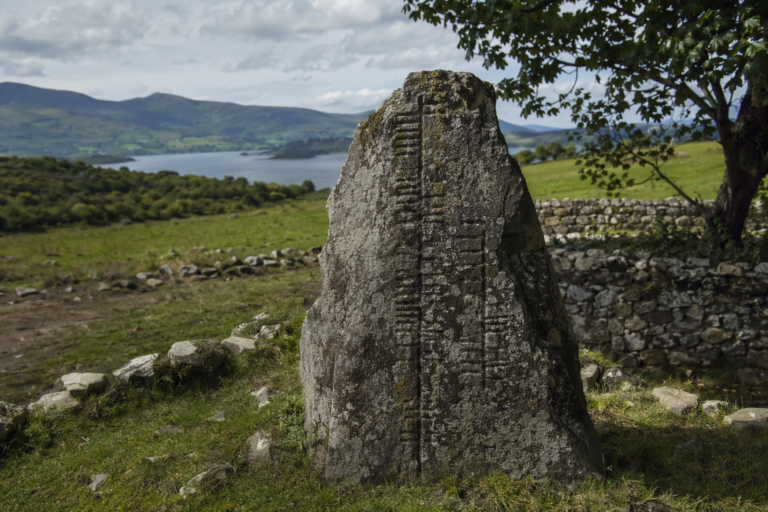
The letters look like short lines. They are marked around a centre line or along the edge of a stone.
-
On stone monuments, you read the script from the bottom and go up to the top.
-
Most first messages show names, say who owns something, or show where the border is in the irish landscape.
-
Later on, people added extra letters and gave some signs more meaning.
Introduction
If you have ever seen straight marks carved on stone and thought about what they mean, you are most likely looking at the ogham alphabet. This old writing style has a direct connection to the irish language and the people who lived back then. For people in Australia, it might feel a bit different but also simple to pick up at the same time. When you learn the basic shapes, this writing begins to make sense, and it lets you see more into irish culture.
The Ogham Alphabet and Its Origins
The ogham alphabet is an old way of writing. It is made of simple lines that sit around a main line in the middle. This ancient alphabet is tied to Primitive Irish, which came before old irish. It’s the first kind of writing people found in Ireland.
People think it started around the 4th century. Most of what we have left can be seen on big stones that stand in the ground in Ireland. You can also find it in a few other places like Wales, Scotland, and the isle of man. If you want to know how this way of writing began, you need to look at the world at that time.
Historical Context of Ogham in Ancient Ireland
Back in the 4th century AD, the people in Ireland did not have their own wide-use writing system like the areas that spoke Latin. That is why ogham is so important. It is the first old alphabet we know of that was used for the irish language and it was made to last in public places.
Most early ogham can still be seen on stone monuments. You will find these upright stones all around the irish landscape. People used to cut the text right along the stone’s side. Many of these messages hold names, using the possessive form. This tells us they could be used to remember someone or show who owned something.
Where the stones are found lets us see how the writing got around. There are a lot of these in Ireland, mostly in the south-west, but ogham is not just there. You can find ogham stones in Wales, Scotland, and the Isle of Man too. This shows that people were moving, living, and talking with each other in the early age across different places.
Theories About the Creation of the Ogham Script
No one can say for sure who invented ogham. That is why there is a lot of scholarly speculation. Some of these ideas come from legend, and some talk about real life needs in early Ireland, like the urge to mark names in a way that stands out.
Later Irish stories kept some tales about how it began. A medieval tract and other works, like Lebor Ogaim, tie the script to learned people and long explanations. These old texts were written in the old Irish period, but much later than the time of the first ogham stones, so they give us meaning more than the true start.
There is also talk about the Latin alphabet and how it could relate to ogham. It was not just copied from Latin letters, but many scholars wonder if people who could read Latin helped shape it. For those learning ogham now, the biggest thing is this: the script grew up in a world with a few languages, but kept a strong Irish way.
Structure and Features of the Ogham Alphabet
The ogham script has groups of short lines placed along a central line. You can spot these ogham symbols easily, because they are not like the round shapes found in latin letters. These symbols use where and how many lines there are to show each one.
At first, there were twenty ogham letters. People put these into four groups, each with five letters. Later, new extra letters, or forfeda, got added. The new signs let people show sounds or mixes that came up when the way people spoke changed. The next parts will show you what these ogham letters look like and how they are set out.
The Unique Symbols and Their Design
What makes ogham symbols different is their clear and simple style. There are no separate letter shapes like you see in other scripts. Each mark is made with one to five lines, and these are set next to a main line, which is often the edge of a stone.
In ogham text, it matters where you put each line, not just how many lines you have. This makes ogham feel quite different from the irish alphabet we use today. The main ideas work like this:
-
One group has lines on the right side of the big line.
-
Another has them on the left.
-
A third kind goes across the main line in a slant, not straight.
-
The vowel marks are made right on top or through the line itself.
-
Later on, people made some shapes more tricky to show extra sounds.
Because it is made this way, ogham works really well on things like stone and wood. You can see how someone can follow the edge of a stone and make these marks just by repeating a few lines. It is easy, it lasts a long time, and it looks special. That helps show why people kept using it for so long.
How Many Letters Are in the Ogham Alphabet?
The earliest ogham alphabet has twenty letters. These are arranged into four groups of five, called aicmí. Later scholars added extra letters to cover sounds and combinations that became useful after the earliest phase of the script.
That means you will often see two answers to the same question. If someone is talking about the earliest inscriptions, they mean twenty ogham letters. If they are discussing manuscript tradition, they may include extra letters found in later teaching material and copied in works such as the Book of Ballymote.
Here is a simple text table:
|
Version |
Letter Count |
Notes |
|---|---|---|
|
Early stone ogham |
20 |
Core alphabet used on inscriptions, organised in four groups of five |
|
Manuscript ogham |
20 + extra letters |
Later tradition adds forfeda for added sounds or combinations |
|
Book of Ballymote tradition |
Expanded teaching system |
Preserves learned forms copied in manuscripts linked with the Royal Irish Academy collections |
How Ogham Alphabet Works
Ogham is easy to spot because it uses a long stem line with short marks on it, and these show what each letter is. In early ogham text, people would cut the marks into the edge of a stone. You read it from the bottom up. This makes ogham one of the more unusual ways to write that you might ever come across.
It was first set up for the early forms of the irish language. Since then, new gaelic sounds have come along, but ogham doesn’t always match these very well. Over time, manuscript ogham tried to fix this by adding more to the system. This is why learning ogham text now can sometimes feel a bit tricky for people.
The Vowel and Consonant Series Explained
The classic ogham script splits its letters into four groups of five each. Three of these groups have consonants, and one is for vowels. Ogham does not have a list from A to Z like other alphabets. It uses the same look in its marks again and again. This makes it easy to see the order in the system once you work out the pattern.
For consonants, the number of lines in the count shows the sound. Where the marks sit around the stem tells you the family it belongs to. Vowels work a bit different. Their marks sit straight on the line or go across it. This simple setup helped people spot the right sounds fast on carved stone.
There are some limits, though. The first system was only made to suit an older stage of the irish language, not the full old irish language that came later. That’s the reason why over time, new extra letters got added, especially by those working in the manuscript tradition. They wanted to show new sounds. This included things like the later letter p.
Writing Direction and Grammatical Features
One of the first things people see is the way the writing goes. On lots of stone inscriptions, ogham is read going up from the bottom along the stone’s edge. If the text keeps going, it might run right around the stone. That has a lot to do with how people were meant to look at the script.
The oldest texts are usually pretty short. Many have names with a word ending that shows who owns what, so you get hints about the grammar, not full sentences. Most of the time, you won’t find poems or long tales on those stones. What you get are quick facts about who someone was, or what group they came from.
Later on, the manuscript tradition kept ogham in a new way. On paper, the script can be fitted for book style and teaching needs. That change is important because examples in books show what smart people thought at the time, while the stones keep the old public stone-carving ways from the days of old irish.
The Purpose and Uses of Ogham in History
The old use of ogham is most clear on stone carvings. These stones often show who a person was, their family ties, or what they owned. An ogham stone was put in the Irish landscape to mark something. It could be about memory, status, or who owned the land.
Later, people used ogham for other things too. Some texts say it was for sending messages, writing down records, and as a secret language or for rituals. The next parts will show how this script was used in real life and what it meant for people.
Ogham as a Communication Tool
The simplest answer is that ogham was used to share names and say how people are related. Many ogham inscriptions are short and clear. This tells us they were there to be useful, not just to look good. In the early age, putting marks like these in stone had a real meaning for people.
But ogham was not only used on stone. Later Irish writers talk about ogham being written on sticks too. These ogham sticks were used to send messages, keep ideas safe, or to act like a secret code. It does not mean every ogham example was hidden or hard to understand. It just means this writing system worked for many things in the Irish world.
Here are the main jobs often talked about:
-
marking personal names
-
showing possession or family connection
-
sending brief messages
-
recording information in compact form
-
serving as a coded or restricted method in some contexts
So, was ogham only put on big monuments? Not at all. The old ogham stones are just the most lasting proof we have. Most people could use ogham inscriptions in more ways, from everyday writing to a kind of secret code.
Ritual, Legal, and Boundary Functions
Many people say that some stones were used as boundary marks. If the stone had a person’s name or the name of a family, it may have shown who owned the land or made a claim on it. Back then, people did not use paper records in daily life, so a stone out in the open could do an important legal job.
There is a ritual side to this as well. Later books connect ogham with magic and special ways to talk between groups. You have to take these claims with care, but they show how much the script became part of irish culture, past just plain record keeping.
When you put all this together, it’s clear ogham had many uses. It could be for memory or mark a place and show authority, all at once. A single stone out in the irish landscape could have been a memorial, a kind of legal message, or a ritual item. It all depends on who came to see it and why it was put up in the first place—maybe for land ownership, memory, or even something spiritual.
Ogham Stones: Ancient Inscriptions Across Ireland and Beyond
If you want to see ogham as it was used back then, start by looking at carved stones. Most of these are in Ireland, mostly in the south-west. There are stone inscriptions in Wales, Scotland, and the Isle of Man as well. These places show that ogham moved around with the people and through their links.
If you want to get a better look, museum collections help a lot too. The National Museum of Ireland and some other places keep key stones and records safe. Before you start, you might want to know which well-known ogham stones to look for, and what patterns on the inscription are important.
Famous Ogham Stones to Explore
When people want to know where to start, Ireland is the best answer. It has the largest collection of ogham stones. Many of these are still in the places where they were first put up. This makes studying these famous ogham stones something special and worth your time.
There are a few places and things that stand out for people who want to learn:
-
south-west Ireland has a lot of the old ogham stones still standing close together
-
Wales is important for stones that show Irish people lived there or had contact with the area
-
the Isle of Man and Scotland show how these stones spread across the region
-
the Buckquoy spindle-whorl from Orkney is a rare inscription that is not on stone
-
there are also old writings in collections that belong to the Royal Irish Academy
What do you get from looking at these examples? You often get to see names of people from long ago, and you sometimes find the evocative names of their commissioners or enigmatic dedications. Even when there are just a few words on the stone, you get a strong feeling for who these people were in the past. This is what makes these stones great to study. People can see them outside or in special collections.
What Do Ogham Inscriptions Reveal?
Ogham inscriptions show us how early groups said who they were. Many of these messages keep names and family ties. This helps people who study the early irish language learn more about it. Because ogham is old, even a few words can give us much information.
These irish symbols were also carved on stone monuments out in the open, not tucked away. So the script was part of the world you could see. It was there on the land, near roads, and stayed in local memory.
Ogham inscriptions also led to a lot of stories later. Irish folklore and medieval writings gave this script new meaning. People tied it to trees or special knowledge. So, when you see these stone monuments today, you find not just the old messages but all the ideas people have added to them since.
Ogham as the ‘Tree Alphabet’
You will often hear people call ogham the tree alphabet. This is because the letters were named feda, which means “trees” or “woods”. Also, some ogham letters have names that match trees like birch, alder, willow, and oak.
But the whole idea of the celtic tree alphabet is not as simple as some say. More than half of the names are not really from trees. Later on, some scholars and irish folklore made the link stronger. That’s why so many use the tree alphabet name, but it should be used with care.
Tree Names Linked to Letter Meanings
Some ogham letters have names that clearly sound like types of trees. This is the main reason why ogham letters got linked with trees. Back then, teachers in the Middle Ages started to use this idea even more, acting like every letter in the set was all to do with plants.
Here are a few examples people often talk about:
-
beithe for birch
-
fern for alder
-
sail for willow
-
dair for oak
-
later talks about signs added after, like the letter p
An old writer once said reading the script is a bit like climbing from the root of the tree to the top. That is a good way to know why people held on to this idea. But not every ogham letter comes from tree stories. The best way for learners to see it is this: some ogham letters do link to trees, but old irish folklore and teaching just made that link even bigger than it was at first.
Cultural Significance of Trees in Ogham
Trees meant a lot in irish culture long before the old irish writing system, ogham, became something seen in modern charts and gift shops. This is part of why, in the past, writers liked to match letters with things like plants, wood, and big cultural ideas.
There’s also a legend tied to it. Some old irish folklore connects ogham with Ogma. He is a character from old stories and some say he was like a celtic god of eloquence. This may not tell us for sure who made the script first. But it does show how much language and respect were joined together in gaelic culture.
Why do people still call it the tree alphabet? That is because it helps folks get into this old writing system with just one label. It mixes the look, irish folklore, and the way people remember their past. Still, this term came much later. It gives a way to think about ogham, not the full truth of every letter.
Modern Uses of the Ogham Alphabet
Ogham is not just for those who study history. There is now a growing community of people who use it in art, learning, and their own styles. You can see ogham jewellery, prints, charts to help with study, and tattoo designs. Many people use it to show who they are, to connect with the past, or just because they are curious.
Most of the time, people use ogham in their own way instead of the old way it was used. It might get put on a piece of jewelry in English words or in today’s Irish, which can be fun and different but is not always the real old way. Digital tools let people do this even more now. It can be good or not so good, but the choice is there.
Art, Jewellery, and Tattoo Designs
Modern makers like ogham because it is bold to look at and takes up little space. The straight lines are great for rings, pendants, prints, and tattoos. This is why ogham jewellery and tattoo designs are still a favourite with people who want something that links to Irish heritage.
You might see ogham featured in:
-
necklaces and pendants from an irish jeweler
-
personalised bands and celtic engagement rings
-
gifts promoted in a claddagh gift guide
-
keepsakes for an irish dancer or family member
-
wall art and projects using names or phrases
Still, it’s good to take care. Many online versions just match today’s letters to old ogham symbols. While this can work for art, it might not reflect how it sounded or was used in the past. If you want it right, especially for tattoo designs that last, it helps to double-check your wording and script before making it permanent.
Digital Tools and Online Translators for Ogham
Yes, there are digital tools and some online translators out there for ogham. They can be a lot of fun to use, and it gives you a quick starting point. For a learner, this can feel like the perfect experience because you type your word and you get the result in strokes straight away.
But there’s a catch with this. Most of these tools just use a simple swap from English letters, but the real script was not made like that. Some letters fit in pretty well, but some of them don’t. Stuff like j, x, or some other letters can get pretty tricky, and can even be way off, or just not make sense.
So these tools are like a good map to get you started, but they’re not the end of the journey. If you want to dig deeper or study it, they help for sure. But if you want to put ogham on a tattoo, or make some artwork, or use this as a teaching resource, you really want to make sure with a more careful check. This is just the kind of advice an irish school headmaster would give and appreciate too.
Conclusion
To sum up, the Ogham alphabet is not only a part of Ireland’s old stories. It is a unique and ancient alphabet that still gets people interested and teaches us a lot today. The way it is put together and what it means in history are both special. People also use it now in art and to share who they are. There’s a lot to learn about language and culture with the Ogham alphabet.
You might be interested in it for the mysteries, or you might just want to know more about old ways of writing. No matter why, learning about Ogham can help you see how people used to talk and share their lives. For Australians who want to know more about this ancient alphabet, there are many places and groups to help you start. Enjoy finding out more!
Frequently Asked Questions
Can You Translate My Name Using the Ogham Alphabet?
Yes, you can use ogham letters for this, but you need to be careful. The ogham alphabet was made long ago for the early ogham language. It was not made for the way we spell words in modern English. There are some names that fit with ogham letters well, but some do not. You can make an ogham text in a way that works for today. But know that this is not the same as how the old irish alphabet worked in history.
Is Ogham Still Used in Ireland or Elsewhere Today?
Yes, it is used now, but more in new ways than in everyday writing. These days, a growing community of people use the ogham alphabet for art, jewellery, tattoos, and things to help people learn. You will still see it in irish culture, mostly when it is about heritage, design, or the irish language.
Where Can Australians Learn More About Ogham or Try It Themselves?
Australians can start with museum resources that are well known, pictures of old writings, and simple guides about the ogham alphabet. For a more perfect experience, look for things from Ireland. You can talk to gaelic teachers who know old writing styles. You should also use an online chart as a good map, but do not make it your only tool.