Key Highlights
-
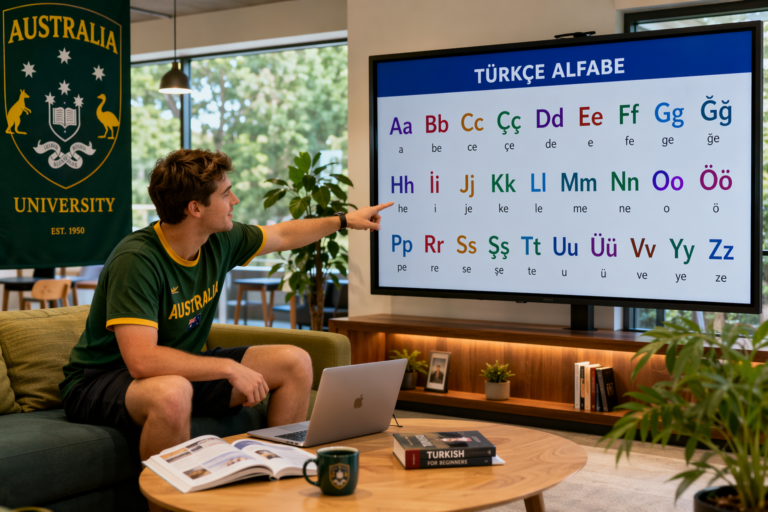
The Turkish alphabet uses a modified Latin alphabet. There are 29 Turkish letters in total.
-
In the Turkish alphabet, you get 8 vowels and 21 consonants. Spelling and pronunciation are almost the same in Turkish.
-
For learners, the hardest part is the special letters like Ç, Ğ, I, İ, Ö, Ş, and Ü.
-
The modern system took over when Ottoman Turkish, which was written in an Arabic script, changed to this alphabet in a major reform.
-
Because Turkish is a phonetic language, you will learn quicker if you listen a lot, repeat the words, and keep practising.
Introduction
If you are starting to learn the turkish language in Australia, the turkish alphabet is a good place to start. It helps new learners with reading, speaking, and spelling. Turkish is phonetic, so you usually say the words the way you see them on the page. This guide show you the letters, sounds, and main ways it is not the same as english. You will get to know these things early. That way, you can feel strong about learning turkish and not pick up bad pronunciation or spelling habits.
The History and Evolution of the Turkish Alphabet
The turkish language didn’t always use the alphabet you see today. Back in history, people used other writing systems for turkish. For a long time in the ottoman empire, ottoman turkish was written in an arabic script. This old writing system was not a good match for all the sounds in turkish.
In 1928, there was a big change. Mustafa Kemal led the move to a writing system that used the latin alphabet for modern turkish. The new turkish alphabet made spelling easy. It helped people read and write better. This cut down on illiteracy. If you want to know why learners find the new alphabet simple now, you need to look at where it started.
The Origins of Turkish Writing Systems
Long before the new turkish alphabet came along, Turks used other ways to write. Over years and places, they tried different alphabets to show how they speak. The turkish language is part of many turkic languages. Because of changes in time, place, culture, and dialects, writing and spelling saw many shifts.
Back in the days of the ottoman empire, people wrote ottoman turkish using the arabic script or a version of the arabic alphabet. That system held a lot of history and culture for them. But it wasn’t a great match for the vowel-heavy style found in turkish words. This made it tougher to spell words like they sound in the turkish language.
As time went on, this gap between how people speak and how they write became a big challenge for literacy. There was a need for change. That need led to the turkish language reform with mustafa kemal and the turkish language association. They pushed for the new turkish alphabet, which fits modern turkish much better. Now, the new alphabet matches everyday pronunciation and vocabulary in turkey and northern cyprus.
The Great Alphabet Reform and Its Impact
In 1928, Mustafa Kemal Atatürk led a big change in the turkish alphabet. This turkish alphabet reform was both practical and important for history. Ottoman turkish, from the ottoman empire, had a writing system that did not match how most people speak turkish. The new alphabet was based on the latin alphabet, and it helped everyone use a turkish writing system that showed words more clearly.
This turkish language reform made modern turkish much easier to read and write. The new turkish alphabet linked turkish letters with spoken sounds. This change made spelling simple and easy to understand. Because it became more of a phonetic language, literacy went up and people found it easier to learn later on.
Now, if you are a learner, this helps you a lot. You don’t have to deal with a writing system designed for different sounds. Instead, there is a clear path from turkish words and turkish letters to speaking. This makes it much easier to say words and helps you get over problems with spelling right away.
Adoption of the Modern Turkish Alphabet
The modern Turkish alphabet was brought in officially in 1928. People say that a group made up of linguists, some people in parliament, and a few teachers all helped this new alphabet roll out, and it was taken up by the public pretty quickly. This was a key part of the wider Turkish language reform, which was linked to Mustafa Kemal.
The new Turkish alphabet is written using latin script, and it now has 29 letters. The way the alphabet was set up was so the letters would match the sounds you get with Turkish words better than the old system did. What the new letters and changed spelling rules tried to do was help make writing and speaking Turkish be much more in line.
That switch still helps learners today. One good thing about Turkish pronunciation is it’s pretty steady, so you can look at new Turkish words and say them out loud with some confidence. The Turkish alphabet is not just the same as English, but it does make logical sense, so this means a lot of beginners pick it up quicker than they would think.
The Structure of the Modern Turkish Alphabet
The current turkish alphabet is a modified latin alphabet used today for modern turkish. It has 29 letters that always go in the same order. Each letter in the alphabet is usually linked to just one sound. This clear connection to the way people speak is one reason the turkish language feels easy once you pick up the basics.
In this writing system, the letters of the turkish alphabet are sorted into vowels and consonants. Some of the symbols in the alphabet may look just like ones you know, but they can sound different. The turkish c, for example, is one of them. There are also a few letters you will only see in turkish. In the next parts, you will get to know more about how many there are, how the letters are sorted, and what kind of sounds you will need to learn.
Total Number of Letters and Their Organisation
The current Turkish alphabet uses a Latin script. It has 29 letters. There are 21 consonants and 8 vowels in it. The alphabet matches the sounds of the Turkish language well. Native speakers use these sounds to share clear meanings through Turkish words. Every letter has its own way of pronunciation. The letters are set up to follow the way people speak, so it helps show Turkish pronunciation well.
This set-up makes it easier for beginners to learn Turkish. The way the alphabet connects with Turkish words gives a solid foundation for pronunciation. Knowing this helps you get started on learning to pronounce Turkish in the right way.
Vowels and Consonants in the Turkish Alphabet
In the Turkish alphabet, there be eight vowels and twenty-one consonants. This gives the language its mix of sounds. Vowels like ‘a,’ ‘e,’ and ‘i’ help make turkish pronunciation clear. Consonants such as ‘ç’ and ‘ş’ make other distinct sounds that matter for saying turkish words the right way. Knowing how the alphabet is set up is key for learners. It gives a solid foundation to learn turkish pronunciation and talk with native speakers in a good way.
Special Characters Unique to Turkish
In the Turkish language, there are some characters that make it different from the English alphabet. There are letters like ç, ğ, ö, ş, and ü. These letters each make a kind of sound that you do not get in English. For example, the letter ç sings out like the “ch” in “charm.” The letter ğ is there to make the vowel before it go longer. These characters make Turkish orthography more interesting. The way these sounds play is important for pronunciation and meaning. They also give the Turkish language its own melody and add to its rich mix of sounds.
Key Differences Between the Turkish and English Alphabets
When you see the turkish alphabet for the first time, it might look a lot like the english alphabet because both use the latin script. Still, the turkish language has its own set of turkish letters and follows its own rules. There is a much closer link between how you spell turkish words and the way you say them.
You will find some letters that are only found in turkish, some that are common in english but not in turkish, and you will spot more clear sound patterns in turkish words. These changes touch vowels, consonants, and how you sound out new words. The next bit will show you which turkish letters are different, which from the english alphabet are not there, and why turkish pronunciation is often easier and more regular for beginners.
Unique Sounds and Letters Only in Turkish
In Turkish, there are many distinct sounds and letters that make the language feel rich. For example, the soft “g” (ğ) makes the vowel before it longer. This gives a smooth sound when you speak. The letter “c” is said like the English letter “j.” “ş” is another letter in Turkish, and it makes a sharp “sh” sound. This sound is quite unique, even when you look at other Turkic languages. The letter “ı” is different too. It is a vowel that has no dot, and you will not hear its sound in English or Arabic.
All of these parts make Turkish pronunciation interesting for learners. There is a good challenge in saying new and different sounds. It gives a fun twist for people who want to improve their turkish pronunciation as they learn the language.
Letters Found in English but Not in Turkish
In the english alphabet, there are some letters that you will not see in the turkish alphabet. This makes things quite fun for learners sometimes. For example, turkish language does not have the letters Q, W, or X. The turkish alphabet uses its own version of the latin alphabet, with sounds that are special to it. This means putting english words into turkish can sometimes be tricky. Native speakers want words to sound right, so they change some loanwords a bit. This helps learners know how to say things the right way without trouble.
How Pronunciation Rules Differ
Pronunciation rules in Turkish are different to the ones in English. Turkish pronunciation is easy to learn because Turkish is a phonetic language. There is a sound for every letter, so you know how to say a word just by looking at how it is spelt. For example, in Turkish, the letter “c” sounds like the “j” you hear in the word “jam,” not the way English says it. Also, vowel harmony is important in Turkish pronunciation. It changes the way sounds join together in a word. The current Turkish alphabet stays the same in how it sounds, so it gives learners a solid foundation. This helps people who are getting to know the Turkish alphabet, and makes it simple to get Turkish pronunciation right.
How to Pronounce Turkish Letters Correctly
Learning turkish pronunciation starts with a clear plan. You need to trust the alphabet. Turkish is a phonetic language, so the new turkish alphabet helps you say turkish words out loud the right way. Learn the main vowels, consonants, and a few special letters. Then you will see it is not hard to get the system down.
The best thing you can do is to listen to native speakers and repeat every day. You get better when you copy the sound and then check your spelling with the rules of turkish pronunciation. If you are new, do not stress about every letter. Most things are easy, but you have to watch out for things like the turkish c, the soft g, rounded vowels, and when to use dotted or dotless i.
Common Pronunciation Challenges for Australian Learners
Many Australian learners find it hard to say some sounds when they learn the Turkish language. The Turkish language has some sounds that are not in English. One of these is the soft ‘g’. There is also vowel harmony, which can be tough to get right. The Turkish letters each stand for just one sound. This is not like English, where one letter can be said in many ways. It is very important to understand the way Turkish words sound and where the stress goes. The pronunciation in Turkish does not always match the spelling.
Talking with native speakers helps a lot. Listening to Turkish media is good too. It also helps if you do phonetic exercises. These things make your Turkish pronunciation better.
Examples and Audio Tricks to Master Sounds
Learning the Turkish alphabet can be a fun journey for you. When you pair audio tools with examples of Turkish words, it helps a lot with your pronunciation. For example, you can listen to Turkish words like “çay” (tea) and “güzel” (beautiful), then say them out loud yourself. This way, you not only learn the sounds, but you also get to know the special way the Turkish language works. The use of apps that come with audio features is one of the best ways to get used to these new sounds and boost how you speak. Good luck with your learning!
Sample Words for Each Turkish Letter
Each letter in the Turkish alphabet comes with bright examples that help grow your vocabulary. For example, ‘A’ is for “araba” (car). ‘B’ is for “balık” (fish). With ‘C’, you get “cüzdan” (wallet), and ‘D’ gives you “domates” (tomato). When you get to the vowels, ‘E’ is for “elma” (apple). These fun words show you how to say each letter and help you see how rich the Turkish language is. They let learners connect better with Turkish culture.
Smart Tips for Learning the Turkish Alphabet Fast
If you want to pick up the Turkish alphabet fast, try to keep your method easy and something you can do over and over. It helps to study just a few Turkish letters at one time. Write them by hand, say them out loud, and go back to them each day. When you do this, you get better with spelling and Turkish pronunciation. It is a good way for beginners to start strong.
You can also use songs, printed sheets, or an app. These tools can help you practise more often and make it fun. The main thing is not to just remember the new alphabet. You want to tie Turkish letters to real Turkish words and how they sound. Now, let’s see what mistakes you should watch out for and which memory tricks will give you a hand.
Mistakes to Avoid When Mastering Turkish Pronunciation
Getting used to Turkish pronunciation can be hard, especially if you are a beginner. A lot of people make mistakes when they don’t pay attention to the distinct sounds not found in English, like the Turkish ‘ç’ and ‘ş’. You may get the intonation wrong as well. If that happens, people might not understand you. Also, if you repeat sounds that should not be repeated, other people can get confused, as some Turkish letters have only one sound. It will help to listen and practise with native speakers, or use language apps. If you spend time learning about Turkish phonology, you will build a solid foundation. This will make it much easier for you to learn the Turkish language.
Memorisation Strategies and Fun Facts for Beginners
Getting started with the Turkish alphabet can be a good way for beginners to learn. You can make flashcards. Put Turkish letters on one side and their sounds on the other. This helps you remember what you learn. It’s best to keep the practice simple. You get better at Turkish words with this method.
Some fun facts can make it more interesting, like how modern Turkish used to have the Arabic script but now uses a modified Latin alphabet. This shows how the Turkish language changed over time.
If you want to learn the Turkish alphabet better, try listening to Turkish songs or playing language games. These things make learning easy and fun. It keeps you coming back to practice more Turkish letters.
Conclusion
To sum up, getting to know the Turkish alphabet can be an exciting step. It helps you get into a new language and culture. When you start to learn about the history, the sounds, and the rules of pronunciation, you will talk better and enjoy your study more. If you use the tips and ways shared in this guide, it’ll make things easier for Australian learners to get used to the Turkish alphabet and not feel too lost. Keep in mind that with every bit of practice, you will get better. When you enjoy this part of learning, results will show up for you. If you want to move ahead in your journey with the Turkish alphabet, you can reach out for a free chat or to try a lesson. Enjoy learning!
Frequently Asked Questions
Is there a version of Turkish with more than 29 letters?
Modern Turkish has 29 letters in its alphabet. Some loanwords do use signs like â, î, and û, but the information out there says these are not seen as extra letters in the Turkish alphabet. If you want to learn the current Turkish alphabet, just think of it as a 29-letter system. This will make things a lot easier for you as you learn modern Turkish.
Why was the Turkish alphabet reformed?
The Turkish alphabet changed in 1928 to help more people read and write, and to bring the language up to date. They wanted to make spelling easier. The change was to use the Latin alphabet instead of the Arabic script. This made the Turkish alphabet match how people say the words. It was better for learners. These steps also helped give people a stronger sense of national identity.
Are there any quick methods for Australians to learn the Turkish alphabet?
Yes, Australians can pick up the Turkish alphabet quite fast. You just need to use tricks to help you remember, use fun apps, and watch online videos to practice how each letter sounds. If you practice a bit every day and pay extra attention to the usual sounds, you can get better at Turkish pronunciation in no time.