Key Highlights
-
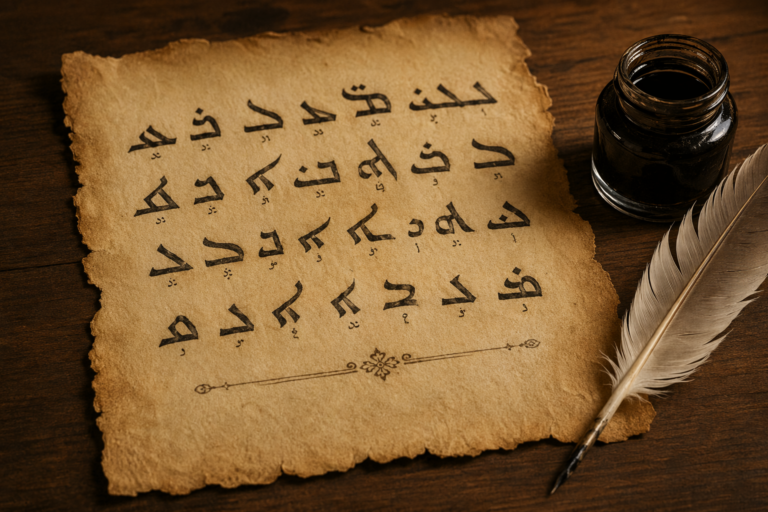
The syriac alphabet is a kind of writing system for the syriac script. People started to use it in the 1st century AD.
-
The syriac alphabet came from the aramaic alphabet through what is called the Palmyrene alphabet, and it has moved from right to left since then.
-
There are 22 consonant letters in the syriac alphabet, and you can show vowel sounds by using marks if you need them.
-
Classical syriac was big in shaping religion, learning, and books all over the Middle East.
-
The main types of the script are Estrangela, west syriac Serto, and east syriac Madnhaya.
-
The script is still important today for study, worship, and use in digital writing.
Introduction
The Syriac alphabet is an old writing system. People have used it for the Syriac language since the 1st century AD, and you can still find it being used now. If you are in Australia and want to learn more about old scripts, the Syriac alphabet is good to know about. The reason is it shows a clear link between language, faith, and the history of the people who used it. This writing system goes from right to left, and most of the letters join together. It became well-known all over the Near East as a type of Aramaic writing.
Early Origins of the Syriac Alphabet
The syriac alphabet began as part of the story of the aramaic script. It comes from the aramaic language and goes through what we call the Palmyrene alphabet before it turns into its own writing style.
This background goes back to the start of Mesopotamia, the world people know from the old assyrian period and the middle assyrian empire. By the 1st century ad, the syriac alphabet showed up as a recognised script by itself. To see how that happened, it helps to look at where it started with the aramaic language and then see how it grew in the Near East.
Roots in Ancient Aramaic Script
At its core, the syriac script is part of a big group called the semitic abjads. This means it is made to show mostly consonants, not all the vowel sounds. If you know a bit about the aramaic alphabet, you can quickly see how they are linked.
The syriac writing system comes from the aramaic script, passed down to it through the palmyrene alphabet. Put simply, syriac writing is not outside aramaic history, but comes out of it. Scholars often compare the syriac script to things like hebrew and arabic. That’s because they all come from the same broad writing family.
What happened as time went on was new looks and ways of use. The aramaic language had different forms in different places. One of these styles turned into the syriac script. So, when people want to know how syriac is tied to aramaic, the answer is clear: it comes after aramaic, as its own writing system, shaped for a special place and kind of writing.
Historical Emergence in the Near East
By the 1st century AD, the Syriac writing system was known in the Middle East. This did not happen suddenly. It came from slow change inside a long scribal and language tradition.
In the Near East, people often changed written forms as they used old scripts for how they spoke, taught, and used in religion. The Syriac tradition grew out of that place. Over time, people made the letter shapes, layout, and ways of writing in Syriac so different that it became its own script, not just another type of Aramaic.
This history of how it began is important. It shows why the Syriac writing system can feel both new and known. It kept things from older scripts, but also got its own look and style. Once Syriac had its own form, what happened after was that it spread far in religious and local culture networks, and that helped shape what it became in later years.
Spread Through Early Civilisations
After it came up, syriac writing did not stay in just one spot. It started to move around the Middle East. This happened through the paths of faith, trade, and learning. Because of this, the syriac script began to have a part in many early civilisations.
The reach of syriac writing grew as different groups used it for different reasons and in more than one language. As time went on, syriac showed up even far away from where it started. You could find it in some places in Central Asia, too. This use in different places helped syriac writing stand out and last over time.
-
The script was used for classical syriac aramaic and later Neo-Aramaic versions.
-
You could see it in Arabic writing as well, often called Garshuni or Karshuni.
-
The Sogdian language could be written with the syriac script, too.
-
There is also a form in Malayalam called Suriyani Malayalam, which is based on the syriac script.
Evolution and Historical Significance
The Syriac alphabet has 22 letters. This writing system is used for Classical Syriac and other types of Aramaic. When it started, the Syriac tradition got a steady script. So, people could pass on their religious, story, and school texts for many years.
By the 5th century, Classical Syriac was very important for big Christian communities. That is why the writing system is still important. The Syriac alphabet was more than just something to write with. It helped keep a people’s way, faith, and learning strong. The next parts will show where this, too, made the most difference.
Influence on Christian Communities
The Syriac alphabet is closely linked to many Christian communities in the Middle East. For a lot of Syriac Christians, this script was not just something they used. It was a big part of the way they worship, teach, and pass down memories in their community.
Different churches use the script in their own ways. The Church of the East used what is called the eastern style. The Syriac Orthodox Church went with the western one. But even though there are these differences, they still share one alphabet. It brings them together through their faith and what they write.
You can see the strong effect of the script in Syriac texts. People used it for sermons, church services, bible texts, and many church notes. The alphabet has 22 letters and simple marks, so it is easy to learn and use. It helps people read and say the words right. This is great for those who want to keep the old traditions and stories safe through the years.
Role in Preserving Religious Texts
One reason classical syriac was used for a long time is because it helped keep old religious books safe. A single syriac letter in these books could be very important, especially when people read the texts out loud in worship or during study.
Classical syriac aramaic turned into a key written form for holy books, thoughts, and special prayers. Syriac writing gave people the same way to write down and save these things through many years. In old books, just having or not having a vowel mark could matter, mostly when people were expected to know their traditions well.
The script was not only used for classical syriac. Over time, other Aramaic ways of talking started to use it too. Arabic could even be written in syriac letters and this was called Garshuni. Because of these things, the alphabet became a part of more than one language. It helped a larger religious and cultural group who wanted to keep what they had in writing.
Connections to Other Ancient Scripts
If you look at Syriac next to other scripts close by, you can really spot the family link. It comes from the aramaic script, so it shows some key parts that also turn up in the Hebrew alphabet and the arabic script, even if each one grew on its own path.
Syriac got ideas from other ways of writing, too. One big thing is how western syriac used small greek letters to mark vowels. That does not make Syriac a Greek script, but it does let you see how different writing ways shaped each other in day-to-day use.
-
Syriac, Hebrew, and arabic script are all part of the bigger Semitic writing family.
-
Syriac comes from aramaic script, while arabic and Hebrew both went their own way but stayed linked.
-
western syriac vowel signs came from greek letters to help show the right sounds.
-
Over time, Syriac also gave ideas to scripts like Sogdian, which then played a part in making traditional mongolian scripts.
Key Characteristics of the Syriac Alphabet
The syriac script is a writing system that goes from right to left. It uses 22 consonant letters. Like other Semitic abjads, the focus is on consonant letters first. Vowel sounds are often added after, using extra marks that you can choose to use or not. This setup is a basic part of the syriac script.
Another thing to know about the syriac script is the way the letter shapes look. The letters are usually flowing and joined together, which gives them a bit of a cursive look. Some letter shapes even change depending on their spot in a word. These features make a difference in how people read, write, and learn the syriac script.
Total Number of Letters
The Syriac alphabet has 22 main letters. These are consonant letters, which is typical for a Semitic script. There is no upper and lower case, and most letters join inside words.
Vowel sounds are usually shown with optional dots or other marks rather than with separate full letters. Even so, some letters can help indicate vowels in certain contexts. In modern usage, additional letters or altered forms may appear to represent sounds not found in older Classical Syriac.
Here is a simple text table:
|
Feature |
Details |
|---|---|
|
Main letters |
22 letters of the syriac script |
|
Core type |
Consonant letters in an impure abjad |
|
Vowel marking |
Usually shown with optional signs rather than separate alphabet letters |
|
Letter case |
No capital or lower-case distinction |
|
Extra forms |
Additional letters or altered values may appear in modern usage |
Letter Names and Their Order
Each syriac letter has its own name, and the order of the letters does not change. The sequence starts with ʾālep̄, then comes bēṯ, gāmal, dālaṯ, and goes on until you get to all 22 letters. When you see the word “abgad”, that shows the same order that has been used for a long time.
The way the syriac letter order is set up is very important. It’s used in learning, for making dictionaries, and in old ways of using numbers. Like what you find in Hebrew and Greek, syriac letters can also stand for numbers. So, learning the letter names is not just about how to say them out loud. It helps you see how this writing system worked in books and in older ways of teaching.
When it comes to saying the letters, you have to think about each letter’s value, where it’s used, and any extra marks. Some letters can sound stronger or softer depending on the word, and some letters can help show what vowel comes next. If you are new to this, it’s a good idea to learn the name, sound, and where each syriac letter goes in a word all at once. This is better than trying to learn each part on its own.
Unique Writing Direction and Formatting
One of the first things people in Australia notice is the way you read Syriac. The writing goes from right to left, so you start reading at the right and move your eyes to the left side of the page. This is not how it works in English, and it makes Syriac feel very different.
Another thing is about the flow of the writing. Syriac is what’s called a cursive script. That means, in many cases, the letters in a word will join together as you write them. Words are split apart by spaces, but the letters in each word are often joined up. When you look at Syrian writing, you will see a smooth line of letters that might look fancy, but can be tough to read when you first see it.
-
Reading starts from the right and moves left across the lines.
-
Most of the letters are joined up, even though not all of them connect to the next one.
-
The way Syriac looks on a page depends on the space between words, not on any big or small letters, since this script does not use upper or lower case.
If you want to learn a cursive script, Syriac writing is a good place to see how it works.
Major Variations of the Syriac Script
The syriac script can be found in three main styles. These are Estrangela, west syriac Serto, and east syriac Madnhaya. The alphabet is the same in all of them, but the letter shapes and the way you read some things change between each one.
You can see them as the main script with different looks. Estrangela is the oldest style. West syriac is more simple and smooth. East syriac looks more like the first types of this script. If you know about these changes, the whole syriac script is much easier to get.
Estrangela – The Classical Form
Estrangela is the oldest form of the Syriac script. You will find it a lot in old scholarly editions or old inscriptions. This is the style of writing that comes up first when you look into classical Syriac and early manuscripts.
This form is not the main script for everyday Syriac writing anymore. But Estrangela did not go away. People still used it for titles, inscriptions, and scholarly publications. From the 10th century, there has even been some revival. It stays alive in learned settings because of this use.
Estrangela has an ancient script look. The letters are more rounded and formal compared to what came after. You also will not see vowels marked most of the time. That is because it came before people used special marks for vowels. For Australians who study the Syriac script, it is a good starting point if you want to understand the history of syriac writing and classical Syriac.
West Syriac Serto Style
The west syriac style is called Serto, or Serṭo, which means “line”. This is the main script for western syriac tradition. People link it with Maronite and Syriac Orthodox writing. Unlike Estrangela, Serto has shapes that are much simpler and flow better.
This western variety became common from the 8th century. Its rise was probably because of a practical reason: the lines in Serto use the space for writing better. That helped a lot when copying manuscripts, since every bit of material was important.
-
Serto is the usual west syriac style.
-
It puts small, Greek-style vowel marks above or below the letters.
-
The letter shapes are easier and less complex than Estrangela.
If you want to learn about the western syriac tradition, you need to know Serto, as it comes up often in church materials and later works.
East Syriac Madnhaya Style
The east syriac style is Madnhaya. This word means “Eastern”. People use it for the eastern syriac tradition. You might also know it as Swadaya, Athoraya, or Kaldaya. Some call it the nestorian script, but that is not always right.
Madnhaya looks a bit more like Estrangela than Serto does. The way it marks vowels is simple. It mostly uses dots above and below the letters. This gives eastern syriac a look that is easy to spot on the page. Many people who read east syriac get to know this look quickly.
-
Madnhaya is the usual east syriac style.
-
It often uses dots to show vowels.
-
It is closely tied to the Church of the East and related groups.
If you look at different manuscripts, knowing about this eastern style helps you work out both the region and the way people read them.
Structural Features of Syriac Writing
To read the syriac script well, you need to know its main parts, not just try to remember each letter on its own. The syriac script acts as a system, and the letter shapes can change depending on where you see them.
The script is written with joining letters, so each one may look different at the start, in the middle, or at the end of a word. This can be a bit hard when you first see it, but it also makes some regular patterns. When you see these patterns, you will find the syriac script is much easier to write with your hand and spot when it’s printed out.
Consonant-Based Structure
Syriac uses an abjad system. This means the main job in the script is done by consonant letters. You see this a lot in Semitic languages, so people have to work out the vowels from the way the words are used and the grammar in the sentence.
The Syriac alphabet has 22 letters, and most of them are consonants. You do not always need every vowel shown to know what a word means if you are used to it. That is why old texts, mostly in a classical style, can look very short or packed together if you are new to them.
For Australians who are beginning, this will make you think in a new way. You will not be looking at each letter like you do when you read English. You start to see how a consonant-based script can be good at getting language across quickly. When you take that idea in, Syriac starts to be much clearer.
Keywords: semitic languages, consonant letters, letters of the syriac alphabet
Position-Based Letter Forms
Many Syriac letters change their look based on where they are. One shape shows when a letter stands by itself. It looks different in the middle of a word. There’s also a special shape at the end of a word. This way of changing shapes is a big part of this writing.
But, not every letter does this the same way. There are some letters that won’t join to the next letter, so the one that comes after has to change its shape too. Some, like kāp̄, mīm, and nūn, often still look joined, even when they aren’t next to any other.
This is also important for saying words out loud, since the way a letter looks can help you know how a word is set up. Once you get used to the forms that change by position—at the start, middle of a word, or at the end of a word—you can spot when words start, go on, and finish. This really helps make reading and copying easy, even when you have to write by hand.
Ligatures and Cursive Flow
Syriac writing moves in a way that feels natural, like normal handwriting. In this cursive script, letters often link together. We call these links ligatures. That means two letters join as one shape people see a lot. These joins make writing in Syriac faster and feel smooth on the page.
You will find that some ligatures show up a lot, especially in old Syriac writing. They are not just nice shapes. They are needed because the script is made for people to write both quick and neat. Many ligatures came from daily use and not for show. When you spot them, you will see that the words do not feel squeezed together anymore.
-
Lāmaḏ-ʾālep̄ is one ligature that happens at the end of a word most often.
-
Taw-ʾālep̄ and taw-yōḏ also turn up joined together at times.
-
The letter waw is a good one to watch. Sometimes it is a consonant, other times a vowel, and it fits well into all these joins in Syriac writing.
If you are new, a good step is to practise these joins as if they are just one piece. You do not have to push two letters together by force. Just let the common ones come in as full shapes, and you will get better with your Syriac writing.
Representation of Vowels
The Syriac language uses a script that mainly shows the consonants. Still, the vowels show up in a few different ways. This is where diacritical marks and vowel letters are important.
Some of the vowels are marked with dots or little signs. Others show up with matres lectionis, like ʾālep̄, waw, and yōḏ. These systems change between eastern and western groups. If you want to say the words right, you have to know both the sound marks and how some letters help out.
Keywords used: syriac language, diacritical marks, matres lectionis, vowel letters
Diacritical Vowel Marking
Diacritical marks play a big part in how Syriac shows its vowel sounds. In East Syriac, you get dots above or below the letters to show sounds like a, ā, e, i, o, and u. In West Syriac, people use small marks that come from Greek and they do a similar job.
These marks came in after the first stage of the script, so you do not usually see them in the oldest Estrangela writing. But that doesn’t mean people just guessed the words. It means they had to use their own language skills and work out words from what was around them, even more than we would today.
In Syriac, a single dot is not just put there for showing vowel sounds. It is also used to tell the difference between hard and soft sounds for some consonants. So when you look at pronunciation, you need to keep an eye on where the mark sits. In this script, if you put the dot above or below a letter, it can change the way the word is said.
The Use of Matres Lectionis
Syriac has matres lectionis too. These are consonant letters, but they can also show vowels. This gives the syriac script more ways to spell out words, but do not make it a full alphabet with every vowel sound. That is why the syriac script is called an impure abjad.
Most of this vowel work happens with three letters in the syriac script. The meaning of these letters can change, depending on where you find them in a word. So you need to look at how they act with other letters and in different spots in the word. Do not just memorise one sound for each letter.
-
ʾĀlep̄ can show a glottal stop. It also helps show a vowel, mainly at the start or the end of a word.
-
Waw might be the w sound, or a vowel sound like o or u.
-
Yōḏ can be the y sound, or work for these vowels: i and e.
Once you get the idea with these vowel letters in the syriac script, it is much easier to work out the pronunciation. It will not feel so tricky.
Common Pronunciation Marks
How you say words in Syriac is about more than the letters on the page. There are marks that help people with sound, grammar, and even when a letter is quiet. This can make Syriac look crowded or full when you see it at first, but the alphabet does not have many parts.
One common way to help readers is with hard and soft marks for six sounds. There are also marks that show when a word is in plural forms and when some letters are silent. Not every mark stands for vowel sounds, but all of them change how you read the words out loud.
-
The letter ʾālep̄ can show a glottal stop or work as a vowel carrier.
-
A single dot above or below some letters can show if it should be hard or soft when you speak.
-
The syriac abbreviation mark is a special line above that is used in digital writing.
It’s a good idea to learn these marks with the letters when you start. That way, you do not have to try to pick them up later.
Contextual Letter Forms and Shaping
In the syriac script, letter shapes are not always the same. They change, based on where the letter sits in a word, how it joins to other letters, and the way the word flows. This is why you might see the same letter look a bit different in one line of words.
These changing letter shapes are just the normal way of writing with the syriac script. They are not something out of the blue. Once you get the hang of this, reading becomes a lot easier to follow. The next three parts will talk about how the shapes of letters shift based on where they are, how joins or ligatures work, and how you should deal with letters at the end or on their own.
How Letters Change with Word Position
A Syriac letter can look different at the start, in the middle of a word, or at the end of a word. These changes are normal for the script. They help people read and keep the line of text joined.
Most letters link with the next one. But there are some letters that do not join with the letter that comes after them. This break changes how the next letter will look. So, the way letters change, depending on where they are in the word, is not just for style. It helps show how the word is put together on the page.
If you want to learn, it’s best to spot patterns. Try not to remember each shape on its own. Look at one Syriac letter and see how it looks at the start, middle of a word, and end of a word. When you can see how the same sign acts in different spots, your reading and speaking will get better at the same time.
Ligatures for Common Sounds
Ligatures in the syriac script show up a lot in common pairs of letters, not in the rare ones. They help you write the same thing again and again more easily. With some practice, they also make it easier to spot words when you read.
This is important for reading because a ligature will bring together what look like two different shapes into one. If you get stuck on a word, look for a ligature you know. It will often help you work it out quickly.
-
Lāmaḏ with ʾālep̄ often makes one ending together.
-
Taw with ʾālep̄ might also be found joined at the end.
-
Hē with yōḏ and taw with yōḏ are some other well-known pairs.
If you are starting with the syriac script, don’t worry about learning every old ligature straight away. Begin with the most common ones you see in learning charts and old papers.
Handling Isolated and Final Forms
When you start to study Syriac, you will see charts that show every letter on its own. These charts are good because they help you pick out each letter before you see it inside words. But in real syriac writing, these letters don’t stay on their own for long.
The forms at the end of a word are just as important as the others. A letter will change at the end of a word, and this way of closing the line can look different than the one in the middle. It matters most when you copy by hand because if you make a mistake with this ending, people might not know what the word is.
So, the best thing to do is always look at letter shapes in their full setting. Check out the stand-alone form, then compare it with how it looks at the start, in the middle, and at the end of a word. This practice will make you feel good about picking out words, and you will go from looking at charts to real reading much faster.
Writing and Reading Syriac Today
Today, people still read and write the syriac language in religious, cultural, and study settings. You will find modern syriac in printed books, teaching materials, and on the internet. So, the script is not just something from history.
For Australians who want to learn the syriac language, this is good news. You can go from reading old syriac texts to using modern learning tools, all without leaving your home. Thanks to digital technology, there are now more fonts, keyboards, and study resources. This means it is even easier for you, me, or anyone to study modern syriac on your own.
Learning the Syriac Alphabet – Tips for Beginners
If you are just starting with syriac writing, it is good to begin with easy steps. Learn the 22 letters by breaking them into smaller groups. Then, try to see how each one looks when used in joined words. Don’t try to learn the whole syriac script at one time, because that can make you feel lost.
It is also smart to pick one type to start with. Estrangela helps when you want to read old history. Serto is best for western use, and Madnhaya is for eastern uses. Pick one of these, and get to know it well first, before you look at how syriac script changes in the others.
-
Learn each letter’s name, the way it sounds, and the way it looks at the same time.
-
Write from right to left every day, even if you spend just five minutes on it.
-
Learn the main ways the letters join and how they look at the end of a word early on.
-
Wait to add the marks for vowels and sound until you are used to the main letters.
These easy steps make learning syriac script and syriac writing less hard and help you make good habits from the very start.
Where to Find Free Practice Sheets and Resources
Yes, you can find free resources for the Syriac alphabet, mostly online. The material here shares some good places where a beginner can get learning tools, help with handwriting, and script charts. You can access all of this without buying anything fancy.
Try to use trusted educational and reference sites, not just random pictures. These top sites can give you practice sheets you can print, basic alphabet guides, and ways to help you write well. Some also show you more than one style of script. This is good if you want to see how Estrangela, Serto, and Madnhaya look and be able to tell the difference.
-
Omniglot has basic material for starting out with the script.
-
AncientScripts shares helpful background info about writing systems.
-
Wikiversity brings you support for learning the Syriac Latin alphabet.
If you are in Australia and want to learn at home, these free resources are a smart first step. You can start with them before you move on to deeper grammar books or reading old handwritten texts.
Notable Online Video Guides and Tutorials
If you like to learn by watching, there are online video guides and tutorials for Syriac writing. These videos can help a lot because the script is joined up, and seeing how the letters move is often easier to understand than looking at a still chart.
The information here points you to a few online spots that link to handwriting and learning the script. Videos are very good for showing you the right way to write each part, how to connect the letters, and what order to use for each line, which many people find harder than just spotting letters in print.
-
“How to write Aramaic – learn the Syriac cursive scripts” is a good place to start.
-
“Aramaic and Syriac handwriting” can show you how the script flows.
-
“Learn Assyrian (Syriac-Aramaic) Online” can help you with the Maḏnḥāyā style.
To get the best results, play a short lesson, then stop and copy the letters yourself. It’s better to do this than to just read along.
syriac writing
Modern Usage and Revival
The syriac script is still used today in modern syriac life. People use it in worship, schools, and to bring the community together. This revival is not to create something new. The goal is to make sure the old writing stays visible in communities now.
Digital tools help keep this tradition strong. Things like fonts, Unicode, and online lessons make the syriac language easier to read and type for people all over the world. For Australians, this means it is much easier to use than it was many years ago.
Contemporary Communities Using Syriac
Today, the Syriac tradition is still important for people who are part of church life, care about their heritage, and want to keep the language alive. You find it among Syriac Christians from many backgrounds, including groups with both eastern and western practices.
The script is not just something from old church books. It is used for spoken language, too. For example, Sureth, Turoyo, and Western Neo-Aramaic have all been written down in the Syriac tradition. This helps keep the script alive and in use, and not just part of the past.
-
Syriac Christians still use the script in church and prayer.
-
There are Neo-Aramaic groups that use forms of it today.
-
In Australia, people can join in through websites and global community links.
If you are in Australia, these groups and their online spaces are a good way to learn about the script and see its story as something living, not just old.
Syriac in Digital Technology and Unicode
Digital technology now makes the Syriac language much easier to use. The Syriac script was added to the Unicode Standard in 1999. This let computers show and share Syriac letters the right way, no matter the device.
This helps people who want to learn Syriac. All things like printable charts, PDFs, and digital keyboards need the right kind of encoding to work. The main set of Syriac in Unicode is called U+0700–U+074F. Later, there was a Syriac Supplement block added for extra letters used in Suriyani Malayalam.
-
The Unicode Standard covers both the main Syriac block and the Syriac Supplement block.
-
There is a special way to show the syriac abbreviation mark with its own control character in Unicode.
-
Fonts based on Unicode, like Meltho Fonts and GNU FreeFont, let people see Syriac text easily.
If you are after a PDF of the Syriac alphabet, look for Unicode-based charts and tables from trusted language or font websites.
Australian Interest and Syriac Language Learners
Interest in old and heritage languages is growing in Australia, and Syriac is a great fit for that. If you want to learn about this language, you get a piece of Aramaic history, old Christian books, and living traditions all at once.
The good thing is, you don’t just have to use local print libraries. There are online learning tools, fonts, handwriting guides, and script charts that help you study from home. Once the device shows the script in the right way, you can start using a lot of materials right away.
If you are just starting, the best way is clear. Pick one script style, use trusted resources, and practise a little bit every week. This works well whether you learn for research, culture, or to connect with your heritage.
The Syriac Alphabet and Other Languages
The syriac script started from the aramaic script group, but it did not stay with just one language. Over the years, the syriac script was used in lots of places. People used it for semitic languages and even for some languages that are not semitic.
This wider use is one reason the syriac script is important for language history. It shows that a writing system can move between different groups of people. It also can change to fit what people need. The next parts show which languages used the syriac script and what kind of mark it left.
Languages Historically Written with Syriac Script
Historically, the syriac script was used for more than Syriac alone. It descended through the Palmyrene alphabet and later served several languages in different regions. Some of those uses were long lasting, while others were more specialised.
This wider spread helps explain why Syriac appears in discussions of script history beyond the Middle East. Through Sogdian, for example, it stands in the ancestry of systems that eventually connect to traditional Mongolian scripts.
Here is a text table of historical use:
|
Language or Use |
Notes |
|---|---|
|
Classical Syriac Aramaic |
Primary literary and religious use |
|
Western Neo-Aramaic |
Later adapted in West Syriac contexts |
|
Sureth and Turoyo |
Neo-Aramaic varieties written in Syriac forms |
|
Christian Palestinian Aramaic |
Historical Aramaic use |
|
Arabic (Garshuni) |
Arabic written in Syriac letters |
|
Malayalam (Karshoni/Suriyani Malayalam) |
Syriac-based writing use |
|
Sogdian |
Important historical non-Semitic use |
The Alphabet’s Legacy on Regional Linguistics
The Syriac alphabet has a strong place in the study of language around the Middle East. It shows how a branch of the Aramaic script turned into a lasting way to write over time. This makes it good for looking at how Semitic languages change and grow.
The power of Syriac script goes further than just words and how you use them. The story of the script gives us a look at how ideas move, how faith groups spread, and how people wrote in the past. Syriac is a strong example of how a writing system can carry the link to a people and their ways, even if how it looks might change later.
For people who study the history of language, Syriac matters a lot. It keeps old ways of Aramaic alive, while still holding links to new ways people speak and write. This deep history lets us see the line of change and how things stay the same or shift in this region. Syriac gives us a way to see how writing moved through the Middle East and, in a roundabout way, other parts of Asia joined by script use.
Comparison to Hebrew and Arabic Alphabets
The Syriac alphabet, the Hebrew alphabet, and the arabic script are all part of the bigger group called Semitic abjads. This means they show most of the consonants, and people reading them need to figure out some of the vowels by using clues from the sentence.
But, each one has taken its own way. Syriac comes from Aramaic and went through Palmyrene. Hebrew and Arabic are also related but had their own development, shaped by the people using them, the way books were made, and how things looked on the page.
-
The three are all written from right to left.
-
Syriac and Hebrew have strong links because of the old Aramaic writing tradition.
-
arabic script and Syriac both join up letters, but how they do it looks very different.
-
Syriac made its own eastern and western vowel marks. This is not how the basic Hebrew alphabet does it.
So, these writing styles are family if you look back in history, but they are not exactly the same.
Conclusion
To sum up, the Syriac alphabet isn’t just a way to write words. It’s a bright thread that ties together history, culture, and many groups of people over time. When you learn where it comes from, the changes it went through, and how people use it today, you get a much deeper look at this old writing system. If you live in Australia and want to discover more about the Syriac alphabet, you’ll find lots of good material out there, like online lessons and free practice sheets. Learning about this can help you understand other cultures better. It also lets you read old texts and meet new people who still use it. If you are keen to learn more, now is a great time to start. Grab those helpful guides and jump into your journey with this writing system today!
Frequently Asked Questions
How many letters are in the Syriac alphabet and how are they pronounced?
The syriac script has 22 letters. Each syriac letter is used mostly for a consonant. The way you say a word in the syriac language depends on the context. It also changes because of vowel sounds and special marks that you see above or under the letters of the syriac alphabet. Some letters in syriac script also have both hard and soft sounds. This kind of change is common, especially in classical syriac.
What are the main differences between Estrangela, Serto, and Madnhaya scripts?
Estrangela is the oldest and most classic style. The serto script is the flowing west syriac form. Madnhaya is the usual east syriac style. They both use the same alphabet, but the letters look different in each script. They also mark vowels in different ways. Serto and Madnhaya show the western and eastern reading styles.
Where can Australians access resources to learn Syriac writing?
Australians can get help to learn syriac writing by using online platforms. They can find lessons on language learning websites and on YouTube tutorials. Some local community centers or cultural groups may also have classes they can join. Books and academic journals are good to read too, if you want to study syriac writing on your own.