Key Highlights
-
Sumerian cuneiform is one of the oldest writing systems from the ancient world.
-
It started in southern Mesopotamia and people used it to keep track of trade, goods, and daily work.
-
At first, signs were simple pictures pressed into clay tablets.
-
Writers would use a reed stylus to make small wedge-shaped marks in the soft clay.
-
This script was used for the Sumerian language, which is a language isolate.
-
After some time, cuneiform grew to show words, sounds, and meaning in a fuller way.
Introduction
If you want to learn about the first big writing systems in ancient Mesopotamia, the Sumerian language and its cuneiform script are a good place to begin. Cuneiform started as simple marks. Over time, it turned into a detailed way to write down facts, language, and ideas. This writing made sure the Sumerian language did not get lost and now lets us see some of the oldest written words from ancient Mesopotamia. For learners in Australia, this script makes it easy to look at how writing got started and shows why it was so important.
The Origins and Purpose of Sumerian Cuneiform
The Sumerians lived in southern Mesopotamia. They first used clay tokens to keep track of goods and animals. Around the 4th millennium BC, people started pressing these marks onto clay as simple pictures. This gave them a better way to store their information.
As time went by, Sumerian cuneiform became more useful. People used it for accounts, making records, and many other things. The Sumerians spoke the sumerian language. This language was not like other languages and is called a language isolate. These early ways of counting turned into one of the world’s first real writing systems. If you want to know more about this big change, you need to look at how early society worked back then.
Early Sumerian Society and the Birth of Writing
In early southern Mesopotamia, the Sumerians had to find good ways to manage their goods, animals, and trade. Before writing came about, people used clay tokens to help them count. These small tokens showed what items were there, and helped people keep track in the growing towns.
After a while, they started to press the clay tokens into the clay to show what things they had or counted. This was an important change, because the token turned into a clear mark or sign. Later on, pictographs were used, and these gave people a better way to write down meaning.
It all began as just a way to manage things, but soon started to show spoken language, too. This big change led to Sumerian cuneiform. The cuneiform system did not just appear straight away. Instead, it grew from what people needed each day into a way to save information for more than just memory or talking.
Transition from Pictographs to Cuneiform Script
At first, people used pictographs as simple picture marks to show objects. These marks helped, but there were limits to what they could do. As people needed to keep more complex records, the signs had to do more. They needed to show things like how many, different kinds, and even sounds.
Before this, people used tokens kept inside sealed clay envelopes. To show what was inside, they would press the tokens into the clay on the outside. After a while, they saw the tokens were not needed anymore. Just the marks left on the clay could tell people what was inside.
This shift moved the system closer to what we know as cuneiform script. In the first stages, the layout could show signs in vertical columns. The signs became more stylised and everyone started using the same types. This was a big step in the story of writing systems. It helped people find new and clearer ways to write and use tools, leading to the cuneiform used in so many early civilisations.
How Sumerian Cuneiform Was Written
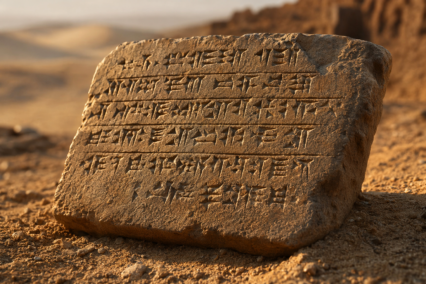
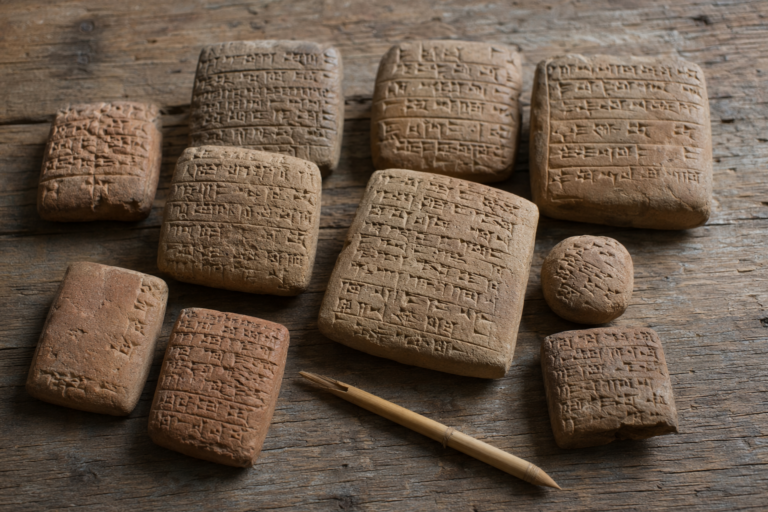
Sumerian cuneiform was often made on clay tablets while they were still soft. People used a stylus, usually from reed, to press into the clay and make the wedge marks that the cuneiform got its name from.
Early writing styles could look very different. Some texts even went in vertical columns. Later on, the direction of writing changed and the signs became more regular. This helped make the script easy to use wherever you were. Now, we will talk about the tools used and the people who worked with the tablets.
Tools and Materials: Styluses, Clay Tablets, and More
The things used for cuneiform writing were simple but did the job well. People wrote on clay tablets because the clay was soft and easy to shape when it was wet. After you finished, the message would stay for a long time. That is why so many old tablets of cuneiform writing still exist today.
The main thing used for writing was a reed stylus. The writer pressed the tip of the stylus into the soft clay. This did not make lines but little wedge shapes. Before cuneiform writing became common, people also used clay envelopes. These could hold tokens and later, full written signs were used instead.
Common tools and things people used included:
-
reed stylus for making wedge marks
-
clay tablets for writing down accounts and other texts
-
soft clay as the place to write
-
putting tablets in a kiln sometimes to make them hard
With these basic things, people made one of the first writing systems in our history.
Writing Techniques and the Scribes of Ancient Sumer
Cuneiform writing worked through things like pressure, angle, and being steady. Instead of drawing round shapes, people who wrote, called scribes, pressed the marks into clay. That is how the signs got those sharp wedge edges. As the script got new changes, the way scribes set up the text moved to horizontal rows. This made it much easier for people to read and follow the order.
Scribes were the ones who used these ways of writing with great skill. They worked with different types of writing. These could be for things people needed every day, as well as for religious use, art, and studying. Because of this range, you can see cuneiform writing was not just for trade or business.
You might want to know what sorts of things were written down back then. Well, we know it includes items, silver records, office work, and, later on, literary texts. The writing system became open enough that people could use it for basic notes or to show deeper ideas in stories and more.
Structure and Symbols of Sumerian Cuneiform
The cuneiform script is made up of symbols formed by wedge-shaped marks. These signs can mean different things. Some signs stand for full words. Some show categories. Some signs match the syllables people say.
That mix makes Sumerian cuneiform look tricky when you first see it. One sign might have a few meanings so it depends on what is around it. If you want to know the main cuneiform signs or try using them to write a name, it helps to begin with the common signs and how they work.
Common Signs, Symbols, and Their Meanings
The basic signs of Sumerian cuneiform were not all used in the same way. Some signs functioned as logograms, meaning they represented whole words. Others worked as phonograms and stood for syllables. There were also determinatives that hinted at a word’s category.
This makes the script semanto-phonetic. In simple terms, the signs combine meaning and sound. That is why common signs on cuneiform tablets can look straightforward but still carry more than one possible reading. Context mattered, especially in longer records and literary texts.
|
Sign type |
Main function |
|---|---|
|
Logogram |
Represents a whole word |
|
Phonogram |
Represents spoken syllables |
|
Determinative |
Shows a word category |
|
Wedge mark form |
Builds the visible sign shape |
Practical Examples: Writing Names and Words in Cuneiform
If you want to write your name using the cuneiform writing system, it is not the same as just swapping English letters with ancient signs. That is because cuneiform writing and alphabetic writing are not the same. The cuneiform signs show words, categories, and the sounds from spoken language.
Because of this, to write your name, you should match it by the way it sounds, not just by the letters used. Still, results will change since there were different versions of the script and many writing styles over time. A new name like yours may not go straight into a Sumerian pattern.
A good way to do it is:
-
break your name up into syllables
-
try to find cuneiform signs that have the same sounds
-
keep in mind that there can be more than one way to do this
So, you can have a go at it, but what you get will be an attempt, not a perfect match.
Legacy and Impact of Sumerian Cuneiform
Sumerian cuneiform is important because it helps keep the earliest writing from the ancient world safe. For archaeology, the tablets give us clear proof about how people kept records, spoke with each other, and lived their lives over many years.
It was not just for the Sumerians. Cuneiform was also used to write different languages like Akkadian, Elamite, Hittites, and Old Persian. This wide use makes it stand out from the way people used hieroglyphs. To know how people worked out what cuneiform said, we have to look at how scholars cracked the code in our time.
Decipherment and Understanding by Modern Scholars
Modern understanding of cuneiform grew step by step in the 19th century. People did a lot of hard work with signs, looking for repeated patterns, and used clues from different languages to figure out how it worked. It was not fast. There had to be a lot of comparing, patience, and thinking things through.
Big names from this time are Edward Hincks, Henry Creswicke Rawlinson, and George Smith. What they did helped people see that cuneiform signs could show sounds, not just meanings. This was a big change and helped everyone read ancient texts from the ancient Near East much better.
Things kept in the British Museum’s collection had a lot to do with it. Having tablets and other old writings right there let people compare things and test new ideas. Because of all this work, Sumerian cuneiform went from being marks no one could read to a real written record of the ancient Near East.
Conclusion
In short, Sumerian cuneiform shows the big changes in how people used writing systems over time. It sits between simple pictographs and the more complex ways to write that came after. When you learn about how it was set up, what the symbols mean, and the steps that the early scribes used, you get to know more about the life and people in early Sumer. This writing has a deep history. It helps us see what old civilisations were like, and it even has an effect on how we write today. If you are in Australia and want to know more about cuneiform, there are lots of resources online that can help you. Take some time to learn about Sumerian cuneiform and find out the stories that led to how people share ideas today!
Frequently Asked Questions
Where can Australians see Sumerian cuneiform tablets or examples today?
Australians can see cuneiform tablets by looking at big overseas collections and their online displays. The British Museum’s collection is a good place to start. The Penn Museum and the Yale Babylonian Collection are also helpful. These places have many important cuneiform tablets, and make it easy for people to learn, even if they are far away.
Are there online resources or tools for learning Sumerian cuneiform?
Yes, you can find online tools to help you learn about cuneiform writing and the Sumerian language. These tools include dictionaries, some websites made for learning, and things put out by universities. If you want to know more and need good facts, sources from groups like Johns Hopkins University are a good place to start. They can guide you as you get into sumerian language and cuneiform.
How does Sumerian cuneiform differ from later Akkadian writing systems?
Sumerian cuneiform was made first for the Sumerian language. Later on, people used cuneiform writing for different languages like the Akkadian language. When the old Babylonian period started, this script did new jobs for these languages. But it was still not the kind of alphabetic writing you see today.