Key Highlights
-
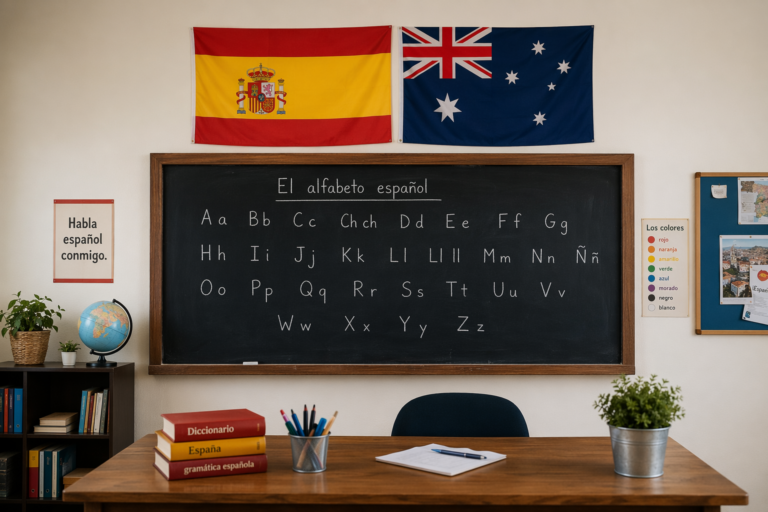
El abecedario in the modern spanish language has 27 letters. The spanish alphabet is almost the same as the english alphabet.
-
The extra letter that stands out is ñ. This one shows up a lot in spanish words people use every day.
-
You will still see ch and ll in some spanish words, but these are not counted as separate letters in the spanish alphabet now.
-
Spanish is very phonetic, so it helps beginners read out loud with more confidence.
-
The five vowels always have the same sound. This is not like english, where vowels can change the way they sound.
Introduction
If you want to start with the spanish language, learning el abecedario is a good way to go first. It can help you read, spell, and say spanish words with more ease. For Australians, this is important because spanish is often clearer to sound out than english after you know the basic alphabet. You do not have to remember many hard rules when you begin. Start with the abecedario, hear how each one sounds, and then picking up the rest gets a lot easier.
Overview of the Spanish Alphabet for Australians
For people in Australia who speak english, the spanish alphabet seems like something you already know. Most of the letters look the same as the english version. The name for the spanish alphabet is “el abecedario.” It has 27 letters. Nearly every part of the alphabet is just like what you use when you write in english.
The letters are: A, B, C, D, E, F, G, H, I, J, K, L, M, N, Ñ, O, P, Q, R, S, T, U, V, W, X, Y, Z. You get a good start with this simple list if you want to use spanish in your lessons. Now, let’s break down how many letters there are and learn some facts about the abecedario.
How Many Letters Are in the Spanish Alphabet?
The official spanish alphabet has 27 letters. That means the modern system is almost the same as English, but with one extra letra del abecedario: ñ. If you are learning the letras del abecedario for the first time, that is good news because there is less to memorise than many beginners expect.
Here is a simple text table that shows the full order of the letters of the alphabet:
|
Order |
Letters |
|---|---|
|
1-9 |
A, B, C, D, E, F, G, H, I |
|
10-18 |
J, K, L, M, N, Ñ, O, P, Q |
|
19-27 |
R, S, T, U, V, W, X, Y, Z |
The vowels are A, E, I, O, U. Everything else is treated as a consonant in the modern alphabet. Older materials may mention ch and ll as separate entries, but the current official spanish alphabet counts 27 letters, not 29.
A Brief History of the Spanish Alphabet
The spanish alphabet has changed over the years, but the main look is still the same today. Its origen is the latin writing style, and that’s why many of the letters look a lot like the ones you see in English.
During the edad media, Spanish became its own language, and so the alfabeto began to fit the sounds in spanish more closely. Sometimes, you may hear people talk about the alfabeto griego when they’re talking about the long past of european writing styles. Still, you should know that today’s spanish sticks to the latin line.
A big change happened in 2010. The letters ch and ll were no longer counted as separate ones in the alphabet. In older dictionaries and some textbooks though, these may still appear that way. So, while the spanish alphabet has changed, these changes won’t confuse beginners. If anything, they just make the alphabet a bit simpler.
Comparing the Spanish and English Alphabets
When you first look at the english alphabet and the spanish alphabet, you see that they nearly look the same. This is good for english speakers because the letters mostly be what you already know. The page is not all new to you.
There is one main difference. Spanish has the letter ñ. The spanish alphabet has 27 letters, not 26 like english. Some letters can sound very different in spanish. Sometimes, two alphabets use the same letter, but you might say it another way. If you take an example word like año, you will see how spanish uses some letters for sounds that english does not. The next parts will help you see these differences in the alphabet.
Key Differences in Letters and Sounds
One big difference between the english alphabet and the spanish alphabet is how words sound. Spanish is much more easy to read out loud. This is because the letters always sound the same way. When you get the main sound rules, it is simple to read new words.
The names of the letters are also not the same. For example, you say A as ah, E as eh, I as ee, J as hotah, H as ah-che, and Ñ as en-yeh. You also get Q as coo, X as eh-keys, and Z as seh-tah. For many people, this is important when they start learning the spanish language. This is because what you see in the alphabet is not always what you get. One letter can look like what you know in english, but have a different pronunciation.
There are letters that can trip up beginners. These letters look their normal self, but they are said in a new way in spanish. For example, B and V sound the same. Y might be ye or i griega. So, the main things to keep in mind are the extra letter ñ, the more steady sound system, and the fact that some letter names have a different pronunciation from english.
Unique Features of the Spanish Alphabet
What most people notice in Spanish is that a letra, or letter, may look familiar but have a very different name when you say it out loud. This becomes important when you spell words or need to listen carefully in class. Of course, ñ is a special letter and you do not find it in English, but there are other things about Spanish and its consonants that you should know.
Here are a few easy things to remember:
-
The letra g is called ge in Spanish, not “gee”, and how it sounds can surprise many beginners.
-
The letters B and V often sound the same, so people sometimes use example words to make it clear.
-
In latin america, people have names for some letters that others may not use – mostly V, W, and Y.
It is also worth pointing out that k and w are not very common in spanish. They normally show up in loanwords like kilo and whisky. The letters are part of the same writing system, but not all of them are used as often in daily life.
Vowels and Consonants in Spanish
Spanish splits its alphabet into vowels and consonants, and it does this in a clear way. The vocales, or vowels, are A, E, I, O, and U. They always keep the same sound, so they are easy for people learning spanish to remember.
Every other letra, or letter, in the modern alphabet is a consonant, called consonantes. It is good to know if a letra del alfabeto is a vowel or a consonant. This will help you with spelling, pronunciation, and reading the basics of spanish. Most Australians find this part of the spanish alfabeto really simple. Now, let’s take a look at how the vowel system works first.
The Five Vowel Letters and Their Pronunciation
Spanish has five vowels: A, E, I, O, U. These vocales are pronounced in a steady way, which makes them easier to learn than many English vowel sounds. For beginners, this regularity is one of the biggest advantages of Spanish pronunciation.
Use this quick text table as a guide:
|
Vowel |
Common pronunciation guide |
|---|---|
|
A |
ah |
|
E |
eh |
|
I |
ee |
|
O |
oh |
|
U |
oo |
A written accent can appear on a vowel, but it does not create a new letter. It simply marks stress in a word. So when you see á, é, í, ó, or ú, you are still looking at the same five vowels, just with a written accent that affects how the word is spoken.
The 22 Consonant Letters Explained
If you take out the five vowels from the spanish alphabet, you will have 22 consonantes left. The letters are B, C, D, F, G, H, J, K, L, M, N, Ñ, P, Q, R, S, T, V, W, X, Y, and Z. Each consonant is a part of the alphabet you will get to know early on when you start to read and understand spelling work.
Some of these are common in everyday spanish, but some turn up less often. You will see K and W mostly in words borrowed from other languages, not in standard vocabulary. You should learn about them as part of the alphabet, but don’t worry about them too much.
Keep in mind one letra in spanish may not sound like its match in english. The letter H is silent when you say it in words, even though its name is hache. The Ñ is its own special letter, and Y can have more than one accepted name. The name may change depending on the region.
Special and Distinctive Spanish Letters
Even though most of the spanish alphabet looks like the english one, some letras del abecedario need more focus. The one people know best is ñ. This letter is not in standard english. You will see it in a lot of common spanish words.
You will also see the tilde when you read or write spanish. It sits over vowels and ñ. The tilde is important because it shows stress or is a part of the letter. These tiny marks may look small on the page, but they change how you say and understand the alphabet. Let’s start with the one most people spot right away: ñ.
The Role of Ñ in Spanish Words
The letra ñ is a proper letter in the modern Spanish alphabet. It is not just an n with something put on top. In Spanish, ñ has its own spot and its own sound. So, you need to see it as different from n.
Its name is eñe. The sound is like an n, but then you say “yay” after. You find this sound in spanish words like año. This example shows why using the right letter is so important in reading and saying words.
N, on the other hand, is called ene. So, how is ñ different from n? They are not the same. They have different pronunciation and they show up in palabras for different reasons. If you swap one for the other, it’s not just a small spelling mistake. You are changing the real letter in the alphabet.
Foreign Letters and Historical Digraphs (CH, LL)
Some parts of the Spanish language may seem odd to new learners, because not everything you see in older dictionaries still counts as a main letter in the official Spanish alphabet. The best examples are ch and ll. You will still come across these in Spanish words, but today, they are not listed as separate entries in the official Spanish alphabet.
Keep these things in mind:
-
In older dictionaries, ch and ll were counted as their own alphabet letters.
-
In 2010, the academy took them out as separate alphabet letters in the official Spanish alphabet.
-
They still each stand for one sound and you’ll see them when reading Spanish.
Some foreign letters do matter for Spanish too. K and W are both part of the current Spanish alphabet, but you usually find them in loanwords like kilo and whisky. If you spot ch and ll a lot in Spanish, it means they appear in words often, but you should not count them as extra alphabet letters any more.
Writing and Capitalisation Rules in Spanish
When you write in Spanish, the rules for the official spanish alphabet are easy. The letters can be small (lowercase) or big (capital), just like in English. It’s good to know both from the beginning.
A big thing many Australians forget is about marks. Just because a letter is big doesn’t mean you leave out a written accent. It still matters. Writing spanish words the right way means you use the correct letters and put on the written accent when you need to. The next parts explain this even more.
Correct Spelling and Accent Marks
Spelling words right in the spanish alphabet means you need to pick the correct letter every time and keep each accent mark that goes with the word. This is very important in spanish lessons for people starting out, as small things you write can make a word sound different when you say it.
A tilde is what you see over the ñ, and this makes it a totally different letter from n. You can also see a written accent sitting on top of vowels: á, é, í, ó, ú. These marks are not there just for fun; they help tell you where the stress goes when you say the word, so you must use them in the right place.
That’s why it’s not only about picking the best letter when you write in spanish. You have to also remember to add all the right marks in your workbook, sheets, or when you type things out. If the word should have an accent mark, make sure it is there. If the word has ñ, don’t write n instead.
When to Use Capital Letters in Spanish
Spanish uses capital and small letters about the same way English does in normal writing. When a letter is at the beginning of a word or sentence and it needs a capital, you have to use the capital. The lowercase letter won’t be right in that spot.
A few things to keep in mind:
-
Capitals and small letters are both part of the same spanish alphabet.
-
Accent marks still go with the letter, even when the letter is a capital.
-
The same thing goes for ñ. It keeps its special look in both forms.
If you are new to this, it is best to stay the same all the time. If you copy vocabulary, write each word just as you see it. This means using the capital at the beginning of a word when you have to, using the right lowercase letters, and making sure you put any accents on. This way you get things right from the start. You will have less trouble with spelling later when you do reading, writing, and basic exercises.
Beginner’s Guide: How to Learn the Spanish Alphabet
If you are starting spanish as a beginner, it can help to keep things simple. You should start by learning the names of each letter in the alphabet. After that, connect each letter to the sound you hear most with that letter. This step will give your spanish lessons a way that is easy to follow.
A spanish alphabet chart is helpful because you get to see the full order all at once. Use it with audio, repeat what you hear, and see some simple words as examples. The more you do these, the faster you will learn. You do not need anything fancy. You just need to come back to it often and practice for a short time each day. Up next, we will talk about helpful resources and what usually makes it hard for learners.
What You’ll Need to Get Started (Resources & Materials)
You do not need to have a big pile of things when you start. A few basic tools can help make your early spanish lessons go smoother. They also help you remember the spanish alphabet faster. The main idea is to hear, see, and write the letters again and again.
Start with these:
-
A spanish alphabet chart that shows all the letters in order
-
Audio so you can hear the names and sounds of the letters
-
A simple libro or workbook with beginner vocabulary
After that, keep your things simple. Use short word lists with easy and well-known words like casa, amigo, or queso. When you hear a letter, say it out loud. When you see a word, write it down by hand. That mix of chart, sound, and vocabulary practice will help you build a solid foundation for your spanish study without making it feel like too much in the beginning.
Common Challenges for Australian Learners
Australian english speakers at first see that the Spanish writing system looks easy. But as soon as you listen, you get it works in a different way. That’s common. The Spanish alphabet is one you know well on paper, but this new language will ask you to hear each letter with a new sound.
Here are a few things that trip up most people:
-
A letter you know might have a different pronunciation from English
-
B and V will sound the same in Spanish
-
Ñ needs to be learned as its own letter. It isn’t just a different kind of N
There is another thing, too. You need to trust Spanish sound patterns instead of old English habits. If you keep checking every word against English, you slow down a lot. It’s better to do practice with audio, quick spelling drills, and hear the language each day. It trains your ear to get used to how the new language sounds, and that will help you move ahead.
Step-by-Step Guide to Mastering the Spanish Alphabet
The best way to learn the spanish alphabet is to follow a simple step-by-step plan. Don’t try to remember all the letters at one time. Start with knowing the names of each letter. Then listen how each sound is made. After that, practise writing them and do a short review.
This method is great for spanish lessons because the abecedario is very regular. You can hear each letter, say it back, write it down, and check yourself—all in one go. This cycle helps you build your confidence fast. The next four steps show you a clear way to use this from day one.
Step 1: Familiarise Yourself with the Letter Names and Sounds
Start by learning the nombre of each letra in the abecedario. You do not have to use full sentences yet. Your first step is to know every symbol and to link it with the way people say its name.
Here are a few examples to help your memory:
-
A = ah
-
H = ah-che
-
J = hotah
-
Ñ = en-yeh
Then, keep going through the full set in order: A, B, C, D, E, F, G, H, I, J, K, L, M, N, Ñ, O, P, Q, R, S, T, U, V, W, X, Y, Z. Say each one out loud, go slow, and focus on good pronunciation. When you feel the names are easy and natural, you will find it easier to spell words with your voice and keep up with classroom instructions.
abecedario #pronunciation #nombre #letra
Step 2: Practice Pronunciation with Audio and Repetition
Once you know the names of the letters, move straight on to listening work. This is one good way to get better at how you say words, because you can hear your own voice. You can check it against native speakers and then adjust what you do.
Keep your practice simple:
-
Listen to the full alphabet in the right order.
-
Stop after each letter and say it out loud.
-
Play back the hard sounds until you feel good with them.
Because spanish is a new language that you say the way you see it, going over it again and again helps a lot. You are training your ear and your mouth at the same time. Doing short, daily tries work better than one long go. If a sound feels off, slow down and copy it a few more times. The main thing is not how quick you are. The goal is to do it right and to feel sure about the basic spoken pattern of the spanish alphabet, like native speakers do.
Step 3: Write Out the Alphabet by Hand
Writing the spanish alphabet by hand is a good way to help the order of it stick in your memory. You can take your time to look at each letra, and not just go over it too fast on a screen. For many people, going slower like this can make remembering much better.
Start by writing the whole alphabet: A, B, C, D, E, F, G, H, I, J, K, L, M, N, Ñ, O, P, Q, R, S, T, U, V, W, X, Y, Z. Do it a few times until you know it without needing a look. Then, try again from your memory.
After this, match the letters to easy spanish words. You can use A for amigo, C for casa, H for hola, and Q for queso. This helps make a list that does not feel dry, but is something you can use. The more often you write and connect the letters to spanish words like casa, the faster the alphabet will start to feel like it is yours.
Step 4: Test Your Knowledge with Simple Exercises
To help you lock this in, test yourself with some short exercises. You don’t need advanced spanish lessons for it. Small checks will let you spot weak spots and help you get better at the abecedario. You can do it without feeling stressed.
Try things like these:
-
Write the alphabet in order without looking
-
Match every letter to an example word
-
Circle the five vowels in a mixed list
You can also listen to a letter name and write the right symbol down. Or read a short spanish vocabulary list out loud and find the sounds that give you trouble. This kind of active recall is one of the best tips out there for learning the alphabet. It changes the job from just seeing the letters to knowing them for real. It also shows you which ones still need more work.
Conclusion
To sum up, learning the Spanish alphabet is a great way to start with the Spanish language. It helps you get into a rich culture and new way of speaking. When you know the special letters and sounds, you will feel more sure of yourself talking to people in Spanish. It is good for you whether you are new or have some experience. Just remember, practicing every day is important. Try out different ways to learn and talk with others who want to get better, too. If you keep at it and use the right tools, you will get better with the Spanish alphabet and speak with more ease. Start now and enjoy learning Spanish!
Frequently Asked Questions
Why were ‘ch’ and ‘ll’ removed as separate letters from the Spanish alphabet?
Ch and ll stopped being their own letters in the spanish alphabet in 2010 when the RAE wanted to standardise it. The RAE doesn’t call them separate letters now, but you will still find ch and ll in many words. Some older dictionaries and textbooks might show them in a different way. You can see this if you look at old spanish dictionaries.
How is the letter ‘ñ’ different from ‘n’?
Ñ and n are not the same letters. They are different in the spanish alphabet. The letra ñ has its own pronunciation, and the n sounds different. In spanish words, if you swap n for ñ, it changes the letter. This also changes how you say the word.
What are effective tips for memorising the Spanish alphabet?
Start with a step-by-step way to learn the spanish alphabet. First, learn the names of each letter. Listen to the sounds they make. Say them out loud yourself, then write the letters by hand. A spanish alphabet chart lets you see the whole abecedario at the same time. Doing a little practice each day is good. It helps even more if you use simple spanish lessons or test yourself for a short time daily.
Do all Spanish-speaking countries use the same alphabet?
Yes, spanish-speaking countries all use the same modern spanish alphabet, which has 27 letters. This includes latin american countries and spain. Some places might use different names for a few letters, and older dictionaries can show the old ways of naming things. But the alphabet itself does not change. It stays the same in these countries.