Key Highlights
-
The Sanskrit alphabet is not just a list of letters put together at random. It is a well-ordered writing system.
-
All its sounds, like vowel and consonant sounds, are put together by watching how the mouth makes them.
-
The Devanagari script is mostly used to write the real Sanskrit letters.
-
You can use English to get a basic idea, but Sanskrit pronunciation is much clearer and more exact.
-
There are both short and long sounds. When you add aspiration in Sanskrit, it can change the meaning.
-
The IAST, which uses the Latin script, helps people in Australia read Sanskrit letters in a clear way.
Introduction
If you want to know about Sanskrit, the alphabet is a good place to start. The Sanskrit alphabet helps shape many Indian languages. It is famous for being neat and easy to follow. English words sometimes do not sound like they look, but in Sanskrit, letters and sounds match well. This helps beginners read with more confidence. For people in Australia who are learning Sanskrit, knowing how the alphabet works can make this language seem much less scary.
Understanding the Structure of the Sanskrit Alphabet
What sets the Sanskrit alphabet apart is how logical it is. This writing system sorts sounds by where they happen in the mouth, not by some old order. So, people who learn Sanskrit get a clear way to move from one group of sounds to the next.
In Sanskrit, and also in vedic sanskrit, the alphabet matches how people speak, right from the start. Vowels come first. After that, the consonants are grouped by where and how the sound is made in the mouth. You will see this structure much better in the next two sections.
Order and Classification of Sanskrit Letters
The order of Sanskrit letters is set by how we make the sounds. The alphabet starts with the vowel sounds. You first get short vowels and long vowels. After that, each group of consonants is put together by where the sound comes from in the mouth. This is what makes the Sanskrit alphabet very clear and organised.
The rows of consonants then go through different spots in the mouth. Some of these Sanskrit sounds are made at the back, some by the palate, some when the tongue curls back, some at the teeth, and some at the lips. The way the flow of air moves also shows what group each sound belongs in.
For people who want to learn, this pattern helps a lot. Sanskrit letters are easier to group than English letters. A vowel can sit on its own, but a consonant usually comes with a vowel sound. When you can spot this setup, the whole system of the Sanskrit alphabet gets much more natural and it’s easier to remember.
The ‘Divine Garland’ Concept in Sanskrit Tradition
In Sanskrit, people sometimes call the alphabet a divine garland. This shows that the sounds are seen as more than letters written on a page. They are part of something special and carefully put together. The image of a garland makes you think of beauty, order, and things linked together.
This fits with how vedic sanskrit is taught. In that way of learning, sound is very important. Each letter has its own place and every sound is needed for saying words right and learning them well. So, the alphabet in Sanskrit is not just for writing. It is valued for how it connects meaning and sound.
If you are just starting, try to think about the words divine garland. It can help you understand that Sanskrit puts a lot of thought into where its sounds go. You are not just trying to remember shapes on a page. You are learning an alphabet in sanskrit made with care, tradition, and focus on how people say each sound.
Sanskrit Vowels and Consonants Explained
A simple way to understand Sanskrit is to split vowel sounds from consonant sounds. A vowel can make a sound on its own. But a consonant usually needs help from a vowel. This is a key idea for reading and pronunciation.
Sanskrit also cares a lot about vowel length. Short vowels and long vowels are not just small changes but real differences. Once you get how short vowels and long vowels work, the rest of the Sanskrit alphabet gets much easier to follow. This is different from how it works in English.
Key Differences Between Vowels (Svaras) and Consonants (Vyanjanas)
In Sanskrit, svaras are what we call vowels, and vyanjanas are the consonants. The main thing to know is that vowels stand on their own. You can say a vowel by itself. But a consonant needs help—it’s mostly said with a vowel, often with an “a” sound at the end of a syllable. This is one reason why the flow of air and the pronunciation in Sanskrit sound so neat and set.
You can see the difference like this:
-
A vowel can make a sound on its own.
-
A consonant will shape or break up the flow of air.
-
When you use long or short vowel forms, the pronunciation does change a lot.
-
Consonants are sorted by where and how you make them in the mouth.
This is important for Sanskrit. That’s because the flow of air, where you put your tongue, and even how long you say a sound all help make the correct pronunciation. If you know English, you might feel like lots of sounds mix together. But in Sanskrit, the rules make things more clear, and it is much easier to look at and work out what is going on with each sound.
Pronunciation Guide and English Comparisons
Sanskrit pronunciation is more exact than English. In this alphabet and writing system, sounds that look the same might be different. This can be because of things like aspiration, where you add a strong breath, where your tongue is, or how long the vowel is. People who speak English might not notice these clear differences at first, but they are very important in Sanskrit.
Here are a few things that are useful to know:
-
k and kh are not the same. Aspiration in kh adds a quick burst of air.
-
n can change depending on where you put your tongue, so na is not just one sound.
-
Long vowels are held longer than short ones.
-
Retroflex and dental sounds are two different groups in Sanskrit.
When Australians use English to learn Sanskrit, it can help to compare the sounds for a bit. But there is a limit, because English spelling can be all over the place, while the Sanskrit writing system tries to make each alphabet letter line up with the sound. This is why you need to listen well and keep saying the sounds. It helps you get the right pronunciation, vowel sounds, and more.
Writing and Transliteration of Sanskrit Letters
Sanskrit letters are usually written in the Devanagari script. This writing system is not only for Sanskrit, but for other languages as well. If you want to see the original visual style, you need to learn Devanagari. It will show you how the vowels and consonants look in the old way of writing.
But many beginners choose the Latin script at first. That is why transliteration is so useful. It helps you say Sanskrit letters the right way even if you do not know Devanagari yet. IAST is the most well-known system for this, and the next part will show you in a simple and practical way how it works.
International Alphabet of Sanskrit Transliteration (IAST) and Its Role
The International Alphabet of Sanskrit Transliteration (IAST) makes it easy to match the Sanskrit alphabet with the Latin script that many people in Australia know. This system helps you see the difference between short and long vowels, as well as letters you have to breathe out strongly, so your pronunciation is right. IAST uses little marks, like the acute accent, to make things clear and to keep the special sounds of Vedic Sanskrit. This way, it is simple to learn about Sanskrit letters and what makes them unique. It also helps people who speak different Indian languages pick up Sanskrit with less trouble.
Practical Tips for Learning and Practising the Sanskrit Alphabet
Learning the Sanskrit alphabet can be simple if you do it little by little. Break up the sounds and learn them in groups, instead of trying to remember every single symbol all at once. You can use a clear chart or a pdf. It will help you see the vowels, the consonants, and the way the letters match English sounds.
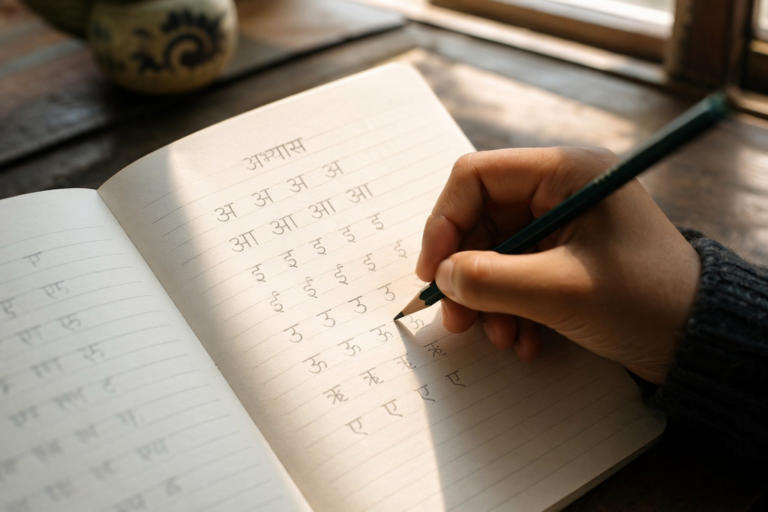
Handwriting is important, too. Try writing the same Sanskrit letters over and over. This helps you see shapes and hear sounds in a better way. When you say the letters out loud as you write, it can make you remember them faster. In the next section, you will find easy ways to get more from your practice.
Handwriting Techniques and Practice Strategies
When you start to practise handwriting, keep it simple. Focus on just a few sanskrit letters at one time, and say each sound out loud while you write it. This helps you connect how the letters look, how they sound, and how you remember them. If you are using devanagari, copy neat examples slowly. Don’t rush until you feel ready.
A simple routine is good:
-
Use a chart or pdf that has both devanagari and IAST together.
-
Practise one vowel row and one consonant row during each session.
-
Write the hard letters a few extra times by hand.
-
Say the sound out loud after you write each form.
The main thing is to be consistent. Doing a short practice every day works better than a long one once a week. If you get stuck on a letter, look at it next to a similar one, and go back to the sound group. Learning sanskrit letters gets easier when your hand and ear practise at the same time.
Frequently Asked Questions
People often get curious about the Sanskrit alphabet. There are always interesting questions about it! One thing many people want to know is how there are short vowels and long vowels in the writing system. They ask what makes the pronunciation of each vowel and consonant different, especially when it comes to aspirated sounds. This is about the flow of air you use when you speak Sanskrit.
A lot of English speakers also look for help in understanding Sanskrit letters. The IAST system is good for putting these Sanskrit sounds into Latin script. That means you can read the words in a way that makes sense in English. If you want to know more, you can go on and look deeper into these ideas to get a better grip on how it all works.
Can you provide a simple chart of the Sanskrit alphabet with English transliteration?
Yes. A basic Sanskrit alphabet chart shows the Devanagari letters on one side and the English transliteration, like IAST, on the other side. You should add the main vowels like a and ā, and also consonants like k, kh, g, and n. Many people save this as a PDF to print out and use when they study the Sanskrit alphabet.
Why do people choose to learn Sanskrit in Australia?
In Australia, many people like to learn Sanskrit. They do this because they have an interest in how language works, how it sounds, and the old texts. The writing system and the Sanskrit alphabet stand out for people who love to see patterns. When you study Sanskrit, the way sound and the writing system match up can make it feel good to learn.
Are printable charts or PDFs available for learning the Sanskrit alphabet?
Yes, printable charts and PDF resources are very good for learning the Sanskrit alphabet. The best ones will show Devanagari, IAST, and how to say each letter all together. This setup helps you with fast review, writing out the letters by hand, and checking the sounds. It is very useful if you learn on your own.
Conclusion
As we finish looking into the Sanskrit alphabet, we can see that learning this script can help you connect with a deep culture. You might be interested in how it is put together, how its pronunciation works, or you may just like the way the writing looks. No matter what, starting to learn Sanskrit gives you a new and different kind of language journey. The tips and ideas we shared will help you get started or help you go further if you already know a bit. Jump in and take on the challenge. Remember, the journey into Sanskrit can be good fun and also give you a lot back. If you want to go further with your learning, feel free to ask for more help or some new resources!