Key Highlights
-
Learning the basics of the portuguese alphabet gives you a solid foundation in reading and spelling when you start with the portuguese language.
-
The standard portuguese letters now use 26 letters in the alphabet, but for a long time there were only 23 main letters.
-
Pronunciation is important because many letter names sound different from english, even though the alphabet looks a lot like what you see in english.
-
Video lessons and audio can help you hear how each sound should be, making it easier to learn.
-
You will also come across digraphs, accents, and some less common letters that show up in foreign words.
Introduction
If you are from Australia and you want to learn the portuguese language, it helps a lot to start with the basics of the portuguese alphabet. This is one of the first things to get good at. The alphabet gives you a strong start, because you will learn to read and spell. You will also hear how the portuguese language sounds in real talks. Some letters might look like the ones in english. But their names, the way you say them, and how their pronunciation is can be different from what you know in english. When you know the alphabet well, you can start to see new words, practise easy sayings, and you will not feel so lost when people speak fast.
Overview of the Portuguese Alphabet
At first, the basics of the portuguese alphabet look a lot like the english one. This is because both alphabets come from the latin alphabet. For beginners, it can look easy to get started, and you will see many shapes you know straight away.
But the alphabet is not just the shapes you see. The names of the letters, the way the sounds work, and how to say each letter change in portuguese. That is why you should learn the basics of the portuguese alphabet early on. It helps you get a good start with reading and spelling. In the next parts, we will talk about the main things you need to know, like the alphabet, basics of the portuguese alphabet, and pronunciation.
Number of Letters and Key Features
For a long time, people learning Portuguese were told there were only 23 portuguese letters. In that old list, K, W, and Y didn’t count as normal letters of the alphabet in native words. You might still hear about this older version today, so both of these numbers show up in lessons.
Now, K, W, and Y are part of the regular Portuguese alphabet, making it up to 26 letters of the alphabet. Even with this change, these three the letters turn up less often. They are often found in foreign names, units, loanwords, symbols, and abbreviations.
There’s another thing to know about the portuguese letters. Some do not have a single sound all the time. A good example is the letter x because its pronunciation can change. In portuguese, you will also get special groups like CH, NH, LH, RR, and SS. These make new sounds, and it helps learners to listen to and practise them.
Unique Aspects Compared to the English Alphabet
Even though portuguese and english both start with latin roots, they do not sound the same. You might see letters you know, but they do not always sound like english. This can be a surprise to Australians when they try to use the portuguese alphabet.
One strong difference is that portuguese often uses combinations of letters to make new sounds. You will see these patterns a lot in everyday words. If you want better pronunciation, you need to know some of these ways. In portuguese, vowels get accented quite a bit, and some words show special symbols that change how you write and say things.
A few things to know:
-
CH in portuguese sounds like sh, and not like the ch you get in chip in english.
-
NH and LH have sounds you do not hear in english and use different combinations of letters.
-
RR and SS pop up in the middle of words. These show different pronunciations, which is not the same as in english.
-
The portuguese alphabet will use accented vowels, the cedilla (as seen in Ç), and the tilde (as seen in à and Õ) too.
The Origins and History of the Portuguese Alphabet
The portuguese alphabet comes from the latin alphabet. The latin alphabet is also the base for a lot of european writing systems. This background is the reason why portuguese can look like english when you first see it. You will know most of the letter shapes right away.
But, portuguese made its own way of matching letters and sounds. As time went by, the alphabet used in portuguese changed to match local pronunciation and spelling. It also changed to show sound changes. This is why things like accents and digraphs are important now. Some parts were added to the alphabet later as well.
Early Influences and Evolution
The portuguese alphabet started with the latin alphabet. That is where much of the modern alphabet comes from, which is why portuguese looks like many other Western languages. This helps learners as it makes the first part easier.
As portuguese became its own language, people needed ways to show how local speech sounded. Sound changes in daily use made spelling use forms that could show differences that were not clear in the old latin pattern. That is when accents and special letter groups became important.
You can still see this change in modern portuguese. Some sounds are now written with digraphs such as CH, NH, and LH, not with new letters. Marks like the cedilla and tilde also help people see how to say words clearly, while still using the latin alphabet.
Significant Reforms and Changes Over Time
One big change in the portuguese alphabet is how K, W, and Y are treated. Old books and lessons often talk about a 23-letter alphabet, since these letters did not belong to the normal set. Lots of early resources still use this older style.
But the way we use portuguese now is different. Changes and updates made K, W, and Y part of the official alphabet. Now, there are 26 letters in total, though you do not see K, W, and Y much in common portuguese words. These are mostly used in names from other places, symbols, units, and words borrowed from other languages.
So, has the portuguese alphabet changed lately? Yes, it has. But the change is not a big one for everything. The main change is adding those three letters for the alphabet, but spelling rules, accents, and sounds are still the same for learners and local speakers.
The Complete List: Portuguese Alphabet Letters
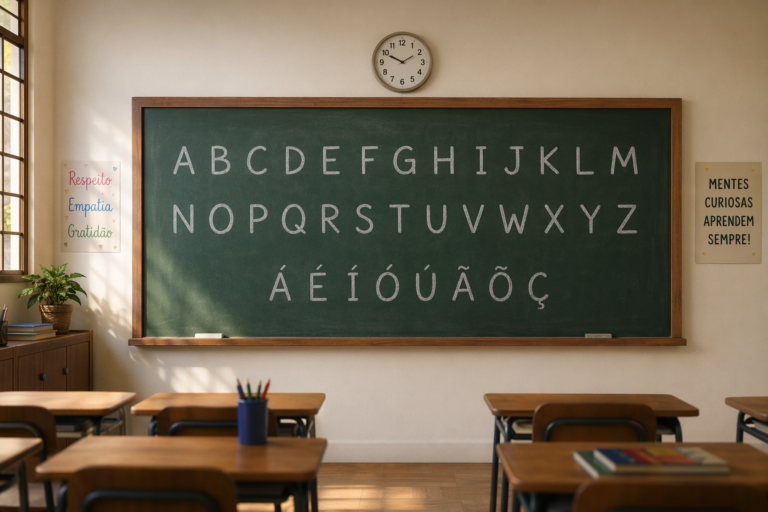
When you want to know what letters are in the standard portuguese alphabet, the answer is easy. The portuguese alphabet now has the same 26 letters as english. That means it goes from A to Z. K, W, and Y are now officially part of it.
However, many teachers like to describe the common group first. They then add the less-used ones. That helps because most of the portuguese letters you see in daily vocabulary come from the old 23-letter system. The sections below will show that main set first, and also explain where the extra letters of the alphabet are used.
The 23 Core Letters Explained
The traditional core of the portuguese alphabet has 23 letters. These are the portuguese letters most often taught first because they cover the main native spelling system. Learners usually begin with the vowels, then move to the consonants.
The five vowels are A, E, I, O, and U. The remaining core letters are consonants: B, C, D, F, G, H, J, L, M, N, P, Q, R, S, T, V, X, and Z. This grouping gives you a practical base for reading and spelling common words.
Here is a simple text table:
|
Group |
Letters |
|---|---|
|
Vowels |
A, E, I, O, U |
|
Consonants |
B, C, D, F, G, H, J, L, M, N, P, Q, R, S, T, V, X, Z |
|
Not in the older core set |
K, W, Y |
Additional Letters Common in Foreign Words
Not every letter is used the same amount in portuguese. The letters K, W, and Y are good examples that people do not see as much in common portuguese vocabulary. Learners and beginners might not get them very often, but you can still find them in modern life.
In portuguese, you will mostly find K, W, and Y in foreign words or loanwords. They also show up in abbreviations, for measurements, symbols, and names that come from other languages. This is why these three letters are now part of the official portuguese alphabet, but they do not feel as important as the main set that new learners know and use.
You’ll often see these letters in places like these:
-
K comes up in abbreviations like km and kg, and in some foreign names.
-
W is seen in loanwords, like whiskey and software.
-
Y gets used in borrowed words and names from other languages, for example yoga or baby.
Pronunciation Guide for Each Portuguese Letter
Knowing the names of the letters in the portuguese alphabet is important, but you need good pronunciation for it to help you in real life. You have to say each letter clearly when spelling your name, a street, or a booking code. You also need to hear the letters well.
The basics of the portuguese alphabet can be learned by listening, repeating, and recording yourself. Video lessons and audio help you hear the sound of every letter. If you keep practising spelling, you will get faster and more confident. We will start with vowels, then move on to consonants.
Vowels and Their Pronunciations
Most learners start with the vowels because they are at the heart of portuguese pronunciation. People are often taught the names of the letters as A [ah], E [ayh or ay], I [ee], O [ohr], and U [oo]. If you get these right, spelling and listening to portuguese words becomes a lot easier.
Vowels can show sound changes when there are accents on them. So, pronunciation is about more than just the plain letter. Stress and the way a vowel sounds both matter, which is why vowels play such a big part in the system. Things like vowel height are good to know for advanced study, but most beginners will just need to listen well and practice repeating the sounds.
Here is a simple list to help you get started:
-
A sounds like ah, kind of like the way people who speak english say the vowel in the letter name R.
-
E is heard as ay or ayh when naming the letter.
-
I is ee.
-
O is ohr, and U is oo.
Consonants and Regional Variations
Portuguese consonants each have an easy name to remember. Some are B [beh], C [seh], D [deh], F [ehf], and G [geh]. There is H [a-gah], J [jota], P [peh], Q [qay], R [éh-rre], S [éh-sse], T [têh], V [vay], X [shish], and Z [zay]. It helps a lot to learn these when you need to spell things out loud for someone.
Different ways of saying these sounds happen in different dialects, too. Learners will hear both European Portuguese and Brazilian Portuguese pronunciation in lessons. This means it is clear that the region can change the way things sound. The Portuguese of Portugal has its own style. That may be different from what you’ll hear from Brazil, even if you see the same alphabet and consonants.
Some things are good to notice early on:
-
RR is a sound that is often in the middle of words, and learners might need some practice with it.
-
SS happens in the middle of words, too.
-
X can have a few different pronunciations, so it helps to look at where it is in the word and the type of word.
Learning all this can help learners get used to the different pronunciations in Portuguese, no matter if it is from Portugal or Brazil.
Diacritics and Special Characters in Portuguese
Yes, portuguese uses diacritics and special characters. They are needed for reading and spelling. You will see the acute accent, grave accent, circumflex accent, tilde, and cedilla. These marks help show where the stress goes and how to say each word.
If you are in Australia and learning portuguese, you should know about this from the start. A word with an accent may sound different to one without it. These special characters are not there just for show. The next two sections talk about the main accents, and then explain how the cedilla and tilde are used.
Acute, Grave, and Circumflex Accents
Portuguese vowels often come with accents. These marks show how to say a word or where to put stress. The most common ones are the acute accent, grave accent, and circumflex accent. These accents are a normal part of writing in portuguese. They are not strange or rare in the language.
You will see the acute accent on Á, É, Í, Ó, and Ú. The grave accent shows up on À. The circumflex accent is there on Â, Ê, and Ô. When you learn spelling, it is good to see these accents as a part of the word. Don’t think of them as a small thing added later.
Keep this quick guide nearby:
-
Acute accent: Á, É, Í, Ó, Ú
-
Grave accent: À
-
Circumflex accent: Â, Ê, Ô
-
These accents are used on vowels
-
They help you know the right pronunciation or stress in portuguese words
The Cedilla and Tilde in Use
Two symbols are important to know in portuguese: the cedilla and the tilde. The cedilla is the little mark under C that you see as Ç. People call it c-cedilha or c-cedilhado. The tilde is the wavy line you see in à and Õ. Both of these are used a lot for pronunciation and spelling in portuguese.
You might find the cedilla used in pairs like CÇ. Here, the second C will have the cedilla mark. In books for people learning european portuguese, you’ll often hear that this form happens more in european portuguese. Like other accents on vowels, these symbols help people know how a word should sound when they say it.
The main ideas you need are:
-
Cedilla: Ç changes the sound of C and is always used in normal portuguese spelling.
-
Tilde: Ã and Õ are special vowel letters you need to say and write in portuguese.
-
These marks make it much easier to get the pronunciation right.
Examples and Common Words for Each Letter
Seeing examples helps the portuguese letters make more sense. When you match a letter with useful vocabulary, spelling is not just an idea. It starts to be something that helps you in real life each day. You can get more sure of yourself with only a few words as you practise listening and speaking.
A good way to begin is with practical language. Think about the names, greetings, and replies you might say in a café, a restaurant, or out on the street. The next parts look at simple, everyday vocabulary and how pronunciation works. These can help Australians remember common portuguese phrases and get better with portuguese letters.
Day-to-Day Vocabulary Australians Might Use
If you want to learn for your travel or for talking with people every day, start with learning practical vocabulary. The compiled lessons say you should use the simple portuguese phrases again and again. This will help you get used to the words when you hear them and when you say them in real life. It’s a good way for beginners to learn.
A strong example is muito bem, obrigado, and for women, obrigada. Another simple reply is sim, sim, obrigado. These might look easy, but the phrases help you understand the rhythm, stress, and quick way people talk. Até amanhã is also a good portuguese expression to know and to say out loud.
You can start with words and phrases like these:
-
Olá
-
Muito bem, obrigado / obrigada
-
Sim, sim, obrigado / obrigada
-
Até amanhã
-
Exemplo words from digraph practice such as chave, ninho, and filho
Pronunciation Tips Using Familiar English Examples
Some Portuguese sounds might remind you of English ones, but these are just simple tips to help you start. For example, the material put together says the letter A in Portuguese sounds a bit like the vowel says in the name of the letter R for English speakers. This link can be a help at first.
But it’s better to listen to a native speaker, check out some audio, or watch video lessons instead of going with what you know from English. Portuguese has its own way with sounds that does not show up the same way in English. This is true when you look at digraphs or when you hear the rolling R sound.
Try these to remember:
-
CH sounds like “sh”, and not like the “ch” you find in “chip”.
-
NH is much like “ny”.
-
LH gets close to a “lyi” sound.
-
RR needs you to get your tongue or throat working a bit more.
-
Use audio and repeat what you hear. Don’t depend just on ai-style phonetic spells for sounds.
The Differences Between European and Brazilian Portuguese Alphabets
Australians often wonder if european portuguese and brazilian portuguese use different alphabets. The truth is, both share the same alphabet. There are 26 letters that the two forms of portuguese use. So, there is not a different alphabet between them.
The real differences between european portuguese and brazilian portuguese are in how people sound the words out, the way accents work, and in the different dialects they speak. You might hear the same word said in different ways, depending on if it’s someone from portugal or from brazil. The alphabet stays the same, but when you listen to people speak, there can be different ways of saying things. This can make your listening experience change a lot between the two types.
Spelling and Pronunciation Distinctions
The alphabet in Portuguese is the same for both European Portuguese and Brazilian Portuguese. Learners and beginners in both use all the same letters. This makes it easier to start.
What stands out more is how people say the words. The resources split up the pronunciation, so you can hear the difference in european portuguese and brazilian portuguese. The same words can sound very different depending on which one you learn. Many Australians notice this right away when they begin. It is the first big thing they pick up.
Here’s a quick wrap-up:
-
European Portuguese and Brazilian Portuguese use the same spelling and alphabet.
-
There are different pronunciations in each accent and between different areas.
-
It’s best to listen to audio from the kind of portuguese you want to learn, instead of guessing from english or using ai.
This helps learners and beginners, no matter if you go for european portuguese or brazilian portuguese. People get the different ways to say things if they use real audio as part of the way they learn.
Contexts Where Differences Matter for Learners
For learners, these things really matter when you are listening, repeating, and picking what to study. If you want to go to Portugal, you will find European Portuguese audio and spelling practice the most useful. If you want to go to Brazil, it’s better to use Brazilian Portuguese resources.
This does not mean you have to learn the basics of the Portuguese alphabet again. The letters are still the same. What changes is how quick people speak, the way some sounds come out, and the accent your ear gets used to hearing over time.
Focus on situations like these:
-
spelling your name, address, or code to another person
-
understanding fast speech in different dialects
-
choosing video lessons, audio, or a native speaker model that matches your learning goal
Letters Used Primarily in Foreign Words
Some letters are still not used much in normal Portuguese words by people who speak the language every day, even though they are now part of the alphabet. Most learners see these letters mostly in foreign names, words from other languages, short forms, or in science and measurement terms.
The main group to remember is K, W, and Y. These letters are important, but they do not play the same role as the old main letters. If you know where these letters show up and the reason for it, you can avoid mixing things up when you see loanwords or when you have to say new words out loud.
Keywords: portuguese, alphabet, vocabulary, loanwords, learners
Which Letters Are Rare or Loanwords Only?
The letters K, W, and Y are not used much in portuguese. You will not find them a lot in words that come from the native vocabulary. This is why old lists of the alphabet do not always show these letters as part of the main group. Even today, learners and beginners notice that K, W, and Y do not come up as much as the other letters.
Most of the time, you will see these rare letters in foreign names, short forms, and words borrowed from other languages. These letters are now part of the full portuguese alphabet, but they still feel imported when you see them in use. If you are just starting out, it is good to know what they look like. You do not have to think of them as common pieces that make up most everyday words in portuguese.
Here is the quick breakdown:
-
K is a rare one and turns up a lot in shortcuts like km and kg.
-
W is usually found in words that have come from another language.
-
Y most often shows up in names and new loanwords from other places.
-
All three are now official, but they are not main letters in traditional, native portuguese spelling.
Examples of Foreign-Origin Words in Portuguese
Examples help people remember this better. The list gives words from other places that are now in everyday Portuguese, mostly in new things people talk about. These examples are useful because they let you see how the rare letters look when used, not just by themselves.
You can hear this vocabulary when people talk, in the media, or in product names. Even though some of these words come from other languages, they are important for learners because you will find them in real life. That’s one reason the letters K, W, and Y were added for good to the Portuguese alphabet.
Some common examples are:
-
whiskey
-
software
-
yoga
-
baby
Conclusion
In the end, knowing the Portuguese alphabet is important for people in Australia who want to use the language well. The Portuguese alphabet has some special letters, diacritics, and ways of saying things that can be tricky at first. But these things also make learning fun and full of new things to discover. If you get to know the main points of the alphabet, and see what is different in Brazilian Portuguese and European Portuguese, you will get better at talking and understanding people. You will also learn more about the culture.
No matter if you want to travel or just try something new with language, this knowledge will help you a lot. If you want to keep going and learn more, you can try our brazilian portuguese help for free and start your journey today!
Frequently Asked Questions
Is the Portuguese alphabet similar to Spanish or English?
The portuguese alphabet is much like the english and spanish ones. That’s because they all start from the latin tradition. What sets them apart are how letters sound, where the accents go, and the way you say the words. So, the alphabet looks familiar on a page, but when you hear spoken portuguese, you will notice some clear differences. This is why learners need to listen often and practise saying these sounds.
What are the best resources for Australians learning the Portuguese alphabet?
The most helpful things for learners are audio, video lessons, and doing spelling many times. Learners do well when they hear how a native says something and record their own voice. It also helps to use real phrases in practice. A dictionary with pronunciation help is good, too. If you use a pdf, it’s better to have audio with it and not use the pdf by itself.
Has the Portuguese alphabet changed in recent years?
Yes, the old way of teaching used a 23-letter portuguese alphabet. Later on, changes made it so K, W, and Y are now part of the alphabet. You will still find these letters mostly in loanwords, names, shortcuts, and symbols. So, the main change was in making these letters part of the right spelling, not in how people use the core alphabet every day.