Key Highlights
-
The Phoenician alphabet was a small writing system that people used for the Phoenician language.
-
Its Phoenician script made it easier to write, compared to old writing systems that had a lot of signs.
-
The Greek alphabet took the Phoenician signs and used some of them for vowel sounds.
-
Many people still use alphabets in the world today because of the Greek alphabet and later Latin, and their connection goes back to Phoenician script.
-
Historians say it is important because it reached a lot of the Mediterranean world, mostly through trade.
-
This writing system is valued for how simple it is, its influence on others, and the way it continues to matter in culture today.
Introduction
The phoenician alphabet is the main writing system for the phoenician language. This language is a semitic language used by people living on the coast of where Lebanon is now. The phoenician script is important because it made writing faster and simpler than old ways of writing. That let people be more flexible with writing back then. The phoenician script also helped start later scripts, especially the greek alphabet. Because of that, it has had a big effect on the alphabets that people like Australians use now.
Discovering the Phoenician Alphabet: Origins and Timeline
The story of the Phoenician alphabet is part of how early writing systems began in the ancient Near East. It is not the oldest system, but in the Phoenician world, it soon became well known and very important to many people.
By the time of the early iron age, the Phoenician writing system was mostly used in coastal cities along the Levant. From these places, it started to go out to other areas. To get why it came about and how it spread so far, you have to look at both the way people lived around the Mediterranean and what was happening in the local Canaanite community.
The Ancient Mediterranean Context
Start by looking at the ancient mediterranean world. The Phoenician people lived on the Levantine coast. They made strong links with others using sea travel and trade. Their cities grew into busy centres that joined the Near East, islands, southern europe and north africa.
This setting was important. The maritime trading culture of phoenician merchants helped ideas travel as well as goods. A writing system with only a small group of marks was very handy when people needed to write names, goods or messages to send them across long distances.
In this world, the phoenician script was more than a simple local way to write. It did the job for traders and for many people spread out through the region. This setting helps us see why the phoenician script stayed so close to the spread of alphabetic writing, though other early ways to write with the alphabet came before it.
Where and When the Phoenician Alphabet Emerged
Most stories say that the old Phoenician alphabet came from the coast of what is now Lebanon and places close by in the Levant. This matches with lebanon’s epic heritage and the big part cities like Tyre and Sidon played in the phoenician world. People used this writing system for the Phoenician language, which is one of the canaanite languages.
But the alphabet’s story goes back more. When you look at all the helps, they show Proto-Sinaitic or Proto-Canaanite as coming before it. These have links to Egyptian writing signs and something called Semitic acrophony. Some stories also talk about Ugaritic from northern syria as being older and important, as it helped shape the way the alphabet lines up now.
Old stories about the phoenician prince cadmus show how much the early Greeks thought writing came from the Phoenicians. These stories are more legend than true history, but the big picture is still clear. There was an early linear script that grew up in the Levant before the early iron age, and it turned out to be very important.
Unique Features of the Phoenician Script
One reason the phoenician script is important is because it is simple. The script uses a small number of letter forms. It does not have hundreds of signs, so it is easy to use and quick to learn. This helped the script to spread fast across the trading networks at that time.
Another key point is that it is an abjad. That means the phoenician script was mainly for consonants, and did not write full vowel sounds. This made the script work in a special way. Later on, new users—like the Greeks—changed some letter forms to show vowel sounds too. The next sections talk more about this.
Number of Letters and Their Appearance
The Phoenician alphabet is commonly described as having 22 letters. These phoenician letters represented consonantal sounds. Their letter shapes changed over time, but the key point is that each sign stood for a sound rather than a whole word or large syllabic set.
Some letter names are especially important because of what happened later. The first letter was alep, linked with “ox” in older explanations. Other well-known names include he, waw, yodh, ayin, mem, and taw. These names help explain how later alphabets reused or reshaped signs.
|
Phoenician letter |
Name of the letter |
Broad sound value or later link |
|---|---|---|
|
? |
Alep |
Glottal sound; later linked with Alpha |
|
? |
He |
H sound; later reused for Greek E |
|
? |
Waw |
W or semivowel; later linked with U, V, W, Y, and F pathways |
|
? |
Yodh |
Y or semivowel; later linked with I and J |
|
? |
Ayin |
Throaty consonant; later linked with O |
|
? |
Taw |
T sound; in later reuse linked with X in some traditions |
The Abjad System: How It Works
Here is the main thing to know about the Phoenician script: it was what we call an abjad. It wrote down most consonants but left out a lot of vowel sounds. Because of that, if you try to set it right next to English scripts, you run into problems. This is because English needs you to write out the vowel sounds.
That’s the reason why you don’t have clear Phoenician script versions for a lot of English vowel letters like E, O, I, and U. Some of those letters later came from Phoenician signs, but this only happened after Greek speakers used old consonant signs for new vowel sounds.
This system worked well if you spoke a Semitic language with consonantal roots. People could guess the missing vowels just from the context. So, the script was good for what it was made for, but it was not made for English. That key point is also why Greeks had to change things to build their own alphabet.
Comparing Phoenician to Other Writing Systems
To see why the Phoenician alphabet was important, you can look at it next to older systems like egyptian hieroglyphs and cuneiform. Those old ways needed a lot of signs, had mixed meanings, and asked people to know a lot. Phoenician made things easier by using a simple set of sounds.
That does not mean it worked just like the English you and I use today. Most of the time, you can’t swap an English word for the same letters, because Phoenician wrote sounds in a different way and often left out vowels. But, if you compare it with egyptian hieroglyphs and older writing methods, the Phoenician style gave people a much simpler way to write. The next parts will show you how.
Differences from Egyptian Hieroglyphics and Cuneiform
Older systems like egyptian hieroglyphs and cuneiform were not made from a small, steady set of single-sound signs. They could use signs for things, ideas, groups of sounds, and single sounds. This made reading and writing a skill mostly for a few people.
The phoenician script is different. People often talk about it as a much more clear step in how we used letters for sounds. Some say it started with signs from Egypt, or even as a direct variation of egyptian hieroglyphs that passed through older Semitic types. Still, when it was done, the script looked like one of the linear scripts.
-
Egyptian hieroglyphs used a lot of signs and did different jobs.
-
Cuneiform also had many signs and went with groups of sounds.
-
Phoenician had a short set of signs mainly for sounds.
This is why people say it is simple to learn and could spread fast.
How the Phoenician Alphabet Simplified Writing
What made this writing system work well was not mystery or some special status. It was how easy it was to use. There were fewer letter forms to remember. That made writing an easy way to record names, track goods, or share messages. People didn’t have to get through hundreds of signs to write things down.
The simple layout is one reason historians often say the Phoenicians were the ones who gave us the alphabet. There were earlier alphabetic ideas, but in the way people talk day-to-day, the Phoenicians get the credit. Their writing system spread out wide, and it became the missing link between those old systems and the ones that came later.
You can see this in what happened after. The Greeks took the Phoenician signs and made them their own. Then, others took the Greek forms and changed them too. That meant a system, simple enough for notes, trading, and even short articles or labels, could be used by a lot of people, not just one bunch. It was their easy way of doing things—not just how old it was—that helped shape history.
Everyday Uses of the Phoenician Alphabet in Ancient Times
The Phoenician alphabet was not just a smart idea. It was something people used every day. Phoenician traders and their communities had to use writing that could help them with business and talking to others as they moved goods across the sea and set up in new places.
This is why record keeping is very important here. The new script helped with jobs people did every day, especially for Phoenician merchants working in the Mediterranean world. When we look at things found by archaeologists and old writings carved in stone, we can see how it was used. Next, we talk about trade, keeping records, and what has been found in different sites where people lived and traded.
Trading, Communication, and Record Keeping
One big reason the script became common is simple. It worked well for trading. Phoenician traders worked in ports and lived by the sea. They needed an easy way to mark goods, write names, and keep up with deals. The short alphabet of the phoenician writing system made this faster than older, big systems.
The writing system was also helpful for messages. When people had to travel over water, notes needed to be copied, sent, and read in many places. A small, clear way of writing helped these words move and made work records easier to keep.
-
It was useful for trading activity all over the Mediterranean.
-
It made record keeping work better in shops and trade.
-
It made it easy to send news between far-away settlements.
That hands-on use is a big reason the phoenician writing system became so important at the time.
Inscriptions Found Across Phoenician Settlements
The best proof that people used this writing comes from Phoenician inscriptions found in many spots where the Phoenicians went. These show that the script did not just stay in one city. It moved around with the people, their trade, and the places where they settled.
This spread is important because it matches what ancient writers and the later historians talked about. The script was not just used in one spot. It reached out into other parts of the Mediterranean. It was not only a local test. Each new writing added more to our lines of inquiry about where the script went and how people used it.
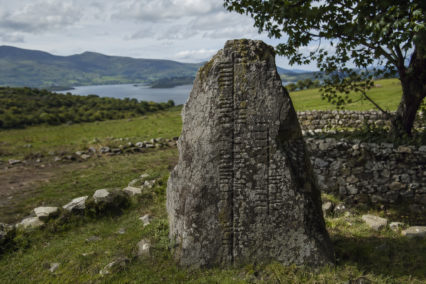
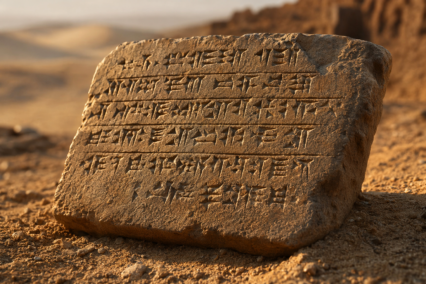
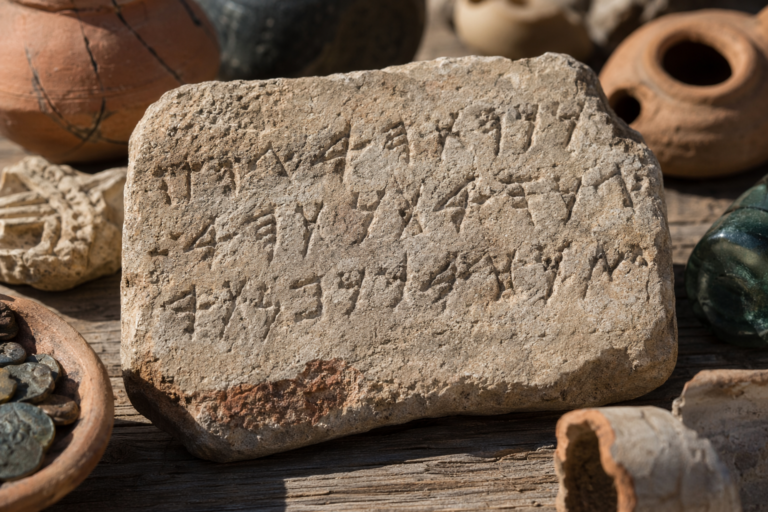
Even the small finds really matter. You might see just a short text on a rock, a marked thing, or an old stone with words on it. These show letter order, local writing styles, and the way people did things in different Phoenician spots. This is how archaeology helps us make big ideas real and lets us check if they are true or not.
Influences on Subsequent Writing Systems
The Phoenician alphabet was important not just for its own language. Other scripts took ideas from it. The greek alphabet is a well-known example. People changed Phoenician signs so they could write Greek words. They gave some extra consonant signs new jobs and used them for vowels.
After that, the story moved to the latin script too. The information here also shows the links with the aramaic alphabet and other Semitic writing ways. So, Phoenician was close to the start of one big group of scripts. The next parts talk about these branches in more detail.
The Phoenician Alphabet’s Role in Shaping Greek and Latin Scripts
The main mark left by the Phoenician alphabet can be seen in the greek alphabet. Greek speakers took the signs but they changed how some worked. Greek needed written vowel sounds much more than Phoenician did. So, the greek speakers used some of the old consonant marks and put them to new use for vowels like E and O.
This step was a big deal. It shifted the writing system from one that focused on consonants to one that suited ancient greek much better. From there, western Greek forms spread to Italy, where the Etruscans and then the Romans changed them again. This is how the latin script we use today, comes from the Phoenician way of writing.
So when people in Australia use the modern Roman alphabet, they are working with a very far-off child of that first writing system. The path runs across southern europe, and even though the forms changed over time, the deep historical link stayed strong. This is still one of the top examples of how a script is passed down through history.
Links with Hebrew, Aramaic, and Other Languages
Phoenician influence did not just move to the west. There is material that shows the script, or forms like it, was used for the hebrew alphabet, Old Aramaic, Ammonite, Moabite, and Edomite languages. This points to how connected it was to the wider group of canaanite languages and people near them who spoke Semitic languages.
Because of this, the hebrew alphabet and aramaic script are part of the same family story. They show a direct continuation or close growth from the same set of alphabets. It was not a totally new idea that stood on its own. That is why there are similarities people still notice in older letter names and their setup.
This is important because there are two main paths of influence. One path gave rise to Greek and Latin writing. The other path helped build Semitic writing that flowed across many middle eastern kingdoms. Together, these make the Phoenician script a central link in the whole history of alphabets.
Legacy and Archaeological Finds
The Phoenician script can still be seen today. It shows up in later writing systems and in artefacts that have lasted. These pieces help people who study the script get a clear picture of how the letters were made, how the marks were set out, and the places where the script was used.
One of the most famous examples is the sarcophagus of king ahiram. Finds like the sarcophagus of king ahiram, plus things tied to old hebrew and related scripts, keep giving new clues. They help people compare letter forms, follow how the writing got passed on, and tell more of the story about early alphabets. Let’s take a closer look at what the evidence shows.
Famous Artifacts Featuring Phoenician Letters
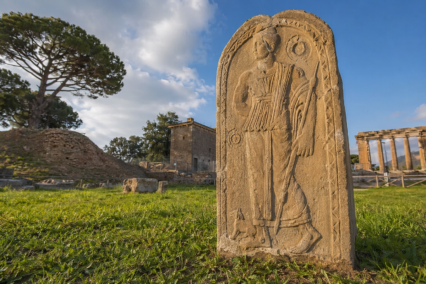
One of the best-known finds in archaeology is the sarcophagus of king ahiram. People talk about it a lot because it has one of the earliest written lines. This means scholars can look right at real Phoenician letters found in stone carving. Finds like the sarcophagus of king ahiram help take the talk away from only ideas and more into what people really did back then.
There are other bits of proof as well. These come from many places, like inscriptions, old clay tablets with a similar writing system, and objects spread out in Levant and places around the Mediterranean. Sometimes people talk about when or how these were passed on, but these objects still matter a lot. They show how the Phoenician writing system and phoenician letters were used for real and not just told about later.
-
The sarcophagus of king ahiram is a key find for study.
-
Phoenician letters seen on ancient stone show their shape and order.
-
Finds of letter forms and clay tablets across the area tell us the phoenician writing system was used far and wide.
When you put all this evidence together, it gets much easier to look at the phoenician writing system. Researchers can compare it with later scripts because of these old things.
Deciphering the Script Today
Modern study of Phoenician depends a lot on careful comparison. People look at many inscriptions, other Semitic scripts, and later alphabets that grew from these scripts. Each part opens new clues and lines of inquiry about how old things are, how people said the words, and how ways of writing changed from place to place.
Sometimes the best progress comes when you spot small things. A broken bit of writing, a change in how a letter looks, or finding the same letters in another script can give new clues. That is why short texts are also important. They help us get a better idea about the script’s spread and development.
But one piece is not enough to know all the answers. Authoritative work draws on patterns found in many old things. Still, Phoenician is often seen as the missing link in the story of alphabets, joining early Semitic ways of writing to the well-known scripts of Greek, Latin, Hebrew, and Aramaic that came after.
Conclusion
To sum up, the Phoenician alphabet is a big part of history that shows how smart people could be in the past when it comes to talking and keeping records. The way it was made helped make writing easier for everyone, and, over time, the Phoenician way of writing led to other alphabets like the Greek and Latin ones we know today. When we look at this old script, it helps us see how language and culture get linked through years. As Australians, we can be proud of the way the Phoenician alphabet shaped the ways we speak and write. If you want to know more about this or you want to check out other items from history like this, feel free to ask for a free chat with an expert!
Frequently Asked Questions
Why do historians see the Phoenician alphabet as revolutionary?
Historians say the Phoenician alphabet was a big change because it used just a few simple signs in a good, easy way. This writing system went everywhere. It turned out to be a missing link from early alphabet ideas to what came later, like the greek alphabet, so its reach grew even more.
Can English be written with Phoenician letters?
Not quite. The Phoenician letters are part of what’s called an abjad system. This means they mainly show consonants, not vowel sounds. English, though, uses a lot of written vowel sounds. Some letter names from Phoenician did go into Greek and Latin forms. But you can’t make a simple match to modern English.
Are there places in Australia to see Phoenician artifacts or scripts?
The information collected does not name any museum in Australia that has Phoenician artifacts on show. If you want to know more, a good next step is to look at the main museum collections in Australia. You can also check exhibition listings for ancient Near Eastern items. Try to find displays with script or phoenician inscriptions.