Key Highlights
-
The roman alphabet, also known as the latin alphabet, is the world’s most used writing system today.
-
It came from the etruscan alphabet, and the etruscan one used to be linked to the greek alphabet.
-
The roman empire helped these set of letters go across big parts of Europe.
-
The old style had less letters than the modern english alphabet we use now.
-
With time, lowercase forms, printing, and later changes changed latin script.
-
Now, a lot of different languages use latin letters in daily talk and technology.
Introduction
You use the latin alphabet every time you write in English. You may not always think about it, but it’s there. People also call it the roman alphabet. This writing system is the one behind modern English and many other languages. That means it’s both very old and still important today. For Australian students, learning where these letters come from can help make spelling, how words sound, and language history much easier to get. It also shows why the roman alphabet matters for more than just school.
The Origins of the Latin Alphabet
The latin alphabet did not show up all at one time. It started to grow as a writing system when earlier cultures met each other, especially ancient greek and the Etruscan world. People started using Old Latin in writing about 700 B.C.E., so the system was already coming together back then.
It was not made up by just one person. The Romans took the Etruscan alphabet and changed it for their own use. Their new way of writing then became important as the Roman Empire got bigger. If you want to know how this happened, you need to look at the first steps and how others, like ancient greek people, helped shape it.
Ancient Roots and First Appearances
The story of the latin alphabet started before Rome was around. The oldest signs of Old Latin can be seen in writing from about 700 B.C.E. At that time, the writing system was already close to some older ones that people used around the Mediterranean.
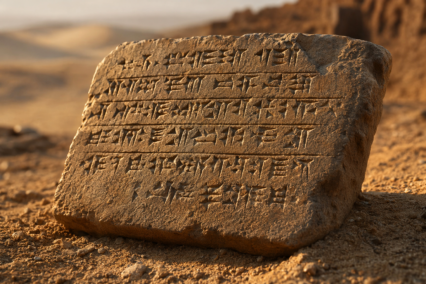
Before the roman script was made, the etruscan alphabet was the main type. That script came from the Greek way of writing. The Greek system was even older and came from outside Italy. So, the latin alphabet was not made from scratch. People took ideas from writing systems that came before and changed them bit by bit.
The main thing to know is this: there was no one Roman who made all the letters at one time. Groups who used the etruscan alphabet shared their letter shapes with Romans. Later, Romans made changes that turned those letters into a new system. The slow start is why the old latin letters look like some other scripts but are also different in other ways.
Influences from the Etruscan and Greek Alphabets
A lot of the story sits in between the etruscan alphabet and the greek alphabet. The Romans took letter shapes and sound patterns from the Etruscans, who used ideas from the greek alphabet. Then the Romans changed these letters so they would work better for the way they spoke Latin. That is why some latin letters still look like old Greek ones.
There were also changes made for practical use. The Latin language did not need every sound that Greek speakers used, so not all greek letters stayed in the latin letters. Still, later on, Y and Z came back into Latin in the 1st century C.E. This was to help with greek loanwords. This shows us the greek alphabet had its hand in Latin for a long time.
You can see this kind of thing with the history of the letter G. G was made to be a lot like Greek gamma, and it went where Z had been. So, when people want to know who made the latin letters, the right answer is that Romans made them, but they got a lot of the look and sound from the etruscan alphabet and the greek alphabet.
How the Latin Alphabet Developed Over Time
The roman alphabet did not stay the same over the years. It changed a lot through time. First, there was Old Latin. After that, people started using Classical Latin. In the Middle Ages, there was Medieval Latin. During the Renaissance, Modern Latin came in. Each stage changed the latin script because people needed a new way to write, and new readers started to use it.
Technology made another big change. The printing press brought in more set ways to write. Before that, writing by hand led to smaller and smoother letters. If you want to get how it all happened, start with early Roman choices. After that, think about the most important changes during the Middle Ages and the time of the Renaissance.
Early Roman Innovations in Letter Design
In the beginning, roman script did not look like what you see now. Old Latin used just capital letters. There were no spaces between words most of the time. It worked well when people carved into stone or other things, but it was not easy or quick to read.
When the roman empire got bigger, the need to write things down grew. People used writing for work, signs, and books. Classical latin started to use certain spellings after about 75 B.C.E. But even then, the alphabet had fewer letters than what you use today. There were no true lowercase letters at that time.
Lowercase letters came about much later, in the middle ages. This happened as people copied books and made new texts by hand. So, in Rome’s early days, one big idea was not lowercase but making a simple and clear capital-letter latin script. Those roman capitals set up the style for others to build on and create new ways of writing.
Key Changes During the Middle Ages and Renaissance
In the middle ages, the look of latin letters started to change. You can still see the effects of this on the way you read today. Lowercase letters showed up at the time, when people wrote books by hand and needed a quicker and more useful style of writing. This was different from what came before, when all letters were just big capitals.
One big change in the middle ages was carolingian minuscule. This new style of writing brought in smaller letters. It made words easy to tell apart, and it was neat, which helped people read books. People did not have to work so hard to move their eyes across the page, and books became much easier to use.
Later, when the printing press showed up, reading got even more steady and clear. Not many printing characters could be used at first when making books, so that made printers pick one good, simple style for latin letters. This happened in many languages. The story of the alphabet is not just about Rome. It is about writers, printers, changing styles of writing, and the way people learn to read today.
Structure of the Classical Latin Alphabet
The classical latin alphabet had less letters than the basic latin alphabet we use now in English. After 75 B.C.E., classical latin used only 23 letters. This became the main form that Roman writers and other smart people used for their work.
The old way can look odd at first. Some letters we know were not there or got used in a different way. You would not see all the letters we now use in modern English. When you look at the number, order, and the newer letters added later, you can see the set of letters and structure of the classical latin alphabet much better.
Number of Letters and Their Order
If you ask how many letters are in the classical latin alphabet, the answer is 23. That is fewer than the 26 letters in the basic latin alphabet used for modern English. Classical Latin became the literary standard, but several familiar modern forms were not yet separate letters.
This matters because not every symbol in modern writing counted as a distinct letter in the same way. For example, I and V often carried extra sound duties that later split into J and U. The order of the letters of the alphabet also changed over time as some letters disappeared and later returned.
|
Alphabet Stage |
Number of Letters |
Key Detail |
|---|---|---|
|
Old Latin |
20-21 |
Early inscriptions, no spaces, capitals only |
|
Classical Latin |
23 |
Literary standard after 75 B.C.E. |
|
Modern English/Basic Latin Alphabet |
26 |
Includes later separate forms such as J, U, and W |
So, the classical latin alphabet was a tighter system. It was organised enough for literature and public use, but it had not yet reached the full modern set you know today.
Missing, Rare, and Later-Added Letters
Some letters we use today were missing in the classical Latin alphabet, or were only used in some cases. When you look at old writing, you might see that G, J, U, W, and Y do not show up the way we see them now. This can make classical Latin a bit strange at first for modern eyes.
Let’s talk about the letter z and the letter Y. Both came from Greek and at first, people took them away because Latin did not need those sounds much. They brought them back in the 1st century C.E. because of greek loanwords. The letter G then took z’s old spot to give a different letter for its sound, instead of only using C. The letter k was there too. However, it was not used much, since the letters C and Q also gave the same sound in some cases.
After some time, more changes happened to the classical Latin alphabet. U and W grew out of the letter V, while the letter j came in during the 17th century. This new j helped to show the first sound in some words, which before was written using I. All of these extra letters made the full set we use now for writing, especially the ones found at the end of the alphabet.
Pronunciation Rules in the Latin Alphabet
The latin alphabet is more than just a group of symbols. The letters also have sounds, and these sounds have changed as time has gone on. In classical latin, most letters were spoken in a more steady way than you hear in modern English. This makes it easier to work out how each one should sound.
But not every sound is what you think it would be today. V was said like W, C and G always had a hard sound, and some groups of letters worked a bit differently from how we say them now. In the next two parts, you will find out the basic rules for how to say things in classical latin. Then it will show how the sounds now can be different in each language.
Classical Latin Pronunciation Basics
Classical latin had ways of saying things that were usually more regular than the way we spell in English. The information put together here shows that many vowel sounds and consonant sounds stayed the same most of the time, and each vowel had a long and a short way to say it. This makes the latin language good for people who want to study clear phonetic values.
A few rules about classical latin stand out as they are not what you find in modern English. If you try to say latin the same way you say English, you will get a few words wrong. The way things sound really mattered, and people who wrote in classical latin thought those reading it would know about these steady patterns.
-
V was said like W, and it showed up in writing where people today expect to see a U.
-
C and G were always hard in classical latin, so C was said like the C in ‘cut’, and G was like the G in ‘good’.
-
When I was at the start and came before a vowel, it could sound like Y, while R was said with a trilled or rolled sound.
There was a rule in classical latin to make double consonants each have their own sound. Q always went with U. Sounds like AE and OE were diphthongs and had their own sound people knew. Knowing these ways to say the words gives you a better idea of how the latin language would have sounded for people who were well-educated.
Modern Variations Across Different Languages
When the modern latin alphabet started to spread into different languages, the way people said the letters was no longer the same. The same latin letters could stand for different sounds based on where you were. That is why English, French, German, Italian, Spanish, and Swedish all use similar letters, but they sound quite different when you say them.
French has the same 26 letters as English, but it is said very differently. German brings in special characters like ä, ö, ü, and ß. Spanish uses ñ, and Swedish adds å, ä, and ö after Z. These special changes help each language fit its own sounds. Still, they all use latin letters from the modern latin alphabet.
So, what languages use latin letters besides Latin? Many do. Germanic languages and romance languages use the modern latin alphabet. There are also many African and Oceanic languages that use it. The letters are shared, but each group of people makes pronunciation rules special for their language, not for one big universal modern latin alphabet.
The Spread of the Latin Alphabet Beyond Rome
The spread of the latin alphabet started with the Roman Empire. It did not end there. As Roman influence moved across Europe, the writing system became part of government, religion, and schools. Over time, many local languages started to use it.
Later on, the alphabet spread more because of printing, colonisation, trade, and teaching. That is the reason people now use it far outside ancient Rome. To see how this happened, it helps to look at how Europe first used it, and then how the wider world took it on.
Adoption by European Languages
Across Europe, the latin alphabet grew to be the main writing tool for many languages. It worked well for romance languages because these all come from Latin. But, it also made its way into germanic languages like English, German, and Swedish. This often happened as Christianity spread.
Before this happened, some languages in the area used runic systems. Old English used Futhorc then. German kept its runic tradition before switching to Latin writing around the 8th century C.E. Swedish began to use the latin alphabet later, about the 11th century. This took longer because of where it was on the map and what was going on in the area at the time.
-
Romance languages that use the latin alphabet are French, Italian, Spanish, and Portuguese.
-
Germanic languages that use it are English, German, Dutch, Danish, Swedish, and Icelandic.
-
A few slavic languages use Latin writing, like Polish, Croatian, and Bosnian.
This wide use across Europe built a good base for the alphabet. After it took hold in so many germanic languages, romance languages, and slavic languages, it was all set to spread even further as people in Europe met the rest of the world.
Global Expansion Through Colonisation and Trade
The roman alphabet did not just spread because of old empires. It went global with colonisation, trade, mission work, and schooling. People have found that the alphabet shows up in the Americas, Europe, and it’s in the language use of many african and oceanic groups.
This tells us the alphabet was not stuck with old European languages. It was changed to suit new languages. Some needed extra marks or accents to show their sounds. This made it good for lots of places and different people.
Now, many african languages use latin letters. You see them in Afrikaans, Swahili, and Zulu. Māori and Malay use it too. So when someone asks about the roman alphabet today, it’s clear. It helps reading, learning, and talking for people, and covers lots of languages and areas.
The Latin Alphabet in the Modern World
In the world now, when people talk about the modern latin alphabet, they mean the group of latin letters. You see these letters in English and in many other languages people use today. It is not just about old Latin. Now it is a active system that people use every day when they write, read, and talk on the screen or on paper.
There is more to the story than just history. The use of these latin letters matters for jobs, schools, science, and when people talk with others from other places. The way people write matters a lot in these areas. This is why modern latin forms are very important today. The parts that come next will show how these letters work in special jobs and on screens in the digital age.
Current Use in Technology, Science, and Communication
The latin alphabet is now used in much more than school writing or simple messages. You see it in technology, in science, in books, on signs, and when people from different countries need to talk. It’s helpful because so many languages use it already, so it makes sense for many new systems to use the latin alphabet as their main choice.
It’s easy to see its reach in things like tools for language. You read about the international phonetic alphabet, and that makes you think of latin letters being changed to help show exact sounds. People working in science or teaching find it easy to share ideas with others in different places because the letter shapes are the same.
But every language sometimes needs more. Many languages add special characters to the main letters. French puts marks like ç and é on its letters. German people add umlauts and ß. Spanish uses ñ. These special characters show why the latin alphabet is so handy. It lets every language keep a base they share, while still helping people show all their real sounds.
Adaptations in International Standards and Unicode
When people talk about the latin alphabet these days, they mean more than just the basic 26 letters used in English. In the modern world, there are many additional letters, special characters, and accents that different languages need. This wider use of the alphabet is important for things like dictionaries, the education system, and digital platforms.
International rules are needed, because computers must all agree on how to store and show text. That’s why we use the term unicode. Computers and digital devices depend on standard codes, so letters like ñ, ä, ö, å, þ, and ß can show up the right way. Without those rules, trying to use many languages on computers would not work well for any of us.
So, today, the latin alphabet is more than the old Roman letters. It’s now a big group that includes those basic letters, a lot of accented forms, and many other symbols we use with modern languages, all working under international standards. These extra pieces—like those additional letters and special characters—help people write and read the right way in different languages around the world.
The Latin Alphabet and the English Language
The english alphabet uses the latin alphabet now, but it was not always like this. In old english, people wrote with the runic Futhorc system at first. Later, when Christianity arrived in the 7th century C.E., english started to use latin-based writing. This change made the way people wrote english and the way they spelled words different over time.
You can still see signs of that long change in english today. Some letters from old english went away, and the latin forms became the usual ones in grammar rules, printing, and schools. If you want to really understand the english alphabet and old english, it helps to know how latin came into the language, and how english began to show its own style later.
Integration into English Spelling and Grammar
English took up the latin alphabet bit by bit, not all at once. Before that time, Old English used Futhorc. When Christianity came along in the 7th century, people started to use latin writing more, and after a while, it fully replaced the old runes. This change gave English a new look when it came to spelling and grammar.
At first, the english alphabet did not match the language exactly. People kept some extra signs like thorn (þ), eth (ð), and ash (æ) because they stood for sounds that did not fit in the latin set. As time went on, printers couldn’t always find these signs. That made people use them less and helped to make the english alphabet more set.
Latin words and the way latin spelling is done also had a big part in shaping how people read and wrote english. English is not one of the Romance languages, but its writing really belongs with latin now. So when people learn old english grammar or the english alphabet, they also see how much latin words and writing still matter in everyday life.
Unique Features of English Compared to Other Latin Alphabet Users
English uses the roman alphabet like many other languages, but it does things a bit differently. In English, the way words sound often does not match the way they are put on the page, especially compared to Classical Latin or Italian. The letters we see in English might look the same as those in other languages, but the sounds don’t always connect in the same way.
There is a good reason for this. Old English started out with its own writing style. Later, it took in a lot from Latin, and then changed again with printing and when English speakers met new languages. Along the way, it got rid of special letters like þ and ð, which once helped show certain English sounds more clearly.
The language also took in a lot from Greek, so greek loanwords make spelling rules less tidy. These borrowed words often hold onto their older spellings, even if we now say them differently. Basically, Romans built the alphabet for Latin jobs, but English took it and changed it over its long and mixed-up history.
Comparing the Latin Alphabet to Other Writing Systems
The latin alphabet is just one writing system. It is the most common now, but there are others. Some languages use the greek alphabet, some use arabic script, and some use Cyrillic, Hebrew, or East Asian characters. Each system fits the history and way a language works.
Looking at these systems helps you see what is unique about latin-based writing. There are differences in how the letters look, the sounds, and how the writing joins to each language. The next two parts cover the greek alphabet first, then explain why many people still use non-latin scripts.
Differences with the Greek Alphabet
The latin alphabet and the greek alphabet both come from the same family, but they are not the same. Latin letters were shaped over time with help from Greek and passed down through the Etruscans. This shows how the two connect in history. Still, latin and greek letters are used for different languages and have their own symbols.
Some greek letters never made it into the latin system, while others changed a bit before popping up in latin. Latin dropped Y and Z for a while but brought them back to handle greek loanwords. So, latin built its own set rather than just copying everything from Greek.
-
The greek alphabet was started first and helped lead to the latin set of letters.
-
Latin letters got changed to suit how latin was spoken and didn’t keep every greek form.
-
Some greek letters, mostly ones for sounds only found in greek, got used little or not at all in latin.
So, what makes the latin alphabet different from the greek alphabet? It is its own system now, made for different languages. The letters, sounds, and history are linked, but latin has grown and changed to fit its needs.
Why Some Languages Still Use Non-Latin Scripts
Not every language chose Latin-based writing, and that’s not a problem. A writing system is more than just how you write sounds. It holds a lot of culture, history, religion, and identity. That is why many people kept their own scripts, even when the latin alphabet was used in many places.
The list has a few big examples. Greek uses the greek alphabet, Russian uses Cyrillic, Yiddish uses Hebrew, and languages like Japanese, Korean, and Mandarin Chinese use their own systems. The arabic alphabet is important too, with the arabic-based writing strong in different parts of the world.
Even where the latin alphabet took off, it did not change everything. Some slavic languages use Cyrillic, and others use Latin. The main thing is this: scripts stay because they fit their culture and language needs. Having a global writing system helps, but it does not take away from the value of other script traditions.
Conclusion
In the end, the Latin alphabet is more than just its letters. It has a long and rich history, and it still matters a lot in the world we live in now. This alphabet started a long time ago. Now, people from many places use it in their languages. When you learn about the Latin alphabet, you start to see how special language and talking with others can be. Australian students will find it interesting to see how the Latin alphabet links so many cultures and times. You might look at how people say the words or see how this alphabet is different to others. No matter what, learning about the Latin alphabet can be fun, and it teaches you a lot. If you want more info or some help, you can always get in touch for a free consultation!
Frequently Asked Questions
What are some interesting facts about the Latin alphabet?
One of the most interesting facts about the latin script is that the old roman alphabet had just 23 letters. English now has 26 letters. In the past, people wrote the roman alphabet without spaces and used only capital letters. Later on, lowercase letters and a few new ones started to change the latin script in big ways.
Which modern languages use the Latin alphabet?
The latin alphabet shows up in many modern latin writing styles. You can see it in romance languages like French, Italian, Spanish, and Portuguese. It is used in germanic languages too. This group has English, German, Dutch, Danish, and Swedish. The latin alphabet is also found in many different languages, like Māori, Swahili, Turkish, and Vietnamese.
How did each letter in the Latin alphabet develop?
The latin alphabet came from earlier forms. It was connected to the greek alphabet because the Etruscans used it. In roman script, a few letters changed how they were used. Letter z was taken out and then brought back. For a while, G was put in to take z’s spot. In the 17th century, letter j became its own letter and broke away from I.