Key Highlights
-
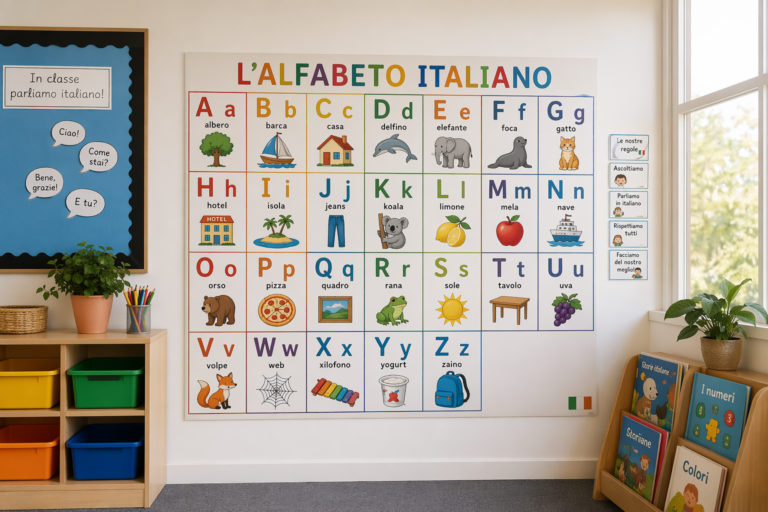
The italian alphabet has 21 main letters. It does not have 26 like the english alphabet.
-
People in Australia will see this because both the italian and english alphabet come from the latin alphabet.
-
A simple pronunciation guide can help you say all italian letters. Each sound is clear and regular.
-
The italian language is very phonetic. This means reading and talking usually match well.
-
There are five letters, J, K, W, X, and Y, that show up mostly in foreign words.
-
When you learn the sounds from italian words, you build good and early confidence.
Introduction
If you are just starting to learn the italian language, the alphabet is a good place to start. For english speakers in Australia, many letters of the alphabet will look familiar. But the way the sounds work is not always the same. This is good news, because italian is a phonetic language. That means words in italian are usually said the way they are written. It makes using the alphabet and practising a few rules for sound much easier than with english. After you get the alphabet and the basic sound rules, it will be easy to read, say, and remember new words.Overview of the Italian Alphabet for Australian LearnersFor australian learners, the italian alphabet looks a lot like the english alphabet at first. That is because both come from the latin alphabet. The standard set of letters in italian is A, B, C, D, E, F, G, H, I, L, M, N, O, P, Q, R, S, T, U, V, Z.But the italian language does not use five letters you find in the english alphabet. These letters are J, K, W, X, and Y. You may still see them in foreign words and loanwords. So, you get a mix of the alphabet shapes you know along with fewer letters. That can help you get into italian more easily. Next, we will take a closer look at the size and how the alphabet is made up.How Many Letters Are in the Italian Alphabet?The italian alphabet has 21 letters in it. This comes from the latin alphabet. The letters are A, B, C, D, E, F, G, H, I, L, M, N, O, P, Q, R, S, T, U, V, and Z. If you are used to the english alphabet, you might find this list short at first.So, which letters are not there in the italian alphabet when you look at the english alphabet? There are some missing. J, K, W, X, and Y are not part of the standard italian alphabet. This is why there are fewer letters in italian than in english.Still, you will see those letters if you look at foreign names or words that come from other languages. They can be found in modern vocabulary too. Most of the time, people use just the 21-letter system, and new learners of italian will do well to focus on these for better pronunciation and spelling.Unique Features Compared to the English AlphabetAt first glance, the english alphabet and the italian alphabet might look almost the same. The big change comes with the system behind the letters, not just the shape. There are fewer letters in the italian alphabet, and the italian pronunciation is usually a lot more steady from one word to the next.You can also see that some missing letters are not in the usual set, and some letters act in a more steady way than in english. This makes the alphabet feel tidy and easy for people to learn.The standard italian system leaves out J, K, W, X, and Y.These missing letters only turn up in foreign words or loanwords most of the time.Most italian letter sounds do not change much, so what you see is what you get with spelling and pronunciation.For english speakers, this can be a good thing. You do not need to guess how to say things as much, even though a few consonants still need extra care.Italian Alphabet – Each Letter ExplainedOnce you know the italian alphabet, also called the alfabeto italiano, you have a good start for the italian language. Every letter has its own name. When you learn the names, it helps you with reading, spelling, plus listening right from the beginning.A clear pronunciation guide will also help you hear how the italian letters sound different from english ones. This is very useful when you learn new words for your vocabulary. In the next bit, you will find out how the letters look when you write them down. You’ll also hear how they sound and see what they look like in some everyday examples.Uppercase vs Lowercase FormsIf you want to know if the alphabet in the italian language is different when you use capitals or small letters, the answer is no. The italian language uses the same alphabet for both. Only how the letters look on the page changes. The way they sound and their place in the system does not change.So when you see A and a, B and b, or M and m, these all stand for the same italian letters. The names of the letters do not change, either. This makes it easy for you if you are just starting out, because you only have to learn one alphabet.You will find capitals, or uppercase, used where you would expect. For example, at the start of a sentence or with proper names. For most other writing, people use small letters. The alphabet may look different with big or small writing, but it still works the same way in the italian language. You read and say the letters with no change.Pronunciation Guide for All Italian LettersItalian is often described as a phonetic language, which is great news for learners. Once you know the letter names, italian pronunciation becomes easier to follow. A full pronunciation guide does not need to feel overwhelming. Start by matching each letter to its common spoken name.Here is a simple text table with the standard letters and the common names used for them:LetterCommon Italian nameAaBbiCciDdiEeFeffeGgiHaccaIiLelleMemmeNenneOoPpiQquRerreSesseTtiUuVviZzetaIf you later study IPA, you can map these names to more exact sounds. For now, focus on listening and repeating. Because Italian is fairly regular, this step quickly improves both reading and speaking.Examples of Italian Words for Each LetterThe fastest way to learn the alphabet is to match each letter with a real italian word. This helps turn the letters into words you can use in the italian language. You don’t have to remember a really big list on the first day. If you use a few good italian words, it can help a lot.Here are some examples with words from the italian language:A for amore, B for bambino, C for cane, D for dito.E for estate, F for fame, G for gufo, H for hotel.I for idea, L for latte, M for madre, N for naso.You can also go on with O for odore, P for piede, Q for qualità, R for rosso, S for sole, T for terra, U for uscita, V for venerdì, and Z for zio. When you pick up more vocabulary, you start to see each letter combination in these new italian words. This will help you get better at both your memory and your pronunciation of the alphabet in the italian language.The Five Foreign Letters in Italian: J, K, W, X, YThe five foreign letters in Italian are J, K, W, X, and Y. These are not part of the standard Italian alphabet, but you will find them in the English alphabet. Because of this, many learners often hear people call them missing letters.You will still spot these letters in things like foreign words, brand names, and borrowed vocabulary. If you are just starting out, it can be good to see these as extras and not as the base letters of the Italian alphabet. The next parts will talk about why these letters are not in the tradition and how people in Italy usually say them.Why These Letters Aren’t Traditionally ItalianThese foreign letters are not found in the Italian language because Italian did not need them in its main sound system. The Italian alphabet grew from the Latin alphabet in a way that fit home spelling. That is why letters like J, K, W, X, and Y are not in the list.This is the simple answer for why these are missing letters in Italian. Back in old and traditional times, you would see Italian use other letters or mix letters together to show the sounds it needed. One easy example is with the sound you find in “kilo.” That’s written with “ch” in Italian, for example in the word chilogrammo.Later, Italian took in some new loanwords and ideas from overseas. Because of this, those alphabet letters started turning up now and then in the Italian language. Still, they are foreign letters and are not in the basic 21-letter Italian alphabet that comes from Latin.How Foreign Letters Are Pronounced in ItalianWhen you see foreign letters in Italian, the main advice is to say them like they sound in the language where the word comes from. This helps make things easy for people still learning. Most of the time, these letters are not in the usual Italian alphabet. So, the pronunciation is like the language that gave the word, not what is normal in Italian.But Italians do have names for these extra letters. The letter j is called i lunga. The k is known as kappa. When you see w, you say doppia vu. The x is like saying eecks. And the letter y is called ipsilon or sometimes eepsilon if you look in guidebooks made for people learning.Each day, the most important thing is to listen for which word the letter is in. See words like jeans, yogurt or karate? These come from another language and became part of the Italian vocabulary. That means, don’t try to use normal Italian sound rules with them. Instead, pay attention to how people usually say these words and try to copy it closely.Common Loanwords and Usage in ItalianLoanwords are the main reason you will see J, K, W, X, and Y in the italian language. These foreign words come into day-to-day vocabulary without getting changed to fit the old Italian spelling style. That is why these extra letters are still easy to spot in today’s italian words.Many of these are easy to know because they are also used in English or other languages. You might even know a few before you start to learn Italian.jeans with Jkoala or karate with Kwurstel, xenofobico, and yogurt with W, X, and YThese italian words show how borrowed forms sit next to classic spelling ways. For people learning the italian language, what matters is this: these letters are in real use when you read every day, but they mostly point out foreign words, not the main alphabet or older vocabulary you might learn first.Italian Vowels and Consonants: Pronunciation EssentialsTo speak clearly in Italian, you need more than just the names of the Italian letters. You also have to know how Italian vowels and consonants work in real words. This is where Italian pronunciation starts to make sense in a real way.The good news is, vowel sounds in Italian are usually steady. A lot of consonants are plain and simple, too. But there are some letters like C, G, H, Q, and Z that need you to pay extra attention. When you know these patterns, it makes reading out loud much easier.Rules and Patterns for Italian Vowel SoundsItalian vowels are some of the clearest sounds in the language. In most cases, the vowel sounds are close to the names of the letters. This makes a pronunciation guide easier, especially if you are used to english sounds that like to change a lot.There are five italian vowels: A, E, I, O, and U. The letter A is /a/, I is /i/, and U is /u/. The vowel E can be more open or more closed in how you say it. The same goes for the vowel O, which has two different pronunciations. You might notice these changes more in some parts of italy than others.If you are just starting out, you do not have to stress about getting every open and closed vowel perfect. Try first to be steady in how you say your italian vowels. Italian keeps its vowel sounds steady, so that helps. And when two or more vowels are next to each other, say each vowel, instead of blending them into one sound, like you might do in english.Italian Consonant Pronunciation and Double ConsonantsMany consonants in the italian language sound close to what english speakers know. Letters like B, D, F, L, M, N, P, T, and V act in a way that most people can get used to from the start. But italian pronunciation starts to stand out more when you deal with double consonants.Double consonants matter a lot in italian. They aren’t just there for looks in how you spell a word. Compared to single consonants, they get held a bit longer, or there is a little pause just before you say the sound. This small thing can really change how a word sounds and feels.Look at how single and double sounds work in words like mamma, nonna, caffè, and pizza.Listen out for that quick hold before you get to the second consonant, it’s not only a louder sound.In the south of italy, people may double a consonant at the start of a word when they speak, like when la gente sounds like la ggente.This is one spot where good listening can help you get used to italian pronunciation.Special Cases: Hard & Soft C and G, plus H, Q, and ZSome consonants in the Italian alphabet need a bit more attention because the way you say them can change with what’s around them. The biggest ones to look out for are C and G. They can sound hard or soft, and this all depends on which vowel comes next in the word. This pattern shapes a lot of common words in Italian.The letter h is usually quiet when it’s at the beginning of a word. But it does an important job in some words because it helps keep C and G hard when they come before E and I. Q mostly makes a /k/ sound, and there will be a U after it most of the time. Z can be said in two ways. It might sound harder or a bit softer.C makes a hard sound before A, O, or U, but it’s soft before E or I.G works much the same way. There are many sequences of sounds with gi in Italian.sc can sound like sk when it comes before A, O, U, H, or another consonant, but it becomes a different sound before E or I.When you know about these patterns with vowels and consonants, reading Italian and getting the pronunciation right will start to feel a lot easier for you.Practising the Italian Alphabet in AustraliaFor australian learners, regular practice is more important than getting everything right the first time. The best way to learn is to use italian lessons, have short speaking times, listen carefully, and go over a pronunciation guide again and again. This helps keep your italian learning journey on track and not too hard.You can also say the spelling of words out loud. In italy, people use a phone alphabet to make letters clear when talking on the phone. This is helpful if you need to spell your name, street, or booking details. This habit can make your pronunciation and use of the italian alphabet better in real life.Fun Activities and Tips for BeginnersYou do not need any hard or tricky tools to start. The best way for your italian learning journey is to keep it simple and steady, and to use spoken words. Say each letter, link it to a word, and go over these short sets many times. Doing this will help you pick up more vocabulary and work on your pronunciation.It also helps to say letters out loud with the Italian phone alphabet. People in italy use city names and words you know to make each letter clear, mostly when chatting by phone. For example, they use Ancona for A, Bari or Bologna for B, Firenze for F, Milano for M, Napoli for N, Roma for R, and Venezia for V.Build small drills where each letter goes with one word, like A for amore or M for madre.Read out loud short groups of words and listen for vowels, consonants, and double consonants.Try spelling out names or places with the phone alphabet as much as you can.Keep it easy, do it often, and you will see your confidence grow in no time.ConclusionTo sum up, learning the Italian alphabet is a good step for people in Australia who are starting to learn this new language. When you know the special parts of the alphabet, its sounds, and any letters that are different, you can get better at using Italian. It also helps you feel closer to the culture of Italy. If you keep practising the alphabet with fun lessons or activities, you will find it’s not just helpful but also good fun. Remember, nobody starts as an expert. We all have to take that first step, and every challenge helps you grow. If you want to get even better with your Italian or understand the alphabet and pronunciation more, you can find more help or resources that fit what you need. Enjoy your learning about the Italian alphabet, and all the best as you go!