Key Highlights
-
The greek alphabet is a set of 24 letters that’s still used in the greek language now.
-
The alphabet has both uppercase and lowercase greek letters, and some shapes can look odd to people who use english.
-
The order of the modern greek alphabet is the same as the classical greek alphabet. It goes from Alpha to Omega.
-
Greek was a good step forward because it marked vowel sounds and also consonants so clearly.
-
You can still see many greek symbols in maths, science, and in modern culture today.
Introduction
If you have seen greek letters in maths, science, or even on university shirts, then you already know a bit of the greek language even if you did not know it. This alphabet is important. It is not only an old script. People still use it today, and it helped make the latin alphabet, which english uses. For Australians who are interested in language, travel, or culture, knowing the basics of these greek letters is a good first step. It is much easier than you might think.
The Structure of the Greek Alphabet
The greek alphabet is a writing system that has 24 letters. These letters go in a set order from Alpha to Omega. This order has stayed the same in both the modern greek alphabet and the classical greek alphabet. Because of this, it can be quicker to learn than most people think.
What makes it special is the balance between vowels and consonants in the alphabet. The letters of the greek alphabet also have uppercase and lowercase forms. To see this better, it’s good to look at the names of the 24 letters and the order they follow.
Names and Sequence of the 24 Greek Letters
The greek alphabet has a fixed number of letters: 24. If you want the names and order, they run from Alpha at the start to Omega at the end. Learning that sequence gives you a solid base for reading greek characters and recognising common greek symbols in other fields.
Here is a simple text table showing the order:
|
Number |
Letter Name |
|---|---|
|
1 |
Alpha |
|
2 |
Beta |
|
3 |
Gamma |
|
4 |
Delta |
|
5 |
Epsilon |
|
6 |
Zeta |
|
7 |
Eta |
|
8 |
Theta |
|
9 |
Iota |
|
10 |
Kappa |
|
11 |
Lambda |
|
12 |
Mu |
|
13 |
Nu |
|
14 |
Xi |
|
15 |
Omicron |
|
16 |
Pi |
|
17 |
Rho |
|
18 |
Sigma |
|
19 |
Tau |
|
20 |
Upsilon |
|
21 |
Phi |
|
22 |
Chi |
|
23 |
Psi |
|
24 |
Omega |
Once you know these names, the greek alphabet feels far less unfamiliar. You can start spotting greek letters in textbooks, apps, and signs, and the order becomes easier to remember with regular practice.
Uppercase and Lowercase Symbols Explained
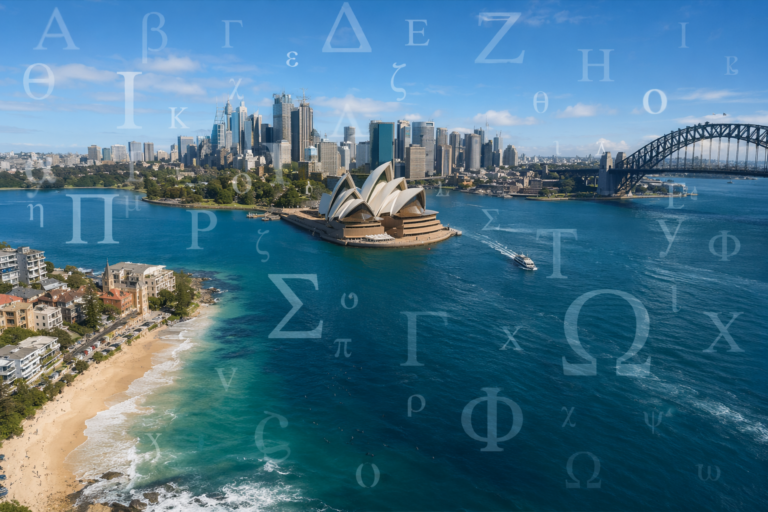
Each letter in greek has an uppercase and a lowercase form, just like we see with english capital letters and small letters. That means, for example, you get pairs like Α α, Β β, Γ γ, Δ δ, Ε ε, Ζ ζ, Η η, Θ θ, Ι ι, Κ κ, Λ λ, Μ μ, Ν ν, Ξ ξ, Ο ο, Π π, Ρ ρ, Σ σ, Τ τ, Υ υ, Φ φ, Χ χ, Ψ ψ, and Ω ω.
Some greek characters might throw you off. The greek letter rho in uppercase looks like a latin P, and eta is written like a latin H, but those sounds are not the same. The sigma is a bit different too because its lowercase form at the end of a word is ς instead of σ.
When you want to type greek symbols, unicode makes that pretty easy on most devices. This helps when you read, write, or use greek for things like school, software, research, and more.
Pronunciation and English Equivalents of Greek Letters
Knowing the names of greek letters is just one step. To really learn the greek language, you need to know the pronunciation too. This helps you link the greek letters with how they are spoken and how they sound, even in english. Many letters in the greek alphabet have english sounds you know. That can make it easier for you at the start.
But, not every letter is the same as in english. Some letters have changed over time from old greek to what we use now. Some of the sounds do not fit with the english alphabet. In the next two parts, you will see how people in Australia can say these greek letters and how they match with english sounds.
How to Pronounce Each Letter in Australian English
For people who speak Australian English, many greek letters are easy to pick up if you link them to sounds you know. Alpha is said the same way as the “a” in “father”. Epsilon sounds like the “e” in “bed”. Omicron is the “o” in “hot”. Omega is a longer “o” sound. Both Eta and Iota sound like “ee” in “see”, while Theta is said like “th” in “thin”.
There are some consonants that are easy too. Delta is like “d”, Kappa sounds like “k”, Lambda like “l”, Mu is “m”, Nu is “n”, Pi sounds like “p”, Sigma is “s”, and Tau sounds like “t”. Zeta is “z”, Xi is like “ks”, and Psi is like “ps” in “psychology”.
A few greek letters need a bit more care. Today, Beta often sounds closer to “v”. Phi is like “f”. Chi is a rough sound, like what you hear in “loch” or in “khaki”. Upsilon can sound like the “u” in “boot”, or sometimes like “ee”, all based on where it shows up.
These tips should help you with how to say greek letters if you speak english in Australia. The greek alphabet starts to make more sense when you match the sounds, like with iota, upsilon, beta, alpha, tau, pi, omega,
Matching Greek Letters with English Alphabet Sounds
When you compare greek letters to English ones, you are not after a perfect match. The main thing is to have a simple guide for the sounds. Some letters of the greek alphabet are easy to pair with the English alphabet, but there are others that only come near.
Some pairs are easy to remember:
-
Delta lines up with the English d sound.
-
Kappa matches k, and Pi matches p.
-
Lambda, Mu, and Nu go well with l, m, and n.
-
Sigma matches s, and Xi is like ks.
There are also part matches. Beta is more like v in modern greek now, not the b sound you might expect. Theta is the same as th in thin. Phi is the same as f. Chi is a rough sound that does not show up much in English. These links should help get your pronunciation of greek letters going the right way.
Vowels, Consonants, and Unique Features
One reason the Greek alphabet is important in writing history is it shows both vowels and consonants clearly. This was a big change from the earlier Phoenician alphabet, that was about consonants. For learners, this makes it simple to read.
At the same time, some letters of the Greek alphabet do not act the way English letters do. Some sounds changed as time went by, and a few letters do not have an exact English sound. If you look at vowels first and then some of the big consonants, it is easier to see what stands out.
Greek Alphabet Vowels and Their Sounds
The greek writing system was a big step because it made a way to write down vowel sounds, not just consonants. That made greek easier and more clear to read. It also helped build other alphabets later on. When people learn, vowels often are the greek letters that they spot first.
The main vowel letters in the greek writing system are Alpha, Epsilon, Eta, Iota, Omicron, Upsilon, and Omega. In modern greek, Alpha is said like a in father. Epsilon is like e in bed. Eta and Iota sound like ee in see. Omicron is a short o sound, and Omega is a longer o sound.
Upsilon can be hard in this group of greek letters, because its sound can change. Sometimes, Upsilon is said like u in boot, but it can also sound like ee, and that depends on where the letter is. So, greek vowels are usually clear and easy to tell, but not always just one sound for every single letter in all words.
Notable Consonants and Letters Without English Equivalents
Most of the consonants in the greek alphabet are easy for english speakers. Delta, Kappa, Lambda, Mu, Nu, Pi, Sigma, and Tau all sound much like the english letters. Still, some consonants in greek are a bit tricky. The way they sound or look might lead you the wrong way.
These need special attention:
-
Beta looks like it should be a b, but in modern greek, it sounds more like v.
-
Theta uses the th sound, like in the word thin. It is not just a plain t.
-
Chi has a rough sound, like loch or khaki. There is no exact match in english for it.
-
Psi starts with ps. English does not usually use that pair at the start of words.
Sigma comes with a special way of writing, too. At the end of a word, greek changes the letter sigma from σ to ς. The sound is still a soft s. That may seem small, but it is one of the most known things in greek spelling.
Frequently Asked Questions
Are you curious about the Greek alphabet? A lot of people ask about the number of letters in it. There are 24 letters. Every letter has an uppercase and a lowercase form. People also want to know what this alphabet means to us. The Greek alphabet has had a big effect on European languages. It is where the Latin alphabet started as well.
Many people think about how to say greek words right. If you understand vowel sounds and consonant combinations, it will be much easier. Getting help from an experienced Greek teacher can help you learn the way to use and say greek words with the right pronunciation.
What is the origin and historical significance of the Greek alphabet?
The greek alphabet gets its start from the phoenician alphabet. That system came out of the big group of semitic languages. People who spoke ancient greek took the phoenician alphabet and changed it. They put in clear letters for vowels. This was a big thing at the time in writing. It helped make the greek script a model for many alphabets that came later.
How is the Greek alphabet used in science, maths, and modern culture?
These days, you see the greek alphabet outside of language classes too. In science and maths, people often use greek symbols like π, Σ, Δ, μ, and Ω. The greek alphabet pops up in modern culture as well. You find it used in fraternity names and common sayings, so these letters stay a part of daily life.
Are there tips for Australians learning the Greek alphabet?
The first step for an Australian learner is to learn the 24 letters in order and match each one with sounds you already know. Write them by hand. Say them out loud. Test yourself often. If you want more help, an experienced greek teacher can help you feel confident faster.
Conclusion
To sum up, learning the greek alphabet is more than just knowing the letters. It helps you see the long history and how it has shaped many languages and cultures that we use now. The greek alphabet is made up of special sounds and shapes. It is also important in things like science and maths. People in Australia can really get a lot out of exploring it.
No matter if you want to use it for your trips, studies, or just for fun, getting to know this old script can be good and you might enjoy it a lot. If you want to learn more, you can take a class or find tools made for people in Australia. Go ahead and start your adventure with the greek alphabet!