Key Highlights
-
The Glagolitic alphabet was the first Slavic script. It was linked closely with Old Church Slavonic and the old church.
-
Most people say the Glagolitic script comes from Saint Cyril. The mission was also backed by the Byzantine Empire.
-
Unlike the Cyrillic alphabet, people see the Glagolitic script as something made by one person. It was not a change that happened slowly over time.
-
The Croatian Glagolitic script became even more important after the 12th century.
-
Glagolitic letters were used as numbers too.
-
For Australians, this is about more than history. The Glagolitic script is a big part of European learning, religion, and Croatian heritage.
Introduction
If you’ve seen the glagolitic script and are asking why it’s important, you’re not the only one. This early way of writing was used to record old church slavonic and played a big part in the start of Slavic reading and writing. The glagolitic script is also a big part of Croatian history. That’s why it means a lot here in Australia, where many people want to know more about their roots in Europe. To get what makes it special, you need to know what the script is and why people first made it.
Understanding the Glagolitic Alphabet
The glagolitic alphabet is the oldest Slavic script that people know about. It was made to write Old Church Slavonic. This was the first literary language that a lot of Slavic communities used together. To put it simply, it let people who spoke a Slavic language write down church and other written works in a clear way.
Most people agree that the glagolitic script is tied to Saints Cyril and Methodius. So, it’s not just a bunch of old symbols. It was a working Slavic script used for faith, translation work, and teaching in the old church. To see this for yourself, you need to know about where it all got started.
Origins and Creation of the Script
The glagolitic alphabet started in the 9th century when Saints Cyril and Methodius went on a mission to the Moravian Slavs. Many people say that Saints Cyril and Methodius made this script. Saint Cyril, who is also called Constantine the Philosopher, is often seen as the main person behind it. He was Greek, from Thessaloniki.
This old church script began during the time of the Byzantine Empire. It was made because Prince Rastislav of Great Moravia asked for it. With help from the Byzantine emperor, the two brothers worked to teach reading and writing. They changed important church writings into Old Church Slavonic. This meant the people in Great Moravia could now use a Slavic language in church.
People say this slavic script was made by the brothers, and did not grow slowly over many years like other alphabets. Some say there may have been a presumed Greek model, but the glagolitic alphabet is clearly different. It was made just for the slavic language and for church use.
Who Invented the Glagolitic Alphabet and Why
Most signs show that Saints Cyril and Methodius, mainly Cyril, were the people who made the original glagolitic alphabet. Cyril was a smart churchman from Thessaloniki. People see it as his work, not something copied from another writing system.
So, why did they make it? The reason was simple. They needed the script to fit Slavic speech and to help them turn big liturgical texts into Old Church Slavonic. This helped more people in Slavic groups learn and join in worship.
There was also some political help. The brothers had the support of the byzantine emperor. That gave their trip more power. In that way, the original glagolitic alphabet was used for reading, writing, religion, and talking in a language people could get. The work spread old church ideas and helped old church slavonic and liturgical texts be part of daily life.
Historical Context and Cultural Influence
The glagolitic script started out in the religious and political life of the Byzantine Empire. This writing was first used in several Slavic areas. It helped with the introduction of Christianity and made church texts easier for local people to understand in their own language.
As the years went by, its place in the world was not the same everywhere. In some regions, it was not used as much. In other places, people kept using it for higher liturgical uses and to help local identity. Out of all the countries, Croatia became the place where the glagolitic script stayed strong for the longest time. The story of this script in Croatia begins when it first made its way through the Slavic world.
Early Use of Glagolitic in Slavic Lands
The first spread of Glagolitic was tied to Great Moravia. Cyril and Methodius led their work there. The coming of the Slavic alphabet made it easy to write and teach in Old Church Slavonic. People did not have to use only Greek or Latin in church.
This was important for the Old Church. Liturgical texts could be translated, so Slavic believers used them straight away. The Glagolitic liturgy linked church life with clear language. More people could take part, and the mission grew stronger.
Later, the script began to show up in other Slavic areas. It reached Bohemia, Moravia, Bulgaria, Macedonia, Serbia, Bosnia, Croatia, and Kievan Rus as well. Even if it was not the main script for a long time in these areas, the coming of the Slavic alphabet meant a lot. It helped early literacy and shaped church life for many people.
Role in Croatian Heritage and Identity
In Croatia, the glagolitic script became even more important after the 12th century. Croats changed it into a style with sharp, boxy shapes called the Croatian Glagolitic script. People used it for church texts and also to write the Croatian language, such as Old Croatian and the Chakavian way of speaking.
This gave the glagolitic script a special role in Croatian heritage. It was the first script that Croats used to write their own language, as early as the 10th and 11th century. That made glagolitic part of who they are, not just a tool for writing.
The link with glagolitic books and religious ceremonies was important too. Priests spoke Croatian Church Slavonic during worship, and this old practice could still be seen for years. Even now, the glagolitic script stays as a symbol of Croatian heritage, culture, and history.
Structure and Features of the Glagolitic Script
The glagolitic script stands out because the people who made it wanted to match Slavic sounds, not just copy another alphabet. The glagolitic letters each had their own name, sound, and a lot of them worked as numbers too. This made the script not only useful, but also showed that there was a bit more meaning behind it.
One more thing you should know is that the original letters followed the way the people organised their alphabet. The first names, like az and buki, could also be put together to mean things. To really get how the glagolitic script worked, you have to look at the sounds, what the glagolitic letters meant, and see how they compared to Cyrillic.
The native alphabetic order of the original letters is also important if you want to learn more about how people used the script.
Letters, Sounds, and Numerical Values
The glagolitic letters were designed for the sounds of Old Church Slavonic. Each letter had a name, and the names were meaningful rather than random. The first sequence, including az, buki, vjedi, glagolju, and dobro, reflected ideas about literacy and good living.
Another distinctive feature was numeric value. Letters could also stand for numbers, marked with a sign above and dots around them. This dual role made the Slavic script useful for both text and number notation.
|
Glagolitic letter name |
Sound or role |
|---|---|
|
Az |
A sound; first letter |
|
Buki |
B sound |
|
Vjedi/Vedi |
V sound |
|
Glagol/Glagolju |
G sound |
|
Dobro |
D sound |
|
Jest |
E sound |
|
Zhivete |
Ž sound |
|
Dzelo |
DZ sound |
The number of letters varied across forms and later developments, but the core idea stayed the same: this was a script purpose-built for Slavic speech and Old Church Slavonic writing.
Differences Between Glagolitic and Cyrillic Alphabets
The glagolitic alphabet and the cyrillic alphabet have a strong link in Slavic history, but they are not the same. Many people think the glagolitic alphabet is older. People think of glagolitic as something somebody created, while the cyrillic alphabet grew out of the greek alphabet over time.
This change between the two shows how they work together. They both helped people write in Slavic countries and they both show byzantine influence. Still, they look different and grew in their own way. The glagolitic letters look more unique, while the cyrillic alphabet clearly uses ideas from the greek alphabet.
-
The glagolitic alphabet is usually seen as older than the cyrillic alphabet.
-
The cyrillic alphabet grew by getting ideas from the greek alphabet over time.
-
Glagolitic is thought of as a created script with more fresh visual forms.
-
Both these scripts were used in the church and show byzantine influence.
Usage and Legacy of Glagolitic
The use of the glagolitic script was not the same in all places or times. In many areas, people started to use Cyrillic or the Latin alphabet instead. Still, glagolitic inscriptions and glagolitic books show that the script stayed in use for a long time, especially in serious religious and written work.
Croatia kept this old way of writing stronger than other places, and you can see it clearly from the 14th century. Even when the 16th century came, and the Latin alphabet got more common, the glagolitic script kept its place in many old papers, books, and with how people saw themselves. Next, you can look at which languages it was used for.
Languages That Used the Glagolitic Alphabet
The script was first made for writing Old Church Slavonic. This was the first written language that many Slavic groups used. The script was mostly used for liturgical texts that were translated from Greek. So, church use was a big part of its story right from the start.
As time went on, the Slavic script turned up in many places. It was found in Moravia, Bohemia, Bulgaria, Macedonia, Serbia, Bosnia, Croatia, and Kievan Rus. In Croatia, the script was even used for the local forms of the Croatian language, mainly in later centuries.
The script was not made for modern vernacular languages like we have today. But, church traditions in different areas and the Czech recensions of the church played a part in how texts were copied and used. Old Church Slavonic, used for religious writing, is still its strongest link.
Important Inscriptions and Surviving Manuscripts
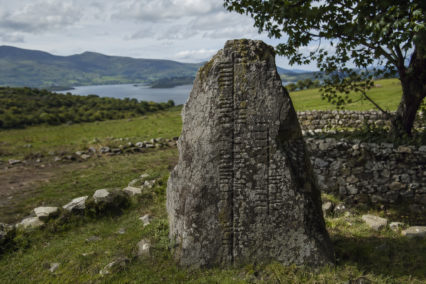
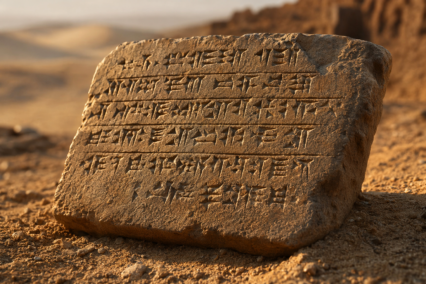
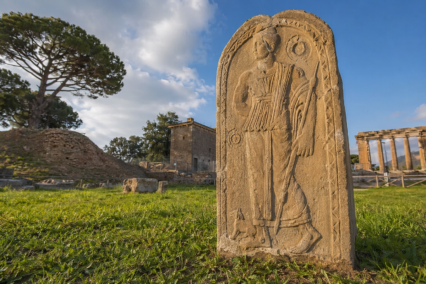
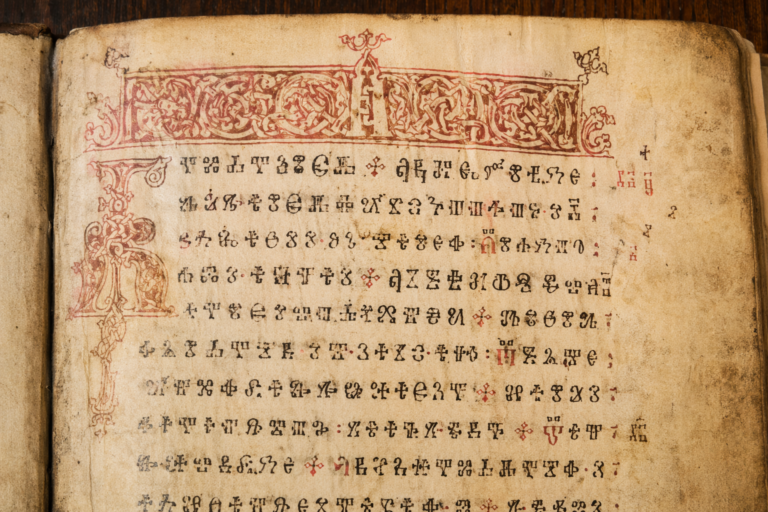
If you want to see examples of the glagolitic script, the best things to look at are old manuscripts and stone carvings that still exist. The Codex Zographensis is one of the oldest Slavic books and it is written in rounded Glagolitic. In Croatia, carved stones from the 11th and 12th century also show the change from rounded to more sharp forms.
The discovery of glagolitic inscriptions in places like Krk and Plomin has helped people follow the story of how this script grew in different areas. Some of the most beautiful Croatian glagolitic books are still around because the manuscript culture in Croatia kept them safe.
-
Codex Zographensis
-
Baška Tablet
-
Plomin inscription
-
Krk inscription
These glagolitic books and monuments matter a lot because they were actually used, not just written about. They let you see how people used glagolitic script in worship, in public, and in everyday writing.
Modern Relevance for Australians
For Australians, the glagolitic script might seem far away and hard to know at first. But if you care about Croatian family history, European church ways, or the story of writing, you will find this script has a place in your life. Here in Australia, the glagolitic script helps us see how people, faith, and language join together to shape who we are.
There is a practical side too. Now, you get online tools, a glagolitic font, and other easy-to-find online help. This means the script is not just for experts or hidden away in old books. You can find people who study and type it right now, and you can also learn with them.
Learning and Writing with the Glagolitic Script Today
The glagolitic script is not used in people’s daily lives like before. But the script still has a clear place today. In Croatia, it is part of the school system, research, and the country’s culture. People learn about it in history and language classes, with heritage groups, or because they are interested in old glagolitic books.
Because of this, people in Australia who want to learn can start with the basics, even if they are beginners. If you want to know more, you can begin with letter charts, old pictures of handwriting, and easy side-by-side checks with Latin letters. It helps to know the glagolitic script started when the introduction of Christianity and church translation took off. That is why most examples left for us are religious texts.
-
Learn the simple letter names like az and buki
-
Look at pages from old handwriting and stone work
-
Check out the round and sharp letter shapes
-
Try the study material that is with glagolitic books
These days, the glagolitic script is not used for everyday writing. Its value now is more about learning, keeping history alive, and feeling linked to culture.
Accessing Glagolitic Fonts and Typing Tools
If you want to try typing the glagolitic script on your computer, the best way to start is by using a digital glagolitic font. There is a downloadable glagolitic font by Frane Para, and this shows that there are typing tools to help the modern user.
You can also see glagolitic script on your screen using Unicode displays. These include old font sets that show both rounded and squared forms, which help you when reading old manuscripts or making simple text pictures. Because the glagolitic script is not used for any modern vernacular languages day to day, these kinds of tools are mostly for people who study, design or do heritage work.
-
Download a Glagolitic font
-
Use Unicode-supported character displays
-
Compare font styles with manuscript images
-
Create simple typed samples for learning
If you are an Australian looking into family or cultural history, these typing tools help you get into the script far easier than before.
Conclusion
To sum up, the Glagolitic alphabet is not just something from the old days. The script still matters a lot in culture and history, and you can feel its mark right now. When you look into where it comes from and what makes it special, you get to see how deep Slavic roots go and how they shape even the languages we use today. More people are getting curious about this script, and you can now use things like easy fonts and typing tools to learn and use the Glagolitic alphabet. It does not matter if you love history or are just interested—checking out this old writing gives real insight into how people have talked and written through the years. If you want to know more, you can find more info or workshops that talk about Glagolitic.
Frequently Asked Questions
Is the Glagolitic alphabet still used today?
The glagolitic script is not used now in everyday writing or for modern vernacular languages. But you still see it in study, in heritage work, and with people who have an interest in old glagolitic books and liturgical texts. In Croatia, the glagolitic script is tied to old church tradition. It has strong meaning for those who care about Old Church Slavonic.
How is the Glagolitic script different from other ancient alphabets?
The glagolitic script is special because people made it just for Slavic sounds. It is for those who want to hear worship in their own language. The cyrillic script came more from the greek alphabet, but the glagolitic script looks different. Its glagolitic letters even have their own names and can be used as numbers too.
Where can Australians see or learn about Glagolitic inscriptions?
Australians can start by looking at digital image collections and learning materials that show glagolitic inscriptions, the Codex Zographensis, and Croatian sites like the Baška Tablet. A glagolitic font is also good to use for more hands-on learning. The resources here help you get to know the Croatian glagolitic script and old glagolitic books from home.