Key Highlights
-
Chinese writing uses a logographic writing system. This means each chinese character links to a meaning and not just a sound.
-
The writing system of china does not use an alphabet. Instead, people need to know thousands of symbols to read every day.
-
The script changed a lot by the time of the Han Dynasty. It looked very different from the old pictures people used early on.
-
Later on, mainland china brought in simpler forms. They did this to help boost literacy rates.
-
Stroke order matters. Doing it right helps people write chinese characters neat and easy to read over time.
-
The system stays closely tied to the culture, history, and helps everyone share the same written chinese writing.
Introduction
If you are new to chinese writing, it might look a bit hard at first. But the writing system of china has some clear ideas when you know what you should look for. Chinese writing does not use letters to make words. Instead, each chinese character has its own sound and meaning. When people in Australia want to learn about language, travel, business or other parts of the culture, understanding the basics can help chinese vocabulary seem less far away and more useful.
Understanding the Chinese Writing System
At its heart, chinese writing works as a logographic system. This means each chinese character stands for a word or a small unit of meaning, not just a single sound. That is why the writing system of China can look so different from English.
This idea also shows why people with different chinese languages can write with the same chinese script, even if what they say sounds different. If you are just starting, remember this: chinese writing is a system where sound, meaning, and history all come together. The next sections will explain more about how it works.
Chinese Characters vs Alphabet Systems
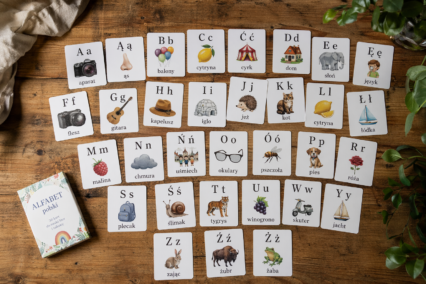
A chinese character is not the same as a letter. In the latin alphabet, these basic symbols are mostly for sounds. For example, the letter b does not have meaning by itself. You use letters together to form a word.
But in chinese writing, it works in a different way. Chinese uses a logographic writing system. Here, individual characters stand for a word or a small unit of meaning. Each chinese character also goes with one syllable. Some of these are independent words. Some go with other characters to make new words or phrases.
This is a key difference when you begin to learn. With an alphabet writing system, there are only a few symbols to know, often less than 50. But if you want to use chinese writing well, you will need to know thousands of different characters. So, instead of learning just letters and spelling like with other systems, you pick up each unit of meaning in chinese one by one.
Basic Parts and Structure of Characters
When people first see Chinese script, they may think every symbol is random. But it’s not. Every character in the writing system is put together from basic parts that go in set ways. These basic components are what give the writing system its order. That means, over time, it gets easier to study and learn.
A character will stand for a small bit of meaning, which we call a minimal unit of meaning or unit of meaning. Each one is made with lines, called strokes. Some have just a few strokes, while others use more. The number of strokes, or stroke count, can change a lot from one character to the next. This is why some are quick to pick up and other ones need more time.
People start to read and write by seeing these patterns, copying the characters, and working out how the basic parts go together. When you can see the structure in each symbol and how the basic components fit, you go from guessing the meaning to knowing it and reading with confidence.
The Role of Radicals in Meaning
Chinese radicals are helpful ideas for those who are just starting to learn. They show up again and again inside Chinese characters, and can help you line up the script and figure out what the character means. Sometimes the clue is not spot on, but chinese radicals often make it easier so you are not too weighed down.
Most characters include two main parts. One part points to a broad meaning, and the other acts as a phonetic component. That means the character often shows a minimal unit of meaning and also gives you a rough idea about how it sounds. This mix got more common with time, as language changed.
-
A radical might show the unit of meaning like an object, a kind of action, or something from nature.
-
A phonetic component is there to show sound, but it is not always exact.
-
Both parts can help you remember and spot characters.
-
This set up also helps put characters in order in books and learning materials.
Origins and Historical Significance
The history of chinese writing goes back about 3,500 years. That makes it one of the oldest writing systems people still use today. It started with early divination texts written on bones and shells. These old texts show that the chinese script began as visual pictures.
As time went on, those old pictures were made into regular writing. During the Zhou Dynasty and later in the Han Dynasty, the script became less like drawings and more like letters you would know. If you want to know why this change is important, you need to look at the earliest signs of chinese writing and see how things changed over different dynasties.
The history of chinese writing, from the zhou dynasty to the han dynasty, gives us a way to see how the chinese script turned into one of the oldest writing systems in the world still in use.
Ancient Scripts and Oracle Bones
The first clear proof of chinese writing can be found on oracle bones from the late shang dynasty. People used these bones for divination. They wrote questions on them, and a diviner would read the marks. This gives us important records of what they believed and the language they used.
Most of these oracle bones were animal bones or turtle shells. These items are so valuable because they show chinese writing in its early days. Many signs still looked a lot like real things. For example, the word “cow” looked much like a cow’s head. If they wanted to show “to go,” it might look like a foot.
But this does not mean that it was purely all pictures. Even by this time, some signs were being used for their sounds, not just their meaning. This change was big because it let the oracle bone script do more than just show simple things. Now, it could start to record fuller language.
Development Through Dynasties
Chinese writing did not stay fixed. Across the Zhou Dynasty, the Warring States Period, the Qin Dynasty, the Han Dynasty, and later eras, the script kept changing shape. Early forms were more visual, but later forms became more standard and easier to reproduce across large areas.
A major shift came with greater standardisation. By the Han Dynasty, much of the old pictorial quality had faded. The present-day standard script took shape in the third and fourth centuries CE, then remained surprisingly stable. Different styles also appeared for formal and informal use.
|
Period |
Development in chinese writing |
|---|---|
|
Zhou Dynasty |
Regional variation existed across the script. |
|
Warring States Period |
Different states used different styles and forms. |
|
Qin Dynasty |
Greater standardisation was introduced, linked with seal script traditions. |
|
Han Dynasty |
The script lost much of its pictorial look and moved toward more regular forms. |
|
Tang Dynasty |
Calligraphic traditions flourished alongside established regular writing styles. |
Simplification and Modernisation
In the early 20th century, some people wanted to change the writing system in mainland China. Reformers at the time said that the old script was hard to learn. They thought swapping the characters for an alphabet system would be better. Their idea was that this would help with modernisation, make learning easier, and help improve literacy rates. Some even felt the old script was keeping the whole country back.
But the full switch to a new system never took place. The chinese government looked at simplification of chinese characters instead. In the 1950s and 1960s, they made simplified forms in mainland China official. The aim was to help people learn the script more easily and see those literacy rates go up.
During this time, Pinyin was also introduced. Pinyin was there to give people help with how to say the words and for use in reference works. It never became the main writing system by itself. Characters stayed important. So, even with modernisation, the chinese government kept the script at the core for all writing in China.
Traditional vs Simplified Characters
One of the first things people in Australia spot is that the chinese script comes in two main forms now. There are traditional characters and also simplified ones. They both belong to the same big writing style. But, they look a bit different and are used in other places these days.
This isn’t only a small technical thing. The way they are different links to history, chinese culture, and learning. If you want to pick up the meaning of signs, study notes, or read formal texts, it’s useful to know what has changed and where each way of writing chinese is used now.
Main Differences Explained
The main difference is how hard the characters are to look at. Traditional forms often keep the old, complex characters, while simplified forms cut down the number of strokes. This idea is behind the simplification of Chinese characters that was used in the People’s Republic of China.
When you are learning, you may see that the stroke count is different depending on which type you use. A traditional character can take more time to write because it has a higher number of strokes. The simplified version usually looks cleaner on the page. But both still need you to follow the standard structure and correct stroke order.
These changes did not change the whole system. A lot of characters stayed the same, and the meaning of each word stayed just as it was. So, the main contrast is really just how it is shown in written form, not as two totally different ways of writing.
Where Each Style Is Used Today
Today, the best way to tell which style is used is by looking at the region. In Mainland China, people use simplified chinese writing. In other areas where people speak chinese, traditional chinese writing is still common. This difference started in the middle of the 1900s. It still shapes things like how schools, books, and public life work.
It’s also important to remember that speaking and writing are not the same thing. There are many chinese dialects and different chinese languages. These may not sound the same. Still, educated chinese speakers can share the same written forms. This written tradition has helped keep everyone connected and acts as a sign of unity.
-
Mainland China uses simplified characters at school, in publishing, and in official documents.
-
Hong Kong still uses traditional characters when people write in public or for official reasons.
-
Taiwan also sticks with traditional characters.
-
Readers from all regions may recognise both forms, especially if they have spent time learning more broadly.
Learning to Read and Write Chinese Characters
Learning chinese characters takes some time. You need to get used to stroke order. You need to work on your writing and memory at the same time. Many people start with stroke order, easy forms, and high-frequency chinese vocabulary. You do not have to learn everything all at once.
The pronunciation of chinese characters is important too. But learning to write is not just about the sound of the word. For Australians, the big step is learning a system that is not like English. If you see how chinese speakers learn and use the writing, it can help. It makes this all seem easier. In the next part, you will read some good tips and learn about what can get in your way.
Strategies for Non-Native Speakers
If you are new to chinese writing and you do not speak it as your first language, the best way to start is to go slow and follow a plan. The writing system may seem big at first, but you do not have to know every symbol right now. You get better at it by putting your focus on what people use most, learning common chinese vocabulary, and looking back at what you learn all the time.
It is good to think of reading and writing as things that go together. When you study chinese words in real sentences, characters stop looking strange. They become a real part of the language. When you follow basic stroke order rules, writing the characters becomes clear and you remember them more easily.
-
Start with high-frequency chinese vocabulary instead of rare characters.
-
Learn basic stroke order rules early and practise them often.
-
Study characters in words and short phrases, not only on single flashcards.
If you keep at it, the hard parts soon begin to feel more normal.
Common Challenges for Australians
For Australians, one big challenge is that Chinese does not use English parts like letters or spelling. You might think words work the same, but Chinese uses characters, meaning, and syllables instead. This change can feel slow at first.
Another thing to watch is spoken Chinese. The same syllable can mean different things if said with a different tone. This can make talking hard, even when you read okay. Chinese speakers grow up hearing these tones, so beginners need extra time to get and use them well.
-
Different tones can make words sound strange, even if they look the same.
-
Characters that look a lot alike may have different meanings. This can mix up your memory.
-
Chinese culture shapes how reading and writing is taught, held high, and used every day.
Still, high literacy rates show that with patient study, the system can be learned.
Influence on Other East Asian Languages
The history of chinese writing goes back many years and isn’t just from China. For a long time, the chinese script was used in places like Vietnam, Korea, and Japan. Classical Chinese acted as the main written language in these spots, like how Latin was used in Europe during the old days.
This has had a big effect on how local people talk and write. The educated group would learn Classical Chinese and use chinese words in the way they speak. Over time, these chinese words got used more and became normal for most people.
Now, each country has its own way of doing things. Vietnam uses the Latin alphabet these days. In Korea, most of the writing is now done with Hangul, but chinese words are still a big part of everyday talk. Japan still uses chinese character shapes that are called kanji in a lot of writing. So, even though the scripts have changed, chinese writing still has a big effect on asian languages.
Conclusion
In short, getting to know the Chinese writing system is important, especially for people in Australia who want to understand this culture better. The way Chinese characters work, how they have changed over the years, and the differences between traditional and simplified writing can show you something special about this language. It has been around for a long time. If you want to learn some Chinese, or if you just want to know more, learning about these things will help you in your day-to-day life with others and help you see the world in a new way. If you want to start now and find out more about the chinese writing system, you can ask for a free chat.
Frequently Asked Questions
How do modern Chinese people type characters on devices?
Modern chinese speakers mostly use input systems instead of drawing each chinese character by hand. A lot of people type with the pronunciation of chinese characters, often by using Pinyin. Then, the device shows matching chinese characters. This way, the writing system can work well on phones and computers.
Why is the Chinese writing system still relevant today?
Chinese writing is still used today by millions of chinese speakers. It is a big part of chinese culture. The writing system holds the history of chinese characters. It helps people talk to each other, learn, publish books, and use digital tools. Even though it is old, it is still useful now.
What is the best way for Australians to start learning Chinese characters?
A good way to start is to learn some common chinese vocabulary and get to know basic stroke order. It also helps to pick up a few high-frequency chinese characters. Australians should try to learn each chinese character as part of a word, not on its own. Listen to how chinese speakers use words. Small bits of regular practice work best.