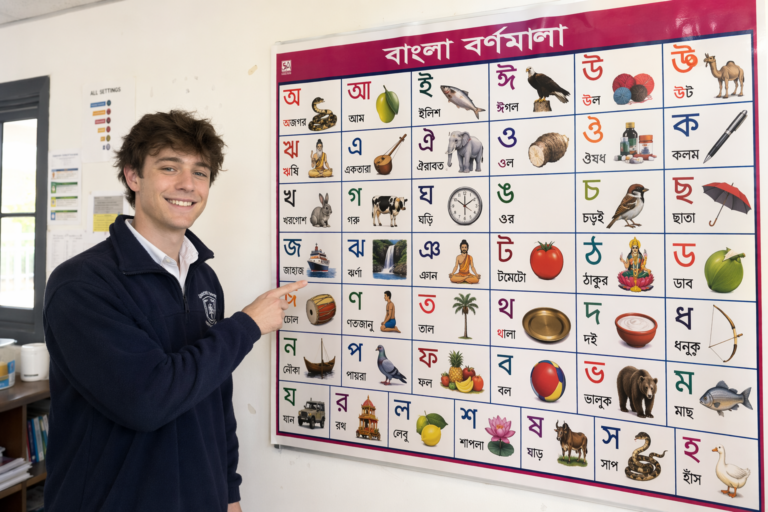
Key Highlights
-
The bengali alphabet is a system used to show sounds in Bangladesh and other parts of south asia.
-
The bangla script is an abugida. This means that most consonant letters have an inherent vowel by default.
-
bengali vowels can be shown as independent letters or as marks added to consonants.
-
The script has 11 vowels, many consonant letters, and some special marks too.
-
consonant clusters happen a lot in the writing system. Some are easy to see, but you have to remember others.
-
pronunciation often matches the way it is written, so it helps new learners pick it up.
Introduction
If you want to know more about the bengali language, starting with the bangla alphabet is a good idea. It helps you see the rich culture that comes from Bangladesh and West Bengal. At first, the alphabet can look a bit strange to people in Australia. But there are some patterns you can pick up on. Many of the sounds have an easy way to write them. If you learn the main rules first, you will be able to read simple bengali words sooner than you think.
Understanding the Bengali Alphabet
The bengali letters are part of a bangla writing system. This system is based on sound and syllables, not just single alphabet units like the English alphabet. This is important because one written sign in bengali can mean more than one thing at a time.
The writing system has vowels, consonants, and extra marks attached to vowels. Bangla letters go from left to right when you write them. The script is made so it matches how people talk in bangla most of the time. If you want to get the hang of the bengali alphabet, first you should understand how the letters are set up.
The Structure and Number of Letters in Bengali
The bangla alphabet is made up of three main parts. These are vowel letters, consonant letters, and vowel signs. This makes the bangla alphabet more than just a simple alphabet. That is why many teachers say it is a system where letters come together to make syllables.
When people start to learn the bangla alphabet, they look at 11 basic vowel independent letters first. These are: অ, আ, ই, ঈ, উ, ঊ, ঋ, এ, ঐ, ও, ঔ. People who are new to bangla also learn what is called the main set of consonant letters. There are 32 main consonant letters listed in most learner books, along with other forms and signs that come up when you write real bengali.
Bengali letters are not the same as english letters. What is special is that each consonant has two jobs. You can use a bangla consonant letter for a normal consonant sound. Or you can use it to show the whole syllable, with the built-in vowel sound called inherent vowel ɔ. This means you get letters and syllables all at once when you read or write bengali.
A Brief Overview: Vowels vs. Consonants
In Bengali, the vowels and consonant letters work together in a very set way. When a vowel sound comes up on its own, it is written as a full, independent letter. But after a consonant sound, the same vowel will show itself in a different form, often as a marker or sign.
This way of writing is not like English at all. In Bengali, people can see the sound pattern clearly, even though some signs go before, around, or under the main consonant letter that comes first when spoken.
-
Vowels show up as independent letters when they start at the beginning of words.
-
Consonant letters usually have an inherent vowel sound. That vowel is there unless a sign changes it.
-
You write a vowel sound after a consonant using a vowel marker most of the time.
-
A consonant sound and its built-in, or inherent vowel, are often counted as one, like a ready-made syllable.
-
Some vowel signs might shift place when written, but they do not change how people say them.
History and Origins of the Bengali Script
The bengali script did not just show up in one day. It slowly grew and changed from the brahmi script, which was one of the big early ways to write in that part of the world.
Today, people use the bangla script a lot in bangladesh and in the indian state of west bengal. The script had a long past, so that is why you can see many bits in it, like pieces from old sanskrit, new ways to make sounds, and many signs that mean their own thing to most people when they read.
Evolution from Ancient Origins to Modern Use
The Bengali script is part of the big Brahmic script family. This family helped shape many South Asian writing systems. Because of that, Bengali has some deep features that it shares with other scripts around it. You can see this in how it uses its consonants, vowel marks, and the way one letter often stands for a full syllable.
The earliest writing in Bengali was very close to Sanskrit. That’s why some old letters are still there in modern Bengali today, even if their main use is in borrowed Sanskrit words. Some of these letters like ঈ, ঊ, and ঋ show traces of this early stage.
As time went on, the Bengali script changed along with the way people spoke. Modern Bengali still uses the old structure, but in a way that’s easier for reading and writing every day. So even though the bengali script started a long time ago, the way we use it now fits our modern life and language.
Influence of Bengali Script on Other Languages
The bangla alphabet is important in South Asia. It is not just for people who speak Bengali. This alphabet is closely tied to the Bengali-Assamese script tradition. That means it has a shared story with some ways of writing found in other places and languages nearby.
You can see how important it is when you look at the places where Bengali is read, used to teach, or used as an official language. The alphabet is a part of life in more than one country and has cultural value in the region.
-
In Bangladesh, Bengali is the official language for the whole country.
-
The alphabet is also right in the middle of things in West Bengal and you will find it in Tripura too.
-
Assamese and Bengali alphabets have a common history through what people call the Bengali-Assamese script.
-
If you look at the bangla alphabet and Devanagari, you will see they look different, but they both come from the same roots.
For people in Australia who want to compare these systems, Bengali is connected to the other writing styles found near it but has its own feel, look, and ways of reading. It is its own thing in many ways.
Bengali Vowels (Swarabarnas) Explained
Bengali vowels are a good way to start as they help you see how sounds and writing go together. In the bangla alphabet, each main vowel sound has its own vowel letter. Most of these also get a sign that you put after a consonant.
This is very helpful for people who are new to the alphabet. You will find it easier to read once you know when to use a full vowel letter and when one goes with a consonant sign. The next two parts will show you the main list of bengali vowels and then talk about how the signs are used with the bangla alphabet.
List and Sounds of the 11 Bengali Vowels
The 11 vowel letters in the bangla script are taught as independent letters because each can stand on its own at the start of a word or in another position where no consonant comes first. Most of them also connect to consonants through signs.
Some vowels share the same modern pronunciation. For example, ই and ঈ both give i, while উ and ঊ both give u. The letter এ can represent two values, often e and æ, and ঋ is usually read as ri in Bengali rather than as a pure vowel from older Sanskrit.
|
Vowel Letter |
Usual sound value |
|---|---|
|
অ |
ɔ |
|
আ |
a |
|
ই |
i |
|
ঈ |
i |
|
উ |
u |
|
ঊ |
u |
|
ঋ |
ri |
|
এ |
e / æ |
|
ঐ |
oi |
|
ও |
o |
|
ঔ |
ou |
These vowel letters give you a practical sound map before you move into consonant combinations and IPA-style learning.
Using Vowel Signs and Diacritics
When you see a consonant in Bengali, the script usually stops using full vowel letters. Instead, it adds vowel signs to the consonant. These small diacritical marks swap out the vowel that is already there. Most of the time, the built-in sound is “ɔ.” A new mark will change this default sound.
This might be surprising if you use English, because the sign can show up before, below, after, or even all around the consonant letter. Even though you say the vowel sound after the consonant, these signs might look like they are in a different spot in the writing. So, the order you see it on the page and the order you say it are not always the same.
-
There is no vowel sign for অ, because it is the vowel that is already there in the consonant.
-
Marks like া, ি, ী, ু, ূ, ৃ, ে, ৈ, ো, and ৌ change the inherent vowel to something else.
-
Some of these marks surround the consonant and are not just written after the letter.
-
At the end of a word, the context will often help you figure out which vowel comes last.
The lowercase, joined feel of this writing is often called “matra.” But here, the main job is to mark the sound in the bengali text.
Bengali Consonants (Byanjanbarnas) and Their Classification
Consonant letters are at the heart of the bengali script. Each one stands for a consonant sound and also holds the inherent vowel unless a marker or a group of consonants changes it.
In the bangla alphabet, these letters are often sorted by how and where you make the sound in your mouth. This way of sorting helps you spot patterns in pronunciation. It also makes it easier to get the idea of consonant clusters when you start to read real words in bengali.
Main Groups of Bengali Consonants
Bengali consonants are usually taught in groups by sound. This makes it much easier to pick up because the letters that use about the same mouth area are put together. It helps when you read a member of a conjunct too, where the first letter often drops its vowel and joins right to the next letter.
These groups help you see that Bengali sounds are quite organised. You are not just remembering odd shapes. Instead, you are getting a chart that follows speech patterns and the way we use our mouth.
-
Guttural sounds come from the back. These include ক, খ, গ, ঘ, ঙ.
-
Palatal sounds are চ, ছ, জ, ঝ, ঞ.
-
Retroflex sounds are ট, ঠ, ড, ঢ, ণ.
-
Dental sounds include ত, থ, দ, ধ, ন.
-
Labial and some more common letters include প, ফ, ব, ভ, ম, plus র, ল, শ, স, হ.
At the beginning of a word, these Bengal letters often sound good and quite regular. In consonant clusters, a member of a conjunct might act another way.
Interesting Features of Consonant Clusters
One thing that stands out about the bangla script is how it uses consonant clusters. These clusters are when two or more consonants come together in a group. Most times, only the last consonant keeps a vowel sound, and the ones before just show the consonant sound.
Some consonant clusters are easy to pick, and you can see the original letters well. Others be harder to work out, so you need to remember them. Forms like ল্প are pretty clear, while shapes like ক্ত or জ্ঞ may not be as simple for people who are just starting.
Special things can happen when you use phala forms and other diacritics in bangla. If a consonant comes right before র, ব, ম, or য, it can mix and change the way it sounds or looks. This is why when you read these clusters, you do not just look at one letter at a time. You have to know the full unit with the preceding consonant and how it works in the bangla script.
Pronunciation Rules and Sound Patterns
Good pronunciation starts when you notice patterns, not when you try to sound perfect from the start. The bangla alphabet helps because many letters match their sound, and this makes it easy to build early vocabulary.
Still, some different sounds in bengali will be new if you speak english first. Bengali uses contrasts in how the air flows and where you put your tongue. Some sounds come from close to the roof of your mouth, and some come from deeper back in your mouth. This is when you need a simple guide the most.
Guide to Pronouncing Each Letter
You don’t have to know every IPA symbol straight away. But, it’s good to get the main idea first. Bengali pronunciation often has a regular link between the sign and the sound. So if you know the usual sounds, reading gets easier.
Vowels in bengali include sounds like: অ = ɔ, just like the vowel you get in call. আ = a. ই or ঈ = i. উ or ঊ = u. এ = e or æ. ঐ = oi. ও = o. ঔ = ou. Consonants will mix with these vowel sounds, unless there’s something else that changes the vowel sound.
-
ক = k, the same as in skit
-
খ = kh, think of a k with a puff of air
-
গ = g, as in go
-
চ = c or a ch-type sound
-
জ = j, just like in job
-
প = p, but ফ can be ph or f
To get clear pronunciation, try to say every consonant sound and vowel sound by following these patterns. Try not to guess just by using english spelling rules.
Unique Bengali Sounds Not Found in English
Some Bangla sounds don’t match up easily with English. One big thing is a puff of air, which is called aspiration. In Bengali, you often see a regular consonant and another just like it, but with that bit of air added in. For example, ক and খ are not the same, and the same goes for গ and ঘ.
You might notice this in pairs such as g and gh, or ch and the one with a puff of air. This isn’t only about the way you spell the word. It changes the sound completely. So you need to listen for that breath, as well as how you use your mouth.
Articulation is another tricky bit. Some bangla sounds are made at the back of your throat, while some need you to use your tongue differently than how you do in english. Guttural letters make you use the back of your throat more, and retroflex sounds mean you curl your tongue up. These things might feel odd at first, but with listening and practice, they do get easier.
Special Signs, Matras, and Markers in Bengali
In bangla script, it is not just letters that matter. Small signs like diacritics and special marks are also important. These signs often attach to a consonant and change both meaning and sound.
You will notice the horizontal line that often goes with matra in bangla or bengali script. This line catches your eye. However, the bigger thing for reading is how the markers can change the default vowel sound, show a nasal sound, or change consonants when there is a cluster. That is why bengali is so clear when it comes to sound and meaning.
Understanding Diacritics and Their Roles
In the bangla writing system, diacritical marks do a lot. They are not just there to look pretty. These marks tell you if a consonant keeps its inherent vowel, or if the vowel changes, or if it turns nasal, or even if it blends tightly with another letter.
This is why, when you learn Bangla, you shouldn’t think of vowel signs as extras. These marks are at the core of reading. Once you know them, you find it much easier to figure out words.
-
Vowel signs take the place of the inherent vowel after a consonant.
-
The sign ং gives a sound like the ng in বাংলা.
-
The sign ঃ brings in a soft h sound or can change the next sound.
-
The sign ঁ puts a nasal sound on the vowel.
Lots of people talk about matra when they describe how the writing system looks. Still, you really want to look at what every sign does to the sound. This makes reading the bangla writing system feel a lot easier to manage.
Nasalisation, Aspirations, and Other Modifiers
Bengali has a few things that change how you say a word. One of the clearest is nasalisation. If you see the sign ঁ added, it turns the vowel into a nasal sound. For example, look at বাঁ versus বা. This shift is not just about how it looks, but also be about how to say it.
Aspirations are also a big thing in bangla script. You do not always get separate letter pairs like you do in english. In bangla, you have different consonants that already show this difference, like গ and ঘ or ড and ঢ. The new sound comes from a bit more breath when you say it.
In some places, bangla and bengali use special letters and markers, like ৎ, or other shapes that are like a shortcut in a word. If you are learning, remember this bit: these diacritics and changes are just part of how to read. If you do not look for them, you miss what sound the word is really making.
How to Read and Write with the Bengali Alphabet
Reading and writing the bangla script gets much easier when you stop thinking of it the same way as English spelling. The bengali writing system works better for you if you practise the main patterns, like the vowels, the built-in sounds, and the usual clusters that come up.
For a lot of people learning bengali, writing out bangla letters by hand helps the shapes stick in your head quicker than just reading. Doing this also helps you better see the special look of bengali calligraphy. You also get to feel more deeply the cultural side of bengali language, especially how important literacy, your identity, and even history are because of things like the bengali language movement. The next steps you take should help you use this knowledge in real life.
Writing Basics and Stroke Order for Beginners
When you start with the bangla script, work on the independent letters first. Move on to the joined forms after. This way, the writing system feels easier to handle. Teach your hand the base shapes before trying the vowel signs. Save the harder joined letters, called conjuncts, for later.
It’s normal if what you write looks all over the place at the start. The bangla script uses a lot of curves and hooks, but that gets better the more you practise it. Copy just a few every day. This approach helps more than trying to rush through everything in one go.
-
Begin with the 11 vowel independent letters.
-
Add a few often-used consonants, like ক, গ, জ, ত, and ম.
-
Practise one consonant at a time with many vowel signs, for example, কা, কি, কু, কে, কো.
-
Leave the tricky joined forms and conjuncts until you’re comfortable with the simple ones.
Using a simple stroke order and taking it slow can make a big difference for new learners. This way, you build your skills in bangla bit by bit, without feeling overloaded.
Practice Strategies for Learning Bengali Script
If you want to get good at bangla script, mix in reading, writing, and listening. You’ll find that it helps to see the same bangla letters in a few ways. Look at them by themselves, with vowels, and inside words. This keeps your brain working.
A lot of people in Australia do well when they set up a simple way to learn at home. There’s no need for anything fancy. You just have to keep using bangla script often and keep a good chart where you can always see it.
-
Use flashcards. Put one letter on the front and the sound on the back.
-
Print or save a chart with vowels, consonants, and vowel signs.
-
Try interactive lessons. Listen and repeat the bangla sounds out loud.
-
Use Google input tools to type in bangla and work out each letter’s shape.
-
Copy short examples, like কা, কি, কো, and the bangla clusters most people see lots.
-
Go over a few forms each day, not all at once near the end of the week.
If you stick with this, you can go from knowing some letters to reading simple bangla much quicker.
Comparing Bengali with Other Scripts
Many people in Australia often look at Bengali next to Hindi or set it beside the Latin alphabet they use every day. This can help, if you see the way there are some things in common and some differences, too.
The bangla script and Devanagari script are from the same family. Both write out consonants first and then use marks for vowels. But bangla has shapes and sounds that are just its own. The way you turn bangla into English letters—transliteration—is a challenge. The Latin alphabet can be handy when you start, but there are things in the bangla script it can never show you in full.
Differences Between Bengali and Devanagari (Hindi) Alphabets
Bengali and Devanagari are linked, but they’re not the same writing system. If you have seen Hindi before, you might spot the shared way that consonants have vowels with them, and small marks change the vowels. The basics match in some ways, but their look is very different.
One simple way to see this is by their shape. Devanagari often seems more block-like, while the bangla alphabet is more rounded or wavy, mostly under the top line. So, if you want to switch from Hindi to bangla, you can’t count on them looking the same.
-
Both writing systems are part of the Brahmic family.
-
Both bangla and Devanagari use consonant and vowel together, not like a basic alphabet.
-
Bengali letter shapes are not the same as Devanagari’s shapes.
-
Some sounds and ways of spelling words show different ways of saying things now.
-
Bengali has its own common joint forms that you have to memorise.
So if you know Hindi, you already know the structure, but real reading in bangla will still be new for you.
The Impact of Romanisation in Everyday Australian Use
In everyday use in Australia, romanisation can help people start learning bangla. It lets people sound out words by using the latin alphabet before they are ready for the full bangla script. This can cut down early stress and makes it easier for people to work on their pronunciation.
But, transliteration is not perfect. The sounds in bengali and english can be very different. How people spell words online may change from one person to another, which means the same word might look like a few different forms. This is fine for talking with others, but will not be the best when you want to learn very well.
-
Use romanisation only as a support, and not as your last alphabet system.
-
Try to learn some common rules, like using aa for আ and kh for খ.
-
Notice how capital letters can mean different sounds, like T and t.
-
Keep checking romanised words with bangla script when you can.
If you speak english, the best way is to get used to transliteration and then start reading the real bangla script as soon as you are able.
Conclusion
In short, getting to know the Bengali alphabet is more than just learning new letters. It’s also about enjoying a good and rich cultural story. The alphabet has a special style with its vowels and other letters. This helps you get into a wider world of language. If you get to know the ways of saying things, the special marks, and how to write them, you will lift up your own language skills. You will also be able to talk more with the Bengali-speaking people. No matter if you want to talk better or you just want to learn a new script, starting this path can be very rewarding. If you want to know more, you can reach out and get support or the right help for learning the Bengali alphabet.
Frequently Asked Questions
What is the best way for English speakers to learn the Bengali alphabet?
For new learners of English, it’s best to understand the bangla writing system step by step. First, get to know the vowels and some consonants. Then, start to learn vowel signs and easy clusters. You can use flashcards, short copy exercises, and interactive lessons so you get the shape, sound, and reading all at once. This way, the writing system will be easier for you to pick up.
Are there printable resources or charts for beginners in Australia?
Yes. A new learner in Australia can use printable things like vowel and consonant charts, practice sheets, and simple tables. Google input tools are good to help with recognising and typing bangla script, vowels, and consonants. The best charts have the bangla script letter, its sound, and some simple combinations.
How many letters are there in the Bengali alphabet, and what are they?
The Bengali alphabet starts with 11 vowels and a bigger set of consonant letters. Most people learn 32 main consonants first. In the bangla script, these different letters are used with vowel signs, special marks, and joining forms. So, the whole alphabet in bangla is more than just the vowels and consonant letters.