Key Highlights
-
The greek alphabet was used in ancient greek and became one of the most important writing systems in ancient greece.
-
The greek alphabet uses 24 greek letters. These go in a set alphabetical order, starting from alpha and ending with omega.
-
One big change in this writing system was adding vowels to the phoenician letters.
-
You can learn how to say each letter by using simple english equivalents.
-
The modern greek alphabet still has many of the same forms you see in the old one. But, the sounds have changed over time.
-
When you read greek, you also need to know about the shapes for upper and lower case, plus diphthongs and some special signs.
Introduction
When you begin with the greek alphabet, try to see it as more than just a bunch of symbols. In ancient greek, the alphabet was very useful. People used it for reading and writing. It helped with memory and learning all over Ancient Greece. Later on, the greek alphabet even had a big effect on other languages.
For students in Australia, getting to know these letters is a good first step. The greek alphabet is set out in order and easy to teach. It also links to many words you already hear in science, history, and everyday English.
Origins and Historical Significance of the Ancient Greek Alphabet
The greek alphabet was a big change in the way people wrote things down. It started around the year 800 BCE, but people do not agree on the exact date. What was new about the invention of the alphabet is that it helped show the full sounds of words in a clear way.
This change was important for more than just ancient greek. The big thing was that vowels were put into the greek alphabet. This is what made the alphabet the first true one that many people know of. The way it was set up later had an effect on other scripts, especially those used across Europe. To see why, you need to look back at where it came from.
Early Developments and Roots in Other Writing Systems
The greek alphabet did not just come out of nowhere. Back in ancient greece, people used the phoenician alphabet, which was a writing system from a semitic language. That earlier script was good for writing down consonants, but it did not work well for all the vowels you find in greek speech.
The big change happened when greek users took some phoenician letters. There were some sounds in phoenician like the glottal stop which do not show up in greek. They changed the way those letters worked. These symbols were now used for vowels, which helped the greek alphabet get a new shape and made writing down words a lot more clear.
But it was not a perfect or simple way from the start. Some sounds got added in later, and different areas in greek had their own versions of the alphabet. A few extra letters got dropped later on too. Still, this use of phoenician letters by greek speakers started a new alphabet. It was important for the history of writing systems and changed the way people in greece and the world wrote things down.
The Impact of the Greek Alphabet on Western Civilisation and Language
One reason why the greek alphabet matters so much is because of how far it reached. The latin alphabet came from greek letters, and the latin alphabet is the base for english and many other european languages. The cyrillic alphabet also takes a lot from greek. So when you look at greek letters, you see part of the story behind other later alphabets too.
In greek society, the alphabet helped people learn, read, and write down their ideas. This was good for books, keeping a record of things that happened, and building a shared culture. This writing system used sounds, and that made it much easier to teach and to pick up new things.
For western civilisation, all this was very important. Greek ideas moved around through written words, and the alphabet helped keep these ideas safe over time. This is why the greek alphabet was not just good in its own day, but also turned out to be a link between old knowledge and the many european languages people speak now.
Structure and Order of the 24 Letters
By around 400 BCE, Athens started to use the 24-letter Ionic style, and this grew to be the standard classical greek alphabet that people learn today. When you want to know about the letters of the greek alphabet and the alphabetical order, this is the set they use in classical greek.
It begins with alpha and ends with omega. Learning this order is one of the best ways to get to know the greek alphabet and feel sure about it. After this, you will see the whole list in order, and then find out the main difference between the capital letters and the later small letters.
Complete List and Sequence of Ancient Greek Letters
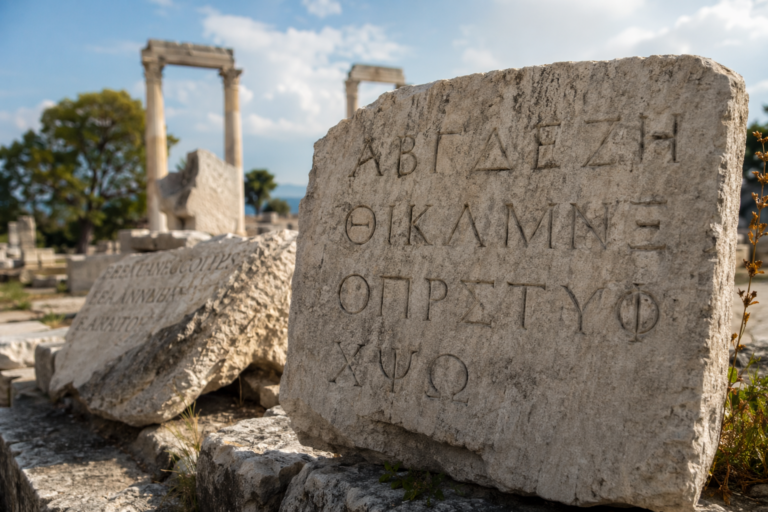
The classical greek alphabet contains 24 greek letters in a fixed alphabetical order. Students usually learn them by chanting the names in groups. That method works well because the sequence is stable and easy to memorise once you hear it a few times.
Here is a simple text table showing the order used in the greek language tradition most often taught for ancient study:
|
Order |
Letter Name |
|---|---|
|
1–4 |
alpha, beta, gamma, delta |
|
5–8 |
epsilon, zeta, eta, theta |
|
9–12 |
iota, kappa, lambda, mu |
|
13–16 |
nu, xi, omicron, pi |
|
17–20 |
rho, sigma, tau, upsilon |
|
21–24 |
phi, chi, psi, omega |
That sequence answers the basic question directly: the letters go from alpha to omega with no extra standard letters in between in the later Ionic system. Earlier local traditions had some additional signs, but the classical greek alphabet settled on these twenty-four.
Distinctions Between Upper and Lower Case Forms
A good thing for you to know if you are just starting with the greek alphabet is this: ancient Greek used to be written with only capital letters. So, every letter was in upper case, not the small ones you see now in many modern books. This can be a surprise for students who see greek writing on printed charts for the first time.
The way the small, or lower case, letters look came along later. People who wrote during the Byzantine times and printers from the Renaissance helped make the shapes we use now for learning and publishing. Because of this, both the capital letters and small letters in the greek alphabet come from different times. They are all part of the same alphabet, though they were made at different times in history.
Some greek letters look a lot like each other in both sets. Other letters are not as much the same. Sigma is a good one to think about, because there is a special form, ς, that is only used at the end of a word. If you get to know all these different letters and where they go, you will read ancient Greek words better and feel more sure of yourself.
Pronunciation Guide for the Ancient Greek Alphabet
Once you know the order of the greek alphabet, it is time to work on pronunciation. Each letter in the greek alphabet has a sound, and most of these sounds are close to ones we use in english words. This can make the greek language feel less hard or scary than you might think at first.
But you should know, not every sound in greek and english matches up. People who spoke ancient greek made a difference between long and short vowel sounds. They also would roll the letter rho just a bit, and they made sounds like pi without much breath, so you don’t hear a puff of air. The sections below give you a way to say the greek letters using an australian-style first, and then show which english sounds fit best with each of the important greek letters.
Australian-Friendly Pronunciation Tips for Each Letter
For people learning in Australia, the best way to get used to ancient greek pronunciation is to put similar sounds together. The greek letters have sounds close to english ones, even if they are not exactly the same. This will help you listen for the system, instead of worrying about small things in ancient greek.
Try these main points first:
-
Alpha is like the a in father when it is long, and like the a in about when short.
-
Epsilon is a short e like bet, and eta is a long e like ate in simple guides.
-
Omicron is a short o, but omega is a long o.
-
Pi is like the p in spot, and rho sounds like a gentle rolled r.
A few names to know: beta, gamma, delta, theta, kappa, lambda, sigma, phi, chi, psi, omega. If you can say the names and use a rough sound for each, you’ll start to build a good base for the greek alphabet and its pronunciation.
ancient greek, greek letters, english equivalents, omicron, alpha, greek, alphabet, sigma, pi, omega, beta, english, lambda, rho, phi, eta, psi, gamma, [
Corresponding English Sounds for Greek Letters
Many greek letters can be matched to english sounds. Beta goes with b, gamma goes with g, delta goes with d, kappa goes with k, lambda goes with l, mu goes with m, and nu goes with n. Some other greek letters need more thought, because they can make a sound that we do not see often or change with spot in the word.
Use these tips for comparing sounds with english:
-
Theta is just like th in theatre.
-
Xi is like x in box.
-
Psi sounds like ps in psychology.
-
Chi is said as a kh sound, like the ch in loch.
In classical greek, the vowels matter a lot too. Iota can make a sound like i in bin or a long ee sound like in meet. Upsilon is taught as something close to a u. For omicron and omega, the main change is about how long you say it. These english sounds do not show everything, but they will help you get started if you want to read or say greek words made from the greek letters.
Diphthongs and Unique Features in the Greek Alphabet
The greek alphabet does not just use single letters. It also has pairs of vowels called diphthongs. Diphthongs are when two vowels are said together in one syllable. This gives you new vowel sounds. They are a bit like how the vowel blends sound in english words such as “loud” or “boy”.
The greek alphabet also has some things that stand out. There are small marks, like breathing marks. You will notice the final sigma too. The alphabet even has a few older letters. Sometimes letters can be used as numbers as well. The next part will show you the most common diphthongs. After that, you will learn about these extra marks and how letters are used as numbers.
Examples of Common Diphthongs and Their Usage
In ancient Greek, diphthongs are two vowels that are said together in one syllable. The last part is always iota or upsilon. These pairs are counted as long by both the metre and the accent. There is one main thing to watch for with ending αι and οι, as they are different in some cases.
Here are some common ones:
-
αι, often sounds like fine
-
ει, often sounds like eight
-
οι, often sounds like boy
-
ου, often sounds like boot
Other ones you will see are αυ, ευ, ηυ, and υι. Different teachers might say these a bit their own way, but the main thing is this: you have two vowels working as one sound. If you keep your eye out for these when you read Greek, your pronunciation gets better. This also helps your feel for the rhythm in ancient Greek.
Additional Characters, Numerals, and Special Signs
The standard Ionic alphabet has 24 letters. Older forms of the greek writing system, though, had some extra characters. The most well-known ones are digamma, koppa, and a letter called san or sampi. These did not stay as part of the alphabet later used in Athens.
Greek used some special signs in its writing system:
-
Rough breathing marks show if you need an h-sound at the start of a word.
-
Smooth breathing marks show this h-sound is not there.
-
Final sigma, ς, is used at the end of words only.
-
Accent marks were added later. These show pitch patterns.
Greek, over time, linked numbers with letters as well. Some older characters remained helpful for numbers, even after people stopped using them in daily spelling. For learners, the main thing to know is that the alphabet was more than just a string of letters. It was a flexible system, full of sound marks and number uses too.
Comparing Ancient Greek with Modern Greek Alphabet
If you look at the greek alphabet in ancient greek and then in modern greek, you will see some things have stayed the same, but some have changed too. The modern greek alphabet still follows the same old style of letters, so you will find lots of shapes and names that are quite close to what you see in classical greek. This is good because if you start with ancient greek, you can use that to help you as you go on with your study of modern greek.
But there are some big changes you should know. The way letters sound now in modern greek is not always what they sounded like before. People write words differently too, and how they use the letters can change. In ancient greek, you will see texts written in big, capital letters. These days, people use more lower-case letters, just like other writing you know. Some of the letters from the old greek once sounded a lot more different, but now in modern greek, those sounds have got pretty close to each other. The next bits will help you see all these changes in the alphabet and how pronunciation has changed between ancient greek and modern greek.
Key Differences in Letter Forms and Sounds
One big difference between ancient Greek and modern Greek is how people say the words. In old Greek, beta is spoken as b. But now, it sounds more like v. The sound of eta also changed with time. It started out as a long e sound and then turned into an i sound in newer Greek.
A few important contrasts are:
-
Ancient beta had a b sound; modern beta is closer to v.
-
Ancient eta was long e; modern eta sounds like i.
-
Ancient phi and chi were taught differently from their later values.
-
Ancient texts used capitals, while later traditions standardised lower-case letter forms.
The greek alphabet looks much the same today as it did back then. But the way people say the letters has changed over the years. So, when you ask how the ancient greek alphabet is not the same as the modern greek alphabet, it is not really about having a new list of letters. It is more about different pronunciation, letter shapes that changed with time, and the way people read greek now.
Evolution of Pronunciation and Usage Over Time
The way people said words in ancient greek did not stay the same forever. Even those who teach it say that no one can be sure about every little thing. What we do know is the sounds changed as time went by. Some sounds that were important early on started to sound more alike later.
The way people wrote greek changed as well. At first, words were written in all capital letters, with little punctuation or space between them. Later, as people used more cursive writing, small letters became usual and accents were put into the writing. This made greek words look different on the page.
When you get to modern greek, you can see the alphabet still has links to ancient times, but now people use it to talk in a new way. Because of this, students need to see the alphabet as something that keeps changing. How to write it, say it, and read it has changed a lot through the years. The greek alphabet, its pronunciation, and how people use it today are results of a long history.
Conclusion
Learning about the ancient Greek alphabet can take you into the world of language and history in new ways. The greek alphabet has a long past and a big part in the story of Western countries. When you get to know it, you can understand more old texts. It can also help you get better at using words. By learning the basics of the alphabet, how the pronunciation works, and what makes it different, you can see there is more to it than books. So, if you are looking at the diphthongs or seeing how it changed over time, the ancient greek alphabet gives you more to think about. Dive in, and explore what makes ancient greece so interesting with the help of the greek alphabet.