Key Highlights
-
The amharic alphabet uses the ge’ez script, which is one of the oldest writing systems that is still in use today.
-
Each of the amharic letters is phonetic. This means each fidel character goes with only one single sound.
-
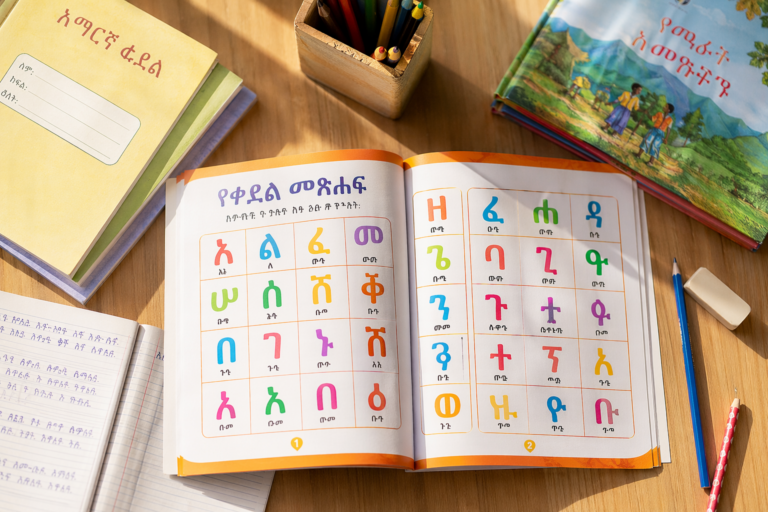
Amharic writing is laid out in a grid. The consonants run down and there are seven vowel forms that run across.
-
You will see the way the amharic alphabet is not the same as english letters and the latin alphabet.
-
This guide has a simple chart, help with how to say each sound, and typing tips for language learning.
-
People in Australia can use apps, websites, and online tools to practise amharic writing every day.
Introduction
If you want to start with the Amharic language, the first thing to do is to get used to the Amharic alphabet. The Amharic writing system looks very different from English. But it has clear sound rules that can help you in language learning. Each symbol is close to the way it sounds, so reading and talking work well together from the start. You will also see what the main letters look like, how their shapes change, and why the Amharic writing system is important across Ethiopia.
Understanding the Amharic Alphabet
The amharic alphabet is a key part of the amharic writing system. It is built on the ethiopic script. In amharic, there are not separate letters for each consonant and vowel sound. Many amharic letters change their shape to show which vowel is used.
This way, the amharic script looks neat and clear. In english, letters can sound different in every word, but in amharic, it is more phonetic. To see why the amharic writing system is like this, you need to know about its special features. The amharic script comes from Ge’ez and follows an abugida system. This gives amharic writing its unique style and structure.
What Makes Amharic Unique Among World Scripts
One thing that makes the Amharic alphabet interesting is the tie between each symbol and its sound. In this writing system, every fidel letter is meant to be read out loud, as it gives you one single sound. This can be easier and feel more simple than the way spelling works in English.
The Ethiopic script is also set out in a grid shape. There are consonant families that go down, and there are seven vowel forms that move across from side to side. This helps you pick up on the way things work, once you see and learn the main shape.
The script looks detailed, but it sticks to a system. You do not have to remember lots of separate letters. You learn how the base form of a letter changes in small steps. For a lot of people learning it, the Amharic alphabet is different, handy to use, and easy to keep track of all at once.
The Role of Geez Script in Amharic Writing
The ge’ez script is the base for the amharic script. This script is a very old writing system, and it is still in use in the world today. Amharic writing uses the ge’ez script, not the latin alphabet you see in English.
The ge’ez script is important for more than just one language. Many ethiopian languages use the same writing system, such as Guragigna and Tigrigna. This makes the ge’ez script central for how people write to each other all over Ethiopia.
There is information that connects the ge’ez script and the ethiopian orthodox church. That shows why this old writing system has stayed around for so long. If you are learning amharic script now, you will see you are not only learning some letters. You are picking up a writing system with a long history that shapes what modern amharic writing is.
Overview of Amharic Fidel as an Abugida
Amharic writing is a type of abugida. In this writing, fidel characters start with a base consonant. The shape then changes to show different vowel sounds. You don’t just place a consonant and vowel next to each other as separate letters.
For example, one group of consonants appears in seven forms across the standard grid. These forms match the usual order of vowel sounds in the info: e, u, ee, a, ae, i, and o. The shape will change a little for each of these different vowel sounds.
That is why in amharic writing, learners often talk about “families” and not just a short alphabet list. The main base characters are the starting point. Every one of these then turns into a full syllable set. So if people ask how many characters there are, it depends if you count only the base consonants or every one of the full syllable forms.
Historical Roots of the Amharic Alphabet
The origin of the amharic alphabet comes from the ancient ge’ez script. There is a long history there. This is why amharic writing feels so set and very different from the latin alphabet most people use now.
That old script was first used for amharic writing, but also for other ethiopian languages. The main idea in the script stayed the same, even when small changes showed up in new amharic writing. If you want to see how it all grew, it helps to follow the history of the ancient ge’ez script and how it was used through different times.
Origins and Development through the Ages
The origin of the Amharic alphabet comes from the old Ethiopian script called Ge’ez. This script is known as one of the oldest scripts that people still use in the world. That makes Amharic writing stand out with a special and long background.
As people kept using this script, it became part of writing for many Ethiopian languages. Amharic chose to use this system and did not make a new one. That choice helped keep familiar ways and sound patterns in place.
What changed as time went by was not the whole system, but there would be a small change in the form, how people use it, or which language uses it. So, when you look at the story of the Amharic alphabet, you see it as a change happening inside a strong script tradition. You can see those old beginnings each time you look at the fidel grid.
Ancient Geez to Modern Amharic Script
The ancient ge’ez script gives us the basics of the amharic alphabet that people use now. The modern amharic script does not start all over again. It keeps the older letter groups the same and follows the same rules for writing.
That’s good news for people learning amharic, because the main setup stays the same. You still get families of consonants, changes for different vowels, and links in sound between the letters and what you say. These things tie how people read now to what has come from the past in the written language.
In real use, the ge’ez script sets up the forms and the way that amharic words be put together. So, when you learn the amharic script today, you are getting a system that builds right from that old style. The history of the script is easy to see in what you do every day, not just hiding in the past.
The Influence of Amharic Script on Ethiopian Languages
The information says that the same script is used in many Ethiopian languages like Guragigna and Tigrigna. This shows the Amharic script is part of a bigger writing system. It is not something that stands alone.
Because the script is based on sound, it helps people understand each other better when they use the same kind of fidel characters. When you learn, you see patterns in how the consonant and vowel forms are set out. This gives the writing system a feeling of being joined together and easy to use with the other Ethiopian languages.
So, its influence is not only about one language taking from another. The real story is about a tradition where a shared script is used by many, helping clear communication. If you study Amharic, knowing this helps you see why the script and the writing system are still so important today.
Structure of Amharic Fidel Characters
To read Amharic writing, you have to know how fidel characters are made. These are not just random signs. Most are part of consonant families that look a bit different with each vowel form.
This setup is the reason the script gets taught in rows and columns. When you see a family, you can then guess the other related shapes. The coming parts have details about the different consonant groups, the way the vowel forms change, and what to look for in these shapes to help you read faster.
Core Consonant Families and Variations
At the heart of the Amharic script, you will find base characters. These start with a main consonant sound. Each set then changes shape to show different vowels. So, you do not have to treat every symbol as a totally separate letter. Instead, you learn them as patterns that are connected.
Take these as an example: ሀ, ሁ, ሂ, ሃ, ሄ, ህ, ሆ or በ, ቡ, ቢ, ባ, ቤ, ብ, ቦ. The main consonant sound stays the same in each group, but the vowel changes. This way, remembering the Amharic alphabet gets more simple and makes sense.
-
ሀ family is often said as ha, hu, hee, ha, hae, heh, ho
-
መ family is muh, moo, mee, ma, mae, mih, mo
-
ተ family goes as teh, too, tee, ta, tae, tih, to
-
ገ family is read as guh, goo, gee, ga, gae, gih, go
Vowel Modifiers and Syllable Formation
A main idea in Amharic is that vowel sounds are shown by making small changes to the shape of each group of consonants. You can see the vowel sounds right inside the character. You do not need to add another separate mark to show a vowel.
The information puts seven common vowel spots on the grid. These are e, u, ee, a, ae, i, and o. When you start with the same base letter and pull it through these spots, you get different vowel sounds. Each one stays with the same main consonant.
-
The first form often has an e-like sound.
-
The second form mostly has a u or oo sound.
-
The third and fourth forms give ee and a sounds.
-
The last few forms will give you ae, i or ih, and o sounds.
This setup helps a learner read full syllables instead of only pieces of the main consonant. That is one of the things that makes the Amharic way of putting together a syllable easy to spot.
Visual Features and Patterns in the Alphabet
When you first look at amharic letters, you might think the script looks thick and packed. But, there are clear shapes that help you. Letters in the same consonant group often share the same base shape. Only small changes show each vowel sound.
So, it’s not just about learning each letter one by one. It helps more to spot the patterns. If you know one set of amharic letters, you will usually spot others in that same group. It’s helpful that the teaching grid lets you see these links too.
It’s also good to know that some consonant group sets look a bit alike, but they make other sounds. For example, there are different groups that look like “h” or “s” in the chart. This can be tough when you first get into it. But, it shows that the script uses small changes to mark different sounds, so you can see the difference.
Amharic Alphabet Chart for Australian Learners
A fidel chart is a great tool for language learning. It helps you see how amharic letters change with each vowel. You do not have to learn one symbol at a time. Instead, you learn the whole group of amharic letters together.
For people in Australia, this way of seeing amharic writing can make it feel much easier. You can look at the shapes, hear the sounds, and notice the small changes fast. The chart below is a good place to begin. Then, you will get tips about how to say the sounds and put amharic letters into groups.
Full Chart with English Transliteration
Below is a short text table using a few common amharic letters and their English transliteration. It does not list every family in the script, but it shows how a single consonant set moves through several vowel forms. That is the core pattern you need.
|
Consonant Family |
1 |
2 |
3 |
4 |
5 |
6 |
7 |
|---|---|---|---|---|---|---|---|
|
ሀ family |
ሀ ha |
ሁ hu |
ሂ hee |
ሃ ha |
ሄ hae |
ህ heh |
ሆ ho |
|
ለ family |
ለ le |
ሉ lu |
ሊ lee |
ላ la |
ሌ lay |
ል leh |
ሎ lo |
|
መ family |
መ muh |
ሙ moo |
ሚ mee |
ማ ma |
ሜ mae |
ም mih |
ሞ mo |
|
በ family |
በ beh |
ቡ boo |
ቢ bee |
ባ ba |
ቤ bae |
ብ bih |
ቦ bo |
|
ከ family |
ከ keh |
ኩ koo |
ኪ kee |
ካ ka |
ኬ kae |
ክ kih |
ኮ ko |
Use this kind of fidel chart to practise both reading and sound recall. Once these patterns feel familiar, expanding to other families becomes much easier.
Pronunciation Guide for Amharic Letters
Good amharic pronunciation starts with the idea that the script is phonetic. This means most amharic letters match up with a sound you can hear. There are not as many spelling tricks as you find in English.
It’s good to start by listening for the same consonant sound. Then, notice how the vowel sound changes after. For example, in the በ family, you hear the b sound the whole time but the ending shifts—beh, boo, bee, ba, bae, bih, and bo. You will see that this works the same way for other families too.
-
Practise whole families, not just single characters
-
Say the consonant first, then try the vowel sound that follows
-
Watch out for sets like ሀ, ሐ, and ኀ, as they might be close in sound or look
-
Keep saying rows out loud until they feel easy and natural
Using this way will help you have correct amharic pronunciation and you will read amharic letters much faster too.
Grouping Letters by Phonetic Sets
A smart way to study amharic letters is to group them into sets based on their sounds. This helps you hear sounds that go together. You will also see where new sounds come in, and it does not feel like you have to learn every sign one by one from the start.
Some groups are easy for people who speak English, like the b, m, n, k, and y families. Some other groups might seem less familiar, like the “stronger” or marked sounds, such as ጠ, ጨ, ጰ, and ጸ. But when you see them as sound groups, reading amharic words is easier to get into.
-
Start with easy phonetic sets like መ, በ, ነ, የ
-
Bring in stronger sounds, like ጠ and ጨ, later
-
Keep h-like and s-like groups together so you can go back and look at them again
-
Read simple amharic words using one sound group at a time
This way, your ear and eye work together as you get to know new sounds in amharic letters and words.
Comparing Amharic and English Alphabets
The Amharic alphabet is not the same as the English alphabet. The shape and the set-up are different. English uses the Latin alphabet. In this system, there are separate letters for every consonant and vowel. Amharic puts these together in groups, or families.
That means you read and remember the writing system in a different way. With the English alphabet, the spelling might change from word to word. Amharic is not like that. The link between sound and the symbol you see is usually more clear. The next parts will talk about writing style, sound contrast, and the problems that people who speak English might have with this.
Differences in Writing Styles and Structure
The Amharic writing system works with groups called fidel families. It is not like the single letter method that you get in the Latin script. In Amharic writing, one character can stand for a full syllable. In English, you often need a few letters put together to show the same sound.
The way each writing system looks is also not the same. English learners know rows of single letters that keep the same look, no matter which vowel you use. In Amharic writing, the shape of the character changes when the vowel sound changes. This way, the amharic writing system has a clear pattern in each consonant family.
-
English uses separate vowels and consonants
-
Amharic changes one base form into different vowel forms
-
English letters belong to the Latin alphabet
-
Amharic has its own script and punctuation marks tradition
When you try to learn the Amharic writing system, the main change is a new way to think. You start to think in full syllable units, not just in single letters of the latin alphabet. This is a new step for many people.
Visual and Phonetic Contrast
Looking at english letters, you see they are usually simple and much the same in shape. The amharic script shows bigger and fuller forms. In amharic script, letters in each set change quite a lot as the vowel changes. For someone new to it, amharic script can look more tricky than english.
Sound is important, too. In english, there is this idea that one letter means one sound, but it is often not true. Amharic script mostly matches the way things sound. Once you get to know the families in amharic script, this can help a lot with saying words right.
-
English letters stay much the same in different words
-
Amharic characters change shape inside their groups
-
English does not always match letters to the sounds well
-
Amharic script is usually much closer to the real sound
So the big thing is not only how they look. The key is how symbol, sound, and the way you say words all line up.
Challenges Faced by English Speakers
For people who speak English, the first thing you face is in your mind. You are so used to reading the english alphabet, so learning a script with full syllable characters can be strange. It is normal to feel this when you get into language learning.
The second big thing is to spot families of letters that look a lot the same. It is hard to keep their sounds apart. Some groups hold on to sounds that are not that clear in English. Without enough practice, this can mess with your correct pronunciation and can slow how fast you read and write.
-
Trying to remember every form straight away
-
Mixing up consonant families that look much the same
-
Leaning too much on english spelling ways
-
Skipping over sound practice and only looking at what the letters look like
The good news is that having a solid foundation in family patterns really helps with these. Once the way it all fits together makes sense, you often see you get better much quicker.
Romanisation and Practical Typing of Amharic Letters
Romanisation lets you read amharic fidel using Latin script, like ha, hu, mee, or bo. This way is really handy at first, mainly when you are still getting your head around the shapes of amharic letters.
Typing is important, too. If you want to do more than write on paper, you can use online tools to type out amharic and feel more sure of yourself. The next parts show some basic romanisation patterns. They also show where to find keyboards, tools for transliterating, and learning platforms found in the info.
Rules for Romanising Amharic Fidel Characters
Romanisation writes fidel characters using latin script. This helps English speakers get close to how the sounds should be. In the chart, you can see forms like ሀ ha, ሁ hu, ሂ hee, or በ beh, ቡ boo, ቢ bee.
The main rule is easy. Always keep the base consonant in the word, then change the way you spell the vowel to match the sound. That’s how one group can look like ha, hu, hee, ha, hae, heh, ho. Romanisation shows you what to say but it does not take the place of the real script.
-
Start with the base consonant, such as b, m, k, or g
-
Add vowel sounds like oo, ee, ae, or o
-
Use the same order for the words every time to keep things clear
-
Know that romanisation helps with transliteration, but is not the final spelling
For beginners, this bridge is good because it makes it easier to get into reading and understanding.
Online Amharic Keyboards and Transliteration Tools
Yes, there are online keyboards and tools for amharic writing in the information collected. You will also find quizzes and converters like Amhanglish, image to Amharic, image to Amhanglish, sound to Amharic, and sound to English.
These tools can help you type, check recognition, and switch between scripts. Many people use them for practice. But, if you want to use amharic writing in official documents, you should always check it very carefully because accuracy is important.
-
Online keyboard tools let you practice typing straight away
-
Transliteration tools let you move between latin script and fidel
-
Image and sound tools can help you with recognising words and letters
-
Quizzes give feedback when you learn
All these resources make practicing amharic writing faster and more interactive. They are good to use every day, especially if you do not feel fully confident with the keyboard yet.
Apps and Websites for Learning and Practising Amharic Writing
If you want apps or websites for language learning, there are many ways for you to get some good practice. You can try things like a fidel quiz, a sound quiz, picture study, number quizzes and vocabulary for topics you use every day.
This is good because if you see or hear the language often enough, you remember it better. You can move from learning single letters to using simple nouns, colours, body parts, food, time, things in nature or words you find in a city. Now, when you look at your script, it can be useful for your life and not just a random lesson.
-
Fidel and sound quizzes help when you want to go over the alphabet
-
Vocabulary pages let you practise things you use in daily life
-
Number quizzes will help you know symbols quick
-
With image and audio tools, you practise more than one skill at a time
So, there are online resources for learning the amharic alphabet. The ones that work best use sound, reading, and repeat lots of short sessions. This makes the learning stick with you.
Tips and Methods for Learning the Amharic Alphabet
Learning amharic letters can be easier if you look for patterns and do not stress. You do not have to get every shape right at once. Having a steady routine will help you build a solid foundation and make language learning feel easy.
Try to put together the shape, sound, and use of each letter early on. Read out loud, copy the families by hand, and go over them again when you do your next lesson. These tips will help you remember, avoid common beginner errors, and pick up habits that will help your reading and writing.
Strategies for Memorisation and Practice
Good memorisation begins with families. The amharic alphabet has a clear pattern, so you will get more out of it if you study one row at a time. This way is better than going from one random symbol to the next. It also makes your amharic writing look neater.
Another good way is to mix up the practice. Say the character out loud, write it down, then check yourself with short quizzes or by using pictures. Keep doing the sound and writing the shape together. This helps them stick in your mind.
-
Learn one consonant family and go through all seven forms
-
Copy the row out by hand and say each sound at the same time
-
Try sound quizzes to see how much you remember
-
Come back and read easy sets again the next day
Short practice sessions work better than long ones that wear you out. Just ten minutes of really paying attention is often better than an hour of fast, careless memorisation. This method will help your amharic writing get stronger.
Common Mistakes Beginners Make
Many people make mistakes when they start to learn Amharic letters. This happens because they treat Amharic like English. Old habits from language learning come with you. Most learners expect the same way of reading as they do with English letters. This often ends up causing confusion.
Another problem is when people try to learn too many amharic letters fast. There are a lot of forms in the script. If you rush, you get the amharic letters mixed up. You can also forget the order of the vowels. This messes up reading and writing for most people.
-
Memorising isolated symbols without family patterns
-
Skipping pronunciation while studying shapes
-
Confusing similar h-like, s-like, or ts-like groups
-
Ignoring regular review after the first lesson
If you slow down and study the patterns, you will fix these language learning mistakes. This way, learning the amharic letters gets a lot easier for us.
Best Practices for Reading and Writing
The best way is to keep things simple with amharic writing. You need to think of the amharic writing system as groups of sounds or families. It’s good to always connect what you read with what you write. When you write down a form, say it out loud. When you read it, see if you spot a pattern in the family.
It’s best to not stay stuck with charts. Try going from looking at the basic characters to real examples. You could start with the main characters, then add short word lists, numbers, and some top words people use. This helps make a solid foundation. It turns what you recognise into something you can use.
-
Review one family each day by going in chart order
-
Read everything out loud and it will keep the sound and rhythm in your mind
-
Write the characters nice and neat so you can spot small changes
-
Use little quizzes and vocabulary lists to see amharic writing in context
These ways work well, are not stressful, and are easy to do again and again. This is what you need at the start for good progress with the amharic writing system.
Conclusion
To sum up, learning the Amharic script helps you dive into the language and culture of Ethiopia. When you get to know how this script works, its history, and how it’s used, you boost your language skills. You also get to know more about Ethiopia’s strong culture. If you use the right ways to learn and make use of things like apps or online tools, it gets much easier to handle the Amharic script. You can do it with confidence. Don’t let this chance to pick up a special language slip by. Start learning now! If you want more help, feel free to ask for a free trial or chat.
Frequently Asked Questions
How many characters are in the Amharic alphabet?
The amharic alphabet is made up of fidel characters set out in groups. Each base shape turns into seven different vowel forms. So, how many characters there are will depend on if you count just the main groups or every full syllable found in amharic writing.
Can I learn Amharic alphabet using apps or websites?
Yes. The information here covers apps and websites with fidel quizzes, sound quizzes, picture practice, number work, and words for daily life. These tools help with language learning by giving you ways to review the Amharic alphabet. You get to listen, read, and practice in short sessions over and over.
How is the Amharic alphabet romanised for English speakers?
The Amharic alphabet is written out in latin script through something called transliteration. For people who speak English, this means you write the fidel sounds as ha, hu, hee, ba, or boo. Using romanisation can help you when you first start to read. But it is best to use it as a guide and not as a replacement for the real script.