

Key Highlights
-
Vietnamese wedding traditions include many customs that show respect to both family and ancestors.
-
The traditional Vietnamese wedding has a few main events. There is the proposal, the engagement, and the wedding ceremony itself.
-
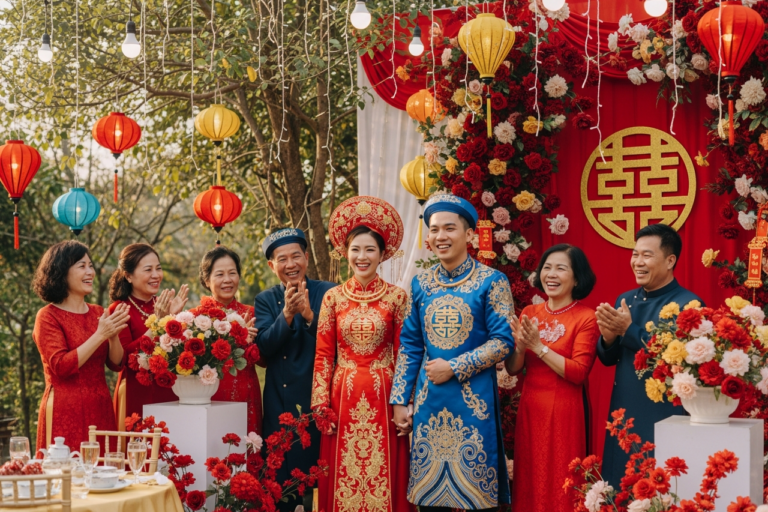
At the wedding, couples wear the ao dai. The bride usually wears red, while the groom often chooses blue.
-
A key part of this wedding is the tea ceremony. The couple shows respect to their elders at that time.
-
Picking an auspicious date is a big early step. Many people ask a monk or fortune teller to help choose this date.
-
These wedding customs bring the family close, honor past generations, and make the celebration of love even more special.
Introduction
A traditional Vietnamese wedding is a lively and important event in Vietnamese culture. It is not just the joining of two people. It’s also the time when the two families become connected. There are many rituals and people wear bright clothes. Every part of the wedding ceremony has meaning. It shows respect for family and old ways. If you want to have a wedding like this, or you’re just interested in what makes a traditional Vietnamese wedding special, you will get to see many great customs and warm celebrations.
Essential Wedding Traditions in Vietnam: What You Should Know
Vietnamese weddings are special times that show a rich mix of traditions. These moments bring out the importance of family, respect, and love in Vietnamese culture. The customs are not just nice things for people to see. The rituals have deep cultural significance. These moments show that a marriage ceremony is about two families coming together, not just two people.
It is good to know about these wedding traditions if you want to understand more about Vietnamese culture. Every step, from the proposal to what happens after the wedding, is made to show respect for ancestors. People also show thanks to their parents and wish the new couple a good start in their life together. Here are some of the most important rituals you should know about.
1. The Family Introduction and Proposal (Le Dam Ngo)
The first step in a traditional Vietnamese wedding is called Le Dam Ngo. This is the family introduction and proposal ceremony. In this step, there is no surprise. The families plan everything. The groom’s family goes to the bride’s home to ask to marry her.
This meeting is very important in Vietnamese culture. It allows family members to meet and approve of the couple. The groom’s family brings gifts, too. This event starts many other wedding customs in a traditional Vietnamese wedding.
When Le Dam Ngo ends well, it means both families agree to the marriage. After this, real wedding plans begin. This moment is a loving and respectful way for the couple and their families to start. It shows how much family matters in traditional Vietnamese culture and in the whole journey of a vietnamese wedding.
2. Choosing an Auspicious Wedding Date
Before anyone makes other plans, picking a good wedding date is the first thing to do in Vietnamese wedding culture. This wedding date is not just any day. It is a day that people believe will give good fortune and happiness to the couple in their new life. Family values are very important in this tradition.
Most of the time, the couple’s parents ask a monk or a fortune teller for help. They think about things like the birth dates and zodiac signs of both the bride and the groom. The idea is to find a wedding date that will help the couple start their marriage in the best way.
This part of the vietnamese wedding shows how people believe that a good and lucky day can help the couple build a great new life together. It really shows the strong family values in vietnamese wedding culture, and it is all about finding good fortune for the couple as they start out.
3. Traditional Engagement Ceremony (Le An Hoi)
The Le An Hoi is a traditional engagement ceremony. It is a big event and feels like a mini-wedding. The groom and his family make their way to the bride’s house. They bring many wedding gifts with them. These gifts are to ask for the bride’s hand in marriage. At this time, both families have a chance to meet all the extended family members.
The groom’s family puts these wedding gifts in red tin baskets. These baskets are called Mam Qua. One thing they follow is, always bringing an even number of gifts. An odd number is seen as bad luck. You may see gifts that include:
-
Betel leaves and areca nuts
-
Fruits
-
Cakes
-
Wine
-
Money
If the bride’s family accepts these wedding gifts, the bride comes out to meet the groom. This engagement ceremony shows both families and other people that the couple have made a strong promise. It is an important way to tell everyone they will get married soon.
4. The Role of Matchmakers in Vietnamese Weddings
In traditional Vietnamese culture, matchmakers have always been important for bringing people together. While modern dating means you do not see as many matchmakers now, many still think their role—finding a good match—is needed. Some families let a trusted elder or a family friend act as an informal matchmaker.
Having a matchmaker shows that family approval is a big part of wedding traditions. The matchmaker would look at how well the couple and their families go together. They looked at things like social standing and family background. This helped make sure the marriage ceremony was a coming together of two families who fit well.
These days, there are not as many professional matchmakers. Instead, family members often take on that role. They guide the couple, give them advice, and help them get through the many steps in Vietnamese culture and wedding traditions. This shows how the marriage ceremony is really about bringing two families together.
5. Exchanging Betrothal Gifts and Offerings
The exchange of wedding gifts is an important part of a Vietnamese wedding. During the engagement ceremony, which is called Le An Hoi, the groom’s family brings a procession of gifts to the bride’s family. The gifts are carried in red tin baskets, called Mam Qua. These gifts show that the groom is serious about the marriage.
Each wedding gift is picked because of what it means. The gifts need to be in even numbers, not odd, because odd numbers are seen as bad luck. Some of the most common betrothal gifts are:
-
Betel leaves and areca nuts, which stand for marriage
-
A roasted pig, which means wealth and good times ahead
-
Sticky rice and cakes
-
Wine
-
Fruit
When the bride’s family takes the gifts, it means they agree to the marriage. This exchange is a way to show respect and make sure both families are truly connected before the wedding day.
6. The Importance of the Wedding Procession (Le Ruoc Dau)
On the wedding day, the formal bride procession, also called Le Ruoc Dau, happens. The groom and his family members go to the bride’s home to officially welcome her and bring her back to his family home. In the past, the bride procession would walk together from one house to the other.
The groom leads this special event. He often holds a bouquet of flowers for his bride. His parents, groomsmen holding gifts, and other extended family members follow behind him. When they get to the bride’s house, her parents and bridesmaids welcome everyone in the procession.
This is a public way to show the marriage. The groom’s father will ask the bride’s parents for their permission for the wedding. When they agree, the groom’s group gets invited inside for the next part of the ceremony.
7. The Vietnamese Tea Ceremony (Le Vu Quy)
The Vietnamese tea ceremony, called Le Vu Quy, is one of the most close and important wedding traditions. At this special event, the new couple meets with their families and honors their ancestors. They also thank their parents and older family members. The whole thing often happens in front of the ancestral altar.
During the tea ceremony, the bride and groom serve green tea or chrysanthemum tea to their parents, grandparents, and other senior family members. They start by serving the oldest people first to show respect. After that, the elders give the couple their blessings, share their advice, and sometimes give gifts like money or jewelry.
This wedding tradition stands for the joining of two families. It is a simple and meaningful time where the new couple says thank you to their parents for all the sacrifices they have made and gets their blessings for a good future together.
8. Praying at the Ancestral Altar and Asking for Blessings
A big part of the wedding ceremony is praying at the ancestral altar. In Vietnamese culture, people have a lot of respect for family members and those who came before them. So, asking the ancestors for blessings is something the couple must do to have good fortune in their new life.
The bride and groom, along with their family members, light incense and bow at the altar. They do this to tell their ancestors about the marriage and to ask for guidance and blessings. It is a special and quiet moment that helps the couple feel close to their roots.
This tradition shows that a wedding ceremony is not just for the present. It is also about showing honor to the past. When the couple includes their ancestors in their wedding, they make sure their new life is started with respect and the good wishes of all who came before them. This helps build a strong foundation for the years to come.
9. Honoring Parents and Elders
In vietnamese culture, people show great respect to parents and elders, and this is very clear at a wedding. Parents give a lot for their children, and everyone knows this well. There is a saying that goes, “when you drink water, remember the source.” It helps people to always express gratitude.
At the wedding, the couple will bow to their parents and their partner’s parents. This is to express gratitude and respect. The bow shows thanks for all the love, hard work, and support from families over the years. It’s a strong moment, and many family members may get emotional.
In vietnamese culture, there are not really “in-laws.” A new husband and wife will call each other’s parents “Mom” and “Dad.” This way, both families become one. The couple now have two sets of parents to honor, making their family members even closer as they start a new life together.
10. Traditional Wedding Attire: Ao Dai and Headpieces
One thing that will catch your eye at a Vietnamese wedding is the traditional wedding attire. The Ao Dai is a long and simple tunic with pants. Both the bride and the groom wear this beautiful outfit for the main part of the ceremony.
The wedding dress for the bride and the groom’s suit are full of meaning. Here are some things to know about the Vietnamese wedding attire:
-
Bride’s Ao Dai: The bride usually wears a red Ao Dai. Red stands for luck and happiness. Now, some brides pick other colors like yellow or gold.
-
Groom’s Ao Dai: The groom most often wears a blue Ao Dai. Blue is a sign of strength and honesty.
-
Headpieces: The bride and groom both wear a Khan Dong, a traditional headpiece that looks like a halo. It makes their look complete.
This traditional attire is a big part of the wedding day. It connects the couple to their roots and makes the Vietnamese wedding look even more gentle and lovely. Some couples get their Ao Dai custom made so it fits just right.
11. Symbolic Wedding Colors and Decorations
The wedding colors and decorations at a Vietnamese wedding are picked for what they stand for. They help to create a bright and lucky feeling at the event. Red and gold show up the most, as these colors are known to bring luck, happiness, and money.
Every piece of decor is planned with care to add to the celebration of love. Here are some common parts you will see:
-
Double Happiness Symbol: This symbol is used a lot in decorations. It stands for the joy of marriage.
-
Red and Gold Decor: These two lucky colors show up everywhere, like on tablecloths and lanterns.
-
Le Vu Quy Sign: You will find this sign outside the bride’s home, announcing the vietnamese wedding.
-
Incense and Candles: These sit at the ancestral altar to show respect for the couple’s ancestors.
These wedding decorations do more than look nice. They carry a lot of tradition and serve to bless the new couple. Even the red envelope for giving money fits into this theme of luck and joy at the celebration of love.
12. Vietnamese Wedding Reception Customs
A Vietnamese wedding reception is a happy and busy event. There is a lot of food, music, and time for everyone to celebrate. It is like Western receptions in some ways, like when there is a big entrance for the couple and a first dance. But, it also has its own wedding customs that make it special. The wedding party is often big. Their family and many friends all come to be with the new couple on this big day.
One special thing is the “table greeting.” The bride and groom, sometimes with their parents, walk around to every table during the reception. They do a small toast, thank people for coming, and take good wishes and gifts. The gift is usually money given in red envelopes.
This face-to-face meeting is a chance for the couple to say thank you to every guest who came. After all the greetings and toasts, the reception goes on with music, dancing, cutting the cake, and more fun. These things help make Vietnamese ceremonies a time that everyone will remember.
Keywords: vietnamese wedding, wedding customs, new couple, wedding party, first dance, vietnamese ceremonies
13. Gift-Giving Etiquette for Guests and Families
When you go to a Vietnamese wedding, it is good to know the gift-giving rules. The main gift that people pick is money in a red envelope. People call this Li Xi. This type of wedding gift helps the couple start their new life. It also helps to pay for your meal at the wedding.
Family members often give traditional Vietnamese wedding gifts at the tea ceremony. Parents or elders may give jewelry, like gold bracelets or gold necklaces. This sort of gift is seen as both a real blessing and a step toward a good future for the couple.
If you go as a guest and want to give a red envelope, keep these tips in mind:
-
Use new bills or write a check. Make sure they look fresh.
-
Stay away from amounts with the number four. Four is seen as a bad sign.
-
Put your name on the envelope. The couple will know who gave it and can thank you later.
-
Hand the envelope to the couple when you greet them at the table during the reception.
These small things help make the vietnamese wedding a great day for everyone. Family members, old traditions at the tea ceremony, and red envelopes bring people together and show love for the new life of the couple. This is how all the wedding gifts play a big part in a traditional vietnamese wedding.
14. Lion Dances and Entertainment at Vietnamese Weddings
To bring fun and good fortune to the day, many Vietnamese weddings have lion dances as part of their entertainment. People believe this dance scares away bad spirits. It also brings luck, happiness, and good fortune to the new couple.
The lion dance is full of energy and color, so it is always a sight for wedding guests. You can hear the loud beat of drums and cymbals as the dancers move like a lion. This makes the air feel lively and exciting. The dance is one of the most memorable wedding customs you might see.
Having lion dances at a Vietnamese wedding is a great way to mix old wedding traditions with today’s celebrations. This honors the vietnamese wedding traditions and also lets all wedding guests enjoy a special experience together. So, it starts the couple’s life with good luck and a happy feeling.
15. Post-Wedding Homecoming Ceremony (Le Lai Mat)
The wedding traditions keep going even after the party ends. A few days after the wedding, there is the Le Lai Mat, or a post-wedding homecoming ceremony. This is the time when the new couple goes to the bride’s family for their first visit as a married pair.
This small ritual means a lot. It helps keep family values strong. The new couple brings gifts for the bride’s parents. This is their way to show respect and thankfulness. It also lets the bride’s family know that their daughter is well looked after in her new place.
The Le Lai Mat ceremony keeps the link between the bride and her first family alive. It proves that marriage does not break family bonds. Instead, their family grows, and all wedding traditions become complete.
16. Modern Adaptations in Vietnamese-American Weddings
Modern couples today, especially in Vietnamese-American weddings, look for new ways to mix their old traditions with new ideas. They still honor their heritage but also bring in things from western weddings. This helps make their wedding special to who they are.
Doing both gives couples a way to show both sides of where they come from. For example, they may have a tea ceremony in the morning. Later that day, they might have a church ceremony and a big party in a western style. With this, they get to enjoy the best parts of both.
These are common ways couples mix things up on the wedding day:
-
The bride often wears a ao dai during the tea ceremony, and then changes to a white wedding dress for the wedding reception.
-
Some couples spread out the ceremonies over two days. This way, the wedding is not too long or packed into one day.
-
Many choose to have a first dance and a cake cutting during the reception. Both are big parts of western weddings.
17. Regional Differences: North vs. South Wedding Traditions
While many wedding customs are shared throughout Vietnam, there are noticeable regional differences, particularly between the North and South. Traditions in the North are often considered more formal and traditional, while those in the South, especially in areas like Ho Chi Minh City, can be more relaxed and extravagant.
These north vs. south traditions can be seen in the types of gifts exchanged, the number of guests, and the overall style of the celebration. For instance, gift requirements might be stricter in the North, while Southern weddings might be larger and more focused on the feast.
Understanding these regional differences can be helpful, especially for families from different parts of the country.
|
Feature |
North Vietnam Traditions |
South Vietnam Traditions |
|---|---|---|
|
Formality |
Generally more formal and strict with rituals. |
Often more relaxed and flexible with traditions. |
|
Gifts |
Gift requirements can be more specific and traditional. |
Gift-giving might be more modern and less rigid. |
|
Reception Style |
Tend to be more modest and centered on close family. |
Receptions are often larger, more extravagant, and party-focused. |
Key Roles and Responsibilities in Vietnamese Weddings
In traditional Vietnamese culture, the wedding ceremony is something that the whole family takes part in. Every family member has a job to do, and this brings everyone together. Wedding traditions shine a light on what each person must do. This way, both sides of the family help make the wedding a success.
The parents lead and offer advice for the process. Bridesmaids and groomsmen are there to support the bride and groom. Each person in the wedding party is important. In the next part, you will see how families work together and what tasks different family members have during this special time in Vietnamese culture.
The Involvement of Both Families Throughout the Wedding
Vietnamese wedding traditions show that marriage brings two families together, not just two people. From the first proposal ceremony, family roles are set. Working together is very important. Parents from both families take part in planning and help decide on many things for the wedding ceremony. They also help pay for it.
Extended family members also have their place. They come to main events and offer help and best wishes. This big family support helps tie the two families closer. It also gives the couple extra backing from the community.
Here’s how both families get involved:
-
Choosing an auspicious date together.
-
The groom’s family gets the procession of gifts ready.
-
The bride’s family takes care of the engagement and tea ceremonies.
-
Parents from both sides welcome guests and take care of things during the reception.
Duties of Bridesmaids, Groomsmen, and Matchmakers
The wedding party in a Vietnamese wedding has special and important jobs. These are more than just standing next to the couple. In traditional Vietnamese culture, their roles are a big part of every part of the ceremonies.
Bridesmaids and groomsmen are more than friends at the wedding. They take an active role, especially during the engagement ceremony. At this festival, you will see them most helping with the gift procession, where they move the Mam Qua gift trays.
Here are the main duties:
-
Bridesmaids: They get the Mam Qua trays from the groomsmen. They also help the bride get ready and stand by her side all day.
-
Groomsmen: They bring the Mam Qua trays in a line to the bride’s house.
-
Matchmakers: Long ago, matchmakers helped put the couple together. Now, a family member that people respect may step up. This person makes main speeches and guides the ceremonies so everything goes well.
The wedding party is a big part of a Vietnamese wedding. Their support mixes with the rich customs in Vietnamese culture. They help make the engagement ceremony and the wedding a day to remember.
Popular Vietnamese Wedding Food and Drinks
No vietnamese wedding is finished without a big feast. The wedding food is a key part of the wedding ceremony. It is made to impress all the guests and show the family’s kindness. It also stands for the couple’s good future. The wedding party gets to eat many courses. All the food is tasty and there is a lot of it.
There are special dishes at a vietnamese wedding that have a lot of history behind them. There are even special ways to toast. The food and drinks at this wedding ceremony are a big part of the day for the wedding party. Let’s see some of the best foods you will find at these happy times.
Signature Dishes Served at Vietnamese Wedding Feasts
The food at a Vietnamese wedding is big and special. It often has many courses. There can be eight or more. Every course brings new tastes and shows skill in cooking. The main idea is to give the wedding guests a meal they will always remember.
Signature dishes are there to please the palate and show abundance. Each course comes after the other. This lets people try many flavors through the night.
Some food you may see at a vietnamese wedding are:
-
Roasted pig, which stands for good fortune.
-
Steamed fish with ginger and scallions.
-
Crab and asparagus soup.
-
Noodle and rice choices.
-
Fresh fruit platters for dessert.
Traditional Beverages and Toasting Customs
Toasting is a big part of the celebration of love at a Vietnamese wedding. At the wedding ceremony, tea is important, but the reception usually has other drinks with more kick. Many people like to have cognac, and you might see every table with a bottle for toasting.
The way people toast is fun and keeps going throughout the event. The bride and groom go from table to table and share a toast with their guests at each one. This is a warm way to say thank you to everyone for coming and being part of their special day.
Key beverages and customs to know:
-
Cognac: This drink is often used for toasting during the wedding reception.
-
Table Toasts: The bride and groom make a toast with guests at every table they visit.
-
Tea: People drink tea during the main wedding ceremony, but it’s not part of the reception.
Conclusion
Vietnamese wedding traditions bring together many important customs, strong family support, and deep meaning. These traditions help show the values and history of the country. Matchmakers are very important for starting things, and tea ceremonies show love and respect in a close way. Each part has a job in bringing people together and sharing happiness.
When you learn about vietnamese wedding traditions, you get more out of the wedding and understand the culture better. You do not have to be getting married to find something new in these traditions. Enjoying the meaning behind these vietnamese wedding customs can help you make the day extra special.
If you want help with a vietnamese wedding, or if you just want to know more about these wedding traditions, you can reach out anytime for advice or support.
Frequently Asked Questions
What is the significance of the tea ceremony in Vietnamese weddings?
The tea ceremony in a vietnamese wedding is a special part of the wedding ceremony. The couple serves tea to their parents and elders to show respect and say thanks. This simple act helps them connect with family values and remember their ancestors. At this time, their loved ones give them blessings for a good marriage.
How do Vietnamese wedding traditions differ between the north and south?
The main difference between the north and south in vietnamese wedding customs is in how formal and big the events are. Northern vietnamese wedding traditions are usually more classic and simple. People often keep things modest. In the south, weddings are more relaxed. They are also larger and can look more fancy. These ways show different family values and how people in each place like to celebrate.
What do guests typically wear to a Vietnamese wedding?
Wedding guests at a Vietnamese wedding usually wear nice, formal, or semi-formal clothes. Some guests may put on a traditional ao dai, but you do not have to wear it. It is best to dress in something that looks good and feels special, just like you would at a Western wedding. Please do not wear white, since that color is meant for the bride.



