

Key Highlights
-
Dutch wedding traditions usually have two parts. There is a civil ceremony to be legal, and later, a church wedding that is more for show.
-
In Dutch culture, the master of ceremonies, known as the ‘ceremoniemeester,’ makes sure the wedding day goes well for everyone.
-
Dutch weddings have a special custom. On the wedding day, the groom gives the bridal bouquet to his bride.
-
Many couples do not use the usual guest book. They pick a wish tree so guests can hang good wishes on its branches.
-
At the wedding ceremony and reception, you will get to try Dutch treats like bitterballen with the classic wedding cake.
-
These Dutch wedding traditions mix what is needed by law with personal choices from the happy couple. This helps make the wedding day special and one to remember.
Introduction
Are you interested in knowing how people in the Netherlands get married? Dutch culture has many special wedding traditions that make every wedding feel unique. When it comes to a dutch wedding, there are both serious parts and some fun moments too. The dutch wedding ceremony mixes these things well. If you get invited to a wedding in the Netherlands, or just want to learn about wedding traditions from different places, you may wonder what the dutch wedding ceremony is like. Here are some charming things that make a Dutch wedding stand out and turn it into a day to remember.
Exploring Wedding Traditions in the Netherlands
Dutch wedding traditions show a lot about Dutch culture. They mix old ways with how people live now. The wedding day is planned out from the start of the morning to the last part at night. There are set roles and customs, and these guide people through the wedding.
A lot of these wedding traditions are still common today. They make up a big part of the Dutch wedding. Here, we will look at some of the Dutch wedding traditions that people in the Netherlands value the most. We will see how the Dutch wedding day is set up, from having two ceremonies to the treats that are served at the wedding reception.
1. The Civil and Church Ceremony: Dual Celebrations
One big difference in a Dutch wedding is the way the legal part is done. In the Netherlands, you must have a civil ceremony before you can be married by law. This civil ceremony has to be done by an official at the civil registry. It usually takes place at city hall or at a wedding venue picked by the couple.
After the civil ceremony, many couples go on to have a church wedding or a deeper, personal ceremony. This second part is not official in a legal way, but it lets the couple say their vows and enjoy the day with more family and friends in their own way.
This two-part style helps couples do what is needed for the law and also lets them make the wedding day special to them. It shows how a Dutch wedding can mix important rules with warm traditions, making the wedding ceremony both meaningful and unique.
2. The Role of the Ceremoniemeester (Master of Ceremonies)
In a Dutch wedding, the ceremoniemeester, or master of ceremonies, has a big job that is different from what the best man or maid of honor does at other weddings. This person is the main person in charge on the wedding day. They help make sure everything goes well from beginning to end. It is a great honor to be picked for this role.
The ceremoniemeester acts as the day-of coordinator. They take care of many things, so the wedding party and the couple do not have to worry. This helps everybody enjoy the wedding day without stress about the little things.
Their main jobs often include:
-
Guiding guests to their seats before the ceremony.
-
Coordinating with vendors and suppliers on the wedding day.
-
Announcing speeches, activities, or performances.
-
Making sure the timeline of the day is followed.
3. The Bridal Bouquet and Flower Customs
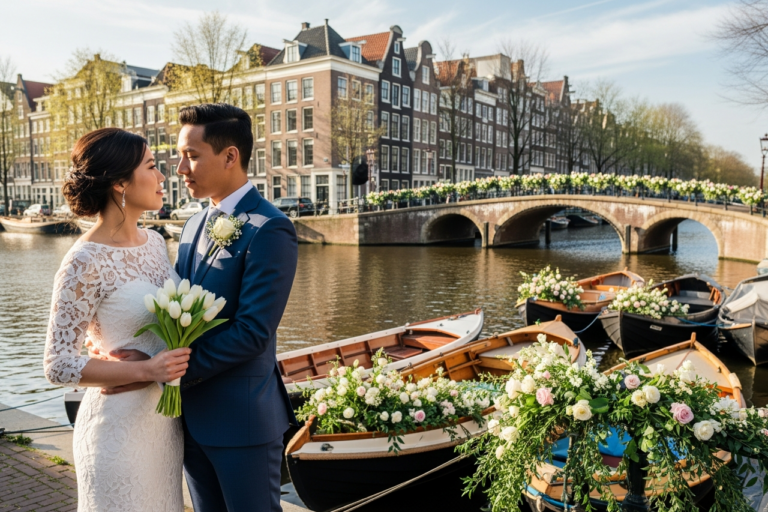
Flowers have a big and beautiful part in Dutch weddings. The day often begins with the groom going to pick up his bride from her home. At this time, he gives her the bridal bouquet. This is a sweet and romantic move that starts the wedding day for both of them.
After the wedding ceremony is over, there is another nice flower tradition. The guests stand in two lines as the couple comes out of the venue. This makes a special path for the couple to walk through. While the couple walks, the guests throw little things over them.
Popular options for this include:
-
Colorful flower petals
-
Rice, which is a sign that wishes the couple fertility and good luck
This wedding ceremony tradition gives the couple a lovely photo and a happy start to their new life. By tossing the flower petals, guests wish the Dutch bride and groom a bright future together.
4. Unique Dutch Wedding Attire and Dress Codes
When you talk about wedding attire, Dutch weddings are a mix of being fancy and useful. This shows the national style. You will not see only one type of look for a Dutch bride today, but the look is often classic and has a simple kind of beauty. The groom will often wear a good suit or a tux.
For people coming as guests, what to wear is usually told on the invite. You should watch for this. In Dutch wedding traditions, being right in how you dress matters a lot. There are not many odd rules, but wearing what you are told shows you care about the couple and their day.
There is one thing that is good to know if you are a guest. These weddings can be on the move. People can go from one place to the next for things like the civil ceremony, the party, and more. This means that it is smart to wear shoes that look good but are nice on your feet. This is helpful for you and others in the wedding party too.
5. The Wedding Procession and ‘Bruidsstoet’
The wedding procession, or ‘Bruidsstoet,’ in Dutch tradition is a bit more relaxed compared to the formal processions in other cultures. There isn’t a strict order for how guests enter the ceremony venue. Typically, guests arrive and find their seats, with the front rows reserved for close family members and the wedding party.
The couple’s entrance can vary. They might walk in together, enter one by one, or be accompanied by a parent. This flexibility allows the couple to choose an entrance that feels right for them. The witnesses, who play a key role in the civil ceremony, are seated near the table where the marriage certificate will be signed.
Here’s a simple breakdown of the seating arrangement and procession:
|
Group |
Role/Position |
|---|---|
|
Wedding Guests |
Arrive first and seat themselves; front rows for family. |
|
Witnesses |
Sit near the signing table for the official part. |
|
The Couple |
Enter together, separately, or with parents. |
6. Traditional Dutch Wedding Bread and Its Meaning
An old but lovely tradition in some Dutch areas is about ‘bruidssuikers’, which means “bridal sugar”. These are sweet gift items, often sugar-coated almonds, that people give to guests at a dutch wedding. Even though this custom has changed over time, it still shows good feelings and warm wishes.
Long ago, there were also special bread or cakes used in the wedding ceremony. People would share the bread to show unity, hope for children, and wish for a good life with much success. Breaking bread together showed the start of a new life and home for the couple.
Today, you will not often see a special Dutch wedding bread at most dutch weddings. Still, people like to share food to wish good luck and celebrate. Now, this idea is seen more in the wedding cake or treats everyone has during the reception.
7. Bitterballen and Other Dutch Reception Treats
After the ceremony, it’s time to have fun. And if you are at a Dutch wedding, you can be sure there will be some classic Dutch snacks. At the wedding reception, apart from the special wedding cake, you will almost always see ‘bitterballen’ too. These are small, deep-fried meatballs that people eat with mustard. They are a big part of any Dutch party or get-together.
The wedding reception is when guests say congratulations to the couple. People also talk, eat, and have drinks. While the wedding cake stands out as the main sweet treat, these salty snacks help make the party feel fun and chilled.
Other good food you might see at a Dutch wedding reception includes:
-
Cubes of cheese
-
Small spring rolls (‘mini-loempia’s’)
-
Different fried snacks, which people call ‘bittergarnituur.’
8. Wish Tree and Special Gift-Giving Practices
A “wish tree” is a nice change from the usual guest book. It is a big hit at many modern Dutch weddings. Instead of signing a book, people write wishes, tips, or nice stories on small cards or tags. Then, they hang these on a small tree. This makes a lovely and special decoration for the couple to keep.
The wish tree lets every guest be part of a group gift. It is like a piece of art to remind the couple of who was there for them. It stands for all the love and backing from their family and friends.
When it comes to gifts for guests, Dutch culture has some sweet ideas:
-
‘Bruidssuikers’ (bridal sugars): These are five sugar-coated nuts that stand for health, money, happiness, kids, and a long life.
-
Little gifts that show the couple’s style.
-
A simple gift that links to the theme or place of the wedding.
Conclusion
To sum up, looking at wedding traditions in the Netherlands shows just how special and full of life these customs can be. People use dual ceremonies and often share sweet treats with guests. Each part can have its own meaning and can add to the happy feeling of the whole event. With things like the unique clothes people wear or touching moments such as the Wish Tree, a Dutch wedding tells a story of history and togetherness. When couples use these ideas, they can make their big day feel more close and meaningful for themselves and for their guests. If you want to bring Dutch wedding traditions into your day, reach out for help so you can include all these wonderful details, like the Wish Tree, and make memories that last.
Frequently Asked Questions
Is it common for Dutch weddings to include specific family or community traditions?
Yes, this is very common. There are a lot of Dutch traditions that people use in a wedding ceremony. But many couples also add their own ideas. They might use songs or skits from close family and friends. The wedding party usually gets these moments ready. This makes the wedding ceremony and what happens after a true show of the couple’s friends and close family.
How do Dutch wedding ceremonies differ from those in other countries?
In a Dutch wedding, the big thing that makes it different is the rule that says you have to have a civil ceremony to make the marriage legal. This part must take place before there is any church wedding or a personal celebration. It is almost always done in two steps. Most other places do not have this rule for the wedding ceremony. This is a special thing in the Dutch wedding ceremony.
Are there popular Dutch wedding favors or gifts for guests?
A well-known Dutch wedding favor is called ‘bruidssuikers.’ These are sugar-coated almonds. They stand for good wishes. Some couples today like to give personal gifts instead. These small gifts show something about who they are or match the wedding theme. It is a nice way to say thank you to wedding guests for being there and sharing the day.
Keywords used: dutch wedding, wedding guests



