

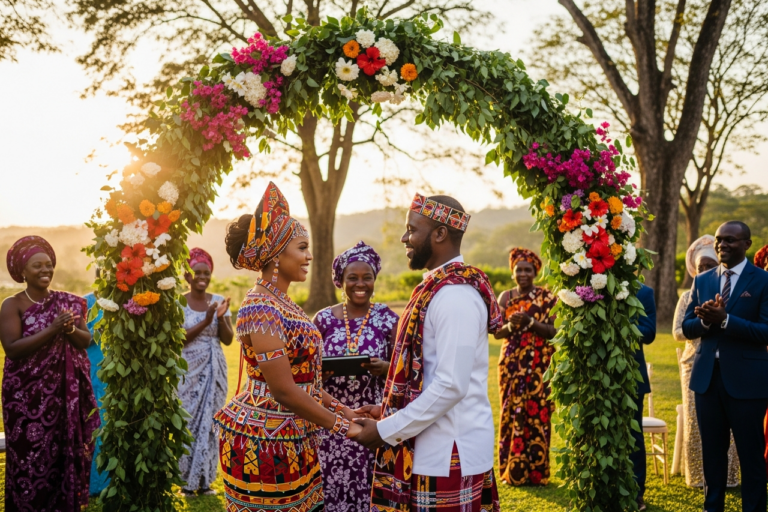
Key Highlights
-
In Tanzanian culture, a wedding is about bringing families together. It is not just for two people, but it is special for both the groom’s family and the bride’s family.
-
There are many ethnic groups in Tanzania, so wedding traditions are not all the same. These differences can be seen in the way people propose and in what they wear for traditional attire.
-
Before the wedding, families and people from the community take part in many celebrations. These pre-wedding festivities often include money gifts and lots of fun times together.
-
After the ceremony, the wedding reception is full of life. There is good food, music, and lots of dancing. Many couples now like to add new parts like a first dance or cutting the wedding cake to old traditional elements.
-
Wedding ceremonies in Tanzania are full of symbolism. Both Christian and Muslim groups lay stress on unity and honor their heritage in special ways.
Introduction
Welcome to the bright world of Tanzanian weddings! In Tanzanian culture, a wedding is much more than one day. It is a time when families, friends, and even large groups of people come together. Tanzanian weddings are full of strong customs, special acts, and happy moments. Each part, from the very first talk about marriage to the last dance at the party, shows the roots of the people and the many ways of life you find in this nation.
Traditional weddings in Tanzania show off all the color and meaning of the culture here. You will see why they are so loved by all who take part.
The Journey to Marriage in Tanzanian Culture
In Tanzanian culture, getting married is something that brings two families together. It is not only about one man and one woman, but it is about both families joining as one. This path starts much earlier than the wedding day. The first step is a traditional proposal. At this stage, the bride’s family and the groom’s family both take part in the event from the start.
In Tanzania, different ethnic groups have their own way of doing things during this journey. But there are some points everyone follows. They always show respect, talk things through, and want everyone in the community to agree before the couple can get married. Below are the main steps that people follow before a couple can say “I do.”
The Marriage Proposal and Initial Family Involvement
The first big step in a Tanzanian marriage is the traditional proposal. This is not a private or romantic thing. It is a formal process where the groom’s family goes to see the bride’s family to ask if the couple can marry. People from the groom’s side, who are often elders, will come to the bride’s house to share what they want to do.
This meeting is important because it shows the joining of families is starting. There is a lot of respect and everything is very formal. This helps set up what comes next with talks and wedding plans. The bride’s family will usually take time to think about the proposal. They want to make sure the marriage is a good match.
After the bride’s family gives their first “yes,” both families start to talk more. These talks are key because people think marriage brings together not just two people but both their families and even their bigger communities.
Engagement Rituals and Formal Announcements
After the proposal is accepted, there are engagement rituals. These mark the couple’s plan to get married. Each of Tanzania’s ethnic groups has its own way of doing this. Still, the main goal is the same for all. These events help both families come together and tell everyone the good news.
Most of the time, there is a party or family gathering. At this time, the families meet and agree on the marriage. This shows the strong family values in Tanzania. The blessing of the elders is seen as very important, and their approval means a lot.
There are different types of festivities when people get engaged. Some keep it small with a dinner for close family. Others will have a bigger party. It is a joyful time for everyone. The two families start to make wedding plans together and are happy about the new connection they now have.
Dowry (Mahari) Traditions and Negotiations
A significant part of Tanzanian weddings is the tradition of the dowry, known as “mahari.” This is not seen as buying a bride but as a token of appreciation and respect from the groom’s family to the bride’s family for raising their daughter. The mahari, or bride price, symbolizes the groom’s commitment and ability to provide for his new wife.
The dowry amount and the specifics of the groom’s family presents are determined through respectful negotiations between the two families. The nature of the dowry can differ significantly among various ethnic groups.
These negotiations are a delicate process, handled by elders from both families. The focus is on strengthening the new family ties rather than on material gain. The items presented have symbolic meaning, representing wealth, fertility, and the groom’s dedication.
|
Type of Dowry |
Description |
|---|---|
|
Livestock |
Often cows or goats, symbolizing wealth and status. |
|
Money |
A cash amount agreed upon by both families. |
|
Cloth and Goods |
Beautiful fabrics (kitenge), household items, or other useful goods. |
Pre-Wedding Customs Across Tanzanian Ethnic Groups
The time before a Tanzanian wedding is full of many pre-wedding customs. These wedding customs can look very different because there are many ethnic groups in Tanzania. Each custom is a big part of the marriage journey. There is a lot of symbolism, and people in the community are always involved. The families and the couple all join in lively festivities to get ready for the wedding.
Some people seek blessings while others take part in special local rituals. Every ritual adds something special to the big day. These traditions help show off the different parts of Tanzanian culture and ethnic groups. But, one thing stays the same. The community and families must all say “yes” to the marriage. All of these points help make the wedding unique.
Blessing Ceremonies and Parental Approval
Getting the approval of parents is key for any marriage in Tanzania. No wedding can go forward until both families say yes. Parents’ consent is most often asked for at a special event. This blessing ceremony is a big part of the culture and happens before the wedding.
During these ceremonies, people come together to show how important family values are. The elders and the extended family talk, pray, and give advice to the couple. They also wish them well. At this time, the family says yes to the marriage, and it makes the two feel strong and ready for their new life because their families are behind them.
Having the extended family there shows how much people in Tanzania care about being together. Marriage in Tanzania is not only about two people. It is about joining both groups. The new couple joins a big family that will help and support them through life.
Unique Regional Rituals Before the Wedding
Tanzania is home to many different cultures, and this is easy to see in the special rituals people do before a wedding. There are more than 120 ethnic groups in Tanzania, and each one has its own way of making a wedding feel special. Their ceremonies show what is important to them and bring out the true meaning of tanzanian culture.
The rituals can be short routines or big events. Some groups have customs that help get the bride ready for her new life. In other groups, families come together to share in activities. These traditions are a big part of what makes tanzania’s culture lively and rich.
Here are a few examples of these regional rituals:
-
Henna Parties: In the coastal and swahili groups, the bride gets together with her female relatives and friends for a henna party. They put pretty designs on the bride’s hands and feet using henna.
-
Groom’s Introduction: In some groups, the groom is brought out in front of the bride’s whole extended family and sometimes the village in a formal event.
-
Special Attire: Some groups ask that people wear their traditional attire to the pre-wedding celebrations, which helps everyone know that the big day is close.
These events show the many sides of tanzanian culture, bringing together the people, their families, their values, and their history.
Community Gatherings and Preparatory Festivities
The preparations for a Tanzanian wedding bring the whole community together. There is often a wedding committee made up of family and friends who work on the plans. They look after things like the budget and the decorations. People in the community give money, called ‘mchango’, to help pay for the big festivities.
A big part of the planning has a group of women come together with the bride’s family. These women help with the feast, set up the decorations, and support the family with good advice. This team effort makes sure that one family does not have to handle everything by themselves.
These get-togethers sometimes turn into celebrations on their own. People enjoy food, music, and in many cases, some local beers. It is a happy time when everyone comes to help get ready for the wedding and make it a success for all.
Attire and Symbolic Accessories at Tanzanian Weddings
Tanzanian wedding fashion is full of colour, tradition, and personal style. The traditional attire picked by the bride, groom, and guests is not just about how they look; it holds deep meaning and cultural significance. Every piece of attire and every colour gives people clues about heritage, the status of the family, and the hopes people have for the new groom and his bride.
The fabric, colour, and design of the attire can change a lot between regions and ethnic groups in the country. When people look closer into Tanzanian wedding fashion, they can see this deep tie between what people wear and their cultural identity. The bright patterns on a kitenge or the fancy beadwork design in Maasai attire all say something special about the wedding and the people at it.
Bridal Wear: Tradition, Color, and Meaning
For Tanzanian brides, what they wear on their wedding day shows both tradition and their own style. Many brides choose a white dress for the main event. After that, they often change into colorful, traditional attire for the party or other events before the wedding. The clothes they pick mean a lot to them.
The colors and patterns they use are not just for style. Each one is picked with care, and they have strong symbolism. For example, some colors can show fertility, prosperity, or joy. This traditional attire helps the bride feel special and praised on her big day.
Here are some things you might see in a Tanzanian bride’s attire:
-
Kitenge or Kanga: Many brides put on outfits from these bright, patterned fabrics. These fabrics are a big part of fashion in East Africa.
-
Multiple Outfits: Most brides wear two or more sets of clothes on the wedding day. There is one for the ceremony and another for the party after.
-
Demure Appearance: It is common for a bride to look shy and keep her eyes down during the wedding, as this shows respect and being humble.
Groom’s Outfit: Cultural Significance and Modern Trends
The groom’s attire at a Tanzanian wedding is just as important as what the bride wears. Many grooms go for a classic suit, which is common in Christian wedding ceremonies. But a lot of them also add traditional pieces to their look. This is a way to show where they come from and what style they like.
In many weddings, the groom’s outfit matches the bride’s. He may wear a shirt or some accessories made with the same kitenge fabric as her dress. This shows their unity and is a sign that they are together now. The groom’s attire is also a way for him to show that he is starting a new life.
Now, there are many new trends in Tanzanian wedding fashion. Grooms mix modern looks with traditional fabrics. They want to look good, be proud of their roots, and show that they are ready for a good life and a strong family. Wedding ceremonies are special, and the groom’s attire is a big part of that day.
Distinctive Fashion Customs: Maasai, Chaga, and Coastal Styles
The many ethnic groups in Tanzania each show their own look and feel in tanzanian wedding fashion. You will find that each group has its own customs for what the bride and groom wear. These outfits are full of cultural meaning and history.
The Maasai, for example, are known for the bright red shuka cloth and detailed bead work. The bride and groom both wear a lot of jewelry and clothes that show their high place and how special the day is. Coastal and Swahili people also have amazing outfits. Men often put on a kanzu that is carefully made, and women wear bright, flowing dresses.
Here are a few examples of these unique styles:
-
Maasai: Brides have a big, fancy beaded collar, and both the bride and groom wrap themselves in bold red cloth.
-
Chaga: The Chaga, who live in the Kilimanjaro area, are known for black and white patterns in their wedding garments.
-
Coastal/Swahili: Swahili brides wear pretty gowns that flow and paint their hands and feet with henna. Grooms put on a kanzu and a kofia cap.
Wedding Ceremony Rituals: Unity and Heritage
The wedding day is the goal of all the plans and hard work. The wedding ceremonies have a lot of meaning, deep ties to family, and strong feelings. It does not matter if the ceremony is Christian, Muslim, or from old customs. These are all about unity, carrying on heritage, and the joining of families. This is the time when the couple’s vows are made official in front of their loved ones and God.
From the exchange of vows to other small acts full of symbolism, each part of the wedding day matters. The next parts will talk about the types of wedding ceremonies and what makes Tanzanian weddings stand out.
Muslim and Christian Ceremony Differences
With a significant population of both Muslims and Christians, Tanzanian wedding ceremonies often follow the distinct traditions of each faith. While both celebrate the union of a couple, their rituals and structures can be quite different.
Muslim weddings often feature a Nikah ceremony, which is the core of the marriage contract under Islamic law. This can be a simple affair, sometimes held with separate ceremonies for men and women. The focus is on the legal and religious contract being made. Christian weddings, on the other hand, are typically held in a church and include praise, worship, sermons, and the public exchange of vows and rings.
Despite their differences, both types of ceremonies are deeply significant events that formalize the couple’s union in the eyes of their faith and community.
|
Feature |
Christian Wedding |
Muslim Wedding (Nikah) |
|---|---|---|
|
Venue |
Typically a church |
Often at a mosque or the bride’s home. |
|
Key Ritual |
Exchange of vows and rings |
Signing of the marriage contract (Nikah). |
|
Structure |
Joint ceremony for all guests |
Sometimes includes separate ceremonies for men and women. |
Special Acts: The Bride Walking on Her Knees
One of the most well-known and powerful parts of some traditional Tanzanian weddings is when the bride walks on her knees. You do not see this at every wedding, but in the cultures that have it, the act holds a lot of meaning. This happens when she goes toward her new husband or his family.
The symbolism of this is all about showing deep respect and humility. It means she is ready to honor her husband as the head of the household and help her new family. People do not see this as being under someone, but as a meaningful way to show her promise to take on this new role.
These special moments touch everyone who sees them. They show how much these Tanzanian weddings value respect for family and what it means to be married. It is a strong, visual promise of her dedication and a big part of the ceremony for people who have this custom.
Important Symbolic Gestures During the Ceremony
Tanzanian wedding ceremonies are full of small acts that mean something big. These acts make the day special. They add culture and faith to the exchange of vows and rings.
In many Christian weddings, the bride and groom wash each other’s hands. They use water to show life and to clean away the past. They use oil to show the blessing from the Holy Spirit. This simple act is a way to start their life together clean and close to God.
There are other important moments:
-
The Procession: The groom and his groomsmen walk to the altar. They meet the bride as singing and dancing women surround her. They walk to the front together. This shows they will start the journey of life as one.
-
Raising Hands During Ring Exchange: The couple might hold up their hands as they put on the rings. All guests can see their promise to each other. This is a way to celebrate in front of everyone.
-
Family Vows: Each family comes up to say they will give support and love. Both sides welcome the groom or the bride who joins their family.
These wedding ceremonies mix beauty and tradition for an unforgettable day.
Wedding Receptions: Celebrations and Modern Influences
After the wedding ceremony is done, the wedding reception is when the real fun starts. Wedding receptions in Tanzania are known to be lively celebrations. There is a lot of music, dancing, and good feelings. People who come show warm hospitality to the newlyweds. It is a time for everyone to eat a big feast, dance, and share good wishes for the couple’s life ahead.
The events at a wedding reception mix old traditions with things people like now. This makes every party special and easy to remember. The food and entertainment are full of joy. Everyone can feel the community spirit on this special day. This energy will be talked about more in the next part.
Food, Music, and Dance in Tanzanian Wedding Receptions
No wedding reception in Tanzania is like others in the world without plenty of food, music, and dance. The meal is a big part of the event. It is a way to show warm hospitality to all the people who come to celebrate. Guests get to eat lots of tasty food, and the famous rice dish pilau is almost always there.
Music is at the heart of the wedding reception. You will hear a mix of traditional songs, pop, and gospel throughout the night. The beat keeps everyone dancing, with some people doing classic Gogo-style moves while others join in group line dances. Nobody wants to sit down when the music gets going.
A Tanzanian wedding reception is a real treat for all your senses:
-
The Feast: The food is usually served at the end of the wedding reception. It comes out after the main parts of the big day, such as giving gifts and speeches.
-
Music and Dance: The bride and groom come into the wedding reception hall with a group of dancers. People keep dancing until late at night.
-
Cake Ceremony: The wedding cake is a very important part of the wedding. It often arrives with its own dance and a song for the moment.
Everything about the night, from the delicious pilau to the lively music and the special wedding cake, helps make a Tanzanian wedding reception full of joy and good hospitality.
Blending Traditional Elements with Contemporary Choices
Tanzanian weddings now bring together old customs and new ideas. You still see strong traditions at the heart of the celebration. At the same time, couples like to add things that fit their lives today. This mix helps make every wedding about the couple and who they are.
For instance, a wedding committee is often in charge of planning everything. But now, many people use WhatsApp groups to keep in touch with everyone. The reception is usually led by an MC. The MC helps keep things lively and the program on track. Many people want an MC at their wedding these days.
During the reception, you will see new things, such as the first dance or a fun entrance that the couple has practiced. You still get the classic parts too, like feeding each other cake or the gift-giving procession. These show how tanzanian weddings respect old ways but welcome new ones, too.
The Role of Gifts and Hospitality in Reception
Hospitality is a big part of Tanzanian culture. You see it clearly at a wedding reception. The whole point is to make the guests feel special because they came to be with the newlyweds. There is always a great feast. People enjoy music, dancing, and a welcoming mood all around.
Giving gifts is also an important part of the event. It happens in front of everyone. Guests walk up to a table set up for presents and give their gifts to the couple. This shows everyone’s support and good wishes for the newlyweds’ future and prosperity.
Here’s what to know about gifts and hospitality:
-
Public Gifting: Guests wait in line to give their gifts. Gifts can be home supplies or cash, and they go on a special table.
-
Money Box: Giving cash is normal and welcome. There will be a box just for these money gifts.
-
Community Support: Giving gifts is one way the community shows they are here to help the newlyweds start their new life.
With the large feast, sharing, and gift-giving, the wedding reception really shows how strong hospitality is in Tanzanian culture.
Comparing Tanzanian Wedding Traditions with Other Countries
When you look at Tanzanian wedding traditions next to those from other countries, both in Africa and in the rest of the world, you can see a wonderful show of cultural identity. Many people across different countries celebrate marriage, but their special wedding traditions tell us what is important to them. For some people, it is all about family. For others, the focus is on friends, the whole community, or even what one person chooses.
When you compare these wedding traditions, you get interesting ideas. Across Africa, and not just in Tanzania, there is a big focus on family in wedding traditions. Still, you can also see the unique customs that set Tanzanian culture apart from others. Let’s now look at how these wedding traditions are alike and what makes them stand out.
Similarities and Differences in African Wedding Customs
Across the vast continent of Africa, many wedding customs share common threads. The concept of bride price or dowry, the significant involvement of the extended family, and the emphasis on community are prevalent in many traditional weddings from Nigeria to South Africa, much like in Tanzania.
However, the specific execution of these traditions varies widely. While a dowry is common, the items exchanged—whether cattle, cloth, or cash—differ greatly. The attire, music, and specific ceremonial rituals are unique to the local ethnic groups, creating a rich tapestry of wedding practices across different countries.
This table highlights a general comparison between Tanzanian traditions and those in other parts of Africa.
|
Feature |
Tanzanian Weddings |
Other African Weddings (General) |
|---|---|---|
|
Dowry (Mahari) |
Central, involves negotiation between families. |
Common, but items and significance vary (e.g., lobola in Southern Africa). |
|
Family Role |
Paramount; weddings are a union of families. |
Very similar; family approval and involvement are crucial. |
|
Attire |
Varies by ethnic group (Kitenge, Maasai beads, etc.). |
Highly diverse, featuring local fabrics like Kente (Ghana) or Aso-Oke (Nigeria). |
Lessons and Insights Learned by Foreign Guests
For people from other places who go to a Tanzanian wedding, it can be eye-opening and full of heart. They get to see a new culture and feel like part of a big group. The first thing they often notice is the warm hospitality. There is also a big group of people who show up and help make the day special. The wedding is not just for the couple; the whole community gets involved and joins the fun.
People also learn a lot about family values. There is real respect shown to older people, and the extended family is close. Many guests find this moving. A group of women from the area may come together to cook food for everyone there. A team is given the job of handling money for the event. This clearly shows that the group makes the marriage strong.
The main thing many guests take with them is this: the wedding is not just about two people. It is about joining two families and bringing their communities together. It shows the strength that can come from doing things as a group. It is a nice way to see what it means to help and belong to a community.
Conclusion
Tanzanian wedding traditions show how important family, community, and love are to people in Tanzania. At every step, from the start of a marriage proposal to the happy times at the celebration, you will see that each part has a special meaning. The traditional attire, the different rituals, and changes depending on the region make tanzanian culture rich and interesting. When you look into these wedding traditions, you get to see what is important to people and how they build strong ties in Tanzania. If you want to know more about these customs or plan to use traditional attire for your day, you can reach out for a free consultation. These steps can help bring a true feel of tanzania and its wedding traditions to your special day.
Frequently Asked Questions
How do Tanzanian wedding traditions differ among ethnic groups?
Tanzanian wedding traditions are different among more than 120 ethnic groups. You can see this in many ways. People in each group have their own wedding rituals. Dowry talks are also different from one group to another. Traditional attire changes too, like Maasai beadwork or kanzus from the coast. There are also special ceremonies for each group. This mix is an important part of Tanzanian wedding culture. Because of it, every wedding is special in its own way.
What is the cultural significance of the dowry in Tanzanian weddings?
In tanzanian weddings, the dowry is also called “mahari.” This is a way for the groom’s family to show respect and thanks to the bride’s family. It is not a payment to get the bride. Mahari shows that the groom will give, care, and stand by the bride. This makes the bond between their families stronger.
How are modern elements incorporated into traditional Tanzanian ceremonies?
Modern elements now mix with old customs in Tanzanian weddings. Couples often use WhatsApp to help plan the day. They hire an MC to guide the wedding reception. Many people now also have a first dance. All these new changes fit along with long-time traditions. This makes Tanzanian weddings special for the couple and their families.



