

Key Highlights
-
Taiwanese wedding traditions mix old customs with new ideas. These wedding traditions are a big part of Taiwanese culture.
-
Family members have a key part in everything. They give their approval for the engagement and join important events like the tea ceremony.
-
There are many things people do, like giving betrothal gifts or picking an auspicious date. The goal is to bring good fortune for the couple.
-
The wedding day is full of fun moments. There are door games, a big banquet, and the bride will often change her outfit a few times.
-
People still value these traditions. Now, many modern couples add a bit of western touches too. This makes the celebration in Taiwan special and new, while still holding on to the past.
Introduction
Taiwanese weddings are lively and full of color. The events are a big part of taiwanese culture and packed with wedding traditions. They are more than a simple get-together. Each part shows respect to family and honors ancestors. People hope these customs will bring good fortune to the new couple as they step into married life. From the start of the betrothal to the big banquet at the end, everything holds deep symbolism. It is a special way for the couple to show their love and the start of their life together. Are you excited to learn about these customs?
A Closer Look at Wedding Traditions in Taiwan: 16 Iconic Customs You Should Know
The wedding traditions in Taiwan are a mix of fun and meaningful rituals. These customs bring family members together to celebrate the new couple. In Taiwanese culture, people follow these traditions to bring good luck and a happy married life to the married pair. The wedding day is full of events for them, which are both enjoyable and hold a lot of meaning.
From the groom’s tasks to the big bows at the end, each tradition matters a lot. Let’s look at 16 customs that show what a Taiwanese wedding is all about. These make every wedding day in Taiwan something you will remember for a long time.
1. The Betrothal Ceremony (Guo Da Li)
The Guo Da Li is the start of the formal engagement. It is also called the betrothal ceremony. The groom’s family goes to the bride’s family for this. They ask her family if the couple can get married. In the past, a matchmaker would help at this event. Today, a respected family friend or an elder often steps in. Most of the key family members from both families will be there.
At the ceremony, the groom’s family brings betrothal gifts to the bride’s family. The gifts show that the groom cares about the bride and is ready to provide for her. The gifts are a sign of respect. During Guo Da Li, both families agree on the wedding together.
After everyone accepts the proposal, they work together to pick the wedding date. The Guo Da Li is important. It starts the couple’s path to their wedding and brings both families into the planning.
2. Exchanging Betrothal Gifts
Exchanging betrothal gifts is an important step in the engagement. It brings strong symbolism to the process. The groom’s family will give the bride’s parents “Pinjin” (聘金), which is a sum of money. This is never about buying a wife. It shows respect to her parents for raising her. It is also a thank you for the bride not being able to take care of them when they get old. The amount can go from NT 120,000 up to NT 360,000.
Many times, the bride’s family will give the money back to the couple or return it later. Beside giving cash, there are other betrothal gifts too. Most times, these are elegant items, and they are meant to bring wealth and prosperity to the couple.
Gold jewelry plays a big part in these gifts. The bride will get pieces that each mean something special.
-
Gold necklaces: Show completeness and a bond that is strong and cannot be broken.
-
Bracelets: Stand for the link between the two families.
-
Earrings: A reminder for the bride to listen to her new family.
3. Choosing an Auspicious Wedding Date
Picking a wedding date is a big deal in Taiwanese culture. You do not just pick any free Saturday. Families in Taiwan believe that getting married on an auspicious date will bring good fortune. It helps make the marriage happy and last longer. This idea goes deep, so family support for the wedding day is very important for the couple’s future.
To find the best wedding date, families use the lunar calendar. This old calendar marks some days as lucky and others as unlucky for big events like a wedding. A fortune teller or a temple master usually looks at the couple’s birth dates and times. They help pick the most compatible and auspicious days for the couple to get married.
Since there are only a few “lucky” days each year, there is strong competition for wedding venues and vendors on those days. Couples and their families may book for popular auspicious dates more than a year ahead. This shows just how much this tradition means to people in Taiwanese culture.
4. The Hair Combing Ritual
On the morning of the wedding day, the bride and the groom take part in the hair combing ceremony. During this moment, their parents or another respected family member comb their hair at home. For the bride, it is often done by a “woman of good fortune,” someone who has a happy marriage and children. This special time shows that they are moving from being children into being adults.
In this ceremony, a family member will comb their hair a set number of times. As they do this, they say blessings for the couple. With each stroke of the comb, they wish for good things like a happy marriage, good health, good fortune, many children, and prosperity. This brings good luck and hope for their life together.
This hair combing ceremony is a warm and important part of getting ready on the wedding day. It is a quiet time for the couple and their family members to be together before the busy events begin. The ceremony helps start the day with happiness and blessings for their new life.
5. Door Games and Groom’s Challenges
The wedding day starts with a loud and funny event called door games. The groom and his group of groomsmen come to the front door to get the bride. But they find the door is locked and the bridesmaids have set up a bunch of challenges for them. These door games let the groom show just how much he loves his bride and why he should get to be with her.
The challenges can include answering simple questions about the bride or their time together, singing or dancing in funny ways, or even doing small physical tasks. The groom and the groomsmen have to get through all of these games. The bridesmaids wait at the door and decide if the group has done a good enough job. Everyone is there to have a good time and to join in some laughter.
After the groom and his groomsmen finish all the challenges – and after they hand out red envelopes to the bridesmaids – the groom can finally go inside and see the bride. The whole morning is full of good wishes and happy moments. This shows the groom will do whatever it takes to win his bride on the wedding day.
6. The Traditional Tea Ceremony
The tea ceremony is one of the most important and loved wedding traditions. It is a way for the new couple to meet their families in a formal way. The bride and groom give tea to their parents, grandparents, and other older family members. This act is to show respect and gratitude. They also want to show that they honor their elders by serving them first, starting with the eldest.
There is a lot of symbolism in this ritual. When the new couple gives tea, it means they respect those who raised them. When the family members drink the tea, it shows that they welcome the new spouse as part of their family. This makes everyone feel together. It also shows strong family support for the bride and groom.
After everyone sips the tea, the elders usually give the bride and groom red envelopes. These envelopes have money or gold jewelry in them. They also give their wishes and advice for good fortune and happiness. This is a sweet part of the tea ceremony. It is the moment when the new couple is welcomed into their new family roles.
7. The Bowing Ceremony to Honor Ancestors
Before she leaves her home for the last time as a single woman, the bride and the groom take part in a ceremony to honor their family members who came before. This is an important part of taiwanese wedding traditions. It is a way for them to show respect. The couple stands by the family’s altar. They light incense and say their prayers.
Bowing is a key part of this ritual. The couple bows to the ancestors. They want to show thanks for their heritage and ask for blessings on their marriage. It lets the spirits of the family members know about this big moment. So, the ancestors are part of the day.
This ceremony highlights that family lineage matters in the culture. It also shows how important respect for parents and elders is to taiwanese wedding traditions. By honoring their ancestors, the bride and groom prove that they will carry the family name with pride. They remember and value those who lived before them.
8. Bride’s Farewell to Her Family
The bride leaving her family home is a touching and important moment in Taiwanese culture. After the tea ceremony and a time to remember ancestors, the bride gets ready to go with the groom. When she steps out, a “woman of good fortune” or her father holds a big black or red umbrella to protect her from bad spirits and to bring good luck.
This part of the day is often both happy and sad for the bride and her family members. It shows that she is leaving her first home and is now joining her new family. In some Taiwanese traditions, the bride may throw a fan from the car window. This means she is letting go of her old ways to become a gentle and good wife.
As the car takes the bride away, her parents might throw water. This old ritual means they hope their daughter will have a good and easy life in the years to come. This farewell is a key part of the day in Taiwanese culture. It is a big moment when the bride begins her new life.
9. Traditional Taiwanese Wedding Attire
Many modern Taiwanese brides like to wear a white, Western-style dress for their wedding day. Even so, lots of people still love the old ways and choose to wear traditional clothes during some parts of the day, like the tea ceremony or the banquet. The deep meaning and symbolism in these clothes are what make a traditional Taiwanese wedding ceremony so special in Taiwanese culture.
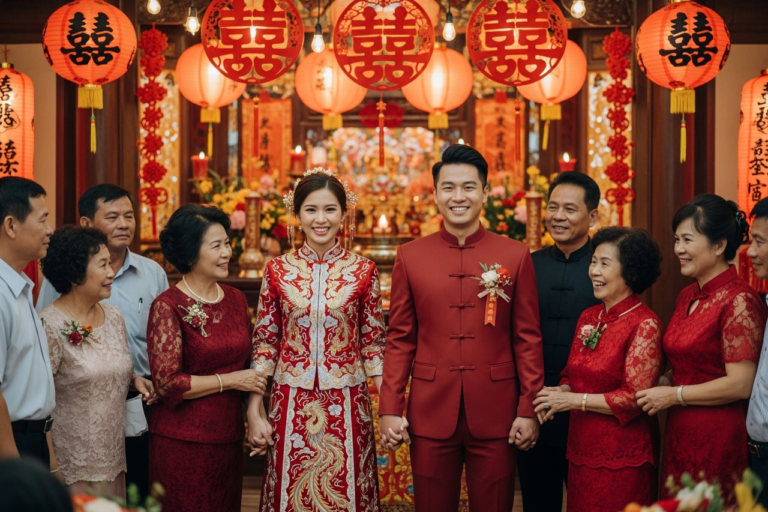
On the wedding day, the bride often wears a red dress called a qipao or cheongsam. In Taiwanese culture, red stands for good luck, happiness, and joy. The groom will wear something to match, like a suit or a traditional Tang suit.
These clothes are full of special embroidery showing symbols with meaning.
-
Dragon and Phoenix: The dragon stands for the groom and means power, while the phoenix stands for the bride and means grace. They are seen as the best sign of a happy marriage.
-
Peonies: These stand for beauty, wealth, and good fortune.
-
Ducks or Geese: These birds are known to stay together for life, so they show faithfulness.
10. Red Envelopes (Hongbao) and Gift-Giving
At a Taiwanese wedding, guests don’t typically bring boxed wedding gifts. Instead, the custom is to give a red envelope, or “hongbao,” containing cash. The red envelope itself is a symbol of good luck and is believed to ward off evil spirits. The money inside is a practical gift to help the couple cover the lavish wedding expenses and start their new life.
The amount of money you give depends on your relationship with the couple and the venue’s lavishness. The amounts are always given in even numbers for good fortune, as odd numbers are associated with funerals. You should avoid the number four, as its pronunciation sounds like “death.” Upon arrival at the reception, guests sign in and hand over their hongbao at a designated table.
Here’s a general guide for how much to give, though this can vary:
|
Relationship to Couple |
Suggested Amount (NT) |
Suggested Amount (USD) |
|---|---|---|
|
Acquaintance/Colleague |
NT 1,200 – NT 1,800 |
$40 – $60 |
|
Friend |
NT 2,000 – NT 3,600 |
$65 – $120 |
|
Close Friend/Family |
NT 3,600+ |
$120+ |
11. The Three Wedding Bows
A big part of the formal wedding ceremony is the tradition of the three bows. The new couple does this simple act together, and it is full of meaning. It helps join the two in front of the heavens, their family, and the whole community. Each bow means something important.
The first bow goes to Heaven and Earth. The new couple gives thanks for the world around them with this bow. They also ask for blessings from above for their new life together. With this, they show they know there is a bigger power out there. They hope for peace from the universe for their marriage.
The second bow is for their parents and ancestors. The new couple uses this to thank all their family members for the care and love over the years. It is a sign of good respect and love towards those who came before them. The last bow is to each other. This one shows simple respect, love, and the promise to stand by each other in their lives. This part has a lot of symbolism to show two people are starting their days as husband and wife.
12. Grand Wedding Banquet Festivities
The wedding banquet is the big finish and the highlight of a Taiwanese wedding. It is a huge feast that can take place at a big hotel or a special banquet hall. It is normal for many people to come. Some banquets have hundreds of guests sitting at large round tables with ten people at each table. The feeling at the wedding banquet is lively and fun. It is often not as formal as what you see at a Western wedding party.
The main highlight at the banquet is the food. People enjoy a big meal with many dishes, usually about 10 to 12 courses. The menu is picked with care. People want everything to taste good, but the food also has special meaning. Expensive food, especially seafood like lobster, abalone, and whole fish, is common at a feast like this. The host family uses these foods to show their kindness and to give “face.”
Western weddings are not the same as a Taiwanese banquet. There are not many planned events like speeches or a first dance. The main thing to do during the party is to enjoy the food and for the couple to go around and greet their guests. The feast goes on until the last party dish is served. When the last party course comes out, that means the banquet is almost over and people know the celebration will end soon.
13. Special Wedding Foods and Sweets
The wedding feast in Taiwan is not just about eating. It is a special event where every dish stands for a good wish for the newlyweds. These meals are picked to bring good things, more money, and joy to the new couple. The groom’s family often gives out traditional wedding cakes. They send these cakes to family and friends to announce the marriage and share the happiness.
There are more than just cakes at the banquet. Special foods at the feast have their own meaning. These dishes are meant to ask for a life filled with good things and money, all enjoyed by people together at the table. As an example, noodles are always present at these events. The reason they be served is more than just taste.
Here are a few foods you will see at these feasts and what they stand for:
-
Long Noodles: These mean a long and happy life together for the couple.
-
Whole Fish: The word for fish sounds like “having extra.” It stands for a wish to have many good things and lots of money in the future.
-
Sweet Tangyuan: These are small, sweet rice balls in soup. They stand for staying together as one family and for the couple to have a sweet married life.
If you go to a wedding in Taiwan, you will see these dishes. People want to give their love and their best wishes as each course be enjoyed.
14. Multiple Outfit Changes for the Bride
One of the biggest wedding traditions at the banquet is when the bride changes her outfits many times. It is not rare for her to wear three or four different dresses on the wedding day. This custom brings a special shine and excitement to the event. It turns the night into what looks like a mini fashion show.
The bride often wears her first dress, which is usually a white, Western-style gown, during the ceremony. When the banquet starts, she may switch to a more traditional dress, such as a red qipao, to greet all the guests at their tables. Later in the night, she might wear another pretty gown when saying goodbye to the guests.
These outfit changes are one of the best parts of a wedding day. The bride gets to show off both modern and traditional styles, and the people there look forward to seeing each look. This mix of western touches and Taiwanese wedding traditions helps make the celebration look amazing.
15. Post-Wedding Home Visits
The wedding happiness does not stop when the banquet ends. A few days later, usually on the third day after the wedding, the newlyweds visit the bride’s parents’ home. People call this visit “Gui Ning” (歸寧). It is a very important post-wedding event. This is the first time the bride goes back to her family as a married woman.
This visit shows that the new family has welcomed the bride in a good way and that the married life is going well so far. The newlyweds will often bring gifts for her family members. In return, her parents will set up a nice meal or small banquet for them. It is about keeping a strong tie between the bride and her parents.
This custom gives a feeling of both ending and going forward. It says that even though the bride has started a new married life with her husband, she is still close with her parents. After this visit, the couple can go on their honeymoon and start their new life together.
16. Observing Wedding Taboos and Superstitions
Taiwanese wedding traditions are about more than just what you do at a wedding. They also have rules about what you should avoid if you want good luck. There are some customs and superstitions that people in Taiwan take seriously. These are thought to keep the couple safe and away from any bad things that might happen. For instance, it’s not good to have two weddings in the same family close together. People say this can bring bad luck.
Many of these ideas help keep bad things, or bad energy, away from the big day. There is one belief where pregnant women are told not to go to a wedding or walk into the bride’s room. Some think this can clash with the bride’s own energy. These beliefs come from old ideas, like yin and yang, which talk about finding balance.
Guests are reminded to remember some customs, too, to help give the couple good luck and keep out bad luck.
-
Avoid the number 4: The number four in Taiwan sounds like the word for “death.” So, when giving gift money in a red envelope, don’t use this number.
-
Don’t clash with the bride: It’s bad luck if a guest’s zodiac sign does not match well with the bride’s.
-
Don’t say goodbye: People should not say “zaijian,” which can mean “see again.” Guests should just leave quietly after the last meal instead.
These taiwanese wedding traditions blend old beliefs and ways to protect the couple as they start a
Modern vs Traditional Taiwanese Weddings: Evolving Customs
Taiwanese wedding traditions change as time goes on. They are not always the same. Modern couples in Taiwan, especially those in big cities like Taipei, like to mix old customs with new ideas. The main values like family and respect still stay the same. But, how people follow these wedding traditions is different now. Many change things to fit their lives today and also take ideas from the West.
This mix gives each wedding in Taiwan a special touch. It feels both personal and full of meaning. In the next part, you will see how modern ways shape these customs. You will also find out how wedding celebrations in Taiwan can be different in big cities and the countryside.
Modern Influences on Wedding Rituals
Today’s Taiwanese weddings are not the same as they used to be. Now, modern couples like to mix western touches with old traditions. Many still keep the heart of each old custom, but the way they do things is softer and more laid-back. This helps make every wedding feel true and special for the people in it.
A big change you can spot is the pre-wedding photoshoot. It is now a huge deal. Modern couples get dressed up in many different clothes and go to many places for photos. You can see them in parks or in city streets. They put these photos in albums that are later shown on the day of the wedding, so every guest can look at them.
Here are some other ways you can see modern ideas in today’s Taiwanese weddings:
-
Ceremony Style: Now, a lot of couples want to add parts of a Western-style event. They may walk down the aisle and say their vows, but they still do the tea ceremony too.
-
Simplified Gifts: The giving of betrothal gifts is not as big as it was before. Some only give the “Pinjin,” and some even skip gifts.
-
Entertainment: Wedding parties now have things like live bands, photo booths, and fun videos that show the couple’s love story.
Urban vs Rural Differences in Celebrations
While many wedding traditions are practiced throughout Taiwan, there are noticeable differences in how they are celebrated in urban versus rural areas. Weddings in major cities like Taipei tend to be more modern, influenced by global trends, and often held in upscale hotels. The focus might be more on style and presentation.
In contrast, rural weddings often adhere more strictly to older traditions. The celebrations might be more community-focused, with outdoor banquets set up in the village square, known as “bando” (辦桌). These events have a more rustic, communal, and boisterous feel, with the entire neighborhood often joining in the festivities.
These differences highlight the diverse cultural landscape of the island.
|
Feature |
Urban Weddings (e.g., Taipei) |
Rural Weddings |
|---|---|---|
|
Venue |
Upscale hotels, modern banquet halls |
Outdoor banquets (“bando”), community centers |
|
Traditions |
More flexible, blended with Western elements |
More traditional, strictly followed |
|
Atmosphere |
Polished, sophisticated, formal |
Communal, lively, boisterous |
|
Guest List |
Often limited to invited friends and family |
Can include the entire village or community |
Conclusion
In the end, looking into Taiwanese wedding traditions shows how rich and full of life these customs are. They are part of the culture and history of the people. Every step, from the betrothal event to the big wedding banquet, means a lot. It stands for love, respect, and strong family ties.
Knowing more about these wedding traditions helps you see just how deep Taiwanese culture goes. It also brings more meaning to your own wedding, no matter if you are having the big day or just there with friends and family. When you add these beautiful parts to your own life, take some time to think about why each custom is there.
If you want to know more about how to use these Taiwanese wedding traditions or a wedding banquet in your big day, go ahead and ask for help with a talk or meeting.
Frequently Asked Questions
What is the significance of the tea ceremony in Taiwanese weddings?
The tea ceremony is very important in Taiwanese weddings. The bride and groom serve tea to their older family members on the wedding day. This is a special way for them to show respect and thank their family members. By doing the tea ceremony, the couple gets the blessings they need. They are also welcomed into each other’s families. It helps bring good fortune to everyone.
What should guests wear or bring to a Taiwanese wedding?
For wedding gifts, you should bring cash in a red envelope (hongbao). This is to wish the couple good luck. There is no strict dress code for guests on the wedding day. Smart casual clothes are fine. Many people come in casual clothes, so you do not need to be very formal at the wedding.
How have Taiwanese wedding traditions changed over time?
Taiwanese wedding traditions have grown as modern couples mix older ways with new ideas. Many people in cities like Taipei still hold on to the main symbols of these weddings. But now they also add Western touches like white gowns and pre-wedding photoshoots. Still, the wedding banquet is the real heart of the celebration. It is a big and loved part of taiwanese wedding traditions.



