

Key Highlights
Here are the key things to know about Spanish wedding traditions:
-
Spanish weddings are full of life and are a big part of Spanish culture. There are many customs that hold special meaning.
-
During the wedding, the married couple will exchange 13 coins. This is called “las arras,” and it shows that they will share what they have in life.
-
At these weddings, the bride’s father and the groom’s mother, known as padrinos and madrinas, are important. They are a lot like the best man and maid of honor at other weddings.
-
Family members are a big part of the wedding day. The focus is on bringing both families together.
-
People at Spanish weddings often stay late to party. They enjoy big meals with many courses and get special gifts from the couple.
Introduction
Are you dreaming about a wedding that is full of love, meaning, and moments you will always remember? Spanish weddings can give you all of that. They mix the deep beauty of Spanish culture with new ideas about love. The many rituals in Spanish weddings each have a story behind them.
Spanish brides will often wear beautiful and intricate lace veils. This connects them to their family from long ago. These customs add something special and amazing to the wedding. Because of this, a Spanish wedding really is a one-of-a-kind memory for everyone there.
Essential Spanish Wedding Traditions
Spanish weddings are known for their sweet and special traditions. These have been shared with others in families for a long time. It is not just about putting on a show. At the heart of the wedding day are these customs that make it all feel close and real.
A lot of spanish wedding traditions highlight the bond with family members and with the whole community. It brings people together to cheer for the couple. Most of the time, you will not see a big wedding party. The wedding day gives main roles to close relatives. Here, let’s get into some of these key customs and see what they mean.
The Exchange of 13 Coins (Las Arras)
One special part of Spanish Catholic weddings is the giving of “las arras,” which are 13 unity coins. In the wedding ceremony, this moment shows how much the couple means to each other and to their future. The coins are often in a pretty box. Usually, the godparents, called padrinos, give this as a gift.
The meaning of the coins is about sharing and being there for each other. When the groom gives the coins to his bride, he is saying he will help and give to their new family. These days, many couples in catholic weddings each take a turn giving the unity coins. This means they both trust each other and will share things in life. It shows that they want to work toward financial prosperity together.
This simple and lovely custom is like when couples use the wedding ring. It is a real way to show support and stick together. For many people, this is a loved part of the wedding ceremony. It helps make spanish catholic weddings feel full of meaning.
Role of Padrinos and Madrinas (Godparents)
In Spanish weddings, you will not usually see bridesmaids or groomsmen. Instead, the “padrinos” and “madrinas,” who are godparents, step in for these important jobs. These roles are often given to close family members. Most times, the bride’s father is the padrino and the groom’s mother is the madrina. Their being there means the two families will join together.
The padrinos and madrinas act as official witnesses in the marriage. Their job is like that of the best man or maid of honor in other places. The father of the bride walks his daughter down the aisle. The groom’s mother goes with her son. They stand next to the couple for the whole ceremony and show their love and support.
This tradition shows how much Spanish culture values family. The couple chooses their parents for these parts to honor them and highlight their new bond. This custom is very touching and makes the day even nicer.
Bridal Attire and the Traditional Mantilla Veil
Spanish brides are known for mixing the old and the new when it comes to their wedding day style. One classic piece of their look is the mantilla veil. It shows off beautiful, intricate lace and stands out as a must-have for a bride. In the past, people wore these veils in black, but now, most brides like to wear white or ivory so it goes with their dress.
The mantilla veil is usually worn over a high comb called a “peineta.” This gives a tall and fancy look to the bride. Today, some spanish brides put the veil right on their hair to get a more fresh and updated style. Often, the mantilla is a special thing that comes from their family. It might be passed down from the mother to her daughter, which makes it even more special for the wedding day.
In history, spanish brides wore black silk dresses for their wedding. Now, a white wedding dress is what most brides want. These white wedding dresses often have:
-
Beautiful intricate lace on the sleeves, around the neck, or at the bottom.
-
Simple but nice designs that go well with the pretty mantilla veil.
-
A mix of classic looks with their own style.
Unique Wedding Ceremony Customs in Spain
The wedding ceremony is the main part of spanish weddings. It has customs that look nice and also mean a lot to the people taking part. This is true whether you go to big catholic weddings in an old church or you have a small civil ceremony. These rituals help make the special day one to remember.
Each part of the wedding ceremony means something. When the walk down the aisle starts, right up to the final blessing, there is a lot of meaning. You will see traditions with flowers, family members, and things that stand for love and promise. All of these add to a romantic and serious mood. Now, let’s see what makes these traditions in spanish weddings so unique.
The Wedding Procession and Church Entrance
The wedding procession in Spain is a very special part when it comes to spanish weddings. Family means a lot, and you can see that during the wedding ceremony. The groom does not stand at the altar by himself. He comes in with his mother, who is called the madrina. This shows how close they are.
After the groom and his mother, the page boys and flower girls walk in. They bring so much joy to the moment with their sweet ways. Then comes the big moment—the bride arrives. She walks with her father, the padrino. He is proud to take her up the aisle and give her away to the groom. This whole scene is about both families coming together.
Having both sets of parents in the wedding makes everyone feel like a team from the start. It is a warm and touching part that shows how important family is at spanish weddings.
Use of Orange Blossoms and Classic Florals
Flowers are an important part of spanish weddings. The orange blossom is the most special flower used for this day. People call it “azahar.” It is a traditional spanish wedding flower. The sweet smell of orange trees can be found in the air. That smell makes the day full of love and sends out magic. The smell of orange blossoms is a big part of what makes this day stand out.
This flower means something beautiful. Orange trees can have flowers and fruit at the same time. That is why the orange blossom stands for happiness, clean hearts, and a life that is filled with joy and good fortune. Many brides like to use orange blossoms in bouquets or place them in their hair.
There are also other popular flowers besides the orange blossom in these weddings. After the ceremony, the guests often throw dried rice or rose petals to the couple. Doing this means they are hoping for good fortune and for the couple to have children if they want them. This act is a happy and important part of the story for the new pair.
Other flower ideas at the wedding include:
-
Bouquets that have classic flowers like roses.
-
Flower decorations that help make the place feel dreamy and fun.
Symbolic Rituals Performed During the Ceremony
Spanish wedding ceremonies are rich with symbolic rituals that add a touch of old-world charm and deep meaning. These traditions go beyond the exchange of vows, creating a memorable and heartfelt experience. For instance, the use of a special flower like the orange blossom carries wishes for happiness and prosperity.
Another key ritual revolves around the wedding rings. In many parts of Spain, couples wear their engagement ring on the ring finger of their left hand but move it to the right hand after the wedding, placing the wedding band on the left hand’s ring finger. This practice can vary by region, but it’s a significant gesture symbolizing their new marital status.
These rituals are all designed to bring the couple good fortune and to celebrate their union in a way that is deeply rooted in Spanish culture.
|
Ritual |
Description |
Symbolism |
|---|---|---|
|
Las Arras |
Exchange of 13 coins. |
Represents the couple’s promise to share their financial future and prosperity. |
|
Orange Blossoms |
Used in bouquets and decor. |
Symbolizes purity, happiness, and a fruitful marriage. |
|
Ring Placement |
Wedding band worn on the left ring finger, engagement ring moved to the right. |
Signifies the transition from engaged to married status. |
Spanish Wedding Reception Traditions
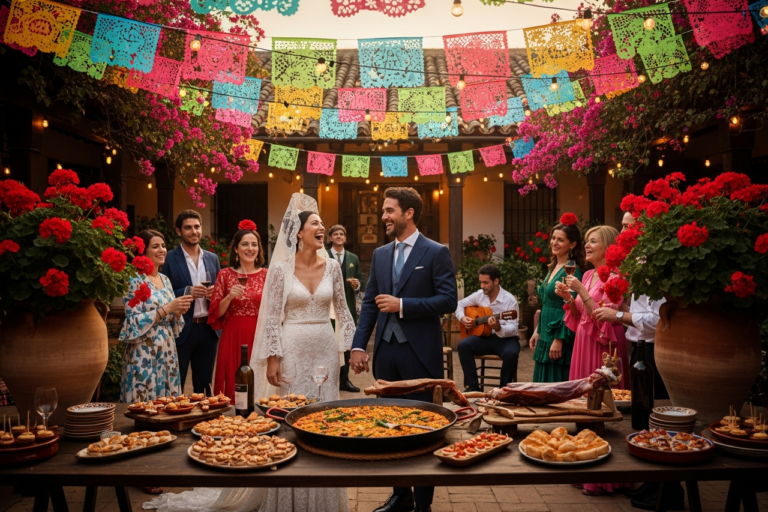
Get ready for a big party because a Spanish wedding reception is known to go all night, sometimes until morning! People call it the “banquete de bodas,” and this is when the real excitement starts. The night is full of amazing food, good songs, and hours of dancing. All the wedding guests, no matter their age, come together to have fun and cheer for the happy couple.
During the evening, you and the other wedding guests will enjoy a wedding feast served in many courses with favorite foods. After that, there will be a lot of dancing on the dance floor. But it’s not only about great food and music. There are special traditions that make the night even more special. We will talk more about the tasty dishes and lively music that help make these Spanish wedding receptions so good for everyone.
Multi-Course Feasts and Signature Dishes
Get ready for lots of food, because a Spanish wedding feast is long and full of fun. Food is very important in Spanish culture. On a wedding day, it becomes even bigger. Things usually start with a busy cocktail hour. There are many tapas and snacks, like jamón (cured ham) and seafood.
After this, everyone sits down for a big meal. There can be many courses and it can take hours to finish. On these special occasions, there are often at least four courses. People eat appetizers, then fish, then meat dishes. Sometimes, there is a sorbet to refresh your taste. All the food shows how people wish the couple a full and happy life.
The meal is more than eating. It is a time for people to talk, toast, and shout “¡Vivan los novios!” (Long live the newlyweds!). Some dishes you can see at the wedding feast are:
-
Seafood paella or fideuà.
-
Roasted meats like lamb or suckling pig.
-
Many rich desserts.
Spanish culture makes any wedding day a big event with good food and happiness for all.
Traditional Dances and Music at the Reception
Music and dancing are at the heart of a Spanish wedding reception. There is a lot of passionate energy at these parties, and people keep dancing and having fun all night. The first wedding dance with the new couple is always a big moment. Still, you will see and enjoy more than one traditional wedding dance, which brings everyone in.
One well-known traditional wedding dance is the “Seguidillas Manchegas.” This dance is full of energy and comes from La Mancha. It does not just include the couple but their parents and guests, too, and everyone gets to join in. Another popular wedding custom is the money dance. Many guests line up to pay for a turn to dance with the bride or groom. It is one way to help out the couple as they begin their new life.
After some time, the music changes from classic songs to more modern tunes. There is also a DJ who keeps playing in a “disco” area as the night goes on. The night can go late, and people remember these parties for a long time.
-
The first dance usually does not start until late, often around midnight.
-
Some weddings have live bands or flamenco shows for added local style and passionate energy.
-
Later on, the DJ keeps the party going with more music, and it is normal to have extra snacks as it gets later.
You will see that a wedding dance, the money dance, and much passionate energy are all big parts of a Spanish wedding. Everyone has a good time
Conclusion
To sum up, spanish wedding traditions are a mix of old ways, culture, and special moments that make each wedding stand out. The giving of 13 coins is just one part that shows the importance of their customs. There are also fun parties at the reception, and everything you see at these weddings comes from things that have been important to people in Spain for many years. These spanish weddings bring the couple close and make them feel part of something bigger with their families and where they come from. If you are getting ready for a wedding or want to know about these traditions, you can ask for a free talk with us. Take in the joy of spanish wedding traditions and start your own story.
Frequently Asked Questions
How do Spanish wedding celebrations differ from American weddings?
Spanish weddings usually last much longer than weddings in the United States. Often, the wedding party goes on until early in the morning. There are fewer guests. Most of the time, it is just close friends and family who get invited. The way they wear the wedding ring is also different. People in Spain have long meals with many courses at weddings, and these meals go on for hours. These things make spanish weddings unique.
What should a guest expect when attending a traditional Spanish wedding?
As a guest, you can expect the wedding day to be long and full of life. The wedding ceremony might include a full Catholic Mass. At the reception, there will be lots of food and dancing that could last until dawn. The day is all about being with family members. So get ready for a fun, warm, and family-focused time.
Are there regional differences in wedding traditions across Spain?
Yes, that’s right! Spain is full of different regions, and each one has its own special style. You can see this at Spanish weddings too. In Andalusia, there are different dances. Places like Catalonia or the Basque Country also keep their old customs. Every part of Spain makes the day special, and they all hold on to their cultural heritage. Wedding planners know all about these things. They can guide you through each tradition, so your wedding fits what you want.



