

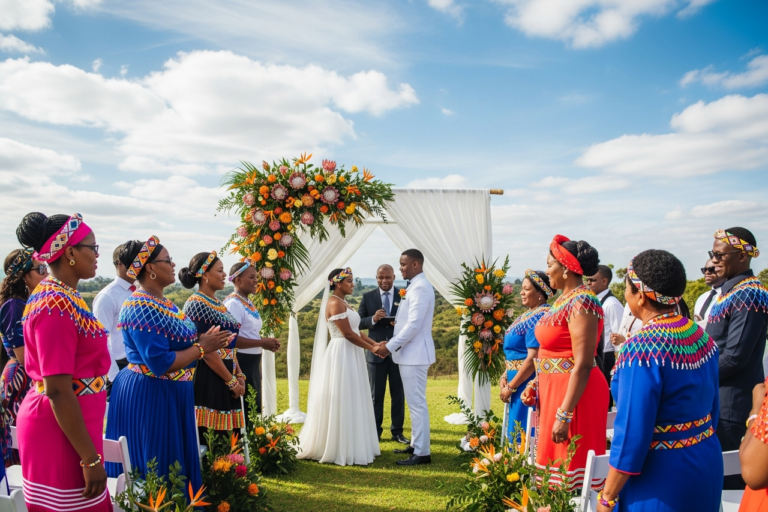
Key Highlights
-
South African wedding traditions are lively and bright. These events mix both ancestral heritage and some modern ways of doing things.
-
One important part of many African weddings is the “lobola,” or bride price. It shows respect and joins not just the bride and groom, but their families, together.
-
At a traditional wedding, people wear colorful attire that often has beadwork. This shows their cultural identity and shares their family history.
-
There is always music and dance at a marriage ceremony. These bring joy and let everyone feel the spirit of the community during south african wedding traditions.
-
Because there is so much cultural diversity in South Africa, customs can be different in each group, like the Zulu or Xhosa. This makes every african wedding unique.
-
These african weddings are all about bringing two families together. Everyone is there to help the couple start a new family at the beginning of their life together.
Introduction
Do you want to know how people show love in different places? The wedding ceremony in South Africa shows a lot about its cultural heritage. In South Africa, getting married means more than just two people coming together. It is an important time when two families join to become one. Grandparents and the whole community often support the couple. The wedding is full of family, love, and tradition. Everyone welcomes the new family with open arms and happy celebrations.
The Cultural Diversity of South African Weddings
South Africa is often called the “Rainbow Nation” because there is a lot of cultural diversity there. You can see this mix of cultures at a south african wedding. The country is home to many different groups, and each group has its own wedding customs. These ways of celebrating are old and have been handed down through families. So, there is not just one set way to have a south african wedding.
Groups like the Zulu, Xhosa, Sotho, and Tswana each have their own traditions during weddings. Their unique style in ceremonies shows their cultural identity. Because of this variety, every south african wedding is special and has a deep, personal meaning. Plus, it shows the couple’s background and love for african wedding traditions.
Overview of Major South African Ethnic Groups and Their Wedding Customs
The cultural richness of south africa shows in the wedding customs of each ethnic group. These weddings are all different and come from long african traditions. In a Zulu wedding, there are special rituals that help welcome the bride into her new family.
The Xhosa people have their own way of getting married. Their process has steps with deep spiritual meaning. Many wedding customs of south africans come from black african culture. But white south africans, like those with Afrikaans roots, have their own ways too. These can mix practices from european styles with local ones, like having a traditional braai, or barbecue.
Music and dance are very important to the Sotho people at weddings. They tell stories and bring people together with joy. All these special customs protect african culture and let us see the beauty in every ethnic group. They also make the marriage day more joyful for the newly married couple.
Shared Elements That Unite South African Wedding Traditions
There are many different ways that people hold a South African wedding, but some traditions bring them all together. At the heart of these African wedding traditions is the idea that it is not just about the couple. It is about two families coming together as one. This focus on family and community is part of every celebration and shows up throughout the day.
Many weddings also honor the couple’s ancestral heritage. This means asking for blessings from people who have come before, so the new family can have a good future. The community is a big part of these events. Friends and family are not just guests. They help with everything, from getting ready for the day to joining the final wedding feast.
Here are some traditional elements you may see:
-
A big focus on uniting two families, and not just the bride and groom.
-
The lobola, sometimes called bride price, given as a way to show thanks and respect.
-
Elders helping with talks and giving blessings.
-
There is vibrant music, dance, and a large wedding feast for everyone to share and enjoy.
In these south african wedding traditions, you can see the bride price, traditional elements, the joining of families, and the respect for ancestral heritage playing a key role in every celebration.
Common Rituals and Practices in South African Wedding Ceremonies
A traditional wedding ceremony in South Africa is full of special customs. These mark an important change for the bride and groom. For them, the wedding day starts a new life. On this day, the couple gets new, adult roles within their community. African weddings are all about people coming together. Many rituals are there to show respect for their ancestors and help everyone feel closer as a group.
One big part is when the bride is welcomed into her new home. Older people bless her and talk to her about the family’s past. This is to show that she is now part of her husband’s family. Customary marriages like these have many acts that carry special meaning.
wedding ceremony, south africa, traditional wedding, african weddings, customary marriages, new life, wedding day
Traditional Processions, Blessings, and Gift Exchanges
The wedding ceremony is a special time filled with important events that join family members together. A common part of this is when the groom’s family goes to the bride’s home to talk about their wish to join the families. This helps both sides build trust and respect for each other.
Elders give their blessings at the ceremony. They say prayers and share advice to wish the couple a good life together. This shows how much people value the knowledge and help that older family members can give. Family members also exchange gifts. These gifts are not just items. They mean a lot to both families and help form a strong connection.
Key rituals that are often in the wedding ceremony include:
-
Formal Introductions: The groom’s family visits the bride’s family to share their thoughts about joining as one family.
-
Palm Wine Ceremony: In some places, the bride gives palm wine to the groom to show he is her choice.
-
Welcoming the Bride: Certain events make it official as the bride joins her new family.
Role of Elders and Family in Ceremony Preparations
In South African marriage celebrations, the family members are the most important part of everything that happens. The couple’s new life is seen as a big promise between two families. It is not just about the bride and groom. Family members from both sides take part right from the start. This shows that everyone in the group is fully involved and ready to help.
The elders have a crucial role in every step. They help as guides, peacemakers, and lead in talks like lobola. Elders are also who families go to when there are any problems. People listen to their advice because they know much more. The couple sees their blessings as very important for a good new life together.
When the groom’s family and the bride’s family take part, the couple gets a feeling that their new life is supported. The help from family members means they know support is always there. Everyone sees the marriage as something the whole community does together.
Key Symbols and Their Meanings in South African Weddings
At a South African wedding, you can see the cultural richness in many ways. The vibrant colors and decorative elements all have a special meaning. These are not just pretty to look at. They act as a way to share stories about who people are, where their families come from, and even their place in the community.
Every piece, from detailed beadwork to patterned clothes, is picked with care. This kind of African craftsmanship is about much more than style. The clothing and objects have meaning, and they become storytellers in their own right. These symbols help people see the beauty and depth of the wedding ceremony.
Beadwork, Colors, and Cultural Attire
The vibrant colors and cool decorations on South African wedding attire are like their own kind of talk. Each color, pattern, and piece of beadwork can show a person’s social status, their ethnic group, or where their family is from. Nothing about the wedding attire is by chance. Every detail is there for a reason and full of meaning.
In African wedding attire, beadwork is a big deal. The bead colors can tell you something important. For example, white stands for love and purity. Red can show passion. The patterns and designs also let people in the community know how you feel or what is true without anyone saying it out loud. It is a silent way to speak.
This careful choice of decorative elements makes the wedding attire feel very real and special.
-
Handmade bracelets and decorative belts are picked because they mean something.
-
Headdresses can tell if a person is married or where they come from.
-
The patterns on the fabric can share a story or show their clan.
-
Using vibrant colors shows people are happy and it is time to celebrate.
This is what makes south african wedding attire stand out, with its vibrant colors and strong ties to each ethnic group. It is full of unique decorative elements like decorative belts and keeps the meaning behind it alive.
Unity Cups, Ancestral Spirits, and Ceremonial Items
Beyond the clothing, there are many things with deep meaning in African weddings. One example is unity cups. In some weddings, the couple drinks from the same cup or vessel. This shows that their lives are coming together as one. It lets people see their new journey as a couple.
Honoring the spirits of family members is also part of many ceremonies. Some families hold rituals, like giving a cow, to ask their ancestors for blessings on the marriage. People believe this brings good luck and helps keep away evil spirits. It is also a way to show respect for their roots and know that they are part of a bigger family going back many years.
Other ceremonial things, such as symbolic staffs and special mats, are used as important decorative elements. Each item has its own role in the wedding. These can show the joining of two families, give blessings to the couple, or protect them from harm as they start a new life together.
The Importance of Lobola (Bride Price)
One of the most important customs in many african weddings is lobola. People sometimes call it “bride price,” but it means much more than just a simple payment. Lobola is a tradition based in african customary law. It shows a special bond that starts between two families before the marriage ceremony.
The groom’s family gives gifts to the bride’s family. In the past, this was cattle. Now, it is often money. This is not to “buy” the bride. Instead, it is a way to show thanks and give respect for all that the bride’s family did to raise her. This process helps both families become closer.
The Negotiation Process Between Families
The lobola negotiation is a special meeting that shows respect, led by older members from both the groom’s family and the bride’s family. This is not about selling or buying someone. It is a careful talk meant to help both families get to know each other and set a fair way to show thanks.
The groom’s family goes to the bride’s family to start the talks. People act in a kind and careful way because this first meeting shapes how the families will get along later. It lets everyone see how important the bride is to her family and that the groom will be able to look after her.
This process helps make things fair and brings both families closer, not just by talking about wedding expenses but about a lot more.
-
Elders lead the negotiation to make sure people act with respect.
-
The process is a way to thank the bride’s family.
-
It helps both families start a strong and good relationship.
-
Everyone must agree in this step before they go ahead with the wedding.
Historical Roots and Modern Adaptations of Lobola
Historically, lobola was a cornerstone of many African societies, serving to formalize alliances and demonstrate commitment. The exchange, traditionally involving cattle, symbolized wealth, honor, and the ability of the groom’s family to provide for the bride. This practice has deep historical roots and continues to be a respected tradition.
In modern times, lobola has adapted to contemporary life. While the core principle of honoring the bride’s family remains, the form of the gift has evolved. Today, financial compensation is more common than livestock, making the practice more practical for urban families. These modern adaptations ensure the tradition remains relevant.
Despite these changes, the essence of lobola endures, coexisting with modern legal frameworks that require the consent of both spouses.
|
Feature |
Traditional Lobola |
Modern Lobola |
|---|---|---|
|
Form of Payment |
Primarily cattle |
Often cash or bank transfer |
|
Negotiation |
Conducted solely by male elders |
May involve wider family, sometimes even the couple |
|
Purpose |
Formalize alliances, show wealth |
Symbol of respect, gratitude, and commitment |
|
Context |
Rural, agrarian societies |
Urban and rural settings, integrated with modern life |
Distinctive Wedding Traditions of Major Cultural Groups
The beauty of a south african wedding comes from its many different styles. Some african wedding traditions are the same for all, but each big cultural group has its own special way of doing things. This keeps people close to their roots and helps to pass african traditions on to the next generation.
You can see this in the bright dances at a Zulu wedding party. Or when you look at the important clothes that people wear at a Xhosa wedding. All of these things show how rich the people are in south african wedding traditions. We will talk about some of the special ways the Zulu, Xhosa, Sotho, Tswana, Pedi, and white South African groups celebrate their weddings.
Zulu Wedding Rituals: Umabo, Umemulo, and Attire
Zulu weddings, called “umshado,” are lively with bright colors and dancing. For the Zulu people, one main event at a traditional South African wedding is the Umabo ceremony. This part of the wedding is when the bride takes gifts to her new family. She does this to show thanks and accepts her place in their home.
There is another ceremony called Umemulo. While it is not a wedding ritual, it is important. The Umemulo is a coming-of-age event for a young woman. It marks that she is pure and ready to get married. It is a way to show that Zulu culture values respect and responsibility.
The wedding attire for a traditional South African wedding is also very meaningful. The bride wears special African wedding attire. She puts on a leather skirt and a unique hat that tells others she is now married. These customary marriages are beautiful to see. They are joyful events where two families come together, making new memories for all.
Xhosa Wedding Customs: Ukuthwala, Umbhaco, and Music
Xhosa wedding customs are full of meaning and tradition. These customs are mostly spiritual and happen in steps. One big tradition is called “Ukuthwala.” Here, the groom does a mock “kidnapping” of the bride. This act shows her move from her own family to her husband’s family. This is the start of her new life.
Xhosa wedding celebrations are usually split into two parts. There is the traditional ceremony and also the “white wedding.” African wedding attire stands out, especially the “umbhaco.” The umbhaco is made with a black skirt that wraps around and blankets are worn over the shoulders. Many brides also wear head turbans with this outfit.
Music and traditional songs take a big role in Xhosa ceremonies. People use these songs to tell stories and show their joy. The songs help bring the community together. The whole celebration shows respect to ancestral customs. It marks the couple’s union and their journey into their new life.
Sotho, Tswana, and Pedi Celebrations: Patlo, Blankets, and Dance
The Sotho, Tswana, and Pedi people each have wedding traditions that are rich and special. For the Sotho, there is an important step called “Patlo.” At this time, the families meet to talk about and agree on the lobola. This gathering is a big part of what makes a marriage happen, and it helps tie the two families together in a strong way.
In Sotho and Tswana culture, there is also a strong use of blankets. The groom will often wear a traditional blanket. This item is an important part of what he wears and holds a lot of meaning. Sotho brides wear cotton dresses called Shweshwe. These dresses bring color to the day and help make it joyful.
Dance is also a big part of these events. At Sotho weddings, people do the “Koena” dance. This is a fun dance that helps everyone feel happy and excited. All these ways of celebrating play a big part in their cultural identity and how the community comes together.
Afrikaans and White South African Marriage Customs
White South African weddings, like those from Afrikaans roots, mix European ways and local South African style. The ceremony is much like a Western white wedding. The bride often wears a white dress, and the couple says their vows to have a real, legal marriage.
Family members are very important at these weddings. They go as guests and give their help at the event. The party after the wedding, called the reception, is a big deal for everyone. At the reception, there is the wedding cake. Cutting the cake is a big moment, and this is something seen in many Western weddings.
Still, there is often something that feels very South African too, and that is the braai. The braai is a barbecue, and it can happen before or after the wedding. It adds a fun, easy-going touch and lets people see how South African spirit mixes with other cultures. This is special to African weddings, especially in the Rainbow Nation.
South African Wedding Attire and Dress Codes
South African wedding attire is something you will see full of vibrant colors and many patterns. You can spot some intricate designs in the clothes, too. These outfits are not just for looks. Each wedding attire means something special. What people wear at a south african wedding shows their cultural identity, family background, and their place in the community. Everything people wear is picked for a reason.
The beadwork and the fabrics in this colorful attire each have a tale. You will see a lot of decorative elements that really stand out. Every item in african wedding attire says something nice about the people. It lets them show their love for their heritage. Through this, they also celebrate their roots in a stylish way.
Bride and Groom’s Outfits Across Cultures
The wedding attire for brides and grooms in South Africa can be very different from one culture to another. It is much more than just the western wedding dresses many people know. These south africa wedding dresses show deep meaning, with style and colors that reflect tradition. Every design and every accessory is a proud part of heritage and skill.
A Zulu bride may choose a colorful skirt and her wedding attire can include beaded jewelry. This is to show she is married in a strong, open way. For the Xhosa, a bride wears the white and black umbhaco, and this too has meaning. Grooms often pick outfits that use both modern and traditional elements. Some men add bold ties or a decorative belt to a suit, and some decide on full traditional clothes. In the end, these choices help people see their roots and feel part of something special.
Here are some things you will often find in traditional wedding attire in south africa:
-
Shweshwe Fabric: This shows up in many wedding dresses and for guests too. It stands out because of its small, repeating patterns.
-
Xhosa Umbhaco: This is easy to see, with sharp black and white patterns.
-
Zulu Attire: Brides use a lot of beaded jewelry, a decorative belt, and special skirts on their day.
-
Ndebele Blankets: People may wear bright, patterned blankets to mark a big moment such as a marriage.
Guest Attire, Headdresses, and Jewelry Significance
At a South African wedding, the way people dress is a big part of the event. Guests are asked to wear clothes that show their own cultural identity or the heritage of the couple. This gives the wedding a colorful look, bringing out both unity and diversity.
Headdresses and jewelry are important at these weddings. A headdress may show if a woman is married, her place in the community, or her ethnic group. Jewelry, mainly beadwork, is full of meaning too. The colors, patterns, and materials of the jewelry tell others about that person’s life, family, or social standing.
All these items are much more than simple accessories. They show true cultural expression. If you wear them, you take part in the traditions of a south african wedding and show respect for the event’s importance. This helps make the day an experience that everyone at the wedding feels part of.
Music, Dance, and Festive Traditions at South African Weddings
Music and dance are at the heart of African weddings, filling every part of the day with fun, joy, and a strong sense of togetherness. These lively parts are not just for show; they help tell the story and share the feeling of the event. The wedding party often starts and leads these happy moments.
There are traditional songs that come from long ago and special dances that almost everyone knows. These sounds and moves invite everyone in and help all people in the group celebrate the wedding in a big way. Without them, the day would not be complete.
Traditional Songs and Their Roles in Ceremonies
Traditional songs are a big part of the wedding ceremony. They do not act as just background music. The songs be mixed into every part of the event. These songs help guide what is happening. They bring out deep feelings. There can be songs that act like prayers. Some songs give joy. Others share the history of the families.
In african weddings, people sing different songs at different times. Some songs be played when the bride shows up. Other songs be for when gifts are shared or a new family member gets welcomed. The words in these songs often give advice, blessings, or good wishes to the couple.
Everyone gets involved in the singing. This creates a strong group feeling. The singing shows it’s not just about two people but about all of us.
-
Songs are used to welcome the wedding parties.
-
They can offer advice and blessings to the new couple.
-
Singing unites the community in a shared expression of joy.
-
They help tell the story of the families and their heritage.
Signature Dances and Community Involvement
Music and special dances are a big part of african weddings. These stands out in every wedding and bring people together from all over the community. The dances are very lively and have strong beats. Each step in the dance can mean something important in the culture. They give everyone, from old people to young people, the chance to show joy and cheer for the couple getting married.
Different groups have their own dances for wedding tradition. The Zulu people are well known for dancing with high kicks and lots of energy. This shows power and quick moves. At a Sotho wedding, people do the “Koena” dance. This bright and happy dance gets everyone, including young people, on the dance floor.
The way everyone joins in is a big deal at these weddings. People are not just watching from the side—they take part in the fun. When people dance together, it makes their bond stronger with the community. It also makes the day very special and happy for all who are there.
Conclusion
South African weddings are full of life. They bring together many ways of african culture and customs. Each ethnic group adds something special to these events. This makes every wedding both full of meaning and fun. Lobola, music, and dance all play big parts. These things show how important the community and family are during african weddings.
Learning about these customs helps you know more about african culture. It also makes the wedding better for everyone taking part or watching. If you let these traditions in, your wedding can feel more real and be something everyone remembers. If you’re getting ready for a wedding or want to know more about these traditions, go explore more about them!
Frequently Asked Questions
How do modern South African weddings combine traditional and Western customs?
Many modern South African weddings bring together both traditional and Western ways. A couple can have a traditional wedding ceremony to give respect to their heritage. Later, they might have a “white wedding” with a white dress and spoken vows. These new styles help couples share their own love story. At the same time, they show honor for the culture they come from. African weddings like this highlight both sides in a simple, joyful way.
Are there regional differences in wedding practices across South Africa?
Yes, there are big differences in wedding customs across south africa. Most of these come from the main ethnic groups in each place. For example, the Zulu have their own ways in KwaZulu-Natal, and the Xhosa do things their own way in the Eastern Cape. This is part of what makes african weddings so different and special.
What meaningful symbols are most often seen at South African weddings?
At South African weddings, you can often see beadwork that is very detailed. The different colors used in the beadwork each have their own meaning. People may also use animal skins, which are important symbols at these events. There are other decorative elements at african weddings too. Traditional blankets, unity cups, and ceremonial staffs are seen a lot, and all of them have deep meaning. These decorations help to connect the celebration to african traditions and ancestral heritage.



