

Key Highlights
-
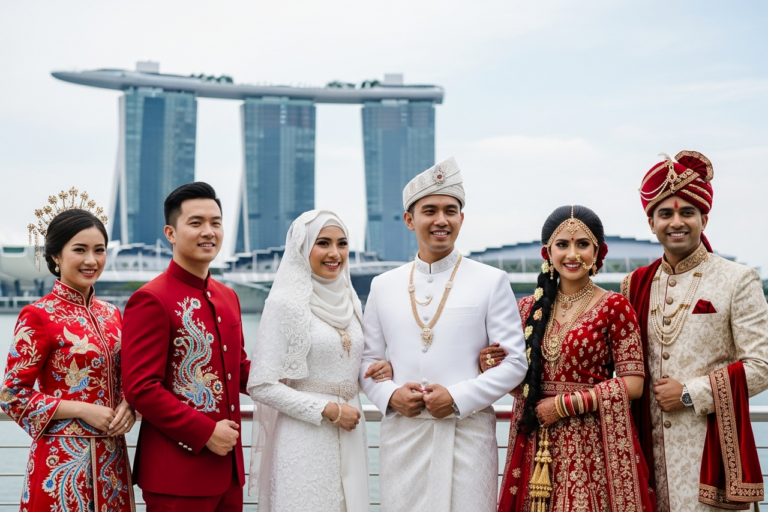
Singaporean weddings show the rich mix of Chinese, Malay, and Indian wedding traditions. This be a big part of what makes singapore unique.
-
Many couples still keep traditional customs like the Chinese tea ceremony and the Malay wedding walk. These special moments mean a lot to them on their wedding day.
-
Today, modern couples in singapore want weddings that feel new and fresh. They often mix old traditional customs with new style to make their own wedding day special.
-
From betrothal gifts to wedding ceremonies, family is always at the heart of singaporean weddings. Their support matters a lot.
-
Key wedding day rituals use symbolic items and colors. People believe these items can bring good luck, prosperity, and happiness to the bride and groom.
Introduction
A wedding is a special day where two people come together to share their love story. In Singapore, this day is full of bright color and culture. Singaporean weddings mix old customs with new styles. This makes the big day both personal and full of meaning. If you are about to plan your own wedding or just want to know more, you will find the world of wedding customs in Singapore very interesting. There is a lot to see and learn about how people in this country celebrate their special day.
Understanding Singapore’s Multicultural Wedding Traditions
Singapore is known for its rich wedding customs. Here, you see different cultures come together. The city has Chinese, Malay, and Indian traditions. Each group has its own rituals and special meaning, with deep symbolism in every step. Because these cultures all live in Singapore, you can have a wedding with many different traditions. This mix makes a Singaporean wedding something very special.
Today, many modern couples in Singapore like to celebrate this mix. They may use some parts of other cultures in their own weddings. This is how many Singaporean weddings today blend old and new. They also show how people want to honor the past but still make things new and open for everyone. In the next parts, you will see how these traditions from Chinese, Malay, and Indian groups come together. You will also learn what makes these wedding customs stand out.
The Blend of Heritage and Modernity in Singaporean Weddings
Today’s Singaporean weddings show that tradition and modern ideas can mix well. Many young couples want their wedding day to keep the old ways alive, but they also want it to show who they are and share their love story. Because of this, you will see a mix of both worlds at these weddings.
For example, the bride may wear a Qun Kua at the tea ceremony. Later in the day, she might change into a modern wedding gown for the banquet. At the same time, while families follow the usual rituals, there are also contemporary elements in play. You may find a live band playing songs the couple loves, wedding favors made just for their guests, or even wedding invites sent out online.
This whole wedding blend lets modern couples respect their families and their cultural background, but still be themselves. It’s a good way to take what’s at the heart of old customs and give it a new touch. That way, their wedding day becomes special and true to them.
Core Differences Between Chinese, Malay, and Indian Wedding Customs
While all Singaporean weddings celebrate the union of two people, the customs of the three main ethnic groups have distinct characteristics. Chinese wedding customs often focus on auspicious dates and gift exchanges to ensure good luck and prosperity for the new couple.
Malay weddings are known for their grand processions and community-focused celebrations, where the entire village or neighborhood might be involved. Indian culture, on the other hand, features vibrant, multi-day festivities filled with intricate rituals, music, and dance, deeply involving both families.
Each culture brings its own unique flavor to the wedding celebration, making Singapore a fascinating place to witness the diverse ways love is honored.
|
Tradition |
Chinese |
Malay |
Indian |
|---|---|---|---|
|
Key Ceremony |
Tea Ceremony |
Bersanding (Sitting-in-state) |
Saptapadi (Seven steps) |
|
Symbolic Color |
Red and Gold |
Various colors, often vibrant |
Red and Gold |
|
Pre-Wedding Ritual |
Guo Da Li (Betrothal gifts) |
Adat Bertunang (Engagement) |
Mehndi (Henna ceremony) |
|
Focus |
Family respect, good luck |
Community, royalty for a day |
Religious rites, family unity |
Popular Venues for Traditional Ceremonies in Singapore
Picking the right place sets the mood for your wedding ceremonies. In Singapore, it is common for many old customs to start at home, especially in Chinese and Malay weddings. The bride’s home is where things kick off. This is where the tea ceremony, or even the start of the wedding procession, may happen.
For the main event, such as the wedding banquet, there are many places to pick from. Hotels are a top pick for many people. They give you big ballrooms and cover almost all the things you need. Still, some couples go after venues that fit well with their own style or theme.
These are some well-liked types of places to hold traditional wedding ceremonies, tea ceremonies, or banquets in Singapore:
-
Hotel Ballrooms: They stand out for their nice look and full services.
-
Restaurants: Good for big wedding banquets where you want real, tasty food.
-
Heritage Buildings: They give you a special, old feel for your big day.
-
Garden and Outdoor Venues: Best for people who want something green and chill.
Spotlight on Chinese Wedding Traditions in Singapore
Chinese wedding traditions in Singapore are special and full of meaning. These moments come from a long history where families want to show respect and bring good fortune. Even though the customs come from the past, Chinese weddings in Singapore now show a mix of local culture and new ways of living.
There are some key parts of a Chinese wedding. Ceremonies like Guo Da Li (the betrothal ceremony) and the tea ceremony are still important in Singapore. These parts of the wedding have lots of small acts and meaningful betrothal gifts. They help bring the two families together. Here, we will look at these main chinese wedding traditions and see what they mean for people in singapore today.
The Guo Da Li Ceremony: Significance and Rituals
The Guo Da Li betrothal ceremony is an important part of Chinese weddings in Singapore. This is when the groom’s family shows their promise to the bride’s family. It marks the real start of the wedding plans. During the ceremony, the groom’s family comes to the bride’s home with a range of betrothal gifts. This is their way to thank the bride’s family and show they are serious.
Many of these betrothal gifts have deep meaning. They can stand for good things like prosperity, fertility, and a happy life together. The bride’s family also gives back with a dowry, called Jia Zhuang, and shares gifts with the groom’s side. This shows their support and blessing for the new marriage.
Here are a few key elements you will often see in Guo Da Li betrothal gifts:
-
Wedding cakes and pastries for both families to enjoy with relatives.
-
A pair of dragon and phoenix candles which bring good fortune.
-
Oranges that stand for wealth and sometimes pig trotter cans or roast pig are given.
-
Jewellery for the bride, often including the Si Dian Jin (four pieces of gold).
Symbolism and Steps of the Chinese Tea Ceremony
The Chinese tea ceremony is one of the key parts of a chinese wedding. It is a special way for the bride and groom to meet each other’s families and to show their gratitude and respect to their elders. When the couple serves tea, they are saying thanks for all the love and care from their families.
The tea ceremony usually happens on the wedding day at both the bride’s and the groom’s homes. At this time, the couple will often kneel and serve tea to their parents, grandparents, and other older family members, starting with the oldest. After they give the tea, the elders give the couple blessings for their marriage, often as red envelopes (hongbao) filled with money or gold jewellery.
The tea ceremony is more than just giving and receiving tea. It stands for the joining of two families. When elders take the tea, it means they now accept their new son- or daughter-in-law. This is a simple but strong moment that brings both families closer and honors the family lines the couple is now a part of.
Auspicious Dates, Betrothal Gifts, and Family Roles
In Chinese culture, people work to bring good luck to a marriage even before the wedding day. Picking the right wedding date is very important. Many couples ask a Feng Shui master or use a traditional almanac to help choose the day. Dates with lucky numbers like eight, which stands for wealth, or nine, which means long life, are very popular.
The family is a big part of every step in the wedding. Parents and elders do more than show up—they help guide the couple and carry out important steps and rituals. Betrothal gifts carry special meaning. For example, mandarin oranges are used for good luck and to bring wealth. Red dates means the couple will have children in the future.
Here are things you need for a real Chinese wedding:
-
An auspicious wedding date.
-
A formal Guo Da Li with symbolic betrothal gifts.
-
The tea ceremony to honor elders.
-
A grand wedding banquet to celebrate with family and friends.
-
Red decorations to bring happiness and good fortune.
Malay Wedding Customs in Singapore
Malay wedding customs in Singapore are joyful, lively, and bring people together. On the wedding day, many say the couple is like a “king and queen for a day.” There are big ceremonies, stunning traditional garments, and fun parties that include everyone in the community.
One special part of Malay wedding customs is the bright wedding procession called the kompang procession. In this event, you will see the groom being walked to the bride’s home. These wedding customs follow both Islamic and Malay culture, focusing a lot on family and community ties. Here are some main parts of the day that show how special these Singapore wedding traditions can be.
Key Components of the Malay Wedding Procession
The Malay wedding procession is one of the best parts of the wedding ceremonies. People wait to see this because it is such a great sight. The groom does not go alone. He walks to the bride’s house with his groomsmen, family, and other friends. The group is loud, happy, and full of excitement. It all comes together when the kompang band goes in front, playing their drums and making the day special.
When they reach the bride’s home, things get even more fun. The bride’s family and her friends block the groom in a friendly way. This part is called the hadang ritual. The groom and the ones with him have to do some fun tasks or give little gifts to move forward. This helps everyone laugh and enjoy the day.
Some important things in this procession are:
-
The kompang band makes music that brings joy to the whole group.
-
The groom walks with his groomsmen, his family, and friends.
-
In the hadang moment, the groom must prove himself before he gets to the bride.
-
People also carry bunga manggar, which are bright decorations made from palm leaves on long bamboo poles. This is done to wish everyone more prosperity.
These parts of the procession help to make the wedding ceremonies full of life, laughter, and meaning.
Must-Have Elements for a Culturally Authentic Malay Wedding
To host a real Malay wedding, you need to follow some traditional customs. These things do not just add fun to the day. They help wish the bride and groom a good life and much happiness. The wedding decorations are also very important. They often look fancy and help turn the place into something special, almost like a royal court for one day.
The bersanding ceremony is at the heart of the party. At this time, the bride and groom sit side by side on a nicely made-up seat called the pelamin. This is when family and friends come up and give their blessings. The bride’s family is a big part of this day. They help welcome all the guests and share all this joy.
If you want your event to feel real and full of tradition, make sure you include these important things:
-
The pelamin (wedding dais) should be the main spot of the party.
-
Bunga manggar (palm blossom decorations) need to be up to show that it is time for a good event.
-
Hantaran (trays of gifts) should go from the groom’s family to the bride’s family and from the bride’s family to the groom’s side.
-
Hold a big feast for everyone called the kenduri where you all come together and share the good times.
-
Do not skip the tepung tawar ceremony, where older folks bless the new couple with scented water and rice.
Unique Rituals and Traditional Attire
Malay weddings are full of special moments that make the wedding day feel magical. One important part of these wedding ceremonies is called the upacara membatalkan air sembahyang. In this event, the groom touches the bride’s forehead with his hand. This small act shows their love is now seen as right in the eyes of Islam. For many, it is a close and meaningful time the two will always remember.
What the couple wears is also a big part of the wedding. They usually dress in matching traditional garments called Baju Songket. These outfits are made with gold or silver threads that shine. On the wedding day, the couple can have more than one look. They change into different gowns and styles, showing off various colors and designs. Some outfits may be very old in style while others look new.
Changing into different outfits lets the couple try many looks and honor different parts of their roots. There will be bright colors that pop and simple shades that feel soft and beautiful. This mix of colors and styles makes the Malay wedding a true treat to see. Every moment is made more special by the clothes and how the couple wears them.
Indian Wedding Traditions: Celebrating Culture and Unity
Indian weddings in Singapore are full of color, fun, and lots of traditions. These weddings are not just about the two people getting married. The day is also about bringing two families together. There are many wedding day events, and they often last for many days. Each event is filled with love, big gatherings, and many old rituals.
Family is a big part of Indian culture, and you can see that during Indian weddings. Family members help with all the pre-wedding and wedding day things. From the first henna party to the last goodbye, every part is about joy, togetherness, and starts the couple’s new life. All the festivities show how important family and tradition are in Singapore’s Indian weddings.
Pre-Wedding Rituals and Family Involvement
The journey to an Indian wedding starts with many joyful pre-wedding festivities. These events begin the big celebration and give the two families a nice way to come together. The whole family gets involved. Parents, siblings, aunts, uncles, and cousins all help out to make sure everything goes well.
One of the most well-known pre-wedding festivities is the Mehndi ceremony. In this event, the bride, her female relatives, and her bridesmaids get pretty henna designs put on their hands and feet. There is also the Sangeet, which is a special night full of music and dance. Both sides of the family join and have fun together.
Here are some main pre-wedding festivities:
-
The Mehndi ceremony just for the bride and her maids.
-
The Sangeet night, which has a lot of music, dancing, and performances.
-
The Haldi ceremony, where a yellow turmeric paste is put on the bride and groom. This is for blessings and to make their skin nice.
-
The engagement ceremony. This is when both families say yes to the union in front of everyone.
Wedding Day Ceremonies and Symbolic Customs
The Indian wedding day is full of special customs and meaningful ceremonies. It usually takes place under a mandap, which is a canopy with four pillars. A priest leads the rituals. The groom arrives at the wedding in a big celebration called the Baraat. There is music and dancing as his family brings him to the venue.
One main part of the wedding is the Kanyadaan. Here, the bride’s father gives her to the groom. After that, the couple does the Saptapadi. They walk seven steps together around a fire. Each step stands for a promise about their life, such as always being there for each other, sharing happiness, and making sure they have good luck, nourishment, strength, and prosperity.
The groom also ties the Thali or Mangalsutra, which is a wedding necklace, around the bride’s neck. This shows that they are now married. All these wedding day customs have deep meaning and are done to wish the couple a good and happy life together. They are about love, good luck, and prosperity for the two families.
Incorporation of Modern Trends in Singaporean Indian Weddings
While the traditions are still an important part, many Singaporean Indian weddings are now including new styles. These days, people want their big day to feel more like their own, so they add some creative ideas. Couples mix old customs with modern touches in many things, like what they wear and how they talk to guests.
Some brides may not always wear only the old-style clothes. For one event, they could pick a wedding gown with sleek lines or use a modern color palette for decorations. Technology shows up a lot too, with videography teams making great wedding films and many couples choosing WhatsApp to keep in touch with friends and people they need for their wedding.
This mix of old and new is easy to see:
-
Fashion: People use classic shapes with modern fabrics, or the bride may wear a new-style gown for their reception.
-
Decor: You may find a modern color palette or clean and simple themes next to the things people have always used at weddings.
-
Technology: Some make wedding websites, send invites online, and get high-end videography for their story.
-
Entertainment: DJs might mix in old songs with new hits people love to dance to.
Conclusion
To sum up, looking at wedding traditions in Singapore shows a lot of different cultures and strong customs. The bright Chinese tea ceremonies, happy Malay wedding processions, and colorful Indian wedding steps all give you a special view of what matters in Singapore’s mixed society. Knowing about these ways does not just make you like the celebrations more, it also helps you respect all the unique cultures people have there.
If you are planning a wedding or going to one, taking part in these traditions can make the time better for you. If you want to know more or wish for help with your wedding in Singapore, you can reach out and get a free call with us.
Frequently Asked Questions
What should I expect when attending a traditional Singapore wedding?
When you go to Singaporean weddings, you will see lively festivities. There are many traditional customs on this wedding day. The day can be long, so get ready for a lot of food, music, and bright ceremonies. People want to give good luck and happiness to the couple. This is a great time to see how their culture celebrates.
How have Singapore wedding traditions evolved for modern couples?
Modern couples in Singapore mix old ways with their own style on their wedding day. They still keep the important wedding ceremonies but often add something new. This might be a special theme, new style in what they wear, and using technology. By doing this, they make the wedding day have meaning and also add something new that fits them.
Where can I find traditional wedding items for Singaporean ceremonies?
You can get traditional wedding items at shops in places like Chinatown or Joo Chiat. Many of these shops help people from different groups, such as Teochew or Hokkien. They have things for you like betrothal gifts, wedding decorations, betrothal clothing, and jewellery. Online stores are also there to give you a simple way to get all you need.



