

Key Highlights
-
A traditional Russian wedding usually has a fun “ransom” tradition. In this part, the groom has to pay to “free” his bride from her family’s home.
-
The wedding ceremony most often happens as a civil service at ZAGS, a registry office in Russia. This is needed by law in Russia.
-
Many couples also want to have a religious wedding ceremony. In this ceremony, it is common to see the symbolic “crowning” of the bride and groom.
-
The wedding party at a traditional Russian wedding is a lively event. A toastmaster, known as a “tamada,” leads the way and helps with old traditions like breaking glasses for good luck.
-
At these celebrations, the wedding party and guests join in many toasts, different games, and sometimes days of fun to honor the culture.
-
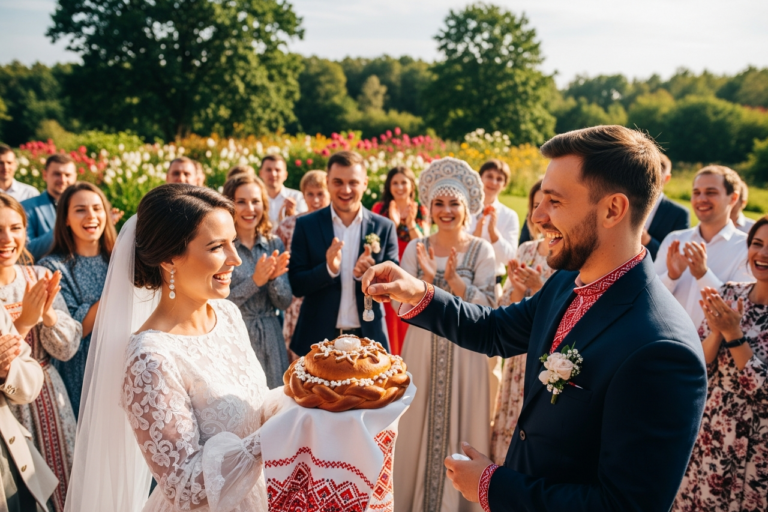
Symbolic things like bread and salt are used in the russian wedding. These things are given as blessings and show wishes for prosperity to the newlyweds for their new life together.
Introduction
A russian wedding is a big event. It mixes old traditions with fun parties. From the start of the wedding day, there are many special rituals, games, and kind words shared. People in russia are known to throw large celebrations where everyone in the wedding party comes together to honor their russian customs. These important traditions make the wedding full of joy and bring both families close as the couple starts their new life. Are you interested in learning more?
Historical Background of Russian Wedding Traditions
The history of the Russian wedding is full of changes and stories from many years. Many things people do today come from old Slavic customs. These customs had a lot of meaning. People used them to make sure a marriage would be happy and lucky.
But in the soviet years, they did not allow religious wedding ceremonies. Because of that, many of these russian traditions were not used for some time. In recent years in russia, there has been a revival where people are bringing back these old ways. They mix the ancient practices with new ideas. This gives everyone a new and special way to celebrate. Here, we talk about how these russian wedding customs have changed with time and how today’s culture plays a part.
Origins and Evolution of Old Slavic Customs
Old Slavic ways are the base of many russian wedding traditions seen in russia today. These old customs were full of meaning. They were often made to keep evil spirits away and to help the couple have a happy life. The bridal veil was not just for looks. It was a thick cloth made to hide the bride’s face and stop bad luck from coming.
There was also the betrothal. It was a formal deal before the wedding. At wedding parties, guests would throw silver, barley, and oats on the heads of the couple to wish them good luck and wealth. People would sing sad wedding songs. These songs showed how the bride would leave her family home.
A lot of these customs, like using the bridal veil and throwing grains like oats on the heads of the couple, still happen in russian weddings today. These traditions link couples now to those who lived before them. They help carry on the stories of love, family, and safety in russia.
Influence of Modern Culture on Russian Weddings
Modern culture, especially from the West, has had a big impact on the traditional Russian wedding. For many years in the 20th century, during the soviet years, people could not follow religious practices. Because of this, church ceremonies and many old customs almost vanished, and the wedding ceremony became just a simple civil ceremony.
Today, a civil ceremony is still a legal requirement in a russian wedding. But now, many couples mix old traditions with new ideas. There is a revival of religious ceremonies. At the same time, some couples bring in Western trends. For example, it is common now for the bride and groom to get professional directors for the event, invite famous performers, or plan a big show.
The idea of giving an engagement ring, for example, has come from Western culture and is still new for a russian wedding. Elopement is not a usual practice for a russian wedding, but now the focus is on making the wedding ceremony fit what the couple wants. This allows them to show their style and also honor their heritage.
Pre-Wedding Customs in Russia
A Russian wedding starts with a lot of fun even before the official wedding ceremony. Early in the day, there are special customs, and one of the best-known is the bride “ransom.” This happens at the bride’s house on the wedding morning.
The ransom makes the day feel lively and happy. The groom comes to the house with his friends and the wedding party. The event happens with humor and joy. A toastmaster, called tamada, or matchmakers, also help make the activities run. These customs show the fun and excitement of a russian wedding. It is only the beginning of the wedding party and a full day of celebration.
Let’s take a closer look at some of these russian wedding traditions.
The Ransom Ceremony (Vykuplenie Nevisty)
One of the most fun things at a russian wedding is the ransom, called “Vykuplenie Nevisty.” On the morning of the wedding, the groom comes to the bride’s house. He finds that her family and friends have blocked his way. They have “kidnapped” the bride and now ask for a ransom before he can see her again. But this is not a serious talk. It’s all about having fun with some playful tests to see how much the groom cares.
The groom has to get through some tasks and games before he can get to his bride. These might be:
-
Answering questions about the bride.
-
Singing songs or sharing poems.
-
Doing some silly things.
-
Going through a few funny “tests.”
For the ransom, people use simple things like a box of chocolates, a bottle of champagne, or a little bit of cash. At some weddings, the group may put a blindfolded groom in front of some women. He has to pick out his bride by just touching their hands. There is a lot of laughter during this. It makes the day even more fun for guests and the families.
Blessings and Parental Involvement
Parental involvement is at the heart of a Russian wedding. Parents give heartfelt blessings that wish the couple good luck. From the start of the wedding day, parents and other close family members are part of the celebration. Right before the couple goes to the ceremony, family members give their support and best wishes. This is a very touching moment.
This tradition keeps going at the reception. After the ceremony, parents are usually at the end of a line. They greet the newlyweds and give them bread and salt. This is a sign that they want the couple to have a good life with no hunger and lots of good things. This gesture shows that the new spouse is welcome in the family.
Parent blessings are not just for show. Many people think these blessings give the couple happiness and safety as they start their new life together. This beautiful tradition speaks to how important family ties are on the wedding day of a Russian couple.
Attire and Symbolic Items at Russian Weddings
At a Russian wedding, what people wear is full of meaning. You can see the bride’s wedding dress, the groom’s clothes, and all the accessories. The bride usually wears white. This color stands for joy, purity, and good morals. She finishes her look with a bridal veil or sometimes with a crown made from fabric, satin, or taffeta.
These are not picked just for style. All these items are symbolic and have meaning in Russian culture. For example, the bridal veil has been used to keep evil spirits away. Even a simple scarf can be part of what the bride wears. Now, we will see some details about russian wedding outfits and the different things you may find as symbols at the event.
Traditional Russian Wedding Dress and Groom’s Outfit
The traditional Russian wedding dress is usually made from white cloth. This color stands for joy and purity. Many brides today like to choose styles that are popular around the world. Even so, parts of old customs are still seen in the dress. The bridal veil is a key part of the outfit. In the past, it was a thick scarf that covered the bride’s face to keep her safe from bad luck. Now, the veil is lighter and looks more gentle, but it is still very important.
Brides also may wear a crown or add fabric, satin, or taffeta to their hair. Sometimes, they put on a simple scarf to keep the old russian wedding traditions alive. These accessories like the veil, crown, and scarf help give the bride a bit of grace from the past.
For the groom, the outfit is often closer to what you see in modern Western suits. Still, the groom might add things that show off russian wedding culture. Depending on the area and family customs, the groom may wear a special sash or other unique accessories. This matches well with the bride’s clothes and shows who he is on this day.
Symbolic Accessories and Decor Elements
Russian weddings are more than just what people wear. They use many accessories and decorations that have meaning. These things are part of the day to help the couple have a happy and good future. The wedding cake is not only sweet food. It is the main item at the party. The couple cuts it together. This shows their first job as husband and wife.
Many other items can be seen during the wedding day:
-
A piece of bread, called “korovai.” It is round and shared with salt.
-
A bottle of champagne. People use it for toasts or in the bride ransom.
-
Oats or barley grains. These are thrown on the couple so they get luck and money.
-
Icons of patron saints. These are sometimes part of Orthodox events to bless the couple.
The pieces are not only nice to look at. They be part of Russian culture. These accessories hold stories. They give good thoughts and hope to the newlyweds. The wishes are for a safe, full, and happy life.
Structure and Ceremonies of a Russian Wedding Day
The structure of a Russian wedding day is a mix of serious events and fun moments. The wedding day usually starts when the groom comes to the bride’s house for the ransom. After that, the couple goes on to the official part. In Russia, the civil ceremony is needed for the wedding to be legal. Every couple must complete this step.
Once the couple has finished the official registration, many people also have a religious ceremony. These are full of old traditions and special meanings. After this, everyone heads to the wedding celebration. The party can last for hours or even days. Let’s look at the different parts of a russian wedding and see how the events usually go.
Civil and Religious Ceremonies
In Russia, the wedding process involves two distinct types of ceremonies: civil and religious. The civil ceremony is a legal requirement and takes place at a state registry office known as ZAGS. This is where the couple officially registers their marriage and receives their marriage certificate. It is typically a brief, formal event, though friends and family often attend.
For many couples, a religious wedding in an Orthodox church is an equally important step. This ceremony is not legally binding but is a profound spiritual commitment. It includes ancient rituals like scripture readings, the exchanging of rings, and the famous crowning ceremony, where crowns are held over the heads of the couple as they stand before the altar. The priest blesses the union with icons of their patron saints.
Couples must carefully schedule these events, as church weddings are not performed during periods of religious fasting. Here’s a quick comparison:
|
Civil Ceremony (ZAGS) |
Religious Ceremony (Orthodox Church) |
|---|---|
|
Legally required for marriage. |
Optional spiritual ceremony. |
|
Takes place at a state registry office. |
Held in a church before an altar. |
|
Results in a legal marriage certificate. |
Involves rituals like crowning and blessings. |
|
Usually brief and formal. |
Rich in symbolism and tradition. |
Timeline and Multi-Day Celebrations
A russian wedding usually does not last for just one day. It often goes on for two days or even more. This gives everyone enough time to enjoy and celebrate the new couple. The first day of the wedding is the main one. It is more planned and has the big ceremonies and the main party.
The schedule for the first day goes like this:
-
Morning: The bride ransom ceremony happens at the bride’s home.
-
Afternoon: The civil ceremony takes place at ZAGS. Later, there may be a church ceremony.
-
Late Afternoon: People go around the city and take photos at nice spots.
-
Evening: The main reception is held, with a dinner, toasts, and dancing.
The second day feel more relaxed and casual. Many times, bridesmaids wear colorful outfits. People keep celebrating with more food, fun games, and lots of music. This kind of wedding celebration lets family and friends who come from far away enjoy everything. It makes the whole event feel like a big festival and helps everyone mark the start of the new life of the couple with great memories.
Russian Wedding Reception and Festivities
The Russian wedding reception is where the fun really starts. This wedding celebration is big, loud, and full of life. People enjoy lots of food, drinks, and the entertainment keeps going all night. Once the ceremony is over, the wedding party sits down for a feast. The party can go on until it is late. There is a toastmaster at the russian wedding who helps everyone have a good time. He leads with games, jokes, and many toasts.
There are cool things people do at the russian wedding like smashing glasses and shouting “Gorko!” to cheer on the couple. This wedding celebration is full of special moments. And the russian wedding is famous for the food and drinks, too. You will find things like caviar and see a beautiful wedding cake on the table. Let’s talk about some of these russian wedding traditions and the food everyone looks forward to.
Signature Rituals (Bread and Salt, Glass Smashing, City Tour)
Russian wedding receptions are fun and full of energy. There are many traditions that make them stand out. One of the first things the bride and groom do at the reception is the bread and salt ceremony. When they arrive, their parents greet them with a big, fancy loaf of bread called korovai and some salt. The newlyweds each take a bite. People say that whoever takes the bigger bite will be the head of their home.
Another big tradition in a russian wedding is the city tour. After the wedding ceremony, the couple and their close friends go around town. They visit famous places and monuments, lay down flowers, and take photos. It’s a great way to create some nice memories.
During the party, guests often shout “Gorko!” This word means “bitter.” It is a cue that the bride and groom should kiss and make everything sweet.
Other rituals that stand out include:
-
The first toast, “Za-Molodykh!” People drink to the newlyweds and this starts off all the good cheer.
-
Glass smashing. The bride and groom break their champagne glasses to bring good luck.
-
The plate stomp. After the wedding ceremony, they break plates. The number of broken pieces is said to show how many troubles might come later.
These traditions come together to make Russian weddings a great way for the newlyweds to feel special, for friends and family to celebrate, and for everyone to wish good luck to the couple.
Traditional Russian Wedding Foods and Drinks
A Russian wedding is a big, rich party. People want to wow their guests with lots of food and drinks. The tables are full of different starters, called “zakuski.” You can see things like smoked meats, fish, pickled foods, salads, and caviar.
There are also many main courses. Some favorites are chicken tabaka (this is a pan-fried chicken dish), meatloaf, and dumplings. It is normal to find fish, chicken, and meat on the table. Everyone gets a chance to try what they like best. When it is time for dessert, there is a large wedding cake. The couple cuts this cake together.
The drinks also stand out at a russian wedding, and there is always a bottle of champagne for the first toast.
-
A bottle of champagne is needed at the start, when people make the first toast.
-
Vodka is there at the table for all to pour and enjoy.
-
People also get juices, which might be cranberry or orange, to mix in.
-
Wine and cognac are offered too.
At every russian wedding, people want to make sure their friends and family have good food, keep up their glass with a toast, and have a perfect time. The wedding cake, caviar, and that first toast with a bottle of champagne are a big part of these big days.
Special Roles of Family at Russian Weddings
Family members have a big and active part in a Russian wedding. They do much more than just show up for the day. The parents are very important at this event. They give blessings and join in key moments. When they take part, it shows both families are joining together. It also means they support the couple as they start their new life.
There are others who also have key roles besides parents. The matchmakers (or svaty) and the toastmaster (or tamada) help a lot on this day. Their jobs help the russian wedding go well and stay fun. In the next part, we will look at what parents, the svaty, and the tamada do. We will also talk about how all guests have ways to get in on the fun.
Responsibilities of the Parents and Matchmakers (Svaty & Tamada)
On the wedding day, the parents of the bride and groom have a lot to do. They are the first people to give their blessings to the couple, and this means a lot. At the reception, they greet the newlyweds with bread and salt. This is a way to wish them a good life with plenty of everything. The parents are also given nice toasts during the party.
But the parents are not the only people with special roles on this big day. There are also the svaty (matchmakers) and the tamada (toastmaster). The svaty, who are often the matchmakers, usually help with pre-wedding talks like the bride ransom. The tamada is the one who runs the reception. This can be a loud and fun friend or someone you hire for the job.
The tamada is in charge of the toasts, reading jokes or poems, and setting up games and contests so the guests have fun. The energy and style of the tamada are a big part of what makes a russian wedding day lively and exciting. They make sure the day is one that the bride, groom, and all guests will always remember.
Guests’ Participation in Customs and Games
At a Russian wedding, people who are there will not just watch. They take part in the fun, too. The tamada leads the wedding party in games and other Russian traditions through the whole evening. This keeps things lively and helps people feel part of everything.
One game people like at a Russian wedding is called “find your bride.” In this game, the groom is blindfolded. He has to find his new wife in a line of women, which can include the bridesmaids, by touching their hands or legs. The best man and the bridesmaids are both busy during these times. They help set up games and help out during the crowning or other big wedding moments for the bride and groom.
At a Russian wedding, guests are also expected to:
-
Take part in many toasts to the couple and their families.
-
Shout “Gorko!” so the newlyweds will kiss.
-
Dance and join in other competitions the tamada puts together.
-
Join in making things messy on the second day of the celebration by throwing money and letting the bride clean it up.
Frequently Asked Questions (FAQ)
Many people in Russia enjoy wedding traditions that are both fun and special. One common one is where the groom has to pay a ransom for the bride. He tries to win her over, and there are often funny games during this part. Is having a civil ceremony needed? Yes, the couple must do this first because it is a legal requirement before they can have a traditional Russian wedding.
Family members play big roles, too. The best man, bridesmaids, and tamada all help out in different ways. The tamada leads the party and keeps things going. There is also a toast with a bottle of champagne to wish the newlyweds good luck. People in Russia love making their weddings warm and full of joy.
How do Russian wedding traditions differ from those in America?
A russian wedding is not like weddings in America. The biggest difference is in how the wedding happens and what customs are used. In russia, the couple has to do a civil ceremony. It is the legal part of the wedding and goes before any church service. There are special things in a russian wedding. The bride ransom, long parties that last many days, and the “Gorko!” chant all make it different. For american weddings, the legal part and the marriage vows happen in one big ceremony.
Why do Russian weddings often last more than one day?
Russian weddings often last for more than one day. This gives everyone more time for a big wedding celebration. Holding the wedding over many days means that friends and family who come from far away can all be part of it. On the second day, things are usually more easy-going. The wedding party gets even more time to spend together and celebrate the new couple.
What are some Russian wedding customs still practiced today?
Many old wedding customs are still loved in Russia today. Some key traditions at a wedding party are the bride ransom, the bread and salt ceremony to welcome the newlyweds, and many toasts made by a tamada. People also do the “Gorko!” chant and smash glasses, hoping for good luck. These things are a big part of weddings in Russia now.
Conclusion
To sum up, Russian wedding traditions mix history, culture, and the feeling of being together as a group. There are special steps before the wedding, during the ceremony, and at the fun party after. Each part has its own meaning and shows what families and people in Russia think is important. Family and close friends play a big role, and this makes the Russian wedding good for everyone there, not just the couple. When you get to know these traditions, you not only see why Russian weddings are special, but you might also get new ideas for your own day. If you want to use some russian wedding ideas, or want to find out more about them, you can ask for a free talk now!



