

Key Highlights
-
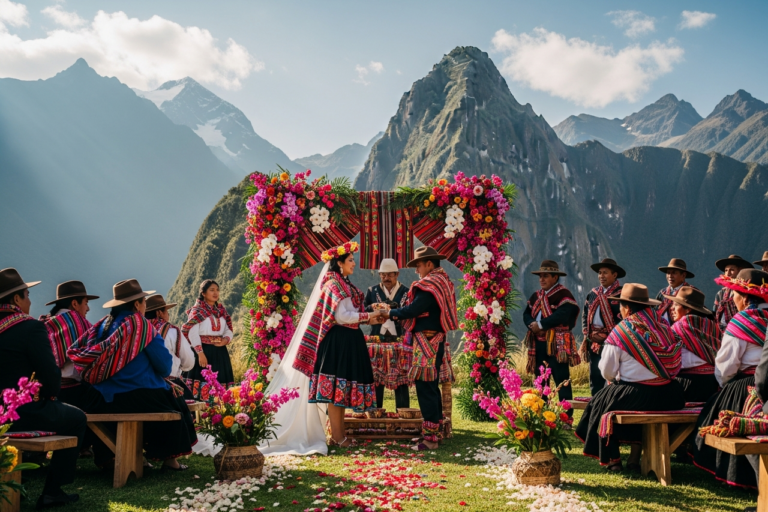
A Peruvian wedding is a bright mix of old Andean ways and Spanish ideas.
-
One wedding tradition is the despacho ceremony. Here, people give blessings to Mother Earth.
-
The wedding reception usually has “La Hora Loca” (The Crazy Hour). This is a fun time with props and lots of dancing.
-
Peruvian wedding ceremonies can look very different in each part of the country. The coast, highlands, and Amazon regions all do it their own way.
-
People often wear bright, hand-woven clothes. This is seen a lot in Andean communities.
-
The food and drink at a Peruvian wedding reception show off the country’s great cooking history.
Introduction
Have you ever thought about what makes a Peruvian wedding stand out? These weddings bring together old history, different regions, and a strong love for family and community. In Peru, you can see spiritual rituals in the mountains and big parties on the coast. Every Peruvian tradition has a story to tell. Are you getting ready for your own wedding day, or do you just want to know more about other places? Let’s look at weddings in Peru, where love, family, and heritage meet for a celebration you will always remember.
The Historical Roots of Peruvian Wedding Traditions
The wedding traditions you see in Peru today are a mix of old ways and new ones. They have deep roots in the country’s history. They show parts of Indigenous Andean heritage and also the influence of Spanish people from long ago. This mix makes each wedding ceremony special in its own way. It tells a story about Peruvian culture.
To really understand what a Peruvian wedding means, you need to know this history. The wedding ceremony in Peru can have rituals from the Sacred Valley and customs that came from Europe. Each one is important and has a meaning. In this text, we will look at how these two big influences have shaped Peruvian wedding traditions and the way people celebrate.
Ancient Andean Customs and Their Legacy
Many Peruvian wedding traditions come from old Andean customs. People use these traditions to honor nature and the spiritual world. One important practice is the despacho ceremony. This is an offering given to Pachamama, who many call Mother Earth. This act is a way to ask for help, show thanks, and it is the heart of many wedding celebrations.
In an Andean wedding ceremony, people put a variety of symbolic items like food, flowers, and coca leaves on a cloth. Each thing is blessed with wishes for the couple’s happiness and a good future. At many Peruvian weddings, guests take part by adding their thoughts for the couple with coca leaves. This makes the blessing something everyone helps with.
When the items are all in place, people wrap up the despacho. There is another blessing before people either burn it or bury it. Doing this sends all the happy wishes and good energy out to the spiritual world. It helps the couple start their life together with luck and care from Mother Earth. These Peruvian wedding traditions keep the couple linked to their family past and show respect for Mother Earth at the start of their marriage.
Spanish Colonial Influence on Marriage Rituals
The Spanish arrived in the 16th century. When they came, they brought new customs with them. These mixed with local Indigenous ways. One big change was the start of the Catholic wedding ceremony. Today, in Peru, many couples have two weddings: a civil wedding that is needed by law, and then a church wedding. This shows how Peruvian weddings come from both the past and the new.
A tradition that came from Spain is the engagement party, called la pedida. This used to be a formal meeting where the groom would talk to the bride’s parents and ask if he could marry her. This was done as a sign of respect. People do not do this tradition as much now, but it is still important for many families to make a family announcement like this.
You can see that this mix of ways is what helps a Peruvian wedding stand out from western weddings. The way people put a church service together with old Andean customs makes every wedding ceremony special. It honors faith and family history at the same time, making the day a good and beautiful celebration.
Regional Variations in Peruvian Weddings
Peru is a country with many different places and ways of life. You can see this in the way people celebrate weddings. A peruvian wedding in Lima, which is on the coast, is not the same as a wedding held high in the Andes or far inside the Amazon jungle. The wedding traditions in each area give every ceremony something special.
The food served, the music, and the way people dance can all change from one region to the next. These things show how proud people are of their peruvian culture. Each place keeps its own customs. Here are some of the unique wedding traditions you might see across Peru.
Unique Practices in Coastal, Highland, and Amazon Regions
The Peruvian wedding customs you’ll see depend heavily on where you are. Coastal weddings often take place on the beach and may have a more modern, party-like atmosphere. In contrast, highland weddings, particularly around the Sacred Valley, are deeply spiritual and incorporate a variety of symbolic items from Andean cosmology.
In the Amazon region, wedding rituals might involve elements from the jungle, such as specific plants or animal symbolism, connecting the couple to the surrounding environment. These kinds of events celebrate the unique local culture.
Here’s a quick look at some regional differences:
|
Region |
Key Wedding Characteristics |
|---|---|
|
Coastal |
Often features beach ceremonies, modern attire, and a focus on lively music and dance like cumbia. |
|
Highland (Andes) |
Emphasizes spiritual rituals like the despacho ceremony, traditional woven attire, and offerings to Pachamama (Mother Earth). |
|
Amazonian |
Incorporates elements from the jungle, with themes that may include local flora and fauna, and unique shamanic blessings. |
Indigenous Wedding Ceremonies and Symbolism
Indigenous wedding ceremonies in Peru have a lot of meaning. They link the couple with their friends, family, people from the past, and the spiritual world. These wedding ceremonies are more than just saying simple vows. They use old rituals that have been part of Peruvian culture for many years. One important part is the despacho. This is an offering that is made to help make the union blessed.
This Peruvian tradition shows the heart of what Peru is all about. The wedding ceremony is never just about two people. It is about bringing together two families, and their close tie to the world, nature, and more. The rituals help create peace and a good life. They get the couple ready for their time ahead together.
Some common parts you’ll see in an Indigenous wedding ceremony are:
-
Coca Leaves: People use these leaves for blessings and to set hopes or wishes for the couple.
-
Offerings to Pachamama: This is a way to give thanks to Mother Earth. It also asks for her to watch over and protect the couple.
-
Sandalwood Cleansing: This is a ritual used to clean the couple as they start out together.
These traditions tie the couple to each other, their families, mother earth, and the spiritual world, making every wedding ceremony in Peru full of life and meaning.
Traditional Peruvian Wedding Attire
The wedding attire at a Peruvian wedding shows how different the country can be. Many couples who live in cities choose the usual white dress and tuxedo. But in the Andes, people still wear the traditional clothes they take great pride in. These outfits are often handmade. They are full of color and have detailed designs.
These Peruvian wedding traditions with clothing let people see and feel the history. The colors, patterns, and items people wear all mean something special. They show a lot about where the couple comes from. It is also a way for the couple to show who they are and who their people are. Now, let’s learn more about these unique styles and the story behind each one.
Bride and Groom Clothing Styles Across Peru
While a white dress is often seen at many modern Peruvian weddings, the type of wedding attire people wear can look very different in different parts of the country. In the Andes, you will see brides wear bright, layered skirts called polleras and jackets with a lot of detail. Grooms may wear a colorful poncho and a hat, showing the amazing work people in the area do with textiles.
This way of dressing is a sign of respect for family roots. The clothes are usually made by hand and are special to each place. So, the wedding attire stands out as a strong show of who people are and where they come from. Even if the wedding is modern, the couple might wear a piece of traditional cloth somewhere in their outfits.
But in the coastal cities like Lima, couples are more likely to pick styles from the West. Still, you will often notice a mix, like one person wearing a white dress with a shawl made the old way, or other small things that bring the new and old together during their Peruvian wedding.
Meaning Behind Accessories and Jewelry
In a Peruvian wedding, the accessories and jewelry are not just for style. They have deep meaning. In the Andes, people wear wedding attire that can have unique hats. These hats can show where a person is from or if they are married. The detailed designs on their jackets and shawls often show things from nature or stories from their home villages.
One sweet tradition with jewelry is called cintas de la torta, or cake pull. In this tradition, charms are tied to ribbons and one of the ribbons has an inexpensive ring. Before the wedding cake is cut, single female guests each pull a ribbon. The lucky lady who gets the ribbon with the ring might be the next to get married.
The jewelry worn by the couple means a lot. Some key accessories are:
-
Woven Belts: These often have designs that stand for fertility and care.
-
Hats: These are an important part of wedding attire, and the look can change from one region to another.
-
The Cake Pull Ring: This brings fun and more hope for good luck at the wedding party.
These traditions make a Peruvian wedding feel special for all the people and their loved ones.
Key Rituals of the Peruvian Wedding Ceremony
The Peruvian wedding ceremony is a mix of legal steps, faith traditions, and old customs. In Peru, couples do not always have just one wedding event like in many Western countries. They often have more than one event for their wedding ceremony. Couples in Peru have big moments like the exchange of rings and also add special local traditions.
Doing many events helps make sure that both the government and the spiritual world know that the marriage is real. Every step matters, from the papers to the blessings that touch the heart. Now, let’s look at some important parts that make a Peruvian wedding so special.
Civil and Religious Weddings: The Dual Celebration
In Peru, the only type of wedding that is legal is the civil wedding. A city official does this ceremony at the town hall or in a place that has the right permission. This step is needed so the marriage will be legal. For many couples, the civil ceremony is just the start of their day.
After the civil wedding, a lot of couples have a religious wedding ceremony too. Peru has many Catholic people, so this will usually be a church ceremony. There are two parts so couples can meet the law and still show respect for their faith and family traditions in a special way.
Some couples want even more from the day. They may add a third type of wedding ceremony as well. One example is having an Andean wedding in the Sacred Valley. Others might want a shamanic blessing in the jungle. When you put together all three weddings—the civil, the religious, and the ritual—you get a full wedding day that covers every part of marriage: legal, spiritual, and family customs.
The Coin Exchange and Other Meaningful Rituals
One of the many special Peruvian wedding traditions is the coin exchange, known as arras matrimoniales. This tradition comes from Spain. During this part of the wedding ceremony, the groom gives the bride 13 coins. He does this as a sign of respect. It is also a promise that he will take care of her and their family in the future. When the bride takes the coins, it means she trusts him.
This ritual is a very touching and meaningful moment in the wedding ceremony. The 13 coins stand for Christ and the 12 apostles, so it also is about faith. The coins show the groom’s vow to commit and take care of his new family. It is a strong promise for a good life together.
Peruvian weddings have other traditions too:
-
La Pedida: This is a traditional engagement party. Here, the groom asks for the bride’s hand in a way that is filled with respect.
-
Despacho Ceremony: In this ritual, the couple and their loved ones give an offering to Mother Earth. They ask for good things to come to their marriage.
-
Sandalwood Cleansing: This is a cleaning ritual. It helps get the couple ready for their new life as husband and wife.
Many of these wedding traditions speak to the value of love, respect, family, and faith in a Peruvian wedding.
Festivities at Peruvian Wedding Receptions
After the main event, the real fun starts at the wedding reception. A Peruvian wedding is about life, love, and being with others. The reception is where you see people enjoy every moment. There will be lots of tasty food and plenty to drink. The dance floor stays full and active all night.
The Peruvian wedding experience is everything about having a good time without holding back. The guests dance well and do not feel shy. This gives the party a feeling of pure joy. Now, let’s look at the music, the dancing, and the special things people do at these wedding receptions that make them so special.
Signature Music and Dance Performances
Music is at the heart of a Peruvian wedding. The dance floor is full of life, thanks to a colorful mix of folk music and fun Latin beats. At most wedding parties, the couple will hire a live band. This is so they can play many types of songs, which means people of all ages can have a good time. The music works well for older people, but it is great for younger ones too.
There is usually a special moment where people watch traditional dances. This will change depending on where they are in the country. Some might see the Marinera, which is smooth and playful, coming from the coast. Others could get the Huayno, which is lively and from the Andes. The dances that people show off at Peruvian weddings bring a nice touch of local culture.
The music really keeps everyone excited at these wedding parties. Some of the most common styles are:
-
Cumbia: This is heard in a lot of places in Peru. The beat makes everyone want to move.
-
Salsa and Merengue: These Latin beats are popular and make people get up and dance.
-
Traditional Andean Music: It uses panpipes and charangos, and gives the party a true Peruvian feel.
How Guests Celebrate: Games and Customs
One of the most fun parts of a Peruvian wedding is called la hora loca, or “the crazy hour.” When people think the party is slowing down, the lights go low, the music gets louder, and props are passed out. Suddenly, wedding guests grab glow sticks, long balloons, and shiny masks. The dance floor turns into something bright and full of life, almost like a rave.
There is also a cake pull tradition known as cintas de la torta that many enjoy. Right before cutting the cake, single female guests walk to the base of the cake. They pull ribbons that hide charms. One ribbon holds a ring, and the guest who pulls it is thought to be the next one to get married.
These customs keep the party exciting. Here are some main activities for guests:
-
**La Hora Loca: ** This is an hour of dancing with glow sticks and other fun things.
-
The Cake Pull (Cintas de la Torta): This is a playful moment for single female guests.
-
Non-stop Dancing: People of all ages get up and join the fun on the dance floor.
Peruvian Wedding Foods, Drinks, and Desserts
No Peruvian wedding is complete without a great meal. Food is a big part of Peruvian culture. The wedding menu is a special way to show their famous food. You will see big buffets and a lovely wedding cake at these events. The food is often the best part and is also something people remember.
Part of Peruvian culture is to share and to give plenty. That is why, as part of Peruvian wedding traditions, guests get to enjoy many kinds of food, drinks, and sweets. All of them taste good and also mean something important. You can look out for these wedding traditions and many different flavors when you go to a Peruvian wedding.
Traditional Dishes Served at Celebrations
The food at a Peruvian wedding is usually served as a big buffet with many traditional dishes. This lets the guests try the best food from Peru. The menu is picked to give everyone a great taste and look, making the Peruvian wedding experience special and easy to remember.
What you eat on the wedding day can change with the place and what the family likes. At some weddings, you can see a whole roasted pig. It is cooked slowly for many hours and brought out later at night, so people have something good to eat as the party keeps going. After a lot of dancing, everyone looks forward to this big meal.
Here are some well-known dishes people get to eat on the wedding day:
-
Ceviche: This is the dish Peru is famous for. It has fresh raw fish mixed with citrus juices.
-
Lomo Saltado: This dish is a stir-fry with beef, onions, tomatoes, and french fries.
-
Aji de Gallina: It is a warm chicken stew that is creamy with a little bit of spice.
The peruvian wedding and wedding day will make you and your guests happy with good food, great company, and a rich mix of flavors.
Popular Peruvian Cocktails and Sweets
At a Peruvian wedding, the bar is always full with the most loved Peruvian cocktails. You will find the famous Pisco Sour, which is Peru’s national drink. It is always served at these parties. There is also champagne for the toast, and with the open bar, people can have as many types of drinks as they want all night.
When you talk about desserts, the wedding cake takes the spotlight. Usually, there are a few layers, which makes it look really nice. This cake also has a special event, called cintas de la torta. Single women step up to pull ribbons that come out from the cake’s base. One of them will get a ring hidden inside.
Along with the wedding cake, guests also find many sweet treats like:
-
Alfajores: These are soft shortbread cookies with a sweet milk caramel inside, known as manjar blanco.
-
Suspiro a la Limeña: This is a creamy dessert—like caramel pudding—topped with fluffy meringue.
-
Picarones: These are doughnuts made with squash and sweet potato. They get covered with a sweet syrup.
A Peruvian wedding will always have these fun dishes and drinks for everyone to enjoy.
Blending Tradition with Modern Trends
Today’s Peruvian wedding brings together old wedding traditions and fresh, new styles. Many couples want to keep their roots but still follow modern trends. They find new ways to mix the two, which makes their wedding feel personal and connected to Peruvian culture. This mix helps these special customs last, while still giving them a new look.
People now add old rituals into their wedding day. They also give classic outfits a new twist. Such changes show the couple’s respect for the past, but also excitement for what is ahead. This is how the Peruvian wedding keeps growing, using pieces from the past and ideas from today.
Let’s take a look at how these things are changing and what they mean for everyone.
Contemporary Changes Seen in Peruvian Weddings
Modern weddings in Peru are starting to look different from the past. For instance, the formal engagement party, called la pedida, is not as common as it used to be. More couples now choose to get married without having the old ritual where parents give their OK. This shows that people today like to make their own choices.
Some wedding traditions are changing, too. The cintas de la torta, or cake pull, is still a favorite with single female guests. But now, it is more about having fun together than really finding out who will get married next. It is just a way to share some good luck and a happy time with friends.
Here are some changes you might see in wedding traditions now:
-
Personalized Vows: Couples now like to write vows in their own words. It lets them tell their love story in their own way.
-
Destination Weddings: Many people from Peru want their wedding somewhere special. They might pick places like the sacred valley for a wonderful day, even if it is not where they grew up.
-
Smaller Guest Lists: Instead of huge weddings with lots of family, some couples invite only close friends and family. These weddings feel more cozy and private.
Preserving Heritage Amid Modernization
Many people still want to keep Peruvian wedding traditions alive, even as new styles and trends change the way people celebrate. Couples often try to include something from their vibrant culture on their wedding day. That might be a despacho ceremony, clothes made with traditional textiles, or classic Peruvian food served at the wedding.
They do this so that Peruvian tradition does not fade away. When people mix old wedding traditions with new ideas, the wedding feels real and true. They get to remember their ancestors and honor the customs that came before, while making sure their big day has meaning for them now.
This mix is what makes a modern Peruvian wedding stand out. It shows how a culture can be proud of its history and still change with the times. The wedding becomes a rich, lively, and very personal event that brings together the best of both old and new worlds.
Conclusion
In the end, looking at the lively and bright wedding traditions in Peru shows us how history and different regions shape the way people celebrate. There are ancient Andean customs and touches from the time of Spanish rule. These ways of celebrating show love and help keep Peruvian culture alive. From the clothing people wear, to the things they do during the ceremony and the big parties after, it all shows the happiness and meaning of weddings all over the country. Today, new ideas are mixing with old ways, but it is still important to know what each custom means. If you want to get married or just want to know more about wedding traditions and Peruvian culture, learning about these special ways can make your experience even better. If you want more information, you can ask for a consultation!
Frequently Asked Questions
What are the most significant customs in Andean weddings?
The most important part of an Andean wedding ceremony is the despacho. In this act, people give an offering to Mother Earth (Pachamama). During the wedding ceremony, they use things like coca leaves as symbols. These are given so blessings can go to the spiritual world. People ask for a good and peaceful life for the couple. This shows a very important part of Peruvian culture.
How are wedding receptions celebrated differently in Peru?
A Peruvian wedding reception is known for La Hora Loca or “The Crazy Hour.” This is one of the most loved Peruvian wedding traditions. It adds a strong burst of energy to the wedding party. People dance non-stop during this time. There are fun props on the dance floor. Everyone celebrates late into the night because of this part of the wedding reception. This is what makes a Peruvian wedding stand out.
Are there special foods or drinks unique to Peruvian weddings?
A Peruvian wedding has a lot of classic dishes. You will see food like ceviche and lomo saltado, and the food is often set out as a buffet. The Pisco Sour is the main drink people have. The wedding cake is part of the cintas de la torta tradition. Food and drink are a big part of the celebration at a Peruvian wedding.



