

Key Highlights
-
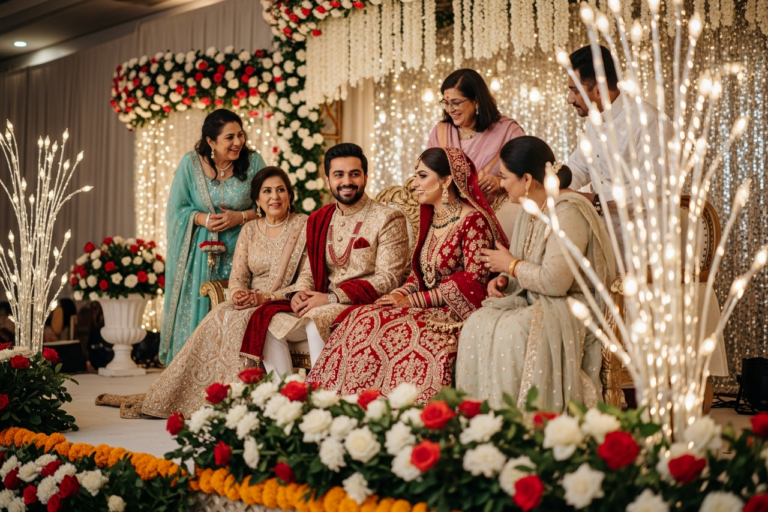
Pakistani weddings are bright, lively events that last for many days. The celebrations help families get together through many cultural and religious wedding traditions.
-
These wedding celebrations start with pre-wedding events like Dholki and Mayun. At these parties, people enjoy music, dancing, and sing traditional songs.
-
One important part is the Mehndi ceremony. At this event, everyone enjoys the colors while artists draw intricate henna designs on the bride’s hands.
-
The heart of the wedding is the Nikkah. This is the Islamic marriage contract where the couple agrees to be together and makes things official.
-
After the couple is married, the groom and his family hold bigger parties. These include the Baraat, a big parade, and the Walima, which is a special party hosted by the groom’s family.
Introduction
Pakistani weddings are full of life, color, and old customs. These wedding celebrations are not just about two people joining together. They are about two families and their close friends coming together. There is a series of events that last for many days. Each one is filled with fun and memories.
Some gatherings are small at home, and some are big parties. Every part of the wedding has its own charm and meaning. If you learn about these customs, you can take part with everyone else. That way, you get to enjoy the culture and make great memories during pakistani weddings.
Key Stages of Pakistani Wedding Traditions
The journey of Pakistani wedding traditions has a few big steps. Each part is special for the families and the couple. These Pakistani wedding rituals mix old customs and religion. They start with fun before the wedding and end with big parties after. The main events are Dholki, Mayun, Mehndi, Nikkah, Barat, and Walima.
Family members join in every step. The bride’s family and the groom’s family each hold their own gatherings. Everything leads up to the Nikkah, which is the marriage contract. The parties keep going with grand events that welcome the new couple. Now, let’s look at these happy pre-wedding events.
Dholki and Mayun: The Joyous Pre-Wedding Events
The fun starts with the Dholki. This is a simple party with close friends and family members. The name comes from the dhol, which is a drum that gives music for the night. People sing traditional songs and dance together. It is meant to be a relaxed and happy way to start off the wedding week. You will find a lot of homemade food and there will be much laughter.
After the Dholki, the Mayun happens. This is a smaller and private event. Here, family members put turmeric (called ubtan) on the groom and bride. Many say this will give them good skin for the wedding day. The bride usually wears yellow clothes. She will stay home to rest and get ready after this, which is when her bridal steps begin for real.
All of these pre-wedding events are about being with loved ones. The groom may wear a simple turban. There will be prayers, blessings, music, and fun. These things help set a good mood for the main events that will come after these first gatherings.
Mehndi: The Celebration of Color and Henna
The Mehndi is often the most lively and energetic part in a Pakistani wedding. It is a big celebration of culture where both families get together for a night that is full of music, dance, and henna. The air is filled with excitement, and everyone wears bright clothes.
Professional artists put intricate henna designs on the bride’s hands and feet. This can take a few hours to do. While the bride gets her henna done, people watch fun dances and sing traditional wedding songs. Some usual customs during the Mehndi are:
-
The groom’s family brings henna and sweets for the bride.
-
Family and friends do choreographed dances.
-
The groom’s name can be hidden in the intricate henna designs on the bride’s hands for him to find later.
This celebration of culture is full of bright decorations, loud music, and tasty food. It is a time when everyone can relax and have fun together. All of the family and friends come together and show their joy for the couple.
Nikkah: The Core Religious Ceremony
The Nikkah is the heart of a Pakistani wedding. It is the main Islamic marriage contract that joins the bride and groom both in law and before God. This marriage ceremony is very important. It is when the couple is seen as married by their families and everyone around them.
An imam or a qazi leads this marriage ceremony. They help the couple say their vows and sign the marriage contract. The Nikkah is a time of respect and quiet. Family and close friends come together to see the couple make their promises. The rituals and words used in this Islamic marriage contract are very meaningful for all.
Rituals and Religious Elements in Nikkah
The Nikkah is a special religious ceremony built around the marriage contract, called the Nikkah Nama. This marriage contract follows Islamic law and explains the rights and duties that the bride and groom will have. An imam or qazi leads the ceremony. They make sure that every religious step is followed in the right way.
One of the main parts of the ceremony is the “ijab-o-qubool.” This part is about proposal and acceptance. The officiant talks to both the bride and the groom, one at a time. The imam or qazi asks each of them if they agree to the marriage. Both must say “yes” three times in front of the witnesses. These simple words, spoken by the groom and bride, make their vows real. It’s how the wedding becomes official.
The thing that sets this tradition apart is how it mixes law and faith. The Nikkah is more than just a celebration. It is a special promise, witnessed by family and blessed by religion. This makes it the most important part of the wedding ceremony.
The Role of Mehr and Family Participation
During the Nikkah, the groom gives Mehr to the bride. The Mehr is an important gift and is written into the marriage contract. This gift can be money, gold, or some property. It belongs only to the bride. Mehr is a part of Islamic law and gives her some money or things for her future.
Family members play a big role in the Nikkah. Elders of the family from both the bride’s family and the groom’s family come to the event. They act as witnesses when everyone signs the marriage contract. Their being there shows support, approval, and helps bring both families together.
Family members do more than watch. Both the bride’s family and the groom’s family share blessings and good wishes with the new couple. They pray for their future together, and this helps bring everyone closer. It also shows the way the community comes together to celebrate the new bond.
Barat: The Grand Procession and Celebratory Arrival
The Barat is the biggest event on the wedding day. It is when the groom’s procession moves to the wedding venue. This is a large celebration of culture, and you can feel the excitement. The groom wears a veil called a sehra. He comes with his friends and family in a lively parade. The group is often walking with the loud sound of a dhol or a band.
This groom’s procession is a sign that he is coming to bring his bride home. When the group gets to the wedding venue, the bride’s family receives them with a lot of joy. It is a warm welcome and everyone feels happy as the night leads into a big celebration and the formal reception. The Barat is remembered for the fun and the special customs that everyone shares.
Sehra Bandi, Rasta Rukai, and Joota Chupai Customs
Before the Barat starts, the groom’s family gathers at his home for the Sehra Bandi ritual. They tie a sehra, which is a veil made of flowers or pearls, to his turban. This shows that he is now ready to leave for his bride and begin his new life. Elders give their prayers and blessings for him.
When the groom and his family members get to the place, they find some fun and friendly challenges waiting for them. These customs bring joy to the day.
-
Rasta Rukai: The bride’s sisters and cousins stand in the way. They do not let the groom pass until he pays them some money.
-
Joota Chupai: The bride’s side takes the groom’s shoes and asks for a reward before they give them back.
-
Doodh Pilai: The bride’s sisters bring a glass of milk to the groom. He has to pay them before he can drink it.
These traditions make the wedding more fun and help the two families bond. They create memories that will last for years.
Involvement of Guests and Unique Regional Variations
Guests are integral to a traditional Pakistani wedding, with their involvement going far beyond simply attending. Community members and friends actively participate in the dancing, singing, and various rituals, making the celebration a collective experience. From joining the Dholki songs to showering the couple with petals, guests contribute to the festive atmosphere.
While the core events remain the same, there are fascinating regional variations in wedding traditions across Pakistan. What is common in one region might be unique to another, reflecting the country’s diverse cultural landscape. Different cities and provinces have their own special customs.
These variations add a unique flavor to each wedding, making every Pakistani celebration distinct. Here are a few examples of regional differences:
|
Region |
Unique Tradition |
|---|---|
|
Punjab |
Elaborate and loud Barat processions with dhol players and dancing. |
|
Sindh |
The “Saanth” ceremony, where the groom’s clothes are mockingly torn by relatives for good luck. |
|
Khyber Pakhtunkhwa |
Traditional “Attan” dance performed by men at the wedding. |
|
Balochistan |
Focus on traditional music with instruments like the suroz and damburag. |
Rukhsati and Walima: Farewell and New Beginnings
After the main wedding events, the Rukhsati and Walima are the last parts of the celebration. The Rukhsati is a touching farewell. During this, the bride’s departure from her family home takes place as she starts her new life with her husband and the groom’s family.
The Walima, on the other hand, is a happy party given by the groom’s side. It is held to share the wedding news with everyone and to enjoy the start of the couple’s new life. These two special events, one more about saying goodbye and the other about joy, are both important and filled with their own traditions. They show the beginning of life together for the couple.
Traditions During Rukhsati and the Groom’s Homecoming
The Rukhsati is one of the most touching parts of a Pakistani wedding. This farewell is when the bride leaves her parents’ house where she grew up. As she goes, her family often holds the Holy Quran over her head like a chador. This shows that she is leaving with safety and blessings. The family says goodbye with tears, hugs, and good wishes.
Years ago, the bride would go in a palanquin. Now, she usually leaves in a decorated car. This is a bittersweet change because it is the end of her life with her parents and the start of her new life.
When the bride gets to the groom’s house, his family gives her a joyful welcome. They may toss rice or flower petals over her head. This is to wish her a good, happy life in her new home. With this, she is warmly welcomed and becomes a part of her new family.
The Significance of the Walima Reception
A walima is a happy event that takes place after the marriage contract. The groom’s family usually hosts this. They invite family members and close friends to show love and support for the newlyweds. It is not just any get-together; it is about bringing together two families and their friends. This helps to make community bonds stronger.
At a walima, people like to sing traditional wedding songs and eat good food. There are also special cultural rituals. All of this shows how much love and unity there is. It is a special time that helps the new couple start their new life together.
Conclusion
To sum up, knowing about wedding traditions in Pakistan shows a mix of rich customs that celebrate love and togetherness. Big events like Dholki and Mehndi are full of fun, color, and close friends. The main part is the Nikkah, which is all about joining two people in marriage with deep meaning for everyone there. The Barat is a show of style and has its own touch in each area, making every wedding feel special. Rukhsati and Walima are not just a farewell but also a way to start fresh, bringing both families and all their friends closer. If you follow these wedding traditions, your day will be even more special. You will also show respect for the love stories these moments honor. If you are planning a wedding or want to know more about dholki, nikkah, barat, rukhsati, or walima in Pakistan, reach out. We will help you make your big day one to remember!
Frequently Asked Questions
What do brides and grooms traditionally wear at Pakistani weddings?
At Pakistani weddings, the bride often chooses a red or bright colored lehenga or sharara that has heavy embroidery for the Barat. The groom usually wears a sherwani. It is often in ivory or gold, with a turban that matches. For the Nikkah, the groom may wear a white shalwar qameez. The clothes for each part of a Pakistani wedding can change based on the ceremony and the families.
How many days do Pakistani wedding celebrations typically last?
A typical Pakistani wedding can run for three to seven days. There is a series of events that make up these wedding celebrations. The main events are the Mehndi, Nikkah, Barat, and Walima. Each part is often held on a different day. This makes for a long and joyful week for everyone involved.
How are families and guests involved in key wedding events?
Family members and close friends play a big part in Pakistani wedding traditions. They take part in the rituals. They sing traditional songs. They also dance and give blessings. Guests get to be part of the fun, too. All of this helps make the events lively and brings the two families closer together.



