

Key Highlights
-
A Nepali wedding is a big event. It has many old customs that can be different for each ethnic group.
-
The wedding process includes detailed rites before the wedding, a bright and lively wedding day, and special customs after the wedding.
-
Astrology has a crucial role in picking matches and choosing the wedding date. This shows how culture and belief mix in these weddings.
-
The wedding ceremony is full of meaning. It has important steps like Kanyadan and putting Sindoor.
-
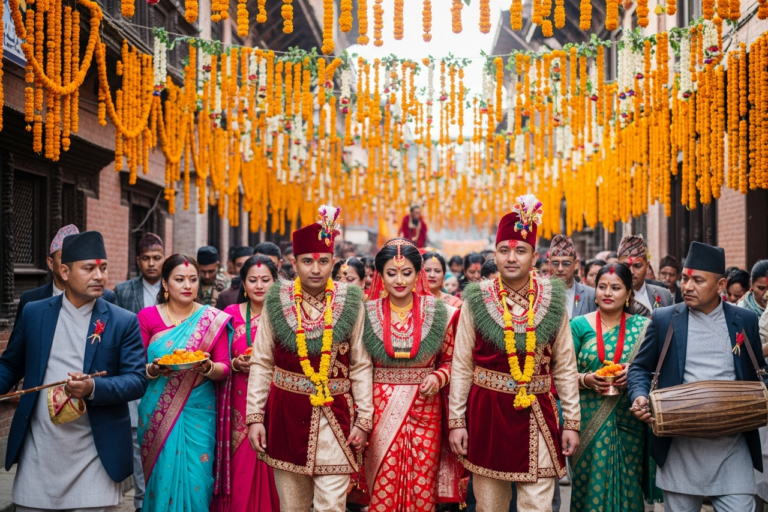
Traditional attire makes the wedding day stand out. The bride wears a red sari. The groom wears Daura Suruwal.
-
Most people still have arranged marriages. But new ways are making some people change how they see matrimony in Nepal.
Introduction
Welcome to the bright world of Nepali wedding traditions! In Nepal, a wedding is not just about two people coming together. It is a big day where two families join as one. People feel that the marriage is made in heaven. This is why it is full of special moments and deep meaning. The event is celebrated with many lovely steps that show the heart of Nepali culture. No matter if you are in the cold mountains or the busy towns, each Nepali wedding stands out. There is a lot of color, strong feelings, and old ways that have been followed for many years. Nepali wedding traditions are always a true part of Nepali culture.
Origins and Significance of Nepali Wedding Traditions
The wedding traditions in Nepal show a mix of old customs and social values. In Nepali culture, marriage is seen as a special duty. It is a big life moment that brings the whole community together. The wedding process is about much more than just the couple. It also helps to build strong ties between their families. These wedding traditions are there to make sure the couple is happy, successful, and stays together for a long time. Families often look at astrology and give their approval before saying yes.
Nepal has many ethnic groups, and every group has its own way of celebrating weddings. But there is something at the core: people are there to honor love and promise. Some wedding traditions can be seen all over the country, while other rituals are unique to different communities. This shows Nepal’s rich heritage. That is why a Nepali wedding stands out and draws attention from so many. Every wedding is a mix of history, faith, and the strength of community. In the next parts, you can find more about the deep roots and the wide mix of these wedding customs found in Nepali culture.
Historical roots and symbolism
The roots of Nepali wedding traditions are deep in Hindu customs. People see marriage as a sacred bond that lasts a lifetime. Many wedding rituals mean a lot and are there to bless the bride and groom and help them start their life together. For example, when they put garlands on each other, it shows respect and that they accept one another.
In Nepal, arranged marriage is very common. In this type of wedding, parents help find a good partner for their son or daughter. They look at things like caste, class, and if the person is of good character. The couple’s choice still matters, and it’s not a forced marriage. Both have to say yes.
The age of marriage in Nepal has changed over time. Today, the law says people need to be at least 20 years old to get married, or 18 if they have their parents’ permission. These wedding traditions show that people in Nepal want young people to make a smart and willing choice about marriage, keeping both their culture and marriage rules up to date.
Cultural diversity across Nepal’s ethnic groups
Nepal has a lot of different ways that people celebrate their wedding day. You can see this most in how many wedding traditions come from many ethnic groups. Some weddings in the Kathmandu Valley may seem the same, but every group adds something of its own. The customs between different people can really be different.
For example, families in the Gurung community allow marriage between cross-cousins. But many Brahmin families do not since they follow strict Hindu rules. This shows how important cultural rules can be for who you marry.
Families usually look for partners from their own group. This helps them keep their own wedding traditions and history. Family members always play a big role, but what they do at a nepali wedding is not always the same. Each wedding shows a little of the way that ethnic groups in Nepal celebrate and what makes them different.
Pre-Wedding Rituals in Nepali Culture
Before the main wedding day, there are a few important events that take place first. These pre-wedding rituals are a big part of how Nepali people get married. The events are full of happiness, hope, and strong family bonds. They help to make the match official, let everyone ask for blessings, and bring both families together.
From picking the best wedding date to having fun with close family, these early events really matter. They are just as important as the wedding day itself. Let’s take a look at how families use matchmaking and astrology, and what some of these key pre-wedding ceremonies look like.
Matchmaking, engagement, and astrology
In many Nepali homes, the path to marriage starts with arranged marriage. Parents, or a person called a Lami, help pick a good partner. They look at the family, school background, and how the other person acts.
Astrology is very important in this. Before the wedding is set, an astrologer checks the horoscopes of the boy and girl to see if they match well. If the stars look good, the astrologer picks a good wedding date.
If both families and the couple agree, they hold an engagement ceremony. This event shows their promise to each other, with traditions like:
-
The couple swaps rings. Usually, the ring is a Kusha ring to show their bond.
-
Someone from the groom’s side gets the ring from a man in the bride’s family, and the bride’s side gets a ring too.
-
The bride’s family members give gifts to the groom’s side. This shows the start of their new family ties.
Important pre-wedding ceremonies (e.g., Mehendi, Swayambar, Bel Bibaha)
Several special events happen before the main wedding ceremony. One of these is the Mehendi party. At this happy event, people put henna on the bride’s hands and feet. The bride has good times with her female friends and family members. These moments add fun and excitement as the wedding gets closer.
There is also a pre-wedding ritual in the Newar community called Bel Bibaha (Ihi). In this ceremony, some young girls are “married” to a Bael fruit, which stands for the god Vishnu. People believe that this helps the girl have a long, happy married life. It is also thought to protect her if she ever becomes a widow.
The Swayambar is an important part of the wedding ceremony. The bride and groom choose each other in the front of their families and guests. Some key moments of the Swayambar are:
-
The couple put garlands on each other. These are usually made of Dubo grass, which does not dry out.
-
The bride and groom exchange the wedding ring.
-
This moment means they both agree to the marriage.
-
It is a big and beautiful step just before the main wedding ceremony.
All of these pre-wedding events help bring family members and loved ones close together. They make the wedding ceremony even more special.
The Wedding Day: Key Ceremonies and Observances
The wedding day is the main part of the celebration. On this day, there is a lot of color, important rituals, and strong feelings. The bride and groom join in ceremonies for the first time that will bring them together and start their married life. It is a time of big happiness and also the most emotional moments for their families.
The groom makes a grand entrance. There are rituals done around the sacred fire that hold deep meaning. Every step in the wedding ceremony follows old traditions that make the Nepali wedding special. Let’s look at these key events that make the wedding day one to remember.
Procession and arrival of the groom (Janti)
The wedding festivities kick into high gear with the groom’s procession, known as the Janti. The groom’s family and friends travel from the groom’s home to the wedding venue, often accompanied by a lively band playing traditional instruments. This colorful and musical parade announces the groom’s arrival.
Upon reaching the venue, the groom’s side is warmly welcomed by the bride’s family. The groom waits patiently as his in-laws perform rituals to formally invite him inside. Some members of the Janti arrive ahead of the main group, bringing gifts and an invitation letter.
The gifts, known as Saipato, are presented on trays and carry symbolic meaning for the couple’s new life together.
|
Gift Type |
Description |
|---|---|
|
Invitation Letter |
A formal letter from the groom inviting the bride to the wedding. |
|
Fruits & Dry Fruits |
Symbolize a sweet and prosperous life together. |
|
Garments & Jewelry |
Gifts for the bride to wear, symbolizing she is now part of the groom’s family. |
Main rituals: Kanyadan, Circling the sacred fire, Sindoor application
The wedding process centers around the Jaggey, which is a sacred space with a fire in the middle. The key rituals happen here. One important part of the ceremony is when the father of the bride gives his daughter to the husband. He places her hand in the groom’s hand, trusting him for her care.
The couple walks around the sacred fire. This shows their vows and marks their union in front of the divine. During the wedding process, priests chant and use holy water to bless the couple.
After this, the groom does the rituals to say the bride is now his wife. This part of the ceremony has:
-
Putting Sindoor (red powder) on the bride’s hair.
-
Giving her a Potey (necklace of beads).
-
These things show she is married, and she will wear them through her married life.
Attire and Adornments of the Bride and Groom
The bride and groom wear special clothes on their wedding day. These traditional attire choices shine with bright colors and detailed patterns. The look is more than just good: it means a lot in their culture. From the time the bride leaves her home, you can see that her outfit and jewelry make her the center of attention.
The groom’s clothes are also important. They show off Nepali heritage in a proud way. These clothes are a key part of the celebration. They tell about tradition, status, and show how happy everyone is on this day. Let’s look closer at what the bride and groom wear.
Traditional bridal wear: Red sari, jewelry, and accessories
The Nepali bride looks beautiful. She wears a red sari. In Hindu culture, red shows love, passion, and wealth. The sari has lots of fancy stitching and unique designs. It stands out as the main piece of what she wears.
She puts on a lot of sparkling jewelry. The gold necklace, called Tilhari or Potey, is a must. She also wears bangles, earrings, and a headpiece. These pieces are often gifts from her parents. They show wealth and that she is married now.
There are other things that help finish her style. These include:
-
A “ghoomto” or sparkling veil that covers her face.
-
A garland, often called dubo ko mala, which is exchanged with the groom.
-
Her hands and feet have detailed henna designs. Her hair often has flower petals in it.
Groom’s attire and its cultural meaning
The groom’s clothes for a traditional Nepali wedding look special and hold meaning too. The main outfit is called the Daura Suruwal, which is the national dress of Nepal. This set has two main parts—a shirt with two layers that ties in the front, called the Daura, and pants that fit close, called the Suruwal.
There is a lot of culture in this outfit. The Daura has eight strings that you tie, which is for the eight-fold path of Buddhism. This is important for showing how people in Nepal live in peace with different faiths. He will often wear a vest and a special traditional hat called a “Topi” with it.
On the wedding day, the groom looks proud and respects tradition in his clothes. Some grooms living in cities may choose a modern suit, but lots of people still go for the Daura Suruwal at their nepali wedding, to feel more connected to their roots and that nepali wedding feeling. At many weddings, the groom’s father and other male family members might wear traditional attire like him. This shows everyone their family is united on this special day.
Post-Wedding Customs and Family Gatherings
The celebrations do not stop after the wedding ceremony. In the next day and the days after, there are more important events and fun family gatherings. These help the newly married couple adjust to their new life and give both families more reasons to celebrate together.
At these gatherings, people share good wishes, make family bonds stronger, and welcome the bride into her new home. The next days bring big meals, music, and gift-giving. This keeps the happy feeling of the wedding going.
Vidaai (farewell) and Ghar Bhitrauni (welcoming the bride)
The Vidaai, or farewell ceremony, is one of the most emotional moments in a wedding. It happens when the bride says goodbye to her family. She leaves her childhood home to start a new life at the groom’s house. There are often tears, showing how hard it is to leave her old life. Still, there is some excitement for what is ahead.
When the bride reaches the groom’s house, she is welcomed in a ritual called Ghar Bhitrauni. This shows her first step into her new home. The groom’s mom and other women from the family meet her at the door. They give their blessings and do small rituals to make sure her married life begins well.
The change from the bride’s house to the groom’s is a clear sign of her new life starting. Vidaai is the end of one part, and Ghar Bhitrauni is a happy start to another, with her new family.
Role of feasts, music, and gifts in post-wedding celebrations
Post-wedding celebrations in Nepal are full of life and color. At these events, food, music, and the whole community come together. There is usually a big party with lots of delicious food. Sometimes this will be at a wedding venue or at the groom’s home. The groom’s family puts on the meal to welcome all guests and to get good wishes for the new couple.
Music fills the air during these parties. You will hear traditional instruments being played throughout the day or night. The mood is happy, and people laugh and dance together. Family members and friends always want to share in the couple’s big moment.
Gifts are also a big part of these happy gatherings. They are a way to show love and care for the bride and groom. During these post-wedding days, you will always find these key things:
-
A grand reception party hosted by the groom’s family.
-
Delicious food and drinks that highlight Nepali cuisine.
-
The couple receiving blessings and gifts from all the attending family members and guests.
Conclusion
Nepalese wedding traditions are filled with deep meaning and have strong ties to the past. These customs are different for the many ethnic groups in the country. There are pre-wedding steps such as finding a partner and the Mehendi event. On the wedding day, there are more detailed steps. Each part has a crucial role in showing love and togetherness.
When you know about these wedding traditions, it helps you see how rich Nepali culture really is. It also shows what values and beliefs are important and that these have lasted year after year. It does not matter if you are planning your own wedding day or just want to know more. You can make good, lasting memories by taking part in these vibrant practices.
If you want to get deeper into nepali wedding customs, feel free to reach out for more tips and ideas about the different traditions from the many ethnic groups!
Frequently Asked Questions
How do Nepali wedding customs differ among various ethnic groups?
Nepali wedding customs are different for each ethnic group. In the Kathmandu Valley, you will find that a Hindu wedding ceremony is often the most popular. At the same time, people like the Gurungs and Newars follow their own ways on the wedding day. These changes show in how couples get matched, in the rituals held, and also in what the tradition looks like for each nepali wedding.
What are some unique pre-wedding and post-wedding rituals in Nepal?
Some pre-wedding customs are the Mehendi party and the Newar custom called Bel Bibaha. After the wedding, there is the Vidaai, where the bride says goodbye to her family in an emotional moment. Then, there is the Ghar Bhitrauni, when she gets a warm welcome at the groom’s place. These wedding traditions show how love carries on in different ways before and after the big day.
How have modern influences changed traditional Nepali weddings?
Modern trends are starting to change traditional Nepali weddings. There are still many arranged marriage ceremonies. But more and more love marriages are now happening. Couples have more say when it comes to picking their partner and the wedding date. Some people bring in new looks for wedding clothes. Family gatherings also mix some new things with old customs.



