

Key Highlights
Here’s a look at the world of Moroccan weddings:
-
Moroccan weddings are big events. They are often spread out over a week and are full of tradition and culture.
-
These weddings have pre-wedding activities like the hammam to clean the body and the henna ceremony for good luck.
-
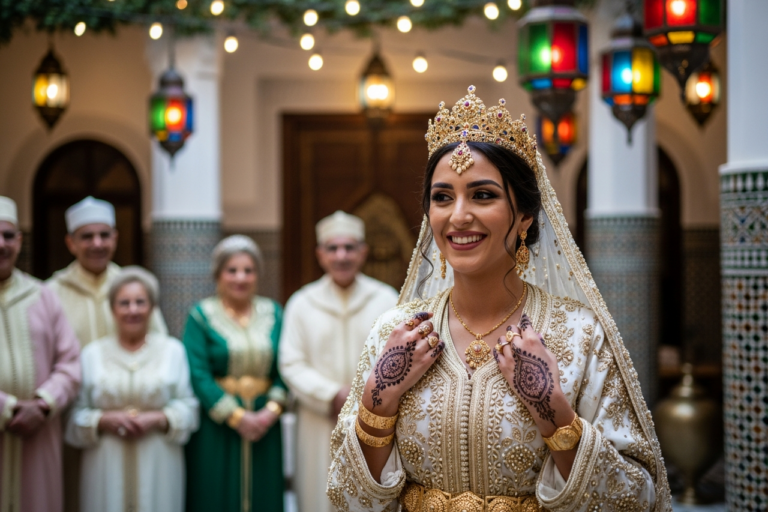
The Moroccan bride is the main person at the wedding. She wears up to seven different outfits, and each one is special in its own way.
-
There are many important traditions during the wedding ceremony. For example, people offer milk and dates to wish the couple a sweet life.
-
A big wedding feast, lots of traditional music, and dancing are important, too. These things help make the wedding fun and give wedding guests a memory they will remember for a long time.
Introduction
Have you ever thought about what a traditional Moroccan wedding is like? These events go way beyond just one day. They give you a real look into Moroccan culture. Moroccan wedding traditions are full of music, rituals, and family matters. You will see how a rich culture has been handed down for years. From the parties before the wedding to the big reception, every part has a special meaning. This makes the day a good and special time for the couple and everyone who comes.
The Historical Roots of Moroccan Wedding Traditions
Moroccan wedding ceremonies are big and full of joy. People in Morocco like to invite many guests to the wedding. They do this to show warm hospitality and to include everyone who matters to the couple. The wedding is not just a party—it is a very important moment for the two people who are getting married.
You can see the love for cultural heritage in many Moroccan traditions during the wedding. There are some parts of the celebration that are the same in most places. But, some rituals are not the same in all regions of Morocco. People in rural areas usually follow their own special customs. All these events honor old ways and help the new couple start their life with hope for good things to come.
Evolution of Wedding Customs Across Morocco
The heart of Moroccan wedding celebrations is still strong, but traditions have changed over the years. The spiritual part and the sense of community are still important. In today’s world, many weddings bring together new ways and old ways. For example, it is now common to use DJs for dancing after dinner, while traditional bands play music earlier in the evening.
This mix of old and new shows how Moroccan culture keeps changing. Wedding styles do not look the same everywhere. In big cities, the customs can be very different from those in rural areas, where local customs stand out more. Each part of Morocco has something special to add to wedding celebrations. This lets people enjoy the country’s different folklore and heritage.
Still, the meaning behind the celebration has not changed. The main idea is to honor the couple, share joy, and show respect for tradition within the community. Because of this, even when things change, the heart of the Moroccan wedding stays alive. It is a part of moroccan culture that will be here for many years to come.
Family Roles in Preserving Heritage
Family is a big part of every Moroccan wedding. They play a central role in keeping the cultural heritage strong. Family members are not just there as guests. They take part in almost every part of the day. From the early talks about engagement to the last moment at the end, their part is very important.
The groom’s family, for example, gives the bride a warm welcome after the wedding. They often bring milk and dates to wish the two a sweet and happy life together. During things like the henna party and hammam before the wedding, female relatives and close family members sit with the bride. They support her, give blessings, and help with all the small jobs that need to be done.
Because the family is so involved, their old ways and customs are given to the next group. When all the family works together, the wedding does not just belong to two people. It becomes a time when the whole community comes together. People grow closer, and the strong customs stay alive.
Pre-Wedding Celebrations and Rituals
Before the big wedding day, there are some special wedding celebrations that come first. These pre-wedding events are not just simple parties. The hammam ritual and the henna party both have deep cultural significance. The couple, with their family and friends, join together to get ready for the big day and their new life. During these times, wedding guests show their support and excitement for what is to come.
These wedding celebrations also be important because they are thought to bring good luck and happiness to the couple. The traditions give everyone a way to share the joy and wish the best for the new couple before the wedding day itself. Now, let’s talk more about the hammam ritual, the henna party, and other pre-wedding events, which all have a strong cultural significance.
The Engagement Ceremony (Khitba)
The road to a Moroccan wedding starts with the engagement ceremony, called the Khitba. During this time, the couple sits down and agrees to get married. One big part of this is signing the marriage contract, also known as Drib Sdak. They do this in front of an Adoul, who is a religious and legal official, and have their close family there too.
This signing is a big deal because it is legally binding. It means the couple is joined together, even before the main wedding ceremony. This step is very personal, and the couple usually shares it with their immediate families and their closest friends with a small dinner.
After the marriage contract is signed, the wedding guests enjoy things like mint tea and pastries. The small, quiet celebration helps set up the mood for the bigger wedding ceremony that comes after. It shows their deep commitment in a big way before the actual wedding.
Henna Night Significance
The henna ceremony takes place about a week before the wedding. It is a lively and important part of the wedding rituals. The henna party brings together the couple and their friends and family to enjoy music, dancing, and a time to celebrate. At the start, the bride and groom often arrive on large, beautiful chairs called amarias. They sit down and there, they greet everyone.
The main reason for putting on the henna is to give blessings to the couple. The intricate henna designs stand for things like:
-
Fertility and beauty for the bride.
-
Optimism and good luck for the pair as they start their life together.
-
Protection from evil spirits.
The henna comes in a lovely bowl and is put on the hands of both the bride and groom. Usually, the bride’s designs are more detailed and special. Guests can get henna put on their palms too. This is a way for them to get good fortune and some of the blessings from the special event.
Hammam Ritual with Family and Friends
Another special tradition before a wedding is the hammam ritual. This is a special way to get ready that often happens the day before the henna party. The bride will go to a classic steam bath with her female relatives and her closest friends. They spend the day there, getting ready for the wedding day.
During this time, the bride gets massages, scrubs, waxing, and is covered with perfume. It is a day for her to relax and become even more beautiful, helped by the women who are important in her life. The hammam ritual is not just a way to get clean. It is a symbol of the bride getting ready to begin her new life in marriage.
The hammam ritual is known for its deep cultural significance. It helps the bride and her close family members feel a strong connection. This is a happy time they share together. It also helps them feel closer, as the bride gets ready for her new life.
Traditional Attire for Moroccan Weddings
The traditional attire at a traditional Moroccan wedding shows off vibrant colors and rich fabrics. People wear these clothes not just because they look good, but also because they have meaning. Every outfit stands for something from the different regions or parts of Moroccan culture. When the couple comes into the wedding hall, people notice them right away because of what they are wearing.
These clothes are a big part of Moroccan wedding traditions. The bride and groom both put on special outfits for this day. The bride, especially, changes into many beautiful looks during the celebration. Let’s talk about the special attire that the couple wears.
Bride’s Special Outfits and Jewelry
The Moroccan bride is truly the queen of the ceremony, and her wardrobe reflects this status. She may wear up to seven different outfits throughout the celebration, each representing a different region of Morocco. These symbolic dress changes are a highlight of the wedding, showcasing the country’s diverse cultural heritage.
Each traditional Moroccan dress, or caftan, is lavishly embroidered and paired with stunning gold jewelry. The bride’s first outfit is often a white takchita to symbolize purity. The outfits that follow are colorful and intricate, turning her every appearance into a grand entrance.
These changes are more than just a fashion show; they are a tribute to Morocco’s rich folklore. Here are a few examples of the dresses a bride might wear:
|
Dress Style |
Significance |
|---|---|
|
White Takchita |
Worn during the ceremony to symbolize purity. |
|
Sahraouia |
A dress wrapped around the body, honoring the Moroccan Sahara region. |
|
Mejdoub |
A gold, embroidered caftan often worn toward the end of the evening. |
Groom’s Wedding Garments
On the wedding day, the bride may wear many outfits, but the groom’s clothes are much simpler. Still, what he wears holds a lot of meaning. The groom often wears one or two traditional outfits for his big day. A popular choice for him is a jabador. This set usually has a tunic, trousers, and a selham, which is a cloak-like garment.
This traditional garb is a big part of the ceremony. It helps the groom feel close to his roots. For events before the wedding day, like the henna party, he might also wear a djellaba. This robe is long and loose-fitting.
There is also the wedding blanket, which matters a lot. The Moroccan wedding blanket is a special piece. It is a soft Berber cloth, often a neutral color, and may have been in the family for many years. People drape it over the couple during the ceremony. This shows that they will have unity and warmth as they go forward in life together.
Symbolic Rituals During the Wedding Ceremony
The wedding ceremony in Morocco is full of meaningful acts. These acts are a big part of Moroccan wedding traditions. They are done to bless the couple, give them good fortune, and bring everyone together to celebrate their union. Once the marriage contract is signed, the main party starts. This part is filled with special moments that mean a lot.
During the religious ceremony, people do things like sharing milk and dates. Each part of the ceremony helps bring the couple together in both heart and spirit. These traditions show hope for what is to come in their lives. Here, let’s look at some important steps in the wedding ceremony.
Religious Ceremony (Nikah) Details
The religious ceremony, called the Nikah in Muslim weddings, is the main part of the wedding ceremony. This is the moment when the marriage is made official in front of faith and family. It happens after the marriage contract is signed and is guided by a religious leader.
The details of the religious ceremony can change based on the couple’s faith. For example, during Moroccan Jewish weddings, a rabbi may read from a Moroccan Sephardic text. In Muslim weddings, there are Quranic verses read out loud, and special prayers are said to bless the couple.
This part of Moroccan wedding ceremonies is usually small and private, with close family members there. It is a way for the couple to make their spiritual bond strong, setting the base for their life together before they move on to bigger, more public wedding celebrations.
Milk and Dates Ritual
One of the most charming parts of a Moroccan wedding is when people offer milk and dates. This happens when guests come in and when the couple comes back. Each person is given a glass of milk and a plate of dates. The act is a way to show kindness and give a special blessing.
The cultural significance of this moment is strong. The milk is to wish for a pure and peaceful life for the couple. The dates, which are found everywhere in North Africa, are a symbol of fertility. They are also for sweetness, so people hope the couple will have a good, happy marriage.
This simple ritual is for good luck and good fortune. It is a warm welcome into married life. It also shows how the people around the couple want them to have a sweet and peaceful life together.
Moroccan Wedding Reception Customs
The Moroccan wedding reception is a big event. There is a lot of food at the wedding feast, and everyone feels happy. The wedding guests come to eat, listen to traditional music, and dance together. You can hear the sounds of traditional instruments all night. The party usually goes on until the morning.
The Moroccan wedding feast is the best part for many people. It shows off some of the top food from the country. There is also lively traditional music at the reception. This makes it an event you will always remember. Now, let’s see more about the musical shows and the bride’s big entrance.
Musical Performances and Dance
Music and dance are a big part of Moroccan wedding celebrations. They help make the day joyful and full of energy. At these events, you will hear a lot of traditional music. Live bands play all through the reception. The sound of traditional instruments can fill the air and bring wedding guests out onto the dance floor.
The music styles at a wedding can show where the couple is from and tell you about Moroccan culture. Here are some common types you might hear:
-
Andalusian music plays during dinner and gives the night a classic and classy mood.
-
Chaabi, which is a type of Moroccan pop, is popular and great for lots of dancing.
-
Bands from the region can play folk music from the couple’s area.
Many modern weddings also have DJs, especially for the party after the main event. This keeps the celebration going late at night. When you put together live bands with a DJ, you get a mix of great music that helps everyone dance and have a night to remember.
The Amariya Procession and Bridal Entrance
A big part of a Moroccan wedding is the Amariya procession. In this event, the Moroccan bride and groom come into the wedding hall on an opulent tented platform. Four to six men lift and carry them into the room. This makes the bride look and feel like the queen of the ceremony.
As the couple moves around, people get to see the Moroccan bride, her lovely clothes, and give her their good wishes. Many times, this walk happens more than once in one night, especially when the Moroccan bride changes her outfits. Every entrance brings more music, cheers, and joy from the people there.
This special walk is a high point of the day for all. It is big, happy, and full of excitement. The Amariya makes the bride’s entrance stand out and helps everyone remember this fun part of the party.
Conclusion
To sum up, Moroccan wedding traditions are a mix of history, culture, and strong family values. There are many bright and joyful moments before the wedding, and each ceremony is full of deep meaning. Every part of these wedding celebrations means a lot and helps bring people together. These customs not only celebrate the couple, they also make family ties stronger and keep the cultural heritage alive. When you look at moroccan wedding traditions, you see new ways people show love in Morocco.
If you want to plan a Moroccan wedding, or you are curious about wedding celebrations from this culture, know that every custom adds a little magic to the big day. Enjoy these beautiful traditions and let them help shape your own celebration!
Frequently Asked Questions
What foods are served at Moroccan weddings?
The Moroccan wedding feast is big and exciting. There are many kinds of food. You will see chicken tagine with saffron sauce on the table. There is usually lamb with prunes. Sometimes, they even serve a whole roasted sheep called mechoui. People also enjoy a lot of Moroccan pastries and other traditional pastries during the wedding feast. The wedding cake is often beautiful and detailed. To make it better, they may add desserts like milk pastilla.
How long does a Moroccan wedding celebration last?
A traditional Moroccan wedding is not something that happens in just one day. The celebrations can go on for many days. Sometimes, people celebrate for a week. There are a lot of things to do before the big day, with special rituals before the main wedding ceremony. On the wedding day, the ceremony and the party for the wedding guests can keep going until morning. This makes it a long celebration for all who come.
How are Moroccan wedding traditions evolving today?
Moroccan wedding traditions still hold strong, but times are changing as they pick up modern touches. Today, a lot of couples mix local customs with new ideas like having DJs play music at the party. This change happens in different ways in the regions of Morocco. But what stays the same is the special way people honor family, community, and Moroccan culture during the wedding.



