

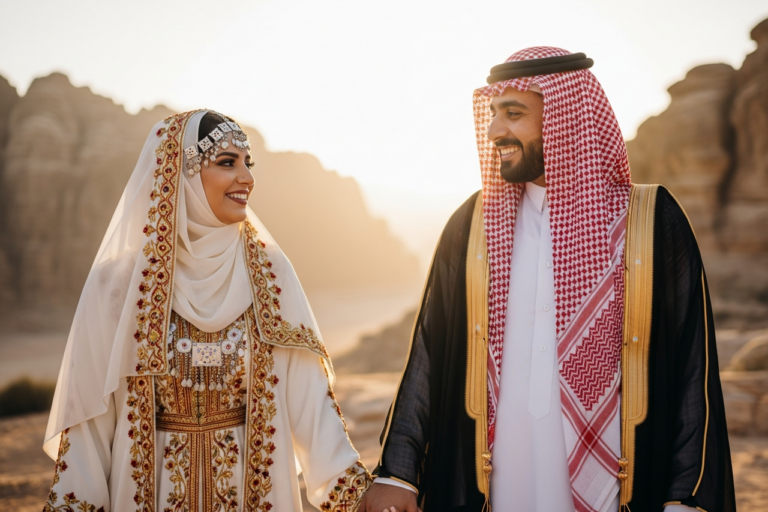
Key Highlights
-
Jordanian weddings are fun and full of life. The wedding celebrations sometimes begin days before the wedding day.
-
Signing the marriage contract at a courthouse is a key step before anything else. This makes the couple legally married before the parties even start.
-
The wedding celebrations take place at the bride’s family home and also at the groom’s house. There is a lot of music, dancing, and good traditional food.
-
On the wedding day, people enjoy a happy car procession. First, there are gatherings just for men and just for women. The groups later come together as one.
-
In recent years, Jordanian wedding celebrations keep old traditions but also use new and modern things.
Introduction
Are you curious about what a wedding day in Jordan looks like? Jordanian weddings are joyful, full of love, and have many old customs. These weddings are not the same as some Western weddings. Jordanian weddings often last more than one day. The families and friends come together to celebrate the couple. Every part has a special meaning, from the first legal steps to the big party at the end. This guide will help you see the joy and beauty in jordanian wedding traditions. You will get to know more about how people in Jordan celebrate weddings.
Engagement and Arranged Marriage Customs in Jordan
The start of a Jordanian wedding is all about family getting together. First, there is the engagement. This is a special and respectful part where the groom’s family goes to the bride’s family. They ask for her hand to marry the groom. This is the first step the couple takes on their way to marriage.
These wedding traditions are about more than just the two people getting married. They bring the two families closer. The families talk about the dowry and make other plans. This step helps everyone in both families see the couple’s strong commitment. These customs help get everything ready for wedding celebrations and the couple’s new life. Let’s talk more about the way families help and the special things they share along the way.
The Role of Family in Proposing and Engagement Rituals
In Jordanian culture, the family is at the center of the wedding traditions. The engagement begins when the groom’s family goes to the bride’s family to ask for her hand in marriage. This is a big moment that shows the groom is serious.
When the bride’s family says yes to the proposal, it means they give their blessing. This is a key step in wedding traditions because it starts the couple’s road to marriage. The father’s approval is very important. It welcomes the groom’s family into their lives.
This official visit confirms the engagement and helps plan what comes next for the wedding. It is a lovely part of Jordanian wedding traditions, showing how the two families come together with the support and love of everyone.
Traditional Gift Exchanges and Symbolic Gestures
After the engagement, giving gifts and making special gestures are a big part of Jordanian wedding traditions. One of the key parts is the dowry. The groom’s family and the bride’s family talk through and decide on the dowry together. The groom gives this to the bride as a gift.
At wedding celebrations, people usually give the newlyweds money, not things for their home. People call this couple money “nuqoot.” It helps the newlyweds start their new life. Guests walk up to the couple to share their best wishes and give their gifts in envelopes.
There is more to these exchanges than just the things you give. They have deeper meaning.
-
Dowry Agreement: This shows that the groom is ready and able to take care of his bride.
-
Couple Money: This group gift shows how the people around the couple support their new life.
-
Blessings: Giving is also about wishing the newlyweds lots of happiness and good days ahead.
Pre-Wedding Celebrations and Events
The excitement for Jordanian wedding celebrations starts long before the wedding day. Parties often begin about three days before the big day. The bride’s house and the groom’s house both host celebrations. At these parties, people sing, dance, and sometimes set off fireworks. The atmosphere is filled with joy.
These pre-wedding events are an important part of wedding traditions. They bring friends and family together to celebrate the couple before their wedding day. The lively henna party and the groom’s own preparations both add to the feeling of excitement. Every tradition makes people look forward to the big day even more. Here, we will talk about some of these key events.
The Henna Night (Laylat al-Henna) and Its Significance
The henna night, also called Laylat al-Henna, is a loved part of jordanian weddings. It usually happens before the wedding day and is held at the bride’s home. The henna party is a time when her close female friends and family members come together to enjoy and get ready for her new life.
At this henna night, there will be a skilled person to put intricate henna designs on the bride’s hands and feet. These designs are not only pretty to look at, but they are also said to bring good luck and happiness for the bride as she goes into her new life. During the henna party, all the women sing, dance, and share in the fun.
This part of jordanian wedding traditions is a strong show of care, support, and joy between women. It comes before the wedding day and marks one of the last days before the bride joins with her husband. The henna night is a special, lively event where the bride gets a happy send-off into marriage.
Groom’s Rituals and Preparations Before the Ceremony
On the morning of the wedding, the groom’s house is full of life and excitement. One big ritual is the groom’s ceremonial shave. He sits with his male friends and family as they gather around him. The groom gets his last shave before his big day. There is a lot of laughter, singing, and support. This shows he is moving into a new part of his life.
This time is not only about getting ready. It is a chance for everyone to come together and show support. It is also a sign that the groom is clean and ready to be a husband. There is joy in the air, and everyone looks forward to the new home he and his new wife will start together.
While the groom gets ready, his family works hard to show their hospitality. Many are busy in the kitchen, making food for the wedding celebrations and for all the guests.
-
Ceremonial Shave: A fun gathering of family and friends to support the groom.
-
Family Feast Preparation: The family cooks classic dishes like Mansaf to welcome wedding guests.
-
Final Touches: The groom puts on his wedding suit and gets ready for the big day.
The Wedding Day – Ceremonies and Festivities
The wedding day in Jordan is full of happiness and excitement. These wedding celebrations are not quiet at all. They are loud, the energy is high, and people be proud. The main part of jordanian weddings is to show joy for the newlyweds. It all starts when the groom goes to pick up his bride. It goes on until the last dance.
On the big day, a jordanian wedding brings together both old customs and new ideas. This mix makes the wedding special for the couple and for all their guests. There are some unique wedding ceremonies, too. You can look forward to a fun procession and the special time when they sign the marriage contract.
The Arrival Procession (Zaffeh) and Musical Traditions
One of the most memorable parts of a Jordanian wedding day is the Zaffeh, or wedding procession. After the groom picks up his bride, they lead a parade of cars filled with cheering family and friends. This isn’t a quiet drive; people honk their horns, hang out of windows, and blast music, creating an incredible spectacle of joy throughout the town.
This lively procession is a public declaration of the marriage and a highlight of Jordanian wedding traditions. The musical traditions are also key, with drums, flutes, and singing filling the air. Sometimes, fireworks or celebratory gunfire add to the festive atmosphere as the procession makes its way to the wedding venue.
The Zaffeh is a powerful expression of community excitement and a core part of the celebrations.
|
Tradition |
Description |
|---|---|
|
Zaffeh (Car Procession) |
A loud and joyful parade of cars that follows the bride and groom’s vehicle around town. |
|
Musical Accompaniment |
Drummers, flutists, and loud speakers playing traditional music to energize the crowd. |
|
Public Celebration |
The procession is a way for the whole community to witness and share in the couple’s happiness. |
Exchanging Vows and Official Marriage Contracts
In jordanian weddings, the legal side of the marriage happens before the main party. The couple and two witnesses go to the courthouse to finish and sign the marriage contract. At this time, a judge might ask some questions to make sure both people are sure about what they want to do.
This means that on the official wedding day, they are already married. The big party that comes after shows everyone their love and lets people celebrate with them. Having the legal part and the party on separate days makes jordanian weddings stand out.
After the marriage contract gets signed, the couple can begin their new life together. The wedding day party becomes a time for friends and family to give their best wishes to the couple and see how happy they are, now that the courthouse part is done.
Cultural Symbols and Expressions of Joy in Jordanian Weddings
Jordanian weddings are full of cultural signs and bright ways to show joy. Hospitality is a big part of the wedding celebrations. The hosts make sure every guest feels welcome and valued. The warmth shows most in the sharing of food. People gather to eat Mansaf, which is Jordan’s national dish. It brings everyone together.
Dancing is a strong way to show happiness at jordanian weddings. These wedding traditions fill the celebrations with energy and life. All these customs show the community’s support and joy for the couple. Now, let’s look at the dances and traditional clothing that make jordanian wedding celebrations so special.
Dabkeh Dance and Group Celebrations
A big part of Jordanian wedding celebrations is the Dabkeh. It is a line dance filled with energy and joy. People link their arms or hold hands. They step, stomp, and kick at the same time to fast music. This group dance is open to anyone who wants to join.
The Dabkeh is not just a dance. It stands for unity and community. It often starts with men dancing in their own space. They show off their moves with excitement. Soon, the whole crowd comes together and becomes one big party. This dance shows how happy everyone is for the newlyweds.
Watching the Dabkeh is a special moment in any Jordanian wedding. It shows what the event is all about.
-
Synchronized Steps: Dancers follow a leader and move together.
-
Energetic Music: The dance has drums and flutes that play a catchy beat.
-
Symbol of Unity: People link arms to show support and togetherness.
Traditional Attire for the Bride, Groom, and Guests
On the wedding day, both the bride and groom want to look their best. At many Jordanian weddings, brides wear white gowns, much like in Western weddings. Many times, the dress is rented just for the day. The groom is often seen in a formal suit. At times, finding what to wear happens at the last moment. This adds a bit of excitement to the day.
One special thing about a Jordanian wedding is the ‘furwa.’ This is a Bedouin coat. The bride’s father gently puts this coat on her shoulders. This moment shows that he gives her his blessing and will always care for her as she begins her new life.
When guests go to a Jordanian wedding, they dress up in formal clothes. Men usually put on suits. Women wear nice and simple dresses.
-
Bride’s Gown: This is often a white dress that is very pretty and may be rented.
-
Groom’s Suit: A classic formal suit that looks sharp.
-
Father’s ‘Furwa’: This is a special Bedouin coat that a father gives to his daughter.
All these parts show how the wedding day is a big event in the lives of the bride, groom, and their families at a Jordanian wedding.
Conclusion
In short, wedding traditions in Jordan bring color and meaning to the wedding day. The whole family plays a big part, starting with the first talks about getting engaged. Every step has ties to old customs that changed as time went on. People love the Dabkeh dance, the outfits, and the many ceremonies before the big day. These things bring friends and family close, making special memories for all. Learning more about these wedding traditions in Jordan helps you see the heart of Jordanian culture. It also adds something special to your own day of love if you choose to use them. If you want to get more details or add them to your own wedding day, feel free to reach out!
Frequently Asked Questions
How have wedding traditions in Jordan changed with modern influences?
In recent years, jordanian weddings have seen new things added. Many couples now hire DJs for their wedding day, not just traditional bands. Some also use Western-style ideas. But the main wedding traditions stay the same. There are still close family and community bonds at these jordanian weddings. This has not changed.
What is expected of a guest at a Jordanian wedding?
At Jordanian wedding celebrations, you need to wear formal clothes. Be ready, because there will be a lot of energy at this event. You can expect great hospitality, loud music, and plenty of dancing. People usually give the couple cash in an envelope instead of a present. This is done to help them as they start their new life.
How do Jordanian wedding customs differ from other Arab countries?
Jordanian wedding traditions are a bit different than other Arab weddings. One main thing is that the marriage contract is signed at a courthouse before the wedding day party. There are some special customs too. For example, the father of the bride gives her a ‘furwa.’ These steps make jordanian wedding traditions stand out in jordan and show what makes these wedding day moments special.



