

Key Highlights
-
Japanese weddings bring together old ways and new trends from the West.
-
The Shinto wedding ceremony is an important part of these weddings. It happens at a shrine with special cleaning rituals.
-
One of the big Japanese wedding traditions is sharing sake. This is called san-san-kudo, and it brings the couple closer as one.
-
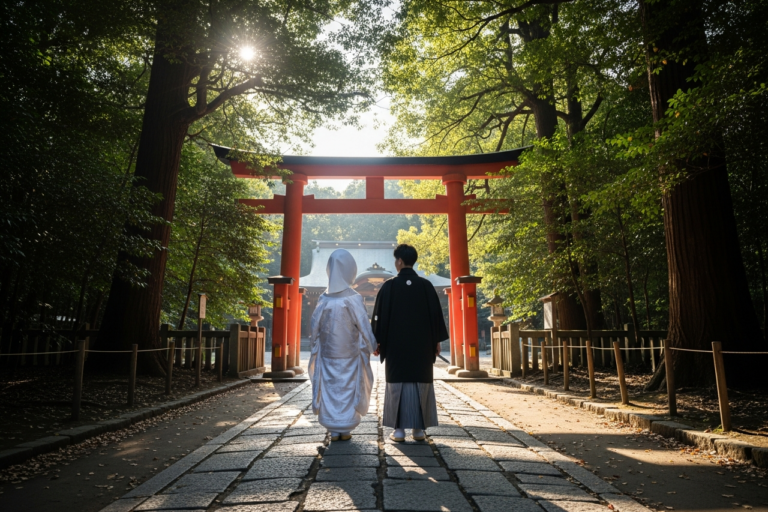
People wear special outfits at the wedding ceremony. The bride has a white kimono called shiromuku, and the groom wears a montsuki. These outfits show off traditional Japanese attire in a lovely way.
-
Family matters a lot. Traditions like giving gifts and sharing warm letters highlight strong family bonds.
-
Some contemporary Japanese weddings use pieces of Western style, like a Christian-style wedding ceremony or having a wedding cake.
Introduction
Japanese weddings are a mix of history, family values, and meaning. You will see some things that look the same, such as a white dress or a ceremony in a chapel. Still, many wedding traditions come from Japanese culture. The Shinto wedding ceremony is quiet and serious, and the party after is loud and joyful. All of these parts have a deep meaning. Are you wondering what makes a Japanese wedding ceremony so special? Let’s look at the unique customs that show how two people, and their families, come together in japanese weddings.
The Historical Roots of Japanese Wedding Traditions
The wedding traditions people see in Japan today come from a long history in Japanese culture. Many of these started in the Edo period. That time was important for the country. The customs from back then were tied to family and community.
Even now, you can still see some of those parts in how people get married. The Shinto style of wedding most people know today became popular after the imperial wedding of the future Emperor Taishō in 1900. That event brought old ideas together with a new, planned way of doing things. It made a big impact on wedding traditions and how weddings look in Japan now.
Edo Period Influences and Early Customs
During the Edo period, traditional Japanese weddings were more about bringing two families together, not just two people. The plans and ceremonies were set up to make family bonds stronger and help keep society steady. There was a big focus on the family line going on and on, and the bride becoming part of her new family.
A lot of what you see now in modern Japanese weddings comes from this time. For example, the idea of purification, which is a big part of Shinto themes of purification, was seen in many ways back then. These cleansing rituals were there to help the couple start their new life together, free from bad things.
In the end, the traditions from the Edo period made marriage in Japanese culture very important. Family bonds and the community were at the center of every celebration, and you can still feel that same spirit in japanese weddings today.
Evolution Through Meiji and Modern Eras
The Meiji era brought big changes to Japan, and wedding traditions changed a lot too. With the start of the Civil Code, people now had to register their marriage with the government. This made marriage not just a family event, but one that the state recognized. Old wedding ceremonies still happened, but they started to fit with the new way society worked.
In recent times, japanese wedding traditions have kept changing. The strict rules that used to guide weddings are not as strong now, and couples have more freedom to choose how to celebrate. Many people are mixing old and modern things in their weddings, picking the traditions that matter to them most and giving those traditions their own meaning.
This change helps couples honor Japanese culture while also letting their own style show. Some mix a shinto ceremony with a Western-style party, and some even make new traditions for their big day. Now, weddings in Japan really show the way the culture is changing and growing.
Essential Elements of the Shinto Wedding Ceremony
A Shinto wedding ceremony, also called shinzen shiki, is a very peaceful and special event. It usually takes place at Shinto shrines. There is a Shinto priest who leads the ceremony. The wedding is all about being clean in heart, being thankful, and showing deep respect to the kami, which are the divine spirits. The couple makes a serious promise here in front of the gods.
A Japanese wedding ceremony has many signs and small rituals. You will see these from the walk to the altar to the couple’s promises to each other. Every part is planned to give the couple good luck in their life together and to remember their family and loved ones from the past. Here are some of the main moments that are part of this tradition.
The Procession and Purification Rituals
The wedding ceremony starts with a quiet walk, called a procession. The Shinto priest and a shrine maiden, or miko, usually lead the group. The pair getting married and their close family follow behind. They walk to the shrine calmly and respectfully. This walk, called sanshin-no-gi, shows both families coming together as one.
Inside the shrine, the priest does a cleansing, or purification rite, called shubatsu. This is one of the basic Shinto themes of purification. The priest moves a special wand, known as a haraegushi, over the couple and the guests. This is done to clean away any bad things or impurities. It helps get everyone ready for the special parts of the wedding ceremony.
The most important people inside are:
-
The Couple: They stand at the right of the altar.
-
The Shinto Priest: He leads the ceremony and the act of purification.
-
The Shrine Maiden: She helps both the priest and the couple.
This act of purification is a big part of the Shinto faith. It makes the mood of the wedding calm and serious. It also shows that the couple has pure intentions as they start their life together.
Symbolic Rites – Reading Vows and Sacred Offerings
After the purification, the couple walks to the altar for the wedding vows. In Japan, this is called seishi sodoku. It is a big moment in the wedding ceremony. Here, they promise to each other in front of the Shinto deities. The vows often show thanks and say they will help each other in their new life.
Next, they give a sacred sakaki branch at the altar. This is called tamagushi-hōten. The branch has paper streamers on it. The couple offers it to show respect and thanks. They ask the kami for help and blessing as they start their life together.
These acts are an important part of the Japanese wedding ceremony. They come before other acts like the ceremonial sake drinking. All these steps help make the couple’s bond strong and filled with meaning.
The Sake-Sharing Ceremony: San-san-kudo
One of the most well-known parts of a Shinto wedding ceremony is the sake-sharing ceremony. This is called san-san-kudo, which means “three-three-nine-times.” During this part of the wedding ceremony, the couple takes part in ceremonial sake drinking together. This exchange of sake is important. It makes their union real and official.
This tradition has a strong place in Japanese culture. It is a way to show the couple is now bound together as one. When they share cups of sake, it is not just about drinking. It shows a promise and a wish for a good life ahead. The ritual is full of meaning, and shows how special this part of the ceremony is.
Symbolism and Meaning in the Ritual
The san-san-kudo ceremony is full of deep meaning. In Japanese culture, the number three is seen as lucky. People use it on purpose in this ritual. The couple drinks from three cups, each with its own size. Every cup and each sip has its own meaning. These all connect the past, present, and future.
The smallest cup stands for the past. It is about being grateful for the family and ancestors who helped bring them to this point. The middle cup stands for the present. It shows the two people and the journey they have made together. The largest cup is for the future. It is about hope for a good life, good luck, and a happy, new life as a couple. So this ceremonial sake drinking is about two people joining their lives together.
This tradition shows how important family bonds are in Japanese weddings. It is not only a serious promise to each other, but it also shows respect and thanks for the families who support them.
How San-san-kudo is Performed During Weddings
The performance of san-san-kudo is a graceful and meticulously choreographed part of the Shinto wedding ceremony. The shrine maiden pours sake into three stacked cups, starting with the smallest. The exchange of sake then begins, with the married couple taking turns sipping from each cup.
The groom typically goes first, taking three sips from the first cup, after which the bride takes three sips. This is repeated for the middle and largest cups. The “three-three-nine” name comes from three sips from three cups, which equals nine, a number that signifies good fortune. This shared act creates the first bond of the married couple.
The entire wedding ceremony ritual is done with care, and each movement is deliberate. The shrine maiden assists the couple, ensuring the process is smooth and respectful.
|
Cup |
Representation |
Meaning |
|---|---|---|
|
Smallest Cup |
The Past |
Gratitude to ancestors |
|
Middle Cup |
The Present |
The couple on their wedding day |
|
Largest Cup |
The Future |
Wishes for family prosperity |
Traditional Japanese Wedding Attire
The traditional Japanese attire for a wedding is very beautiful and has a lot of meaning. The bride will often wear a pure white kimono. The groom will wear a formal black kimono. The mothers from each side may wear a formal black tomesode. This helps make the family look their best and ties everyone together.
The special Japanese wedding attire is an important part of this day. It shows how much this moment means. Every piece of clothing is picked for a reason. Each one has deep meaning for the culture. Now, let’s get into more detail about what the bride and groom wear.
Bridal Kimono and Headpieces
The bride’s outfit is one of the most amazing parts of a traditional Japanese wedding. She will often wear a pure white wedding kimono called a shiromuku. This white kimono shows her purity, her innocence, and her wish to go into a new life with her husband’s family. It tells everyone that she is ready to take on their ways and their colors.
With the kimono, the bride puts on a special headpiece. This might be a white hood called a watabōshi or a more decorated headpiece called a tsunokakushi. The hood is used to hide the bride’s “horns” of jealousy and pride. It shows that she will be gentle and humble as she joins her new family. Only the groom gets to see her without the hood until the end of the ceremony.
The entire set is a key part of Japanese wedding attire. It is not just something to wear. It means the bride’s journey and her deep respect for the shinto deities and both families. After the ceremony, she can change into a colorful kimono called an iro-uchikake for the party.
Groom’s Traditional Garments and Accessories
At the Japanese wedding ceremony, the groom’s clothes are as important as the bride’s. He usually wears a montsuki haori hakama. This is a set of formal wear. It is made up of a black silk kimono, called a montsuki, which has his family’s crest. He also wears a hakama, which looks like a pleated skirt, and a coat called a haori.
The groom’s outfit is not as fancy as the bride’s, but it stands for dignity and strength. The family crests on the kimono are a big part of the outfit. They show the pride and history of his family. This is the highest formal wear for men at a wedding in Japan.
Some grooms pick a dark suit for the reception, but the traditional clothes are very important during the main Japanese wedding ceremony. The mother might wear a black tomesode, and when the groom puts on his special clothes, it shows the families stand together and respect the day.
Wedding Reception Customs and Family Involvement
After the wedding ceremony ends, the fun moves to the wedding reception, called the hiroen. Many Japanese wedding traditions happen here. The focus is often on family members and on giving thanks. You may see a wedding cake like those in the West, but there are also many special Japanese wedding traditions.
Family is a big part of this event. From giving gifts to making speeches, the reception gives both families a way to meet and share in welcoming the new couple. This is a time for everyone to show their support and offer expressions of gratitude.
Gift Exchanges and Heartfelt Gestures
Gift exchanges play a big part in Japanese weddings. At a Japanese wedding ceremony, it is usual for guests to give a monetary gift called goshugi to the couple. People place the money in a pretty envelope called a shūgi-bukuro. The amount of money often depends on how close the guest is to the couple.
The couple also gives gifts back to their guests. These are called hikidemono and are picked with care. The gifts might be high-quality tableware, special foods, or something from a catalog. This gift exchange shows expressions of gratitude and helps everyone feel equal, which is important in their culture.
These small acts are strong ways to show thanks. After the wedding ceremony, the couple might send more thank-you gifts called uchiiwai to people who sent a monetary gift but could not come to the wedding. This way, everyone who was part of the special day knows they are important and appreciated.
Roles of Family and Guests in the Celebration
Family members each have a special and important part at the reception party. The parents of the couple are key people. They often sit at the main table with the newlyweds. They also give formal speeches to thank their guests for coming. Their part in the day shows the union of the two families, not just two people.
The reception party is a time for formal speeches from employers, mentors, friends, and others. This helps make the event feel planned and respectful. One of the most touching and emotional moments is when the bride reads a letter to her parents. She says thank you and shows lots of love. This is a strong reminder of the family bonds that are at the center of the celebration. Some key roles at the reception be:
-
Parents: Welcome guests and give speeches of thanks.
-
The Couple: Thank guests for their attendance and gifts.
-
Guests: Offer money gifts and listen to speeches.
-
Master of Ceremonies: Helps guide the event and keep it moving.
The number of people at a reception will change with each event. Still, the idea is always to make a good place where people can feel the family bonds, give thanks, and welcome the new union.
Unique and Contemporary Trends in Japanese Weddings
While people still value tradition, contemporary Japanese weddings are now including new and Western styles. In recent times, many couples choose to make their big day more personal. They want the wedding to show their own personalities and love story. This mix of old ways and new ideas is popular in Japanese culture today.
Couples get to pick where they want the wedding and how it should look. They also often decide the way the ceremony will go. Choosing a special wedding date was once very important, but now, some people care more about picking a date that means something to them, even if it is not the most lucky date. Let’s see how these new trends in Japanese weddings are making weddings in Japan special for everyone.
Blending Modern Influences with Tradition
One of the most interesting things in japanese weddings is how modern style blends with old customs. Many people now choose to have a “two-part” wedding ceremony. They may start with a shinto wedding ceremony to show respect for family and history. Then, they have a Western-style party after. This often has a white dress, a wedding cake, and a first dance.
It is also getting more common to see Christian-style ceremonies in japan, even when couples are not Christian. The couple may pick a wedding ceremony in a chapel or a Christian church because they like how it looks and feels. The big windows, high ceilings, and romantic mood all play a part. This shows that couples want the day to be special and lovely.
This mix shows that traditional japanese weddings are not set in stone. People are finding new ways to use old rituals with newer, modern things that mean a lot to them. This lets them make a wedding ceremony that is unique and truly their own.
Popular Venues and New Styles
While Shinto shrines are still a well-known pick for a traditional wedding ceremony, many modern couples want something different. Today, people look at many popular places to hold their wedding. Hotels with their own wedding chapels and big banquet halls are very common. These spots usually offer all-in-one deals that make it easy to plan the big day.
There are couples who want something special for their wedding ceremony. Many want to have a day to remember in a one-of-a-kind spot. That’s why some people get married in lovely gardens, museums, or in front of famous landmarks. Couples often make the choice of venue early, since it can set the feeling for everything that comes after. Some top venue choices are:
-
Shinto Shrines: For those who want a traditional wedding.
-
Hotel Chapels and Banquet Halls: For a wedding that’s easy to arrange and includes everything.
-
Restaurants: For couples who want a small gathering with great food.
-
Gardens and Scenic Locations: For a romantic setting with beautiful views.
The many ways to hold a wedding, and the mix of settings, show how modern Japanese couples want something that looks and feels good, but also fits who they are. A wedding can be by the Imperial Palace or inside a stylish hotel in the city. Each choice says a lot about the couple, making their day both lovely and personal.
Conclusion
To sum up, when you look at Japanese wedding traditions, you can see that they come from a strong history, deep meaning, and true customs. These continue to shape weddings today. There are old practices found in a Shinto ceremony, and the special San-san-kudo sake-sharing ritual. Each of these parts helps join couples and their families together. The way tradition mixes with new ideas gives every wedding a chance to be different and personal. This is what makes each wedding day something to remember. If you want to know more about wedding traditions or how japanese wedding traditions work, it helps to learn about them. It can make you like these days even more. If you need help planning your shinto ceremony or a traditional day, you can get expert advice to guide you.
Frequently Asked Questions
Are all Japanese weddings held at shrines?
No, not every wedding ceremony in Japan takes place at a Shinto shrine. In the past, most traditional Japanese weddings had a Shinto ceremony. But now, many couples choose different kinds of weddings. Some have a Christian-style wedding in a chapel or church. Others pick a non-religious ceremony at a hotel or another place.
What gifts are commonly exchanged at Japanese weddings?
At Japanese weddings, guests often give a monetary gift called goshugi. The couple then gives their guests hikidemono. These can be things like plates, cups, or special food that people can take home. This gift-giving is an important part of the wedding ceremony. It shows thanks and respect between the couple and their family members.
How do Japanese weddings combine tradition and modernity today?
In recent times, young couples in Japan often mix old and new customs. They may start with a Japanese wedding ceremony and later have a Western-style party. Contemporary Japanese weddings can have a white dress, wedding cake, and chapel service. There are also traditional parts like the sake-sharing ceremony. Together, these make the wedding ceremony feel special and fit for the couple.



