

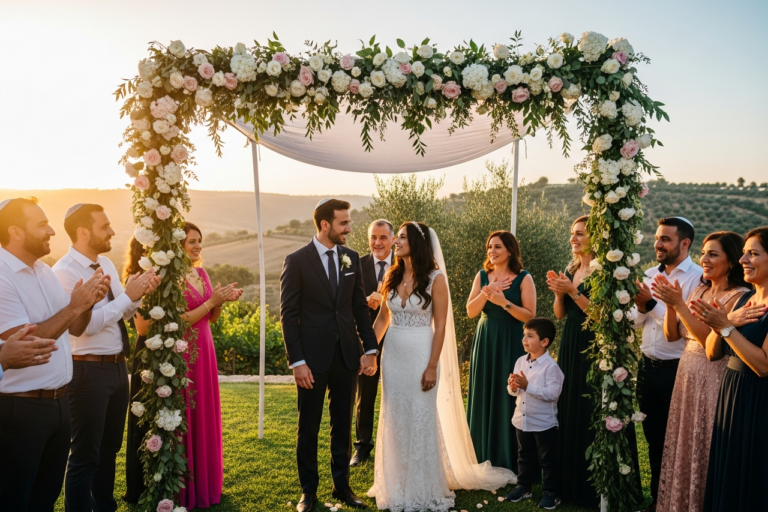
Key Highlights
-
An Israeli wedding brings together old Jewish wedding traditions with new, relaxed ways to make a special wedding ceremony.
-
Some main Jewish wedding rituals are signing the Ketubah, standing under the wedding canopy (Chuppah), and saying the seven blessings (Sheva Brachot).
-
Special moments in the wedding ceremony, like the veiling of the bride (Bedeken) and the breaking of the glass, are very important in these wedding traditions.
-
Before the big day, there are pre-wedding events like the Aufruf, where family and friends join to give blessings to the married couple.
-
The wedding has lots of happy moments, including traditional dances like the Hora and a big wedding feast for every guest.
-
Israeli weddings show great variety in how people celebrate. This diversity comes from Ashkenazi, Sephardic, and other regional wedding customs.
Introduction
Welcome to the lively world of Israeli wedding traditions! An Israeli wedding is not just a simple ceremony. It is a big part of the culture and holds deep meaning for many people. This special day is full of history, heart, and joy. In this article, you will get to know about the unique and beautiful jewish wedding customs that help make every celebration in Israel stand out. We will look at both old rituals and new styles of fun. You will see how every piece, from the vintage acts to the modern party, adds to the deep feelings and happiness at these events. There is a lot to learn about the jewish wedding and the layered meaning behind every tradition.
Foundations of Israeli Wedding Traditions
Israeli wedding traditions come from many years of history and culture. These traditions help make every marriage ceremony in Israel special. The customs come from old Jewish wedding practices. People have shared them from one group to the next for a long time. Because of this, you see many different rituals and symbols in an Israeli wedding.
You will see how these old customs are part of today’s wedding celebrations as well. Let’s look at both the old Jewish wedding customs and some main ways an Israeli wedding is different from weddings in other places.
Historical Influences on Israeli Marriage Customs
The jewish wedding customs you find in Israel today come from things people did in ancient times. The primary reason for these wedding traditions is to honor the biblical concept of marriage and to remember some big moments in history. For example, the breaking of the glass at a marriage ceremony reminds everyone of the destruction of the temple in Jerusalem. This event was very hard for the jewish people.
Many of these customs are tied to jewish civil law, not just religion. The jewish marriage contract, also called the Ketubah, is a good example of this. The marriage contract shows the groom’s duties under the law of moses. This mix of spiritual things and real rules is a key part of a jewish wedding.
Because of this strong tie to history, jewish weddings in Israel stand out with a special depth. Many cultures have good wedding traditions, but the way these jewish wedding customs go straight back to ancient times and important moments makes the ceremonies much more meaningful for jewish people.
Key Differences Between Israeli and Diaspora Jewish Weddings
While both an Israeli wedding and a Jewish wedding ceremony share the same roots, there are some things that set them apart. These changes often come from the local way of life, how people follow religion, and new trends seen in Israel.
Jewish couples who live in Israel usually have a wedding that feels much more connected to their country and its people. The mood can feel bigger, and often the whole community is a part of it.
Here are a few main differences:
-
Guest Lists: You will find that an Israeli wedding often has a lot of people. It’s normal to see hundreds of guests at the celebration.
-
Timing: The wedding ceremony in Israel usually happens on a weekday night. This is not like the Jewish wedding in other countries, where Sunday is a common day for the event.
-
Ceremony Style: The jewish wedding ceremony in Israel includes the usual traditions, but it mostly has a relaxed and easy style.
-
Post-Ceremony: After a jewish wedding ceremony in Israel, the party gets very lively. There is a lot of dancing and food, and couples with their guests often keep the fun going late into the night.
Pre-Wedding Rituals in Israel
The road to the wedding day for Jewish couples in Israel includes many important pre-wedding traditions. These wedding traditions help the couple and their families get ready for the big day. They bring love and bring support from family and friends, even before the marriage contract is signed.
From old custom matchmaking to big family gatherings, these things are a big part of the wedding. Let’s see what the Shidduch and the Aufruf are, because they are two big events that come before the wedding day.
Engagement Customs and Matchmaking (Shidduch)
In some traditional Jewish communities, people find a life partner with help from a matchmaker. This way of meeting someone is called Shidduch. It is one of the oldest jewish wedding customs. In this practice, a matchmaker, or shadkhan, brings a man and a woman together. He or she makes sure they have the same goals and values.
With Shidduch, people care more about the virtues of marriage than just romantic feelings at first. They believe loving kindness and a close connection can grow over time. What matters here is making a stable and good partnership.
Even though it’s not common now for most people in Israel, Shidduch is still important in some orthodox parts of Jewish culture. It shows how special it is for two people to be brought together, building their life with shared faith and principles.
The Aufruf and Family Celebrations
The Aufruf is a happy pre-wedding ceremony where the bride and groom are recognized in the synagogue. The word means “to call up.” This event lets everyone know about the wedding. The couple is called to the Torah and receives a special blessing. It is a good time for family members and the whole community to take part.
After the blessing, people in the synagogue often toss candy at the couple. This is a way to wish the newly married couple a sweet life together. It’s a great time for everyone, and shouts of “mazel tov!” make the room feel alive.
Here are some key things in the Aufruf:
-
Aliyah: The bride and groom get called up and have a blessing from the Torah.
-
Misheberach: The Rabbi says a special prayer for the married couple’s future.
-
Candy Tossing: Guests throw sweets to the newly married couple to wish for a sweet start.
-
Community Celebration: It is a public sign that the wedding ceremony brings the couple into their group.
Essential Elements of the Jewish Wedding Ceremony
The Jewish wedding ceremony is filled with deep and special moments. Every part, like the signing of the marriage contract and the vows under the wedding canopy, has strong meaning. The ketubah signing is when both people agree to the marriage in an official way. The wedding band stands for a bond that has no end.
Now, we will look at the main parts that are at the center of the jewish wedding ceremony. We’ll start with ketubah signing, which is the main marriage contract. After that, we’ll talk about the special place made by the Chuppah or wedding canopy.
Signing the Ketubah: The Jewish Marriage Contract
The Ketubah signing is one of the first official acts of the wedding day. The Ketubah is a Jewish marriage contract that details the groom’s obligations to his bride. This document is not considered religious but is a part of Jewish civil law, ensuring the bride’s rights and protections are clearly defined.
Before the ceremony begins, the groom, bride, and two chosen witnesses sign the Ketubah. The reading of the Ketubah often happens during the ceremony, so all guests can hear the commitments being made. This tradition underscores the legal and practical framework of the marriage.
Here is a simple breakdown of what the Ketubah covers:
|
Aspect |
Description |
|---|---|
|
Groom’s Responsibilities |
Outlines his commitment to provide for and care for his wife. |
|
Bride’s Rights |
Specifies her protections within the marriage. |
|
Framework for Divorce |
Includes provisions should the marriage be dissolved. |
|
Legal Standing |
Rooted in Jewish civil law, not religious doctrine. |
Under the Chuppah: Symbolism and Setup
The Chuppah is the main part of a Jewish wedding ceremony. It is a canopy made up of four poles with a cloth on top. This cloth stands for the new home the couple will make together. The open sides show that they will welcome friends and family with kindness.
Usually, four friends or family members hold up the Chuppah. This shows that the couple have support in their lives. Sometimes, the cloth is a prayer shawl that means a lot to the family. This adds a personal touch to these Jewish wedding traditions.
The Chuppah is often set up under the open sky. This shows that the couple hopes their family will grow big, just like the stars above. The main parts of the marriage ceremony happen under this special Jewish wedding canopy.
Ritual Highlights During the Ceremony
The jewish wedding ceremony is filled with many special moments that have deep meaning. On the wedding day, after the jewish marriage contract is signed, the wedding ceremony goes forward with different acts that are old but still very close to people’s hearts.
All of these moments help make the wedding ceremony stand out. In this piece, we will talk about two key traditions: the Bedeken, which is when the bride gets a veil over her face, and the custom where the bride walks around the groom.
Bedeken: Veiling of the Bride
The Bedeken is a special step in the Jewish wedding ceremony. In this part of the tradition, the groom comes to his bride just before the wedding starts. He looks at her and puts the veil over her face. This comes from a story in the Bible, where Jacob ended up marrying Leah instead of Rachel, because he did not get to see her face under the veil.
When the groom puts the veil on his bride, he is showing that he knows who he is marrying. The act is also a symbol that his love goes beyond her looks and is based on her inner beauty and who she is as a person. It is a sign of their close, caring bond before they go to stand at the Chuppah together.
In a Jewish wedding, this tradition of veiling is about trust and staying true to someone. The groom is promising to stand by his bride, care for her, and see what really matters inside. This moment adds deep meaning and feeling to the wedding ceremony.
Circling the Groom and Its Meaning
In many Ashkenazi Jewish wedding customs, the bride walks around the groom under the Chuppah. This act, called circling the groom, is full of meaning. The bride circles the groom in different ways, with three or seven circles being the most common.
Each number has its own meaning. Circling seven times is tied to a biblical concept that seven stands for being whole and complete. This shows they are making a new family circle. Circling three times can stand for the three virtues of marriage. These virtues are loving kindness, doing the right thing, and fairness.
This custom can mean several things:
-
Creating a New World: The bride is putting up the walls of their new home with the groom.
-
Protection: Some feel this act puts a safety shield around the groom. It keeps away anything bad or any temptation.
-
Defining Family Space: It shows a new circle is made. The groom is at its center with their new family.
Blessings and Symbolic Acts
Blessings and special actions are very important in a Jewish wedding. They bring a deep spiritual meaning to the marriage ceremony. These traditions help connect the couple to the past and to each other in a strong way. During the ceremony, the Sheva Brachot, or seven blessings, are said over a cup of wine. This helps to make the union holy.
These rituals are not just steps people follow. They are moments full of happiness and deep thought. Now, let’s look at what the Sheva Brachot mean, as well as the breaking of the glass in a jewish wedding.
Sheva Brachot – The Seven Blessings
The Sheva Brachot, also called the Seven Blessings, are a big part of a Jewish marriage ceremony. They are said over a cup of wine. These blessings use words that have been passed down for many years to make the couple’s bond special. The rabbi can say them in Hebrew and English. Sometimes, friends or family members join in, which helps make it feel more close and personal.
The first blessing gives thanks for making the world and for the fruit from the vine. There are more blessings, and they speak about people, joy, and being together. These words help tie the couple’s love to when the world started and to the jewish people who come after.
The last blessing is all about the bride and the groom. It wishes them happiness, peace, and many good times together. When the Sheva Brachot are read, the marriage ceremony means more than just a promise between two people. It becomes a special event for their families, their friends, and all the jewish people.
Breaking the Glass: Interpretations and Traditions
The breaking of the glass is one of the best-known jewish wedding traditions. At the end of the ceremony, the groom steps on a wine glass that is wrapped in a cloth bag, breaking it. Guests then shout “Mazel Tov!” which means good luck or congratulations.
The primary reason for this jewish wedding tradition is to remind everyone that, even when people are happy, they must not forget the hard times that the jewish people have faced in history, like the destruction of the temple in Jerusalem. It also shows that people need to remember life can change, and joy must come with some awareness.
Breaking of the glass has several meanings:
-
Remembering Jerusalem: It stands for the destruction of the second temple and keeps the connection to jewish history.
-
Sorrow and Joy: It shows that a marriage will have good times and hard times, and the couple is meant to help each other no matter what.
-
A Final, Irreversible Act: Just as the glass can not be fixed, the marriage is meant to last and be permanent.
Celebration and Festivities at Israeli Weddings
After the ceremony, the wedding day turns into a big, happy party. An Israeli wedding is full of life, good food, and a lot of dancing. The wedding feast stands out, and the dance floor is almost never empty. Guests come out to help the newly married couple celebrate.
The reception is the part of the wedding where you get to see some of the most fun and different traditions. Get ready to hear about the lively dances and festive ways people celebrate at a Jewish wedding. These things help make the party one you will always remember.
Traditional Dances and Music (Hora & Mezinke)
No Jewish wedding would be as fun without the dancing, and the Hora is the main dance at these parties. People grab hands and form a circle on the dance floor, with everyone moving and the energy going up. The best part is when friends and family lift the bride and groom in chairs. The couple usually hold on to a napkin or handkerchief, which keeps them connected.
There is also another dance called the Mezinke. This dance is for the parents of the bride or groom if they are marrying their last child. It shows respect for the parents and thanks them for helping their kids reach this big moment.
These dances stand out in family celebrations:
-
Hora: A group circle dance that stands for community and happiness.
-
Chair Lifting: Lifts the bride and groom up, showing them as king and queen for this day.
-
Mezinke: This dance honors parents when they see their last child wed.
The dance floor becomes the place where everyone joins in for these jewish wedding traditions.
Feast, Toasts, and Wedding Party Customs
A big part of the celebration is the wedding feast. Right after the ceremony, the newly married couple usually spends a few minutes alone. This is called Yichud. It’s when the married couple sits together to share their first meal as husband and wife. This time alone lets them think about their big day before they join everyone else.
When they come back, the real party starts. The wedding feast is often filled with good food and drinks. Guests stand up to toast the married couple, and friends and family say nice things and share warm wishes for their future.
At the wedding feast, there is a lot of happiness in the air. The mix of a great meal, kind toasts, and having loved ones there makes the wedding reception stand out. It is a time the newly married couple and their guests will always remember.
Modern Trends and Variations in Israeli Weddings
While old Jewish customs are still at the center, a lot of Israeli weddings are changing with new trends. Many couples now want to mix those old ways with things that show their own style, no matter if the wedding is very religious or not.
The mix of these two styles makes the wedding very special and very important for the couple. In the next part, we will talk about how people bring together both religious and regular parts for an israeli wedding. We will also see how the culture of different places and families helps make each israeli wedding stand out in its own way.
Blending Religious and Secular Practices
Many Jewish couples in Israel want their wedding to show who they are. They mix old wedding traditions with new ideas. Some couples go for a wedding that does not follow all the old rules. For example, they keep the Chuppah or the breaking of the glass, but they do not use a rabbi or read from holy books.
This way, couples keep part of their heritage but can make the ceremony feel real to them. Many people have a part of the wedding with their own vows. They pick words that talk about who they are, their loving kindness, and their promise to each other.
Here are some ways couples mix old and new practices:
-
Personalized Vows: They use classic blessings mixed with vows they write for each other.
-
Secular Officiants: Some pick a friend or another person who is not religious to make the wedding official.
-
Selective Rituals: Couples use the wedding traditions that mean the most to them, like the breaking of the glass, and do not use others.
Regional and Cultural Diversity in Israeli Wedding Traditions
Israel is full of many different people from many backgrounds. This can be seen in how they celebrate a jewish wedding. A wedding in Israel can look very different depending on where the family comes from. You will find traditions from Ashkenazi (Eastern European), Sephardic (Spanish or Middle Eastern), and Mizrahi (North African or Arab) backgrounds. All of these ways of celebrating come together to make wedding traditions rich and interesting.
For example, there is the ashkenazi tradition where the bride walks around the groom. But in some Sephardic weddings, this does not happen. They may have their own special blessings or different things to do before the wedding. These different customs add a good and special touch when people come together to make a new home.
This mix of ways to celebrate is what makes weddings in Israel so full of life. When two people get married, they might choose to honor just one family’s way of celebrating. Or they might use traditions from both sides. This helps create a day that shows where they both come from and what they want for their life together.
Conclusion
To sum up, knowing about wedding traditions in Israel helps you see the rich culture behind these events. The history, the customs, and the happy times with loved ones all work together to make each wedding special. Every detail, like the deep meaning of the Ketubah or the fun dances after the ceremony, shows what families and communities care about most. If you are getting ready for a wedding in Israel, taking part in these wedding traditions can make your day even better and help you feel closer to what the rituals mean. If you want more tips or have questions, you can get a free consultation!
Frequently Asked Questions
What unique traditions might guests experience at an Israeli wedding?
Guests at a Jewish wedding in Israel will see the Chuppah, the breaking of the glass, and dancing during the Hora. The wedding ceremony uses many symbols. After the wedding ceremony, there is a big wedding feast. It is a joyful and lively event that mixes old customs and new happiness.
How do Israeli wedding celebrations differ for secular and religious couples?
Religious Jewish couples usually follow jewish wedding customs, and a rabbi leads the marriage ceremony. Secular jewish couples can choose to have a modern wedding instead. This kind of ceremony may not have religious texts. A non-religious person can lead it, and couples often pick jewish wedding traditions that matter to them. This helps them create a unique and personal secular jewish wedding.
Are ancient Jewish customs still practiced in modern Israeli weddings?
Many traditions from ancient times are still very important in a modern jewish wedding. Things like signing the jewish marriage contract (Ketubah), and saying the Sheva Brachot (Seven Blessings), are still done in ceremonies today. These and other customs that come from jewish law help people feel linked to their past and their heritage.



