

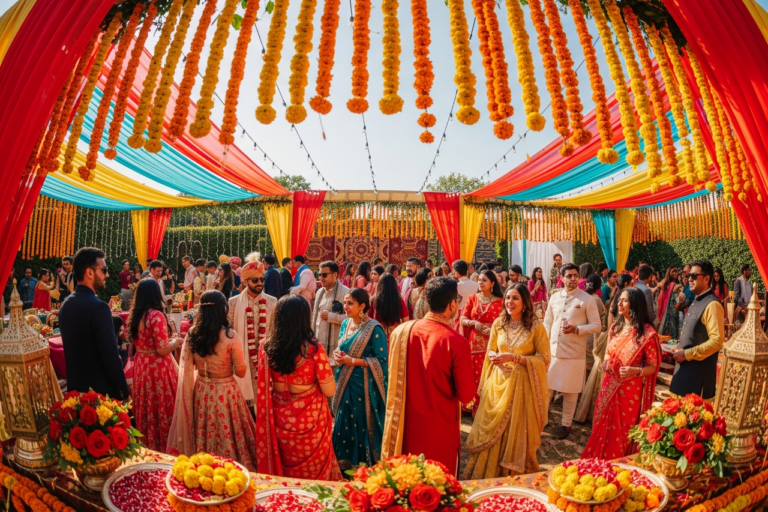
Key Highlights
-
Indian weddings go on for many days. They are full of color and have a lot of old rituals and ways of doing things.
-
Before the wedding, there are important events like Haldi, Mehendi, and Sangeet. Each one is special in its own way and has its own place in the culture.
-
At the main wedding ceremony, you will see big moments like Kanyadaan. This is when the bride’s family gives her away. There is also Saptapadi, where the couple walks around a fire seven times.
-
Right after the wedding, there are customs like Bidaai and Griha Pravesh. These mark the time the bride goes to her new family.
-
During these days, people wear bright and happy clothes. There are different outfits for each event. If you are a guest, do not wear red or white at the main ceremony.
-
You will find that Indian weddings change in each area. Weddings in the north of India use different rituals from those in the south. This shows how the way people do things with their families and their traditions can be very different.
Introduction
Have you ever been asked to go to an Indian wedding? get ready for an experience you won’t forget. There will be a lot of color, great food, and happy times that can go on for days. The parties here are not just a party. they tell a deep story of Indian wedding traditions and many special rituals. You will see many pre-wedding events and then the main wedding ceremony, which happens around the sacred fire. Every part means a lot for the people there. In this guide, you will learn about the beauty and details of Indian weddings, so you can understand the customs that make them unique.
Understanding Indian Wedding Traditions
An Indian wedding is full of color, culture, and joy. It brings together not only two people but the families as well. The happy time is all about classic wedding rituals and time spent with loved ones.
A traditional Indian wedding uses many symbols. There are things like putting turmeric paste on the couple. In addition, you might see the pair go around a sacred fire. Every step in the wedding has a meaning. The rituals are done to give blessings, wish for a good new life, and bring happiness. These steps help the couple start strong. We can look at the different cultural and special parts of these wedding ceremonies.
The Cultural Significance of Indian Weddings
The meaning behind many Indian wedding traditions goes far, showing how the wedding brings two families together—not just the couple. During these celebrations, you will see a lot of color and fun. Family members have a big part in each ritual and are always there to give blessings and help out. The events are made to help both families get close to each other and form strong ties.
A lot of these customs come from spiritual practices. They help bring good luck to the couple for a happy married life. Some rituals, like walking around the sacred fire and saying vows, help make the sacred bonds feel even stronger. These special moments are watched by not just family and friends, but also the divine.
An Indian wedding is, in the end, a mix of feelings, old customs, and deep beliefs. Each ceremony is another step for the couple as they start a new part of life together, with family members and the whole community by their side.
Key Elements That Make Indian Weddings Unique
Indian weddings stand out because they are big and full of life. Each wedding ritual is at the heart of the day, and every tradition means a lot. The scale of the events and the way wedding guests get involved help create a happy mood for everyone.
The things that make these days special are easy to spot. When the couple swaps flower garlands, it shows they care about mutual respect and are ready to accept each other. Walking around the sacred fire means words of promise are shared with something bigger than both people watching. These parts look beautiful and carry deep feelings.
Here are some key things you will see:
-
There will be events over many days, such as the Haldi, Mehendi, and Sangeet.
-
The clothes are always bright and full of color, worn by the couple and all the guests.
-
When the groom arrives, there is the lively Baraat procession.
-
Everyone enjoys big meals with many tasty and rich-smelling foods.
A Beginner’s Guide to Indian Wedding Traditions
Going to an Indian wedding for the first time can seem like walking into another world. The fun usually lasts for a few days. Each day is special, and there are many events before the big wedding day. You may not get just one big invite. You might receive a plan with every part of the wedding ceremony, because each event is a party on its own.
There are many wedding rituals before and after that go up to the last reception. These events can happen at more than one wedding venue. You should plan how to travel from one place to another. The wedding planner helps make these things easy for you, but it helps to be ready. You will see lots of joy, food, and dancing for days. Now, let’s talk about what you need to know before you go, and what can help you get ready for this good time.
What You Need to Know Before Attending
If you are going to an Indian wedding for the first time, being ready will make your time much better. These weddings, whether they happen in New York or New York City, are full of excitement. As a wedding guest, you should know these are not just parties. It is a group of special wedding rituals where family members come together.
A good tip is to send your RSVP as soon as you can, and let them know for each event you will go to. This helps the hosts plan things well. Be ready to join in! You may be asked to dance or help with a wedding ritual. Go for it with an open heart and be interested in what is happening.
Here are a few things to remember:
-
Festivities can last for several days, so pace yourself.
-
Be on time to show respect, especially for the main ceremonies.
-
Watch and follow what other wedding guests do in the wedding rituals.
-
Do not be afraid to ask about what is going on. The family members or your hosts will be glad to tell you.
Essential Resources and Items for Guests
As a guest, having a few important things with you will make your time better and more fun. The wedding invitation or website is often the best place to find a lot of information. You will see details about what to wear and when and where to be there. If there is a wedding planner, you may also find their contact info on these resources if you have any questions about planning.
When you think about what to bring for yourself, just plan for comfort. With the events happening over a few days, you need to know what you are going to wear. For wedding guests, it can be fun to pick the wedding attire for each event. Even though you will not be exchanging wedding rings, you are there to enjoy with everyone else and help make it special.
Here are some things you should pack:
-
Multiple outfits that work for the different events, like a simple look for Haldi and a glamorous one for the reception.
-
Shoes that feel good to dance in, especially for the Sangeet.
-
An envelope with some nice details if you want to give a monetary gift.
-
An open mind and a will to jump in and learn new things about the culture.
Step-by-Step Process of an Indian Wedding
An Indian wedding is a special journey that happens in three main parts. There is the pre-wedding, the main wedding day, and the post-wedding. Each stage has its own wedding rituals. These show the couple’s move through different stages of life. All of this comes together to celebrate the couple, their union, and their families coming together.
The wedding ceremony is the heart of this time. But the days before and after the wedding day are also important. These events help build excitement. They give families time to bond. They also show the start of the couple’s new life. Here is a simple look at this step-by-step process.
Step 1: Pre-Wedding Rituals and Preparations
The journey to the wedding day starts with fun and lively wedding rituals. At this time, close family members help with all the plans. These moments help everyone get closer and make good memories before the big day.
Two of the best-known events are the Haldi ceremony and the Mehndi ceremony. At the Haldi, family members put turmeric paste on the bride and groom. This is to bless them and make their skin shine. The Mehndi ceremony is about art, music, and happiness. The bride gets pretty henna designs on her hands and feet.
These get-togethers are full of music, dance, and laughter. It is a special time for both families to be together. They celebrate and send the couple love and blessings before they start their new life as a married pair.
Step 2: Main Wedding Day Ceremonies
The wedding day is the big moment that comes after all the planning and waiting. It brings together many special ceremonies that join the couple as one. There is a mix of excitement, happiness, and respect, as two people promise to spend their lives together.
During the ceremony, the couple often takes vows around a sacred fire. This shows that their marriage is made in front of a higher power. There is also an exchange of floral garlands, called Jai Mala. This part lets both people show they accept each other. The bride’s parents have an important job. In the Kanyadaan ritual, they give their daughter away in front of everyone.
These traditions are not just simple acts. They are deep promises made with the family, friends, and higher power as witnesses. Each moment helps start the couple’s new life the right way.
Step 3: Post-Wedding Customs and Celebrations
The celebrations go on even after the wedding ceremony is over. After the wedding, there are customs that show how the bride moves into her new family and starts her married life. These moments have both sad goodbyes and happy welcomes.
One key moment is the Bidaai. This is an emotional farewell when the bride leaves her parents’ home. Next is the Griha Pravesh. In this warm and loving welcome at her new home, the bride is met by her new family. She gets love and blessings and does small rituals that stand for good luck and happiness.
Most times, there is a big reception to celebrate with more friends and family. This event is calm and fun. There is music, dancing, food, and a lot of joy as the couple begins their married life together.
Pre-Wedding Ceremonies in India
Before the big wedding day, there are many fun and important ceremonies. These include the haldi ceremony and the mehndi ceremony. These are not just parties. They are religious ceremonies that help the bride and groom get ready for their new life. The family comes together at this time. Everyone feels happy and looks forward to what is next.
Usually, these rituals start with an engagement or Roka. At this point, the two families agree to the marriage, and often there is an exchange of engagement rings. Each event comes with its own traditions and meaning. These steps make everyone more excited for the wedding day. Now, we will look at some of these main ceremonies and what they mean.
Engagement (Sagai) and Roka Ceremony
The Roka ceremony is usually the first part of wedding rituals. It is when both families meet and agree on the relationship. Everyone celebrates and gives their blessings to the couple. After this, people say the couple is “roka-ed” or spoken for.
Next comes the Sagai, also called the engagement ceremony. This is a bigger event. During this, the couple gives each other engagement rings. This shows that they will marry soon. The groom’s family brings gifts for the bride. The bride’s parents do some rituals to welcome their future son-in-law.
These wedding rituals are happy events. People share sweets and gifts. Elders give their blessings. It is a way for family members from both sides to announce the wedding. It also lets everyone come together to celebrate their new bond.
Haldi, Mehendi, and Sangeet Traditions
The Haldi, Mehendi, and Sangeet are three pre-wedding celebrations that are both joyful and full of the old ways. The haldi ceremony uses a turmeric paste that family members put on the bride and groom. This is believed to keep away evil spirits and give both of them a nice glow before the wedding day.
The mehndi ceremony is another special part of these days. Here, the bride gets henna patterns on her hands and feet. The groom’s name or letters may be hidden in the design for him to find later. This is mostly for women, and the female family members love to sing and dance all through the event.
The Sangeet is a time where both families come together for music and dance. Here is what these events mean:
-
Haldi: This event is about cleaning, blessing, and making the couple look good.
-
Mehendi: This means love, luck, and the strong tie between the two.
-
Sangeet: This is a happy time where both families can have fun and get closer by dancing and singing.
-
These times together help everyone relax and enjoy before the main wedding day.
Main Wedding Day Rituals
The wedding day is the biggest moment in the celebrations. It is built around special and old wedding rituals. Hindu wedding ceremonies are full of meaning, where each move and act shows a deep spiritual feeling. The sacred fire is often at the center. It is seen as a witness from the gods when the couple make their vows.
These ceremonies are more than just a social or legal event. It is a sacred union, with blessings from the gods and elders. The wedding day brings many beautiful rituals that unite the couple in mind, body, and spirit. So, let’s look at the grand entrance and the main rituals of this special day.
The Baraat and Bride’s Grand Entrance
The wedding day gets off to an exciting start with the Baraat. This is when the groom arrives at the wedding venue in a lively procession. He might ride a decorated horse or sit in a nice car. He is joined by his family and friends. There is a lot of music, dancing, and people feel great joy. The groom’s family is happy while they all move towards the venue together.
When the groom reaches the venue, the bride’s family greets him with a ritual called the Milni. This shows the mutual respect that both families have for each other. It marks the time when two families come together. There is a lot of happiness and the mood is good for the rest of the wedding day.
Right after the groom arrives, the bride makes her grand entrance. Everyone looks at her as she comes forward to the Mandap, which is the wedding canopy. This is often a moving moment, filled with excitement and hope, as the bride and groom see each other for the first time on their wedding day.
Core Hindu Wedding Rituals (Mandap, Kanyadaan, Saptapadi)
The main part of a Hindu wedding ceremony happens under the mandap. This is a four-pillared canopy that stands for the universe. The couple takes part in some of the most important rituals here. One special moment is the Kanyadaan. The bride’s father gives his daughter’s hand to the groom. He asks the groom to care for her happiness and well-being.
Next, the couple walks around the sacred fire in the Mangal Pheras. Each round stands for a special promise they make for their new life together. People see the fire as a holy witness for what the couple says. This makes each promise very important.
The last part is the Saptapadi, or seven sacred steps. With each step, the couple makes a promise for something good in their married life, like money, power, or always having each other. After the seventh step, they are husband and wife.
Post-Wedding Customs and Festivities
After the wedding ceremony is done, the attention moves to greeting the bride as she starts her new life. The customs after the wedding are all about this big change. They show her moving from her old home to her new family and taking on her role as a married woman.
These moments go from goodbyes filled with tears to a happy welcome. They hold a lot of feelings. The bride gets blessings and love while she steps into this new part of her life. These events, like the Griha Pravesh and the reception, bring together wedding guests and family. Now, let’s look at these last important parts of the wedding.
Bidaai: Farewell to the Bride
The Bidaai is the time when the bride says an emotional farewell to her family. This part of the wedding is known to be one of the most emotional moments. It often makes the bride and her family members cry. This ceremony shows the end of her life as a daughter living with her parents and the start of her new life with her husband.
As she leaves, the bride will throw handfuls of rice over her head. This action means she is giving back to her parents for all they did for her. She also wants their home to have good luck after she goes.
Even though there is sadness, Bidaai is also a time full of hope and dreams for a new family. It shows that life moves forward. The bride is now off to a new, exciting chapter with her new people and a new place she will call home.
Griha Pravesh and Reception Celebrations
After the tearful Bidaai, things change, and people start to feel happy because of the Griha Pravesh ceremony. This is when the bride comes into her new home for the first time and gets a warm, loving welcome. The groom’s mother leads the way. She does the welcoming rituals and performs an aarti to give blessings to the couple. The bride’s mother does not do these things.
Usually, there is a Griha Pravesh tradition that everyone loves. The bride moves a pot with rice in it using her right foot before she steps inside the house. This shows that she brings wealth and good fortune to the family. These wedding customs are done to help the bride feel loved and cared for as she starts this new part of her life.
At the end, the wedding parties often stop with a big, grand reception. This party is usually planned with help from a wedding planner. Family and friends come together there to enjoy food, music, and dance with the bride and groom. It becomes a happy ending to the few days of wedding festivities.
Regional Variations in Indian Wedding Traditions
India is a land with so many cultures, and you can see this in its wedding ceremonies. There are some spiritual practices that many people do across the country. But there are also many regional traditions that make every Indian wedding different and special. The things people do for good luck and the kinds of foods you get to eat also change from place to place. Each area brings its own style to the wedding.
Seeing these differences is what makes Indian weddings so nice to watch and be a part of. It does not matter if it is a big, fancy wedding in the north or a simple, quiet one in the south. The heart of any wedding in India is still about love and family. You need to know about these things. It helps a lot, especially if you are planning destination weddings in India. Now, let’s look at how some regional traditions set weddings apart from each other.
North Indian vs. South Indian Rituals
The contrast between a North Indian wedding and a South Indian one is a perfect example of India’s regional diversity. While both are centered around the sacred fire and key wedding rituals, their style, timing, and specific customs can be very different. North Indian weddings are often known for their grandeur, multi-day functions, and boisterous celebrations like the Baraat.
South Indian weddings, on the other hand, are often more subdued and traditionally held in the morning. They place a strong emphasis on rituals rooted in ancient traditions. For example, food is often served on banana leaves, and ceremonies can include unique customs like the Kashi Yatra, where the groom pretends to renounce worldly pleasures before being persuaded to marry.
Below is a table highlighting some key differences:
|
Feature |
North Indian Wedding |
South Indian Wedding |
|---|---|---|
|
Timing |
Often held in the evening or at night. |
Traditionally held in the morning. |
|
Key Events |
Grand Baraat, Sangeet, Mehendi. |
Kashi Yatra, Oonjal (swing ceremony), serving food on banana leaves. |
|
Attire |
Groom often wears a Sherwani; bride wears a Lehenga or Saree. |
Groom often wears a Veshti; bride wears a Kanjeevaram Saree. |
|
Vibe |
Loud, grand, and focused on elaborate celebrations. |
More emphasis on traditional rituals, often serene and shorter. |
Distinctive Practices in East and West India
Beyond the North-South divide, East and West India each have their own special regional traditions. In West India, a Gujarati wedding has special wedding rituals like the hasta melap, where the hands of the couple are tied together. In a Maharashtrian wedding, the bride and groom see each other for the first time through a cloth, and this cloth is later taken down.
In the East, a Bengali wedding stands out for its lovely and deep wedding rituals, like when the bride is carried to the mandap while she sits on a wooden stool. In Punjab, a Sikh wedding, called Anand Karaj, takes place in a Gurudwara. The main part of the ceremony is when the bride and groom walk around the Guru Granth Sahib, not a sacred fire.
The use of flower garlands, different vows, and these many special acts show off the many colors and ways of Indian weddings. Every community has its own style of coming together, and that makes each wedding an event you will remember.
Indian Wedding Attire and Dress Codes
Wedding attire at an Indian wedding is bright and full of life. There are so many colors, nice fabric, and a lot of detail in the decorations. The garments of the couple are really special. You will see that the indian bride looks amazing, almost like she is a queen. It is not only the couple who dress this way. wedding guests also wear nice and colorful clothes.
For an Indian wedding, you need to know the dress code for each event. This helps you fit in well and also show that you respect the culture and people. What you wear is not only about style. It shows how much you value the event. Now, let’s talk about the special clothes the bride and groom wear, and learn what is good for guests to put on.
Traditional Outfits for Brides and Grooms
On her wedding day, the Indian bride is the focus of everyone’s eyes. Her outfit shows both tradition and style. Most Indian brides choose a red lehenga or saree. Many say that red is lucky and stands for love and good fortune. The dress is often covered with detailed gold or silver thread work.
The bride completes her look with a lot of jewelry. She wears a maang tikka on the forehead, big earrings, and many necklaces. One very important piece is the Mangalsutra. This is a sacred necklace that the groom puts around the bride’s neck during the ceremony. This necklace shows that she is now married.
The groom’s outfit also looks royal. Usually, he picks a Sherwani, a long jacket, with fitted pants called churidar. He can also put on a Safa, which is a kind of turban. There is often a shining brooch on the Safa. The clothes of the bride and groom together show the beauty and richness of the wedding day.
What to Wear as a Wedding Guest
As a guest at a traditional Indian wedding, you get a great chance to wear clothes that are full of color and fun. If you are one of the wedding guests, you should dress in a way that is not too showy, but still use bright colors. Try shades like royal blue, emerald green, deep purple, or bright pink for your wedding attire. These colors look good and help you fit in with others at the party.
Make sure you stay away from some colors at the indian wedding. Red is often for the bride, so you should not wear it. White is used for funerals in Indian culture, so do not choose white for the main wedding day events. Black is not a good color either, so it is better for you to pick happy, bold colors instead.
Here are some good choices for guests:
-
Lehenga: This is a long skirt with a short top (choli) and a scarf (dupatta).
-
Saree: This is always a smart, classic style, but draping it can be hard if you have not tried it before.
-
Anarkali Suit: This is a long, flowing dress-like top (kurta) with pants that fit well. It is both easy to wear and looks good.
-
For men, a Kurta Pyjama or a nice suit will work well too.
There are many ways for you and other **w
Conclusion
To sum up, Indian wedding traditions are full of color, history, and deep meaning. Every part of the day, from wedding rituals before the main event to the wedding day itself, shows the beauty and heritage of Indian culture. If you are at the event as a guest, or if you are just learning, knowing about these indian wedding traditions can help you enjoy the celebrations more. As you get ready for a wedding or plan your own, try to join in and take part in the wedding rituals. If you want to know more about an indian wedding or have any questions, you can reach out for a consultation!
Frequently Asked Questions
What are some sacred customs unique to Indian weddings?
Some special customs in Indian wedding traditions are the Saptapadi, where the couple walks seven steps around the sacred fire. This is important in the wedding ceremony, and it shows that the couple is now married. There is also Kanyadaan, where the bride’s father gives his daughter away. These spiritual practices are at the heart of an Indian wedding, and they show commitment, blessings, and mutual respect.
How long do Indian weddings usually last?
Indian marriages are famous for being long celebrations. They usually last from three to five days. There are many pre-wedding rituals before the wedding day. These wedding rituals often include family members. The actual wedding ceremony happens on the main wedding day. It can go on for a few hours. After the wedding ceremony, there is a big party or reception.
What is the proper etiquette for guests at an Indian wedding?
For wedding guests, it is important to dress in nice colors and stay covered. Try to get to the event on time. Take part in the happy parts of the day. You should bring a gift or an envelope with cash that ends in ‘1’ for good luck. A good way to fit in is to watch what other guests do during the rituals and do the same.
What gifts are considered appropriate for an Indian wedding?
For an Indian wedding, the best wedding gifts are often cash given in a nice envelope, which is called ‘shagun’. People usually give an amount that ends with ‘1’, like $51 or $101, because it is said to bring good luck. Many people also give household items or gift vouchers to the married couple. Giving a gift at an indian wedding is a way to show mutual respect and wish the new couple well.



