

Key Highlights
-
Greek weddings are full of old wedding traditions. You will find both deep meaning and lots of fun in these weddings.
-
The Stefana, or wedding crowns, are a big part of the wedding ceremony. They show the couple’s union and also honor them.
-
Sharing wine from the common cup means the couple will share all their life together. It shows their promise to stand by each other in everything.
-
The Koumbaros (best man) and Koumbara (maid of honor) have an important place in Greek weddings. They stay part of the couple’s lives for years to come.
-
Koufeta, or Jordan almonds, are classic wedding favors at Greek weddings. People give them for good luck, and they stand for a sweet and strong marriage.
-
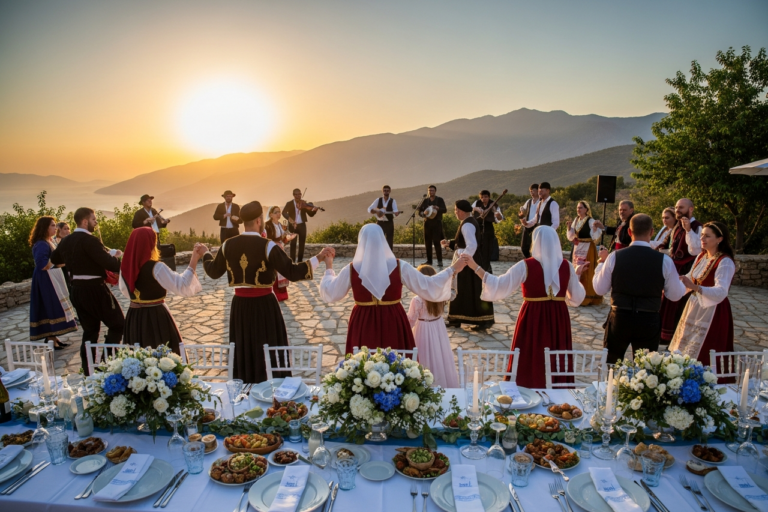
Greek culture comes out in the lively music, old dancing styles, and plate smashing at the reception. These traditions make Greek weddings exciting and full of life.
Introduction
Welcome to the bright and lovely world of Greek weddings. These days are full of joy, and they show how much love, family, and people coming together matter. Greek culture brings old wedding traditions and new parties together to make a day that no one will forget. The traditions at greek weddings mean so much. They are there for good luck, to honor the couple’s family past, and to cheer for their new life ahead in a big way.
Exploring Wedding Traditions in Greece
Greek weddings are a mix of old customs from ancient times and new ways of doing things. Some traditions have changed over the years, but the main values are still the same. Family, faith, and community are always important at every wedding ceremony. At a modern Greek Orthodox wedding, you will see many wedding traditions that people have been doing for hundreds of years. Each one has its own symbolic significance.
Do you want to know what these wedding traditions are? From the fun events before the wedding ceremony to the last dance, let’s look at the common wedding traditions you will find in Greece now. Each one adds something special to the big day.
1. Setting the Wedding Date: Customs and Beliefs
Choosing the right wedding date is a big step for Greek couples. The Greek Orthodox church has some times of the year when it is best to not have a wedding, mostly during fasting periods. People really listen to these rules, since they think they can shape the married life of a couple. In the past, most wedding ceremonies took place on Sundays. But now, many people have them on Saturdays.
There are superstitions too that can change when people pick a wedding day. Many believe that getting married in a leap year can bring bad luck. This goes back to beliefs from Roman times. At the same time, some days or months are thought to bring good luck and help the couple have a good life. If there is rain on your wedding day, it is seen as a good sign. It means you might have children and a happy life together.
In the end, families take these wedding traditions and mix them with real-life needs when they choose the date. By following what the Greek Orthodox church says, and respecting school and work schedules, Greek couples try to start their married life with good luck and many blessings.
2. The Role of Koumbaros and Koumbara
In Greek culture, the Koumbaros (best man) and Koumbara (maid of honor) are very important on the wedding day and after. These people are not just there as witnesses. They play a major part as the spiritual sponsors of the marriage. In past times, the groom’s godfather or a close friend of the family was often chosen for this role, which shows the level of trust placed in them.
During a Greek wedding ceremony, the Koumbaros and Koumbara have important jobs. They do key rituals that bless the couple on their wedding day. Some duties they often handle are:
-
Exchanging the wedding crowns (Stefana) over the couple’s heads.
-
Helping with the exchange of the wedding rings.
-
Giving support to the couple all day and sometimes hosting pre-wedding gatherings.
This job does not end after the wedding. The Koumbaros or Koumbara is seen as a spiritual mentor. Often, they are asked to be the godparent of the couple’s first child. Their role stays strong in greek traditions as they stand by the newlyweds, showing how important a solid support system is for a good marriage.
3. The Engagement Ceremony and Blessing
Many Greek couples show their love for each other long before the wedding day. They do this with an official engagement ceremony. In past years, this was a way for a man to give a true “wedding promise.” This was common in small villages with strict rules in the community. Today, it is a happy event where people come together to share the good news and get blessings from their families.
The ceremony happens with a blessing from a priest at the Orthodox Church. At this time, the couple gives each other rings. These rings are worn on the left hand first. When the wedding ceremony happens, these same rings get another blessing and move to the right hand. This shows the couple’s new place as husband and wife. The engagement is an important step before the wedding that brings together both families.
This part of Greek weddings brings friends and family closer to the couple. They give their best wishes, support, and hope for good luck and a bright future. Friends of the bride and other loved ones start to help form the wedding party. They all share in the happy time and get ready for the wedding day.
4. The Bridal Shoes Ritual
A pre-wedding ritual that many people enjoy is about the bride’s wedding shoes. On the wedding day, before the ceremony starts, the bride gathers her single friends. She writes the names of her single friends on the soles of her shoes. There is a sweet idea behind this act, too. If, by the end of the night, some of the names have faded, it is said that those single ladies will be the next ones to get married.
There is also another fun tradition on the wedding day about bridal shoes. The best man, or Koumbaros, comes to the bride’s house to help her with her wedding shoes. At first, the bride will pretend the shoes do not fit her. To make them fit, the best man has to put some money inside the shoes until the bride says they fit well. This is seen as giving good luck and wealth to the bride and groom.
These wedding traditions give the friends of the bride a chance to be a real part of the wedding day. The simple act with wedding shoes turns into a way to share hope and good luck. This helps bring even more joy and excitement to everyone on this special day.
5. The Bed-Making Ceremony (To Krevati)
One of the most well-known wedding traditions in Greek culture is called “To Krevati,” which means making the marital bed. This special event happens at the couple’s future home. The couple’s single friends and family members come together to get the bed ready for the new husband and wife. The white sheets on the bed show honesty and truth in their marriage.
After the bed is ready, guests throw different items on it as symbols of good luck. Money is tossed for wealth. Rice and Jordan almonds show hopes for a rich and sweet new life together. Sometimes, a baby is even rolled over the bed to wish for children. This is a happy and meaningful event of greek culture that helps everyone feel close.
There is also a fun part in the tradition. If the groom is there, single ladies may have to make the bed more than one time until he finally agrees it looks good. This playful act gets the wedding party and family members involved, so everyone can take part. The event brings joy and celebrates the couple’s happiness, as well as hopes for good things in their future as a family.
6. Shaving the Groom Tradition
On the morning of the wedding day, there is a special moment to help the groom get ready for the wedding ceremony. The Koumbaros, who is the best man, shaves the groom in a ceremonial way. This is not just about shaving. It is a big sign of trust and a strong bond between the two men. It shows a new start for the groom as he gets ready to start his married life.
This wedding day tradition is usually full of energy and happiness. The groom’s friends come together to help him dress. One might fix his tie, while another helps with his jacket. They share support and join in the fun during this time. You often hear traditional music, and the room is filled with laughter and joy. The whole process feels like a mini celebration because the groom’s friends are all with him.
This custom shows how friendship and community mean a lot during Greek weddings. With his best man and all his friends at his side, the groom feels surrounded by good luck and good energy when getting ready for one of the biggest moments in his life—the wedding ceremony.
7. The Bride’s Preparation and Symbolic Accessories
The bride gets ready on her wedding day in a way that means a lot. Each thing she wears has a special reason. These items are believed to bring good luck and to keep away evil spirits. Her friends and the Koumbara help her with her dress. At the same time, they often sing old wedding songs. Every piece is picked with care. Each part comes from ancient traditions.
The bride’s outfit has a lot of meaning, and some things are important for the wedding rituals. These traditions often use:
-
The White Wedding Dress: In Greek weddings, the white color stands for joy and purity. This is a wedding tradition many people follow.
-
Special Wedding Shoes: There is a fun event with the shoes. The Koumbaros puts money in them for good luck.
-
The Bride’s Glove: Sometimes the bride will wear a glove. It makes her look more elegant and has a special meaning for some.
All of these wedding accessories have more than just a look. They keep the bride close to her culture and its wedding traditions. From her white dress to what is put inside her shoes, every small thing is there for a reason. These things help her feel safe and blessed as she steps into her new life.
8. The Bridal Procession to the Church
The trip of the bride to the church is full of color and happiness. This is a bridal procession that people love to watch. In the past, the bride would be brought by a horse-drawn carriage. Now, most brides use a car with lots of decoration. The procession is not quiet. There are musicians walking at the front, playing music for the wedding ceremony and singing wedding songs. Family members and friends of the bride come along too. They help make the day feel like a real celebration of love.
It is a fun custom for the bride to show up a bit late on the wedding day. Sometimes, the car will go around the church more than once. The horns blow as the car goes by, making the groom and all waiting people feel a little excited. This makes the whole moment more lively. It also lets family members and other guests find parking before things start.
This bridal procession is a wonderful part of the wedding ceremony. It brings everyone in the community together to share in the happiness. As the bride goes to the church, she is with friends of the bride and family. She gets good wishes and feels the support of everyone. This helps start a joyful mood for the rest of the wedding day.
9. The Entrance to the Church: Symbolic Steps
When she gets there, the bride meets the groom outside the church. He hands her a bouquet. Her father or another close family member is there to give her away in a formal way. This is a special moment because the two families come together before the wedding ceremony starts. Together, they all take their first steps into the church to begin the Greek Orthodox wedding ceremony.
The number three is very important in the ceremony. It stands for the Holy Trinity. You can see this idea in a lot of the rituals, even when the couple walks into the church. Sometimes, the way they enter shows this number, which means their wedding is blessed. The couple’s wedding party is there around them. They all stand together at the altar, getting ready for the Greek Orthodox wedding ceremony to start.
These first moments of the wedding ceremony are filled with meaning. The bride and groom stand together at the front of the church. They are about to start their journey as a married couple. Their entrance is the beginning of the wonderful and holy wedding rituals that will join them as one.
10. The Exchange of Rings: Significance and Symbolism
The exchange of wedding rings is a big part of the Greek Orthodox wedding ceremony. In this tradition, the wedding rings go on the third finger of the right hand. This is different from a lot of Western cultures. The right hand is important. It has a long history and there is meaning in the Bible. People say it stands for strength, power, and blessings from God.
The best man, also called the Koumbaros, has a key role in the wedding ceremony. After the priest gives a blessing to the wedding rings, the best man takes them. He moves the wedding rings between the bride’s and groom’s fingers three times. This act is done to show the holy trinity—the Father, the Son, and the Holy Spirit. It helps to bind the couple with their faith.
This part of the Greek Orthodox wedding ceremony shows eternal love and an unbreakable bond. Since the wedding rings are circles, they do not have a start or end. This shape is used to show that the couple will be together for all of their days. As they share this old tradition, both people make a promise—to stay together for life, with the support of their faith and those around them.
11. The Crowning Ceremony (Stefana) and Its Meaning
The crowning ceremony, or the placing of the Stefana, is the focal point of the Greek wedding ceremony. The priest takes two wedding crowns, connected by a single ribbon, and places them on the heads of the bride and groom. This act crowns them as the king and queen of their new home, which they will rule with love, wisdom, and justice.
The Stefana carry deep symbolic meaning. The Koumbaros exchanges the crowns between the couple’s heads three times, another ritual invoking the Holy Trinity. This symbolizes their unbreakable bond and shared life.
|
Feature |
Symbolism |
|---|---|
|
The Crowns |
Represent honor, glory, and the martyrdom of marriage, which requires sacrifice and devotion. |
|
The Ribbon |
Symbolizes the inseparable unity of the couple, forever tied together as one. |
|
The Exchange |
The threefold exchange by the Koumbaros blesses the union in the name of the Holy Trinity. |
This beautiful tradition signifies that the couple is now bound together in holy matrimony. The Stefana are a tangible representation of their commitment and the blessings bestowed upon them by God and their community.
12. Candle Lighting in the Greek Wedding Service
In the Greek Orthodox wedding ceremony, the bride and groom each hold a candle that is lit. These candles are not just decoration. They are strong symbols of good luck and faith. The flame shows the light of Christ, who will be with the couple in their new life together and guide them through marriage.
The candle lighting at the wedding ceremony is full of meaning. As the candles shine, it shows that the couple should live with good values and have a pure heart. The light is there to show they want to have God’s blessings in their lives. The two candles, one for each person, show that they are two people who will now walk together with one spiritual light.
This part of the greek orthodox wedding ceremony also honors the Holy Trinity. The candles are used in the walk into the church and stay lit at many key parts of the service. They remind everyone that the marriage is built on faith and hope and give a beautiful sign of what’s to come for the couple. These candles are powerful symbols of good luck for their future together.
13. The Common Cup: Sharing Life Together
One very special part of a Greek wedding is the sharing of wine from a common cup. The priest first blesses a cup filled with sweet red wine. He then gives it to the bride and groom. They both take three sips from the cup. This is a simple and clear way to show their bond.
When they drink from the same common cup, it shows that they will be together in all things. The bride and groom promise to share, in both good times and bad times. They will face both happy days and hard days side by side. The sweet taste of the wine represents their hope for a happy married life. The fact that they both sip from the same cup also shows their strong teamwork.
This tradition goes back to the wedding at Cana, where Jesus turned water into wine. From this day on, the couple will go through every memory together. Their families, the wedding party, and guests are all there to support them on this journey. This shared moment helps make their bond even stronger for the years ahead.
14. The Ceremonial Walk (Dance of Isaiah)
After drinking from the common cup, the priest helps the couple take their first steps together as a married pair. People call this the Ceremonial Walk or the Dance of Isaiah. The priest holds the Gospel and leads the bride and groom in three small circles around the altar. The Koumbaros walks close by, keeping hold of the ribbon that ties the wedding crowns together.
This “dance” is not really a dance. Instead, it is a happy march. During these circles, hymns are sung, and the first one goes, “Oh, Isaiah, dance for joy!” The whole moment is all about pure happiness and saying thank you. Each set of three steps stands for the Holy Trinity and shows that their marriage will last forever.
This wedding ceremony moment is one of the most joyful. It shows the couple starting their new life together, surrounded by the church and the people who love them. The Ceremonial Walk is a lovely start to the dancing and fun that will soon happen on the dance floor.
15. Removal of the Crowns and Final Blessing
As the wedding ceremony comes to an end, the priest brings the couple back in front of the altar. He gives the final blessing and then takes off their wedding crowns. The priest says a prayer, asking for the couple to have a happy life together and for their crowns to stay pure.
This part shows the end of the ceremony. The priest uses the holy book to “free” the couple’s hands. He tells everyone the two are now husband and wife. After this, the couple and their Koumbaros kiss the holy Gospel to show respect. The priest gives the couple good luck wishes and hopes for their happiness.
Now, the real celebration starts. The parents are the first to offer good luck, kissing the wedding crowns and then the couple. After that, guests come up to wish the new husband and wife all the best. They show love and support before the couple leaves the church.
16. Throwing Rice and Flower Petals for Good Luck
When the new couple leaves the church, guests throw rice and flower petals to greet them. The wedding party and all others are happy as they toss rice and petals in the air. This makes a fun and pretty start to the celebration for everyone to see. It is an old tradition in greek weddings that shows joy and good wishes for the couple.
This act has a lot of meaning. It is more than just throwing rice and petals. The meaning behind this act is special, and people know it well:
-
Fertility: Rice stands for growth and family. People throw rice to hope the couple has many kids and a strong family.
-
Happy Life: The petals and rice are to wish the new couple a fun and happy life together.
-
Good Luck: When all toss rice and petals, they hope the couple has good luck as they begin a new part of life.
This time is full of fun and cheer for everyone. When you see the new couple walking as guests throw rice and petals, it is one of the best scenes from greek weddings. It shows the real feeling of happy life and starts the wedding with good luck.
17. Koufeta (Jordan Almonds) and Their Symbolism
No Greek wedding feels complete without Koufeta. These are sugar-coated Jordan almonds, and they are given as wedding favors. People believe these sweet almonds have a strong meaning, and they are a key part of the big day. This old practice goes far back to early Christianity. People used honey on the almonds back then.
There is a lot of meaning inside each part of Koufeta. Some even see it as a wish for the couple’s married life.
-
Odd Number: There is always an odd number of almonds in the wedding favors. This can be five or seven. The number cannot be split in two, which is just like how it’s hoped the couple will stay.
-
The Almond: The almond’s hard shell makes people think of the strength in a marriage.
-
Sugar Coating: The sugar coating is there for a reason. It wants to show how sweet the couple’s future will be, and how both the sweet and bitter parts make life full.
Most of the time, people use five almonds. These stand for health, happiness, being able to have children, wealth, and a long life. When the new couple gives out Koufeta, they get to pass on their joy and the sweet hope of a new life together.
18. Traditional Greek Music and Dancing at the Reception
The Greek wedding reception is where the party really begins. What makes it special are the traditional music and the dancing. Once the music plays, the dance floor fills up with people of all ages. Everyone is ready to celebrate the couple. The energy in the room is so strong, and it is something you see at every Greek wedding celebration.
Greek dancing is about being together. Many of the traditional dances are done in a circle, showing unity. It is common for the bride and groom to start the first dance. After that, all the guests get on the dance floor, too. Here are some popular traditional dances people do at the wedding reception:
-
Kalamatianos: It is a happy circle dance with a 7/8 count. Anyone can join this dance.
-
Tsamiko: This dance is strong and bold. A man often leads and does big jumps along with skillful moves.
-
Sirtaki: This dance became known from the movie “Zorba the Greek.” It begins slow but soon gets fast and fun.
The bright music and the happy dancing show what greek culture is all about. This is when everyone can relax, enjoy the excitement, and share in the happiness of the couple. The dancing makes memories on the dance floor that last a lifetime.
19. The Money Dance and Other Festive Customs
One of the most lively and fun parts of greek weddings is the money dance at the wedding reception. When the bride and groom are on the dance floor, people go up and pin cash to their clothes. This is a way for friends and family to help the couple have some money as they start their new life together.
This dance is just one of the many joyful customs you see at greek weddings. The wedding reception is full of energy, good times, and togetherness. There are some other fun things that people do, like:
-
Lively Processionals: The couple often comes into the reception hall with loud music and cheering. The whole crowd gets excited.
-
Wedding Games: A few couples add games and fun challenges to keep everyone happy and busy.
-
Singing: Guests sing many songs during the night. Most are traditional songs that everyone knows.
All of these rituals focus on making the couple happy in a big, group way. Things like the money dance, processions, and singing bring good luck. They also show how many people are cheering for the couple as they begin their new life together and show strong support from their families and friends.
20. Greek Wedding Feasts: Signature Foods and Sweets
Food plays a big role in every Greek celebration. At a Greek wedding, the feast is both grand and very tasty. People come together to enjoy a big spread of dishes that show the country’s food traditions. The meal stands for hospitality and the happiness of sharing with others on this special day.
The food at a Greek wedding is not small. There are many types of dishes and sweet treats from the culture. Some classic foods you may see are:
-
Lamb Dishes: You might get roasted lamb or lamb chops as the main meat course.
-
Baklava: This is a sweet, rich pastry made from thin layers of dough, chopped nuts, and covered in syrup or honey.
-
Loukoumades: These are small honey puffs that get fried and then topped with honey and cinnamon.
These food traditions are as important as the ceremony. From starters to sweet desserts, a Greek wedding feast is all about taste, family, and a lively mood on this special day.
21. Breaking Plates and Other Unique Reception Traditions
Unique reception traditions give greek weddings a special feel. One of the most well-known is breaking plates. People believe this brings good luck and helps keep away evil spirits. When you see it, you know it is about making the couple’s life happy and full.
Guests at greek weddings can also take part by throwing rice or confetti. This is a way to wish the new couple a good and full life together. Greek dancing is also a big part of the party. You will often find everyone joining in on the dance floor, having fun and making memories. These moments show the eternal love shared with family and friends.
22. Modern Adaptations of Greek Wedding Traditions
Greek wedding traditions today are taking on new and fresh ideas. Couples mix old customs with new trends. Many couples now add things like special wedding favors and make their own playlists. The playlists often have traditional music along with songs that are popular now. This brings more fun to the wedding.
Also, a lot of brides and grooms pick new types of flowers. But they still use classic things like the wedding crowns. These changes help make the wedding bright and full of life. They ensure the day is joyful for all family members and for the friends of the bride. In this way, Greek wedding traditions and love are shared in a fresh way.
23. Simple Ways to Honor Greek Heritage in Weddings
Bringing your Greek heritage into your wedding can help you feel close to your roots. You can use wedding crowns, also called stefana, to show the unity of the couple. Giving jordan almonds as wedding favors is a sweet way to wish your guests fertility and happiness.
Playing Greek music on the dance floor lets people come together and enjoy lively circle dances. This helps everyone celebrate love and being together. You can also use the common cup as part of your ceremony. This old tradition adds meaning and makes your special day feel even more community-focused for you and your guests.
Conclusion
Greek weddings bring people together with many wedding traditions that are full of meaning. These events mix old customs with new ideas to show how strong love and community can be. During a wedding ceremony, family and friends take part in happy moments. They join in vibrant celebrations that come right after. Each part of the day has symbolic significance. Some special traditions are wedding crowns and traditional dances. By following these customs, couples can honor their roots while making good memories on their special day. Here’s to love, happiness, and sharing in life’s dance as one!
Frequently Asked Questions
What is the meaning of the wedding crowns in Greek ceremonies?
In greek weddings, the wedding crowns, known as “stefana,” stand for the couple’s unity and the path they will take together. The crowns are usually made from olive branches or flowers. At the wedding, these crowns get blessed. This shows the couple’s bond with God, with each other, and with their family’s past.
How can couples include Greek wedding traditions in a modern celebration?
Couples can add Greek wedding traditions to modern weddings by mixing older customs with new ideas. For example, you can have a Greek Orthodox ceremony, use traditional music, and include dance at your event. You can also decorate with today’s styles and colors. Adding your own touches, like family heirlooms or special symbols, will make the wedding personal and help you honor where you come from. This is a good way to celebrate wedding traditions while still making it feel new and special.
What makes Greek wedding receptions unique?
Greek wedding receptions stand out because they have lively parties. There are traditional dances, plate breaking, and you can feel a strong sense of community. These things bring a lot of joy to the day and make the celebration fun. The couple gets to enjoy their roots, and their guests get to take part in special moments that honor tradition.



