

Key Highlights
-
A Fijian wedding is full of old customs. These are all about family, friends, and showing respect.
-
Some of the main wedding traditions are the Tevutevu gift exchange, and the formal engagement where a whale’s tooth is given.
-
The Kava ceremony is an important part of any Fijian wedding celebration. It stands for unity and shows respect to all who are there.
-
On the wedding day, both the bride and groom wear special wedding attire. These clothes are made from Masi cloth.
-
Fijian wedding traditions need people to come together. Family members help in a big way.
-
These days, you will find that most Fijian weddings mix old ways with new ideas. It brings both into one special celebration.
Introduction
Picture saying your vows in a tropical paradise. You are wrapped in beautiful plants, and the quiet sounds of the South Pacific fill the air. A Fijian wedding gives you that and more. You get amazing natural beauty, plus deep culture. The wedding traditions in Fiji show the warmth of the people and their big welcome.
You can have a simple beach ceremony or a big party with traditional choirs and warriors. Getting married in Fiji is something you will always remember. It is more than just saying your vows. This paradise and its fijian ways will make your day special.
Exploring the Rich Wedding Traditions of Fiji
Fijian culture shows up in every part of its wedding ceremonies. It helps make each fijian wedding special and full of meaning. The fijian wedding traditions are not just things people do for fun or to be seen. Each one is an important act that shows respect to family, the people they know, and where they come from. A fijian wedding is bright and full of life, bringing together many fijian tradition ideas that have been shared for years and years.
There are many customs like exchanging gifts or wearing certain attire that help make each fijian wedding stand out. These are the things that you will not find in many other places. Let’s look at some of the main wedding traditions people in Fiji still enjoy today.
1. The Tevutevu Ceremony: Honoring Family and Gift-Giving
A big part of a Fijian wedding is the Tevutevu ceremony. This is a special gift exchange that shows how important family is in Fijian culture. It is not just about giving gifts. It is also a clear sign of respect and shows that two families are coming together. On the wedding day, both the bride’s and the groom’s families come to give the couple things they will need for their new life.
This gift exchange means a lot. For example, the groom’s family can bring mats for the couple to use during the celebration. The bride’s family will hand them out. There is a strong focus on everyone working together, showing the new bond between the families.
The items given at the Tevutevu ceremony are practical and have meaning in everyday life. These things help the newlyweds start their home. Here are some examples:
-
Woven mats (Kula)
-
Masi cloth
-
Household goods
2. Traditional Fijian Engagement Rituals
Long before the wedding day, there is a fijian tradition that marks the start of the marriage proposal. In Fiji, this event is called the ai lakovi. The groom and his family go to the bride and her family in a careful and respectful way. It is not just a simple question, but a formal request to join the two families.
The key part of this fijian tradition is when the groom’s family brings a tabua, or a polished whale’s tooth. The tabua is a sign of respect and it means a lot in fijian culture. If the groom hands over the whale’s tooth to the bride’s family, it shows that his intentions are serious.
This act brings both families together and starts the steps toward the wedding day. When the bride’s family takes the tabua, it says they approve the marriage and the engagement is made official.
3. The Role of Elders in Fijian Weddings
In Fijian tradition, elders always get a lot of respect. They are seen as the top people when it comes to wedding ceremonies. These elders know all the old customs and are the ones who help younger family members with every step. The social hierarchy puts elders first, so this makes sure things stay proper and follow the right ways.
At important times, like the engagement proposal or the kava ceremony, elders from each family are in charge. Usually, an elder acts as a spokesperson, or matanivanua. This person speaks for the family, sharing their intentions and giving gifts. The speaker needs to know how to talk well, because what they say matters and is listened to.
Elders take part in more than just the ceremony. They have a big role in everything. When elders from both the groom’s and bride’s families say yes to the process, this shows everyone that the community supports the marriage. It means a wedding is not only between two people, but between two families, too.
4. Kava Ceremony and Its Cultural Importance
No Fijian wedding is complete without the kava ceremony. Kava is a drink made from the root of the yaqona plant. It plays a big part in the wedding process. This drink stands for unity, respect, and hospitality. People mix the powdered kava root with water in a large wooden bowl called a tanoa.
The kava ceremony follows old customs. The first cup is served in a bilo. A bilo is a coconut shell cup. This cup is given to the person with the highest rank, who is often the chief or the oldest elder there. As the chief takes a drink, people around clap slowly. When the cup is empty, someone says “Maca!”
People do this ceremony at different times during the wedding. It starts with the engagement and continues through the main wedding events. This tradition shows the acceptance of proposals. It is also about welcoming guests and connecting two families. The kava ceremony is sacred and helps bring everyone together.
Keywords used: kava ceremony, coconut shell cup, wedding process, fijian, kava, bilo
5. Masi Cloth Attire for Bride and Groom
At a traditional Fijian wedding, the bride and groom wear beautiful Fijian wedding attire made from Masi. This cloth, also called Tapa cloth, is made using the bark of the mulberry tree. The bark is taken off, soaked in water, and then beaten until it becomes thin sheets. After that, people add patterns that mean a lot to their families and regions.
For their special day, the bride and groom’s outfits can be detailed and show the best Masi available. Sometimes, their clothes are made with many layers, which makes them even more striking and important. The designs seen on Masi have stories behind them. They show where you come from and who your family is. Some of the most detailed patterns are known to come from the island of Vatulele.
Putting on Masi at a traditional Fijian wedding means a lot. This Fijian wedding attire helps connect the couple with their roots, their family, and their home. It turns their wedding into a celebration of Fijian skill and history. The bride and groom stand out, and everyone will remember how they looked on this special day.
6. Colorful Fijian Wedding Decorations
The decorations at a Fijian wedding show off the islands’ natural beauty in a bright and lively way. Instead of using things that are made in a factory, you will see decor that uses parts of the outdoors. This makes the whole place look real and amazing. Using natural materials is a custom that makes a Fijian wedding feel special.
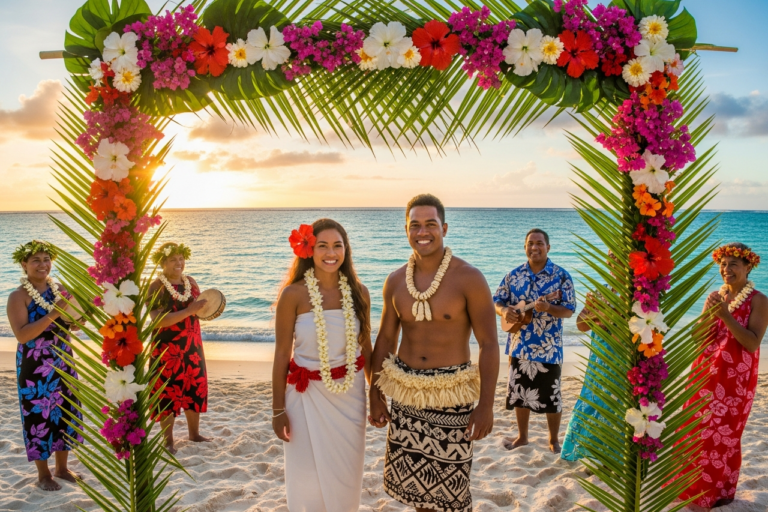
Tropical flowers are everywhere, filling the place with bright colour and sweet smell. People put out woven mats, which are an important part of Fijian culture. These mats are for people to sit on or walk on and give the floor extra style and meaning. Palm leaves are bent and shaped into archways, making a big entry for the bride and groom.
All of it brings in the beauty of the land. The main things people use for decorations at a Fijian wedding are:
-
Garlands and archways made of fresh tropical flowers and palm fronds.
-
Handwoven pandanus mats for seating and for special moments.
-
Tapa cloths (Masi) that hang as eye-catching backdrops.
7. The Sequence of a Traditional Fijian Wedding Day
A traditional Fijian wedding day unfolds through a series of meaningful events that honor family, community, and ancient customs. The wedding process is carefully orchestrated, ensuring that all protocols are observed. For couples seeking a ceremony rich in culture, a traditional Fijian wedding is a great choice.
The day typically begins with final preparations and the dressing of the bride and groom in their Masi attire. This is followed by the formal ceremonies that unite the two families. The sequence of Fijian wedding ceremonies ensures that each step, from the arrival of guests to the final feast, is imbued with significance.
While modern variations exist, the core structure remains. Here is a typical sequence for a traditional wedding day:
|
Event |
Description |
|---|---|
|
The Kava Ceremony |
A formal welcome for guests and the official start of the ceremonies, symbolizing respect and unity. |
|
The Tevutevu |
The formal gift exchange between the bride’s and groom’s families. |
|
The Wedding Ceremony |
The exchange of vows, which can be a Christian service blended with traditional elements. |
|
The Feast (Lovo) |
A large celebratory meal, often cooked in an underground oven, featuring traditional Fijian dishes. |
|
Music and Dance (Meke) |
Performances of traditional songs and dances to celebrate the newlyweds. |
8. Community Participation and Support
In Fijian culture, a fijian wedding is more than just a private event. It is for everyone in the community. The phrase “it takes a village” really means a lot in the fijian wedding celebration. From the start, the whole village and all family members are there to help. This is an important part of the tradition.
Family members join in on both sides. They are not coming only as guests. They are part of the ceremonies. Aunts often weave mats. Uncles help with making the feast. With many people helping, the wedding celebration does not put a heavy load on just one family. It also brings people closer together.
This way of working together shows the heart of fijian values. The wedding is a chance to enjoy the couple’s love and the strength of the community. Everyone gives their time, effort, and skills so the wedding is happy and good for all.
9. Fijian Wedding Music and Dance Celebrations
Music and dance play a big role in every Fijian wedding. They make the whole celebration special, bringing the feel of joy and the local culture to the event. When you are in this island paradise, you will hear Fijian wedding music fill the air. There are sweet choirs and the steady beat of old-style instruments. These do much more than give people something to listen to.
One big part is the Meke. It is an old way of telling stories using song and dance. Each Meke shows a different story, like battles from long ago or love stories. At a wedding celebration, certain dances are done for the bride and groom. They help to celebrate their new life and offer good wishes for both of them.
Many people get to dance, not just a few. At most Fijian weddings, people are asked to step in and join the fun. Both choreographed dances and sudden, casual dances take place. This makes everyone feel close and happy. All of this helps show what the day is all about—unity and joy in paradise.
10. Unique Wedding Feasts and Fijian Cuisine
A Fijian wedding is filled with a big feast that is the highlight of the celebration. This event gives everyone a real taste of the culture. The main event at the feast is the lovo. This is an underground oven used to cook food slowly for hours. The food gets a tasty, smoky flavor from this way of cooking. There are many well-loved traditional Fijian dishes at the table.
Such a wedding feast is made to serve many people. The whole community often comes together to enjoy it. You will see the best of Fijian cooking, using the freshest food from the land and the sea. This food tradition makes any South Pacific wedding special and hard to forget.
When you join a Fijian wedding celebration as a guest, you can look forward to food like:
-
Meats such as pork or chicken. These are wrapped up with banana leaves and cooked inside the lovo.
-
Root crops like taro and cassava.
-
Fresh seafood dishes. These can include raw fish put in coconut cream and citrus, called kokoda.
This is what makes a Fijian wedding feast such a good part of any wedding in the South Pacific.
Blending Ancient Customs with Modern Fijian Weddings
Today, many couples who plan a Fijian wedding choose to mix old wedding traditions with new styles. The modern adaptations give them a chance to keep their culture alive and show off what they like. When this happens, the celebration feels both fresh and classic, and there is a true sense of authenticity.
You will see this mix often in the South Pacific. Couples might say their vows on a beach in a white dress, but they still have a Kava ceremony or a special Fijian feast with the people they love. By doing this, important customs get passed down and still fit in today’s world. The next sections will show the ways couples use these wedding traditions in their big day.
Incorporating Traditional Elements into Contemporary Celebrations
Couples today find new ways to mix old and new at their Fijian weddings. Many want to keep the authenticity of Fijian wedding traditions in the wedding process. They use modern adaptations to blend these traditions with current styles. This lets the celebration be personal and truly Fijian.
For example, the bride may wear a wedding dress during the ceremony. Later, she could change into a masi outfit for the reception. Some have a church service first, then honor their heritage with a kava ceremony. These choices help make each fijian wedding special.
Here are common ways couples use traditional elements in their wedding:
-
Presenting a Tabua (whale’s tooth) as part of the engagement, even if the marriage was not arranged.
-
Including a simple kava ceremony for guests at the reception.
-
Serving traditional Fijian dishes with the cake.
People say these additions make the day feel more true to their roots. Many couples like to show their culture in fresh ways. The mix of wedding traditions and modern ideas keeps the spirit alive for the new generation.
How the Fijian Diaspora Honors Their Wedding Heritage
For people in the Fijian diaspora, keeping their fijian wedding traditions alive helps them stay close to their culture. Even if they live far from Fiji, couples find ways to add fijian customs to their wedding celebration. This makes sure their heritage is part of their new life as a couple.
Often, they ship things like masi cloths or tabua from fiji to use in their wedding. Families and friends may hold a kava ceremony in their backyard, changing it a bit to fit where they live now. The community also comes together for a big feast. They cook traditional food, letting everyone enjoy the tastes and smells from home.
These steps are important for keeping their culture safe. When the fijian diaspora takes time to include these traditions, their kids and others in their new area learn to see how special a fijian wedding can be. There is love, family, and culture that lasts through time.
Conclusion
In the end, Fiji’s wedding traditions bring together rich culture and the help of many people. Every wedding here feels special because of this. The tevutevu ceremony is touching. The kava rituals are lively. The decorations are bright and full of color. All these parts make the day one to remember for couples and everyone close to them.
Fijian wedding traditions are changing, but they still honor old customs. They keep the real meaning alive. If you want to plan a wedding in Fiji, or just want to know more about these wedding traditions, learning about them can show you a lot about love and staying together in this island paradise. If you want more details about the tevutevu ceremony, Fiji, kava, or the customs, you can ask for more info!
Frequently Asked Questions
What makes Fijian weddings unique compared to other cultures?
A Fijian wedding is special because it is all about family and the community. In Fijian tradition, marriage is seen as the coming together of two large families, not just two people. Some rituals like the kava ceremony and the tabua gift show what makes this South Pacific event stand out. It is these parts of a Fijian wedding that help make it a true South Pacific experience.
How is kava used during a Fijian wedding ceremony?
At a Fijian wedding, there is a Kava ceremony. This tradition is special. Kava is shared in a coconut shell cup. The drink shows respect to guests. It is also shared to ask for blessings from the elders. This step helps bring the two families together. The Kava ceremony is a key part of Fijian wedding traditions. It shows respect and unity during the fijian wedding.
Are there special rituals for Fijian wedding proposals or engagements?
Yes, Fijian engagement rituals are very formal. The key part of a Fijian wedding proposal is when the groom’s family gives a tabua, which is a whale’s tooth, to the bride’s family. This shows the families that the proposal is serious. It also shows a lot of respect in the Fijian wedding.



