

Key Highlights
-
An Ethiopian wedding lasts for more than one day and is full of fun events and the customs of the people.
-
On the wedding day, the groom goes to the bride’s home. This is an important part of the wedding ceremony.
-
You will see much of Ethiopian culture in special traditions like the Shimagelay, where elders talk things over, and the Telosh ceremony.
-
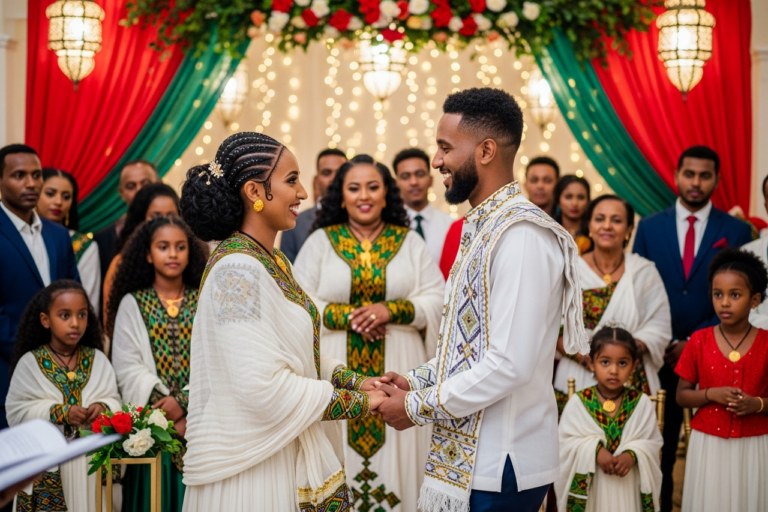
At a traditional Ethiopian wedding, people wear different clothes. The bride may wear the Habesha Kemis.
-
The wedding festivities are full of joy and do not stop soon. There is music, people dance, and everyone eats lots of traditional Ethiopian food.
-
Family is there at every step, starting from getting engaged to the big family blessing at the end.
Introduction
Welcome to the lively world of Ethiopian weddings. These gatherings show the mix of old ways and new styles in Ethiopian culture. They are not just about the wedding day. The event often goes on for days. Family members and the whole community come together to celebrate. Two people join in marriage, and everyone takes part to honor this moment. If you wonder why Ethiopian weddings stand out, you will soon see the special traditions that make each Ethiopian wedding a memory to keep.
Exploring Wedding Traditions in Ethiopia: Culture and Customs
An Ethiopian wedding is big. There are many events that show Ethiopian traditions. The story starts well before the main wedding ceremony. Families talk and make plans first. These talks lead to happy days of celebration. The groom makes a special trip to the bride’s home. At the end, elders give their blessings. Each part is important.
Different ethnic groups in Ethiopia have their own ways of doing things. Still, they are all about people, respect, and having a good time together. Let’s look at some main parts of Ethiopian weddings. We will go from the first talks between families to the fun food at the reception. These things make the wedding ceremony very special.
Keywords: ethiopian wedding, wedding ceremony, ethnic groups, ethiopian traditions
1. The Role of Shimagelay (Elders’ Negotiation) in Ethiopian Weddings
The path to an Ethiopian wedding often starts with the Shimagelay ceremony. In this step, the future groom asks senior members of his family to go talk to the bride’s family. The elders help ask the bride’s family if she can marry the groom. This shows the groom and his family are not just serious, but also show lots of respect.
These elders talk for the groom. They share his hopes about the wedding. There is not just one meeting. The bride’s family may take time before saying yes or no. There can be a few talks before a decision is made. This way, everyone knows family approval matters in Ethiopian wedding ceremonies.
The Shimagelay ceremony is the start of the whole process. It brings out how close family members are in Ethiopian culture. The wedding in Ethiopia is not only about two people coming together. It is about their families coming together as well. The Shimagelay makes sure the wedding gets a blessing from both sides.
2. Engagement Ceremonies and Family Involvement
Once the Shimagelay is done the right way, the formal engagement can begin. At this point, family involvement grows stronger. Both families come together to show support for the couple’s commitment. The future groom will go to the bride’s parents with his family to confirm the engagement.
This is usually a happy event. It marks the real start of the wedding process. At this time, people talk about what comes next for the wedding. Some things they discuss are:
-
Setting the date for the wedding.
-
Talking about the dowry or gifts they will give each other.
-
Figuring out the details for the celebration days.
-
Letting the families get to know the bridal party.
The engagement ceremony helps bring the two families closer. It is when the bride’s parents give their blessing. Everyone starts to feel happy and excited for what’s next.
3. Distinctive Attire and Dress Codes for Ethiopian Brides and Grooms
Ethiopian wedding attire is a stunning display of culture and craftsmanship. On their wedding day, couples often wear traditional Habesha clothes that are both elegant and deeply symbolic. The bride frequently wears a “Habesha Kemis,” a white, hand-woven cotton dress beautifully embroidered with colorful patterns. This is often paired with elaborate head jewelry and other accessories.
The groom’s attire is just as impressive. He might wear a white suit or traditional clothing that complements the bride’s dress. On the third day of festivities, it is common for the couple to don even more traditional outfits. These can include Fotha outfits or the most extravagant Gey Ganafi outfit, showcasing intricate designs and rich fabrics.
The clothing worn by the couple and their wedding party is a significant part of the celebration, honoring their heritage.
|
Attire Element |
Description |
|---|---|
|
Habesha Kemis |
A traditional hand-woven white cotton dress for the bride, adorned with colorful embroidery. |
|
Kaba |
A formal cape worn by both the bride and groom over their outfits during the ceremony. |
|
Head Jewelry |
Elaborate accessories worn by the bride to complement her hairstyle and Kemis. |
|
Fotha/Gey Ganafi |
Traditional outfits worn by the couple during later festivities, known for their rich detail. |
4. Religious Influences on Ethiopian Wedding Ceremonies
Religion is an important part of many Ethiopian weddings, especially for people who follow the Orthodox Christian faith, which is common in the country. The wedding ceremony is usually held in a church. It is a serious and special event, filled with old traditions. At this time, the couple gets the holy blessing of the church for their union.
In the wedding ceremony, the priest leads prayers, reads from the Bible, and gives a talk. The couple exchanges rings and both of them get crowned. This crown is meant to show that they will be king and queen in their home. In some Orthodox Christian weddings, there is a special custom where the bride stands on the left side of the altar. This comes from a story in the Bible.
The religious part of the wedding adds a deep meaning to what the marriage is. Many believe that the blessing of the church is very important for a happy life together. It makes the wedding ceremony both a spiritual and a group event that people in the community can share.
5. Unique Rituals and Customs at the Wedding Ceremony
The day of the wedding is full of unique things that pop up in Ethiopian celebrations. These small rituals really make them stand out. One special custom before the ceremony is called the “Telosh.” The Telosh happens at the bride’s house. The groom and his group have to make their way through the bride’s family and friends. He shows up with gifts for her, and when she takes them, it shows she is ready to get married.
After the Telosh, the couple goes around the city in a lively parade before the main event. During the wedding day, there is an exchange of rings. These rings show their everlasting love, just like you may see in other places. But the rest of the customs are all their own style. Here are some you will see:
-
The groom giving the bride gifts, like jewelry.
-
The couple kneeling in front of the elders to get their blessings.
-
A fun tussle where the groom’s side tries to find bread that has been hidden.
-
The bride and groom sharing a sweet jelly dessert to show they hope for a sweet life ahead.
These things are not just something to see. Each one has deep meaning and comes from many years of tradition. They show love, the power of family, and the heart of their roots. All these parts together make the wedding day one everyone will remember.
6. Traditional Wedding Reception Celebrations
After the formal ceremonies, the main event everyone waits for is the wedding reception. These festive events are full of life, loud, and bright. As the newlyweds get to the event reception, their family and friends welcome them with plenty of singing, dancing, and waving palm leaves. This makes a special path of honor for the couple.
The reception is a big party with things you may see at other weddings. There is the first dance, warm speeches from family, and cutting the cake. But, what makes an Ethiopian reception stand out is the energy and the joy people share. There is constant music and dancing. This can last for hours and keeps the night alive.
One touching moment is when the couple kneels before their elders to get blessings before they leave the place. This shows the value of family and tradition, even when the event feels new. It is a beautiful way to end the main celebration.
7. Music, Dance, and Entertainment at Ethiopian Weddings
Music and dance are at the center of every Ethiopian wedding. As soon as people start to arrive, you can hear both traditional and modern Ethiopian music in the air. The dance floor is busy the whole time because guests of all ages love to dance and join the wedding festivities. The mood is bright and lively. This is what makes the party one of the most memorable days for everyone there.
The couple’s first dance is very important at an Ethiopian wedding. This dance is often done to a special song that has meaning for them. After a short time, their close friends and family come to join the couple. Soon, the first dance turns into a group dance with people close to the couple. In addition to the usual fun on the dance floor, you will see traditional Ethiopian dances. One of the most famous is called the “Eskista.” In this dance, people move their shoulders in a way that everyone has fun with.
Entertainment at an Ethiopian wedding is all about getting everyone moving. You can enjoy these fun parts:
-
Live bands play traditional Ethiopian music and instruments.
-
DJs mix new songs with some traditional classics.
-
Dance circles start up at random times during the night.
-
There will be plenty of singing and cheering for the couple.
These things make every ethiopian wedding a night to remember, full of dance, close friends, and good energy.
8. Foods and Dishes Served at Ethiopian Wedding Feasts
No Ethiopian wedding feels finished without a big meal. Food is one of the main things at these events, and people always make sure there is plenty for everyone. At the heart of the celebration is a long table with stews called “wats.” These tasty, rich meals get served along with injera, which is a soft, spongy flatbread you use to pick up the food.
One of the most loved dishes for any ethiopian wedding is doro wat. This spicy chicken stew is so important that it is known as a national dish. No big party feels right without it. You will often see lamb stew and plates of goat meat, too. There is a dish for everyone, so all your guests can find something they like.
The focus at the feast goes beyond sharing good food. It is also about everyone being together and enjoying each other’s company. Along with the main dishes, you will often find other tasty things:
-
Lots of butter biscuits and other pastries.
-
A gift of sweets for guests to take home.
-
A special moment where the bride and groom feed each other, showing their care and love.
This way, people remember not just the food but also how the feast brings them close as a group.
Conclusion
Ethiopian wedding traditions are full of color and energy. There are many important parts of the event, like elders helping to make big decisions. Brides and grooms wear outfits that show the culture and history of Ethiopia. There is a mix of religious ways, special actions during the ceremony, and lively music and dance. This makes the wedding a great and happy time for everyone there.
Learning about Ethiopian wedding traditions helps us understand and enjoy the variety in Ethiopia’s ways of life. It also helps us feel closer to their rich past and people. If you are interested in going to an Ethiopian wedding or want to know more about this amazing culture, feel free to reach out for tips and insights!
Frequently Asked Questions
What should guests expect when attending an Ethiopian wedding?
When you go to a traditional Ethiopian wedding, you will see a lot of lively events that can last for more than one day. There is lots of music, good food, and dancing to get everyone up on the dance floor. The wedding festivities are full of energy, and you get to taste some great food. You will also see special cultural rituals at the wedding ceremony that make it a time no one will forget. This is what makes a traditional Ethiopian wedding a good and special event for all people there.
How do Ethiopian wedding traditions vary between urban and rural areas?
Traditions are not the same everywhere. In cities, weddings often mix Western styles with Ethiopian ways. But in rural areas, like the Oromia region and other different regions, people stick closely to old customs. Both the bride’s family and the groom’s family have a big part in the ceremony.
Are there differences in customs among Ethiopia’s diverse ethnic groups?
Yes, for sure. There are over 80 ethnic groups in the Ethiopian population, so their customs are very different from each other. For example, the Harari people have wedding traditions that are not the same as those in other places. While you might see some things that are common, most rituals can change based on ethnic groups, family upbringing, and personal choice.



