

Key Highlights
-
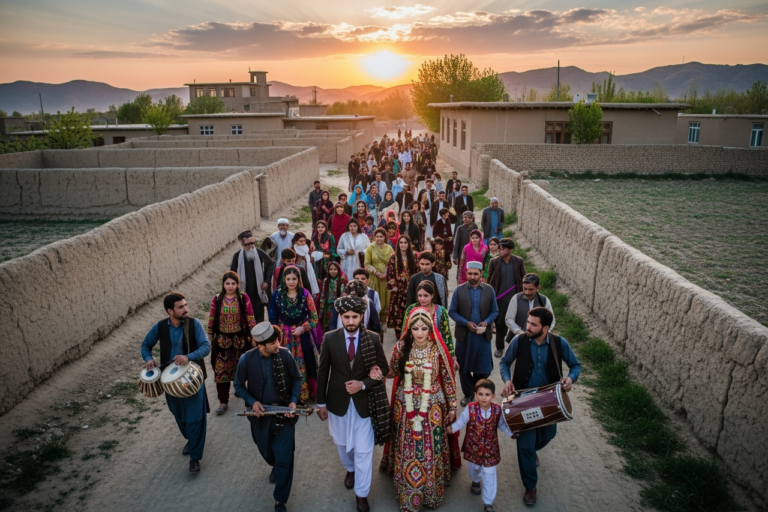
Afghan weddings are full of life and color. They go on for many days. People follow old wedding traditions that have both culture and religion in them.
-
Things usually start with a formal marriage proposal. The groom’s family asks the bride’s family for her hand in marriage.
-
There are special events before the wedding day, like the henna night, known as Khina. Close family and friends come together to celebrate these moments.
-
On the wedding day, there is the Nikah, which is a big religious ceremony. After that, everyone enjoys a big wedding feast with music and lots of dancing.
-
Family is a big part of Afghan weddings. Both the groom’s family and bride’s family help with each part of the way.
-
Some moments are very important, like the “mirror and Quran” ritual. These are important steps in Afghan wedding traditions.
Introduction
Welcome to the bright and lively world of Afghan wedding traditions! Afghan weddings are not just about the wedding day. They show a lot of what Afghan culture, family, and community mean to people. In these ceremonies, there are colorful events, old traditions, and values that go deep. Families use special wedding traditions that have come from many years before.
With Afghan weddings, you can see love, respect, and kindness in every step, from the proposal to the goodbye at the end. The festivities bring everyone together and make old traditions new for each wedding. These moments of Afghan culture let two families join as one.
Foundations of Afghan Wedding Traditions
The heart of Afghan wedding traditions is in how old traditions, family, and beliefs come together. These weddings are a big part of afghan culture. The wedding day means more than joining two people. It brings two families together as well. Every moment is shaped by old traditions.
Family members take care of many things like the marriage contract and the festivities. Their close link to afghan tradition makes sure the wedding day is special for the new couple. Each wedding honors the couple’s roots in afghan culture. The next part will look at how family, history, and faith play a role and keep these events beautiful.
Historical Influences and Cultural Values
The wedding customs in Afghanistan today show a mix that has grown over time. Many cultures have come through the region, and each has added something to the local ways. Because of this, every part of Afghanistan has its own style. Still, all of these customs are seen as being truly afghan.
Afghan weddings are full of life and history. One example is the knife dance, which is called Raghseh Chagoo. This comes from Persian roots, but now you will find it in many afghan celebrations. This proves that afghan tradition changes with time. People add new practices that fit well with old values.
At the heart of these ceremonies is the idea of community and history. Main customs in afghan weddings, like the proposal or the party, help people feel close and mark the start of a new life. It’s a blend of tradition that brings everyone together and honors what is good and lasting in afghan culture.
The Importance of Faith, Family, and Hospitality
Faith is what gives Afghan weddings their deeper meaning. The main religious ceremony, the Nikah, is an Islamic marriage contract. It brings the couple together both legally and spiritually. A Mullah or Islamic clergy usually leads this moment. During the ceremony, they recite Quranic verses. This shows the union is holy. Many families do not serve alcohol at the wedding to honor their beliefs.
Family members are key in Afghan weddings. From the first ideas of matchmaking to the last goodbye, families are closely involved. Parents, siblings, and extended relatives help with money, emotions, and plans. The wedding joins two families together. Their support means everything to the event.
Hospitality is also very important. Afghan weddings are famous for making people feel welcome. The hosts work hard to honor all their guests. The wedding feast, called Walima, is a big part of this tradition. It offers lots of food. This celebration not only marks the union but also thanks the community for their blessings and support.
Matchmaking and Marriage Proposals
In Afghan tradition, getting married usually starts with a formal marriage proposal. People do have love matches now, but many families still help their children choose a good partner. This is a big step and families handle it with care and respect. They want to make sure the couple starts their new life together in the best way.
The first proposal meeting is important. For many, this is the first time both families come together to talk about the idea. If they both agree, the families then have an engagement party with friends and loved ones. This party celebrates the commitment and is the first main celebration before the wedding day. In the next parts, you will learn more about how the proposal happens and about the big part families play in Afghan tradition.
The Traditional Afghan Proposal Process
The typical Afghan marriage proposal is a formal event. It starts with the groom’s family, often his parents and other respected family members. These family members visit the bride’s home to ask for her hand in marriage. This visit is called “Shirini Khori,” meaning the eating of sweets. It shows that the groom is serious.
During this meeting, both families spend time and get to know each other. The groom’s family tells the bride’s family that their son wants to marry her. The bride’s family may not give an answer right away. They think about their daughter’s happiness and future. During this time, all family members talk and decide what is best.
If the bride’s family accepts, it becomes a happy moment for both families. Acceptance is shown by sharing sweets and giving congratulations. After this, the two families plan the engagement party, which is a bigger event. The engagement party brings more people from the community to celebrate. This process is important in Afghan weddings. It shows how marriage is about family members and the joining of two families, not just the couple.
Roles and Expectations of Families in Arranging Marriages
In an Afghan marriage, both families have important jobs. The groom’s family makes the first move and covers most of the wedding costs. This includes paying for the Mehriah, which is the bride price, and for the main wedding party. Their job is to show that they can take care of the bride and respect her family.
The bride’s family hosts several small gatherings before the wedding. They also give a dowry that includes furniture and other items for the couple’s new home. Their main job is to make sure their daughter marries someone from a good and caring family. Close family members from both sides give advice and help settle things as needed.
Family members do more than just help with money. Mothers and sisters help choose clothes and set up rituals like the henna night. Brothers and fathers handle things like where events happen and give support and advice. All these efforts show that marriage is a group event, with the whole community and family members being part of it, and not just about the couple.
Bride Price (Mehriah) and Engagement Customs
After a good proposal, the families talk about the Mehriah, or bride price. This is important in Afghan culture. The groom’s family pays the bride. This is not for “buying” her. It shows commitment and gives her some financial security.
When everyone agrees on the Mehriah, the families have an engagement party. This event makes the couple’s engagement official. They also exchange gifts and sweets as symbols. Let’s see what the bride price means and the nice engagement party traditions in Afghan culture.
Understanding Bride Price in Afghan Culture
The concept of Mehriah, or bride price, is a deeply rooted tradition in Afghan culture. It is a mandatory payment in Islam from the groom to the bride, which becomes her exclusive property. This serves as a form of financial security for her in the marriage. The amount is negotiated between the two families and can range from a symbolic sum to a substantial amount of money or an expensive gift.
The value of the Mehriah often depends on the families’ social and financial standing. It is discussed openly and is considered a serious part of the marriage agreement, often written into the marriage contract. The payment can be made in cash, gold, property, or other valuable assets. In Afghanistan, the currency used is the Afghani (AFN or Afs).
Here is a simple breakdown of what the bride price entails:
|
Aspect of Mehriah |
Description |
|---|---|
|
Purpose |
To provide financial security for the bride. |
|
Negotiation |
Discussed and agreed upon by the bride’s and groom’s families. |
|
Form of Payment |
Can be cash (Afs), gold, property, or another expensive gift. |
|
Ownership |
Belongs exclusively to the bride. |
This practice highlights the responsibility the groom undertakes and the value placed on the bride entering a new family.
Engagement Ceremonies and Symbolic Exchanges
The engagement party, called “Shirini Khori,” is the first big event in wedding traditions. It is a happy time. The groom’s family brings sweets and gifts to the bride’s home. This is to show that both sides have agreed to marry. Close family members and friends are usually at this party.
During the ceremony, there are important exchanges. The groom’s family gives the bride an engagement ring, and often another valuable gift, like gold jewelry. The bride’s family may give a gift to the groom, too. These gifts help bring the two families together. They also make the couple’s commitment clear before the marriage contract is signed.
Key moments in the engagement party usually include:
-
The groom and bride exchanging engagement rings.
-
The groom’s family giving gifts, such as gold, to the bride.
-
Breaking and sharing a decorated sugar cone over the couple’s heads for a sweet and happy life.
-
Serving sweets and tea to all guests to celebrate the good news.
Pre-Wedding Rituals and Celebrations
The days before an Afghan wedding are busy with lively pre-wedding rituals. These events matter as much as the wedding day. They help build excitement and bring family members together. One of the best moments is the Khina night, also called henna night. It is a party just for the bride.
These gatherings have a special place in the family’s life. They are full of music, dancing, and meaningful acts. The use of henna brings joy and good wishes to the bride. In this text, we will talk about the meaning of Khina night and other gatherings in the Afghan community that happen before the wedding.
Henna Night (Khina) and Its Significance
The Khina night be a big part of Afghan wedding traditions. It is usually held one or two days before the wedding. The bride’s family hosts this celebration. Most times, it is only for women, but now, some also have men there. The bride is seen as the “queen of the night.” She wears a nice green or bright dress.
At the party, a group of women, like the bride’s sisters, cousins, and friends, sing songs and dance. The main thing at the celebration is using henna. A paste from henna leaves is put on the bride’s hands and feet in special designs. People say this brings her happiness, good luck, and beauty as she starts her new life.
Usually, the groom’s mother or sister puts the first dot of henna on the bride. Guests at the party can also get henna on their hands, so everyone takes part in the bride’s joy. The Khina night is a strong and heartfelt event. It marks the bride moving from her family home to her new one.
Khimcha, Shirini, and Community Gatherings
Besides the henna night, there are many other gatherings in Afghan weddings that bring people together. One of these special rituals is the “Khimcha.” These are gift trays covered with nice decorations. The groom’s family gives the bride trays filled with clothes, makeup, and jewelry. At the same time, the bride’s family sends gifts for the groom.
Sweets, called Shirini, are also a big part of these times. From the first proposal until the wedding day, people share Shirini. This shows hope that the couple will have a good and happy life. The sweets are served on fancy trays and offered to all guests at different parts of the event. This helps everyone feel a part of the celebration and joy.
These events before the wedding day are very important. They help both families join and work together. The main rituals include:
-
Giving Khimcha trays with gifts to each other.
-
Sharing Shirini to mark happy moments.
-
Having smaller groups to finish plans for the wedding feast.
-
Bringing the community, like friends and neighbors, together so they can share their best wishes.
Afghan weddings use these times to make everyone feel welcome and part of the big day.
Afghan Wedding Reception and Festivities
Afghan weddings are known for big receptions and happy festivities. These can go late into the night. After the main wedding ceremony, guests come together for a big party. There is music, dancing, and a large wedding feast for everyone to enjoy. The dance floor almost never stays empty. People keep showing their love and support for the married couple.
The whole reception is full of joy and afghan tradition. The couple is treated like royalty at this party. From their big entrance to the moment they leave for their new home, all parts of this night are special. Now, let’s talk about some of the main ceremonies you will see at these colorful afghan wedding receptions.
Nikah Ceremony, Rukhsati, and Ahesta Boro
The Nikah is the main part of the wedding. It is the official Islamic marriage ceremony. An Islamic clergy, called a Mullah, leads the event. The bride and groom say yes to marriage in front of witnesses. This often happens in separate rooms or with a partition. They sign the marriage contract. They recite Quranic verses. This act joins them both in law and spirit.
During the reception, two important rituals happen. The first is called “Ahesta Boro” or “mirror and Quran.” The married couple sits together under a decorative shawl. They look at their reflections in a mirror for the first time as husband and wife. This shows hope for a bright future. They also read Quranic verses together.
The last part of the reception is the Rukhsati. It is a touching goodbye. The bride’s family hands her over to the groom. As she leaves, her brother ties a green cloth belt around her waist. This shows she is ready for her new life. The bride then walks out under the Quran, which her father holds above her. She goes to her new home with her husband.
Music, Dance (Attan), and Traditional Afghan Feasts
Music and dance are a big part of any Afghan wedding. When the guests come in, the room is filled with traditional music. This makes the place feel alive and festive. There is often a live band, or a DJ plays songs that are a mix of modern and folk. You will hear instruments like the dhol or tambourine, and people are invited to go to the dance floor.
The Attan dance is the most well-known dance at Afghan weddings. It is the national dance of Afghanistan. People form a circle and dance together. The rhythm keeps getting faster. Men and women both join in, sometimes in their own spaces. The Attan dance shows joy and brings people together.
The wedding feast, known as Walima, is a highlight for everyone. This is a big meal with lots of Afghan dishes. The wedding feast shows warm hospitality and is at the center of the festivities.
-
Traditional music keeps things lively during the reception.
-
Guests perform the Attan dance to honor the marriage on the dance floor.
-
The wedding feast is a main part of the celebration.
-
Persian traditions like the Raghseh Chagoo, which is the knife dance, are often a part of the festivities before the cake is cut.
Dress, Cuisine, and Regional Variation
Afghan culture is very rich and full of many different traditions, and you can really see this at weddings. There are so many wedding traditions in different parts of the country. For example, the wedding attire can be very different depending on the region. The wedding clothes for both the bride and groom show off the local styles and the detailed embroidery from their area.
The food is also different from place to place. There are a few dishes that you will find at weddings all over Afghanistan, but each area has its own must-have foods for the wedding feast. You can taste these special foods when you go to an Afghan wedding.
So, let’s take a look at wedding attire and the tasty dishes that make every Afghan wedding unique.
Bridal and Groom Attire Across Afghanistan
On the wedding day, everyone gets dressed in their best clothes. The bride and groom get the most attention. The bride wears special outfits. She starts with a green dress at the henna ceremony. Later, she changes into a fancy white wedding gown at the reception. Weddings gowns usually have lots of beads and nice stitching.
The groom also has formal clothes. At the reception, many grooms put on a smart Western-style suit. For some wedding events, the groom may wear a “Perahan Tunban.” This is the traditional Afghan attire for men. Sometimes, he adds a coat or vest.
Different parts of the country have their own styles. In some places, the traditional afghan attire has colorful and detailed embroidery that shows the style of the region. At the end of the wedding, for the Rukhsati, the bride wears her last outfit. Often, her brother ties a green cloth belt around her waist. That green cloth belt is a symbol seen in many provinces, but the look and meaning can change depending on where you are.
Special Dishes and Wedding Menus from Different Regions
The wedding feast is a highlight of Afghan hospitality, and the menu is always generous and delicious. Afghan cuisine is known for its aromatic rice dishes, savory meats, and flavorful stews. The centerpiece of any wedding menu is typically a variety of Pulao (rice pilaf), such as Kabuli Pulao, which is garnished with carrots, raisins, and nuts.
While some dishes are staples across the country, regional variation adds unique flavors to wedding menus. For example, a wedding in Herat might feature different kebabs or stews compared to one in Kabul. The types of bread, appetizers, and desserts can also reflect local tastes and specialties.
Here are some special dishes you might find at an Afghan wedding feast:
|
Dish Category |
Examples |
|---|---|
|
Rice Dishes (Pulao) |
Kabuli Pulao, Zamarod Pulao (spinach rice) |
|
Meat Dishes |
Various kebabs (lamb, chicken), Korma (stew) |
|
Dumplings |
Mantu (meat-filled dumplings), Ashak (leek-filled dumplings) |
|
Desserts & Drinks |
Firni (milk pudding), fresh juices, sheer yakh (ice cream) |
This rich spread ensures that guests are well-fed and honored as part of the celebration.
Evolving Traditions and Modern Trends
Afghan weddings have a lot of tradition, but things are starting to change. There are new styles that mix old Afghan customs with modern ways. Many people now want to have professional photography and videography at their events. It is also more common to have a DJ to play music for guests.
These changes show how life and ideas keep changing because of new things from around the world. As families change the way they live, especially if they move to other countries, their Afghan weddings look different too. In the next parts, you will see how afghan weddings have become different over the past years and how people celebrate them outside of Afghanistan.
Changes in Afghan Weddings Over Recent Decades
Afghan weddings have changed a lot in the last 30 years. The main wedding ceremony is still the heart of the event, but many things look new now. For one, wedding receptions have gotten much bigger. Now, most families have these parties in fancy halls instead of their homes. This change means the couple’s stage and decorations are more detailed and bright than before.
There is also new technology at these weddings. Most people want professional videography and photography so they can save memories from this big day. Couples will also get a DJ for the party. The DJ mixes Afghan songs with Persian and Western music so the young people can enjoy the music too.
The time spent on each wedding is different today. Afghan weddings used to last for a few days. Today, most families do only one or two big events so they can save money and keep things simpler. In these ways, afghan culture has found new paths but still holds on to what is important from the past. The changes show how afghan weddings and festivities mix the old with the new.
Afghan Wedding Practices Among the Diaspora
For the Afghan diaspora in the United States and Canada, weddings are a strong way to keep their connection to their past. These big days show a blend of tradition and the customs of their new home. Couples and their families choose which steps to keep so they can honor where they come from.
When families live abroad, some things about the wedding do change. For example, pre-wedding events may all happen on one weekend because people come from far away. At many weddings, men and women do not sit apart at the reception. Now, most Afghan families go for a mixed-gender event, which fits with their new life in a new home.
Still, main parts like the Nikah, the henna night, and the Attan dance stay important. Afghan weddings shine with the joy of afghan culture, showing how strong the people are. They help the young people enjoy a new life, but still keep the same traditions as their parents and grandparents.
Conclusion
Afghan weddings are filled with rich wedding traditions that come from history, afghan culture, family, and faith. The matchmaking part is detailed, and the celebrations are bright and lively. Every part shows how old customs are still valued, even though they change over time. Knowing about these afghan traditions can help us see how important togetherness and community are in their lives. If you are planning or looking into afghan weddings, think about how these practices can be respected and enjoyed with your family. If you want to find out more or have questions about afghan weddings, you can ask for a consultation, and learn more about afghan culture and wedding traditions.
Frequently Asked Questions
Are there distinct regional differences in Afghan wedding traditions?
Yes, there are big differences in wedding traditions across Afghanistan. The way people celebrate, what they wear, and what they eat at weddings in Kabul can be different from Herat. These wedding traditions can show how many types of people and customs are in the country. Each area has its own way of holding a wedding, but there are some things they all share.
How do music and dance feature in Afghan weddings?
Music and dance play a big part in Afghan weddings. Traditional music helps make the whole day fun and lively. People love to join in the dancing, and the Attan is the main event. It is a fast group dance that brings everyone to the dance floor. This dance is a happy way for all people to come together to celebrate the new couple at their Afghan wedding.
What is the significance of bride price and how is it practiced?
In Afghan culture, the groom gives the Mehriah to the bride as part of the marriage contract. The Mehriah is not payment for the bride. Instead, it is an expensive gift, and it becomes her own property. This expensive gift helps give her some financial security.



