

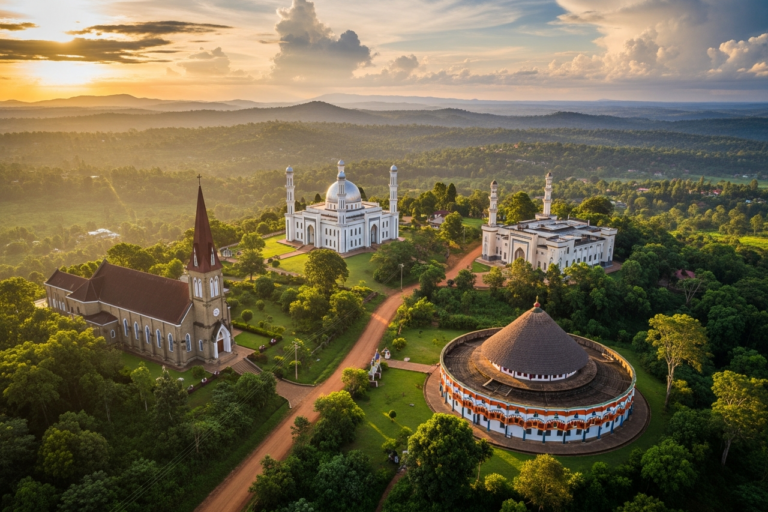
Key Highlights
Here’s a quick look at what you will find about religion in Uganda:
-
Uganda is home to many religions. The biggest group of people are Christians, and then comes Islam.
-
There is a lot of religious tolerance in the country. People of different faiths live together in peace.
-
There are many christian denominations in Uganda. The Roman Catholic and Anglican churches are some of the biggest groups.
-
While most people follow Christianity or Islam, old indigenous beliefs still play a big part in how people live.
-
If you look at the numbers, over 80% of Ugandans say they are Christian. Muslims make up around 14% of the people there.
-
Religious tourism is growing in Uganda. Many visitors from around the world come to see important places like the Uganda Martyrs’ Shrine.
Introduction
Welcome to Uganda. This is a country known for its beautiful scenery and for its lively spiritual life. Religion in Uganda plays a big part in how people live, what they do every day, and how the country is run. The idea of religious freedom in Uganda is written in their main law, so people can choose their faith. In Uganda, different religions live side by side, showing how people can get along. This article will talk about what people believe here. You will find out more about the main Christian and Islamic groups, and about the old ways of worship that are still part of life in this East African country.
Overview of Religion in Uganda
Uganda is a country where many people believe in something. The most widely practiced religion is Christianity. More than 80% of people follow it. Islam is the next biggest group. Some still join indigenous religions, which are their local, old beliefs. The country supports freedom of religion in its constitution. This lets all kinds of faith exist side by side.
There is a mix of different beliefs in Uganda. Most follow popular world religions, but many people also keep some traditional ways. They use old customs with their new faith. This makes the culture look different and interesting. This introduction will help you understand the history and how faith works in Uganda now.
Historical Development of Ugandan Religions
The story of religion in Uganda shows big changes, especially in the colonial period. People in Uganda used to follow their own spiritual beliefs in the kingdoms and groups before outsiders came. This shifted in the 19th century when Arab traders came and brought Islam. Later, European explorers and missionaries showed up.
Christian missionaries really helped shape Uganda today. French Catholic missionaries, often called the White Fathers, got there in the 1870s. Not long after, Anglican missionaries from the British Church Missionary Society followed. They gave people help with education and healthcare. Their faith spread fast, mainly in the Buganda Kingdom.
Uganda does not have a state religion, unlike some other countries. Christianity and Islam came in colonial times, but they did not push out the old ways. There are still many different religious beliefs in Uganda. That mix of faiths, shaped from the colonial period, is key when you want to understand Uganda now.
Key Religious Demographics in Uganda
Understanding Uganda’s religious affiliation requires looking at the numbers. The total population is overwhelmingly religious, with Christianity being the dominant faith. Different religious groups coexist, contributing to the nation’s cultural and social life. The majority of Muslims in Uganda adhere to Sunni Islam.
The breakdown of religious groups provides a clearer picture of the country’s spiritual landscape. While Christianity is the majority, it is composed of several key denominations, each with a substantial following. Roman Catholics and Anglicans form the largest Christian communities.
Here is a simplified look at the religious affiliation based on available data:
|
Religious Group |
Approximate Percentage of Population |
|---|---|
|
Christianity |
84% |
|
Islam |
14% |
|
Indigenous Beliefs & Others |
2% |
These figures highlight the prominent role of organized religion in the daily lives of most Ugandans.
Christianity’s Influence in Ugandan Society
Christianity is not just a religion in Uganda. It is a big influence that shapes the way people live and think. The main christian denominations are the roman catholic church and the anglican church. Both these churches have strong roots in communities all over the country. You can see their influence in schools, hospitals, politics, and the way people go about their daily lives.
In the last few years, many people have joined pentecostal and evangelical churches. These churches offer lively ways to worship. This adds new energy to Uganda’s christian scene. In the next part, we will look at how these major christian denominations make a difference and see how christianity fits into Uganda’s whole society.
Major Christian Denominations and Their Impact
The Roman Catholic Church is one of the biggest and most important groups in Uganda. Its story is closely linked to the Uganda Martyrs, who were some of the first Christian converts in the country. Every year, people remember what these individuals did and all that they gave. This memory still inspires millions today.
The Anglican Church is called the Church of Uganda. It became well known after British missionaries came to the country. Many people in the Buganda Kingdom became followers. The Anglican church and the Roman Catholic Church have both done a lot of good for their communities.
There are also Pentecostal churches in Uganda, and these have grown very quickly. Their lively way of worship and strong sense of community attract many people, especially young people. These groups help out in many ways:
-
Education: They have some of the best schools in the country.
-
Healthcare: They run important hospitals in cities and rural areas.
-
Social Services: They work hard and give support to people who need help the most.
Christianity’s Role in Social and Cultural Life
Christianity shapes daily life in Uganda. It’s more than just Sunday worship. For many, the church is where people come together. It is also where they find help and celebrate things like weddings and funerals.
Early christian missionaries started schools and built hospitals. Today, faith-driven places still lead the way in education and health care. Church members play a big part in how the country grows. Religious practices are a normal part of how many people live and celebrate.
Christian values and teachings help set the rules for how people act and talk to each other. Community members often ask religious leaders for advice on life or teamwork. The church is a guide and is important for support in the community.
Islam in Uganda’s Religious Landscape
Islam has been an important part of Uganda for many years. It is now the second biggest religion in the country. Most Muslims in Uganda follow Sunni Islam. This faith came to Uganda before Christianity. Since then, it has been a big part of the country’s spiritual life. Muslims in Uganda are active in their communities. They have helped the country grow in many ways.
The spread of Islam has built a strong presence in some parts of Uganda. You can see its influence every day. People pray, celebrate, and work together in many Muslim communities. Next, we will go over the history of Islam in Uganda and look at the key things Muslims have done for the country.
History and Spread of Islam in Uganda
Islam started in Uganda before Christianity, going back to the mid-1800s. Arab traders from East Africa were first to bring Islam. They did this as they made trade routes going farther inside the country. When these traders met local people and leaders, Islam started to grow bit by bit.
The faith grew well in some areas, like the West Nile and near old trade roads. When you look at how Islam spread and compare it with Christianity, things are different. The spread of Islam often happened in a more natural way. It moved through business and everyday life, and it took place over many years.
Because the faith started early, Islam became a strong part of life for some people in Uganda. This happened long before the colonial rulers came. We see this long history today in the mosques, the madrasas where children learn about Islam, and the large number of Muslim groups in the country.
Contributions of Muslim Communities to Ugandan Society
Muslim communities have played a big role in different parts of Ugandan life. Their efforts go far beyond just religious practices. They have been active in business, education, and charity work for many years, and their impact can be seen around the country.
In education, Islamic schools, called madrasas, help many young people learn both religious and everyday subjects. Mosques are also important in these communities. They are more than just places to pray. People meet there for many activities and to help each other. One famous place is the Gaddafi National Mosque in Kampala. It stands out as both a cultural and learning center for many in Uganda.
There are many ways that Muslim communities make Uganda better:
-
Commerce: Muslims have traded in Uganda for a long time and still play a big part in the country’s business scene.
-
Social Welfare: Many Islamic groups help those in need. These groups run charity projects open to everyone in Uganda, no matter their religion.
Their work in these areas shows that Muslim communities are an important part of life in Uganda.
Indigenous and Traditional Religions in Uganda
Long before Christianity and Islam came to Uganda, people there followed indigenous religions. These faiths are all about ancestry, the land, and community spirits. Today, world religions are the main ones in Uganda, but indigenous beliefs are still around. Some people, especially in rural areas, still practice them.
Indigenous religions often mix with world religions. You can find these traditions in everyday life, even with those who say they are Christian or Muslim. Next, we will look at the practices of these indigenous faiths and see how they have lasted through the years.
Practices and Beliefs of Indigenous Faiths
In Uganda, the main idea of indigenous beliefs is to have respect for the ancestors, spirits, and the earth. These ways of life are not written down in special books like some other world religions. Instead, people share them by talking, doing rituals, and holding events together as community members.
The practices of any religious body in this tradition often have spiritual healers or leaders. People call them ‘Jajja’. They connect the people to the Spirit world. He or she may do rituals for healing, seeing the future, or asking ancestors to bring peace to everyone.
These indigenous beliefs focus on:
-
Ancestor Veneration: People say that those who have died can still affect the lives of the living.
-
Spirituality in Nature: Rivers, mountains, and woods have a special meaning for the people. People treat these places with care and honor.
-
Ritual Ceremonies: People have rites and events for big things in life like when a child is born, getting married, and when someone dies, or bigger things for the whole group like asking for a good harvest.
Endurance and Evolution of Traditional Religions
Even though many people now follow Christianity and Islam, indigenous religions still stay strong. In many rural areas, people practice these traditional ways out in the open. For them, it is often the main way to find answers and comfort. These beliefs are tied deeply to the local culture and past.
Over time, the way these beliefs change is interesting. Instead of going away, parts of traditional spirituality are mixed into new faiths. Many people will go to church or the mosque but also join in old ceremonies to show respect to their ancestors. This mix helps people stay close to their roots.
Many Ugandans do not see indigenous religions as something that fights with the faith they now follow. They take it as a part that fits well with who they are. Because of this, the wisdom of those who came before still guides life in Uganda today.
Religious Sites and Festivals in Uganda
Uganda has a mix of many religions. You can see this in the many holy places and lively festivals spread across the country. There are big mosques and old shrines. These places bring in both people on a faith journey and visitors who are curious, which helps grow religious tourism.
Places like the Uganda Martyrs’ Shrine and the Gaddafi National Mosque are special. They are not just buildings. They stand as spots for faith, history, and culture to come together. Now, let’s look at some key places people travel to for faith, and see why religious festivals are so important. These events help bring the people of Uganda together.
Important Pilgrimage Destinations and Events
Uganda has many special pilgrimage sites that draw people from all over the world. These places are important for anyone looking to learn about the country’s religious history and enjoy its beautiful buildings.
The Uganda Martyrs’ Shrine in Namugongo is the most well-known site. It was built to remember the young christian converts who were killed in the 19th century. Every year on June 3rd, millions of people travel here to honor the uganda martyrs and what they gave for their faith. Another place a lot of people visit is the Gaddafi National Mosque in Kampala. This huge mosque, right in the city, shows off amazing Islamic designs and has views where you can see the whole area.
Here are some other important religious places to see:
-
Namugongo Martyrs’ Shrine: A major place for both Catholic and Anglican believers. It pays tribute to the uganda martyrs.
-
Gaddafi National Mosque: This mosque is the main one for Muslims in Uganda. It is the biggest in the country and stands as a central point for the Muslim community.
-
Baháʼí House of Worship: There are only a few of these temples in the world. This one stands for coming together and peace, surrounded by wonderful gardens.
Significance of Religious Festivals Across Communities
Religious festivals in Uganda are the lively and happy times you see all over the country. People value these days because they help bring everyone together and let them show thanks for their faith. The big events are more than just important for one group—they are public holidays. People from many different backgrounds come together to party. Because of this, there is even more understanding and good will in the air.
These festivals help a lot with religious tourism as well. They pull a lot of people, both from within Uganda and from other places. The yearly Martyrs’ Day celebration is a good example. It stands among the biggest religious events in Africa. You see millions of people come together at Namugongo, and this also helps the local economy grow.
Key religious festivals include:
-
Martyrs’ Day (June 3rd): This day honors the Uganda martyrs with large pilgrimages.
-
Christmas and Easter: People in Christian groups in Uganda celebrate these days with a lot of excitement.
-
Eid al-Fitr and Eid al-Adha: These are top Islamic days marked by prayers, sharing food, and helping others through charity.
Uganda martyrs and religious tourism both shape these special days for all who join in.
Conclusion
Religion in Uganda is full of life. It shows the country’s long history and mix of cultures. People in Uganda follow many different beliefs. Some of these are old indigenous beliefs. Others follow Christianity or Islam. Each of these faiths brings something special to Ugandan life.
Knowing about these religions helps people show respect to each other. It is important for people to live together and talk with each other in peace. When you look at how people in Uganda live and what they value, you can see how these beliefs shape them.
If you want to know more or have questions about how religion works in Uganda, you can always ask for more information.
Frequently Asked Questions
How does religious freedom work in Uganda?
Uganda’s constitution gives people the freedom of religion. This means anyone in the country can practice their faith without the government getting in the way. Because of this strong support for religious freedom, there is a lot of religious tolerance. The U.S. Department of State says that different religious groups in Uganda can usually get along well. They are able to follow their beliefs out in the open.
Have religious demographics changed over time?
Yes, the way people follow religion in Uganda has changed over time. There is still a high number of people in the total population who call themselves Christian. But in the past few years, there has been a big rise in Pentecostal and evangelical churches. Different places, like the state department, show data about this change in the country’s religious scene.
What challenges do religious minorities experience in Uganda?
Uganda is mostly open and allows people freedom. But some small or less common groups still face social prejudice. Problems sometimes happen because people do not always understand these groups. Some groups have had to go through disciplinary action or have been watched closely, but this does not happen to everyone. Political rights, like the creation of political parties tied to religion, are not allowed. The government stops this to prevent sectarianism.



