

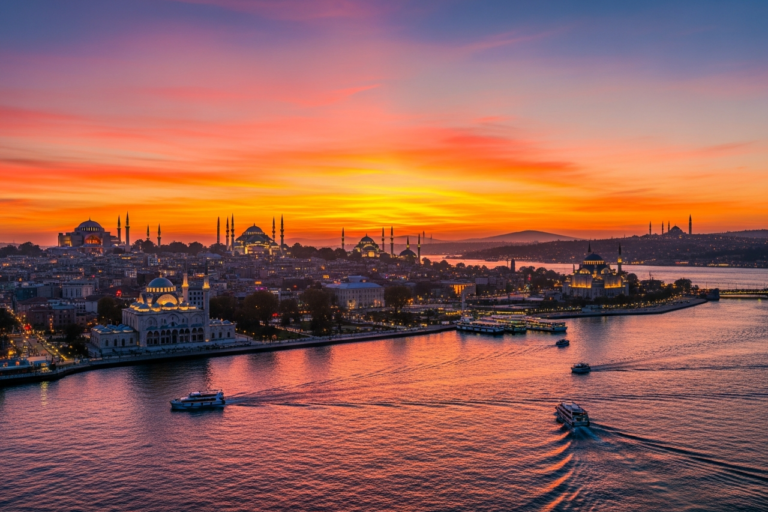
Key Highlights
-
Turkey is a secular state, but most people there are Muslim and mainly follow Sunni Islam.
-
The country has a long religious history that was shaped by both the Byzantine and Ottoman Empires.
-
At the start of the 1900s, Mustafa Kemal Atatürk brought in big changes that made secularism a main idea for the Turkish government.
-
Even though Turkey is a secular state, schools, run by the public, must teach religious education about Sunni Islam.
-
There are also religious minorities in Turkey. This includes different Christian groups and Jewish communities, who have lived there for many years.
-
People in Turkey still talk a lot about how much religion should be part of life and politics. This is a common and lively topic for them.
Introduction
Welcome to a look at religion in Turkey. This is a country where the past and today mix to shape how people live. Many people in Turkey call themselves Muslim. Sunni Islam is the most common. The roots of this come from the days of the Ottoman Empire. But Turkey is now a secular country that is run by its own laws. Knowing how these things work together will help you see why Turkish society is the way it is now.
Historical Development of Religion in Turkey
The story of religion in Turkey shows big changes, and this is because the country sits between Europe and the Middle East. First, there was the Christian faith with the Byzantine Empire. Then the ottoman empire brought Islam, and that stayed in the area for many years. Turkey has been a place where people could see more than one kind of religious belief for a long time.
As time went on, the way people saw religion changed a lot. When the modern Turkish country was made, there was a new idea of not mixing government and religion. This changed how the state and religious life worked together. Moving from old ways with one main faith to a system where religion and government are apart made a big impact on Turkish life, culture, and rules people follow.
Ancient Beliefs and Traditions
Long before big single-god religions came to the Anatolian peninsula, people in the region followed many different beliefs. There were old ways and pagan traditions. These early ways of faith left their mark. Sometimes, you can still find them in stories and local customs that people still share now.
Many empires grew and then ended in this part of the world. Every time a new group came to power, there was a new main way to believe. But the smaller faiths and their special ways did not go away. They often went on right beside the big religion. Over time, this mix of faiths gave Turkey a complicated spiritual past. Many of the old places of worship got changed. People built new ones on top of the old ones or used the same spot for something new.
Today, most people in Turkey follow Sunni Islam. But the country still holds many other ways to believe. You will find Alevism, different kinds of Christian groups, and there is also an old Jewish community. All of these together shape Turkey as a place with many types of faith and many special places of worship.
Role of the Byzantine Empire
For over a thousand years, the Byzantine Empire was the main power in the area. Its capital, Constantinople (now called Istanbul), was the center for Orthodox Christianity. At this time, religion and politics were both part of how the empire worked, and Christianity was a big part of daily life, art, and how people built things.
The Patriarchate of Constantinople was the top spiritual leader for Orthodox Christians. Its reach went far beyond the empire. The Greek Orthodox group, especially, played a very big role in how people lived their faith every day. You can still see this in the old churches and places where monks lived in Turkey now.
There are still Christian groups in Turkey, like Catholic ones, even though there are not as many people as before. The past of Orthodox Christians, Greek Orthodox, and other groups is still a key part of the story of religion in Turkey.
Ottoman Era and Islam’s Rise
When Constantinople fell in 1453 and the Ottoman Empire started to grow, the religious scene in Anatolia changed a lot. Islam, mostly Sunni Islam, became the main religion and had a big impact on Turkish life and culture. This change lasted for many years.
The Ottoman Empire set up a system where Islam was used in law, schools, and the way people acted. Mosques, Islamic schools, and places for charity were part of most towns and cities. Islam shaped family life and even how the government worked.
Even though Sunni Islam was the main religion, the Ottoman Empire still had many religious minorities. There were Christian and Jewish communities. These groups got some freedom to handle their own matters through the millet system. They helped build the rich, mixed culture of the empire, but their place was lower than the main group.
Early Republican Reforms
After the fall of the Ottoman Empire at the end of World War I, Mustafa Kemal Atatürk made the Republic of Turkey. He started many changes called Atatürk’s reforms. These changes worked to make Turkey a modern, Western-style country. One big part of this plan was to keep the Turkish government separate from religion.
These reforms changed how religion and the Turkish government work together. The new country was made as a secular republic. Religion’s leaders were not in charge of the government. This was very different from what the Ottoman Empire had. In the old system, the Sultan was also the Caliph, the top leader for Muslims.
So, is Turkey officially a secular or religious country? Turkey is officially a secular country. This rule is written in the constitution. It makes sure the government and laws are based on ideas, not religion. This clearly separates Turkey from its past as an Islamic empire.
ottoman empire
turkish government
Evolution of Secularism
The idea of a secular state in Turkey has changed over time. People have talked about it and argued about it throughout the country’s history. Turkey’s constitution says it is a secular state, but in real life, this idea is still a topic for debate and has caused some fights in politics.
A big part of being a secular state in Turkey is to keep freedom of religion and conscience safe for everyone. For example, the provisions of article 24 in the constitution protect every person’s right to pray and believe in what they want, without others getting in the way. This system is made so all religions can have a place in the country.
But, there are still problems for religious minorities. The constitution says there is religious freedom, but in practice, the state has always liked to control and manage religion instead of leaving it alone. This makes things hard for people who are not part of the main Sunni Muslim group.
Main Religions Practiced in Turkey Today
Turkey is a country with many different religious groups. Most people there are Muslim. About 99% of people identify as Muslim, and sunni islam is the most common practice.
There are also other important religious groups. The alevi community has its own special traditions inside Islam. There are christianity groups and jewish communities that have been in Turkey for a long time. They might be small today, but they are still a part of Turkey’s mix of faiths.
Let’s get a closer look at these different beliefs.
Sunni Islam in Turkish Life
Sunni Islam is a big part of Turkish life, culture, and who people are. Most of the Muslim population in Turkey grow up in this faith. It shapes how people see the world, the way they think about family and friends, and the big events in their lives from the time they are born until they die.
You can see Sunni Islam in many areas of life. The call to prayer rings out from lots of mosques across cities and towns. People take part in big religious days like Ramadan and Eid. These houses of worship do more than just host prayers. They bring people together and their bold shapes stand out in city streets.
How connected people are to their faith in Turkey changes from person to person. Some people are very religious. They follow all the parts of their faith. Some people are less strict. They may treat Islam as more of a part of their background and daily life, not just something they follow with rules. This wide range of beliefs is a big part of life among people in Turkey today.
Alevism and Its Traditions
Alevism is a branch of Islam. It has many followers in Turkey. After Sunni Islam, it is the biggest group of minority religious communities. Alevi Muslims are known for a way of following Islam that is different from both Sunni and Shia beliefs.
The religious belief of the Alevi community mixes parts from other traditions. This includes Shia ideas, Sufi thoughts, and pre-Islamic Anatolian ways. When they have worship, called cem, it happens in cemevis and not in mosques. There is music, dance (semah), and a focus on being together as a group. They also care a lot about social justice.
The alevi community is a key minority group in Turkey. For years, they have wanted more from the government, like support and being noticed as different from other religious communities. Their way of living and practicing belief gives Turkey a new and special type of religious and cultural mix.
Christianity in Turkey
Christianity has a long and rich history in what is now Turkey. This area was a main place for the early growth of the faith. Now, Christian groups are small but strong. They keep their old beliefs and ways.
This group is made up of different kinds of Orthodox Christians. There is a Greek Orthodox group, which may be small but still matters a lot for history. Its main church is found in Istanbul. There are also Armenian, Syriac, and Chaldean Christians. Each of these has its own way of worship and story to tell.
There are Catholic groups in Turkey too. Roman Catholics and other kinds of Catholic Christians live mostly in big cities like Istanbul and Izmir. These groups work with Orthodox Christians to keep the Christian way of life alive in the country, even if they are now fewer in number.
Jewish Community Presence
Jewish communities in Turkey have been there for many years. Their story goes back to Roman times, and they grew a lot after the Ottoman Empire let Sephardic Jews from Spain come in 1492. For a long time, Jewish citizens have played a big role in business and the culture of the country.
Now, the number of people in the community is much smaller. Most Jewish citizens live in Istanbul. There, they have a few synagogues, schools, and places to gather. They work hard to keep their traditions and their past alive, even though fewer people are part of the community now.
The Jewish community is one of the officially recognized minority religious communities, under the Lausanne Treaty. This status is important for their rights in Turkey. Jewish communities keep adding to the country’s many cultures. They are a link to Turkey’s rich and diverse past.
Other Minority Faiths
Turkey has many religious communities, not just the big well-known ones. There are smaller groups too. Each one has its own special story. These groups may not be large, but they help make Turkey’s history very mixed and rich.
The Syriac Orthodox Church is in this mix of religious groups. It is one of the oldest Christian churches in the world. You can still find it in the southeast part of Turkey.
There are also Chaldean Christians here. They belong to a branch called the East Syriac Rite and are in line with the Roman Catholic Church. The roots of their heritage go way back to old Mesopotamia. The Chaldean Christians are known for their own way of life and language, which makes them stand out in Turkish Christianity.
Maronite Christians belong to these religious communities too. These smaller groups often face the same problems as other minorities. Still, they do their best to keep their language, beliefs, and customs alive. They all play a role in the full story of today’s Turkey.
Islam’s Influence on Turkish Culture and Society
Islam plays a big part in Turkish culture. You can see its mark everywhere, from art to the things people do every day. This religious culture shows in Turkey’s beautiful mosques. It is also clear during lively Islamic festivals. Many people in Turkey value the teachings of Islam as well.
The history of Islam in Turkey is easy to spot in the country’s art and buildings. Islamic art and design are great examples of Turkish talent. Even though Turkey is a secular state, Islam still has a strong pull. The deep history of Islam shapes how people live and what they believe. Now, we will look at some ways this influence is seen today.
Islamic Festivals and Observances
Islamic festivals and observances mean a lot in Turkey. The calendar is shaped by these special days. People pause to think, celebrate, and spend time with their community. These traditions are a big part of Turkey’s religious culture and most people join in, even if they are not very religious every day.
The most important religious observances are also national holidays. These days set the tone of life for the whole country. Families come together. People cook special foods. There is a feeling of kindness and togetherness. The Blue Mosque stands out as a center for prayer and celebration in Turkey during these times.
Key Islamic festivals that are celebrated in Turkey include:
-
Ramazan Bayramı (Eid al-Fitr): This three-day festival marks the end of fasting during Ramadan.
-
Kurban Bayramı (Eid al-Adha): Known as the “Festival of Sacrifice,” this day recalls Ibrahim (Abraham) who was ready to sacrifice his son.
-
Mevlid Kandili: This day is set aside to remember the Prophet Muhammad’s birthday.
Mosques and Their Significance
Mosques in Turkey are more than places of worship. They are at the heart of the community. These buildings show the country’s Islamic roots. You can find small mosques in neighborhoods and large, old mosques in big cities. All of them are important to both religion and daily life for many people.
Some well-known mosques stand out. The Blue Mosque in Istanbul is one, and the Selimiye Mosque in Edirne is another. The Blue Mosque and others have big domes, tall minarets, and detailed designs with tiles. They show what builders and artists could do back then.
Now, these historic places of worship—such as the famous Hagia Sophia—are not just for prayer. They are a top tourist attraction and welcome people from all over the world. Many come to see their beauty and learn about their history and meaning.
Everyday Religious Practices
The way people show their religious belief in daily life in Turkey is very different. Some follow set routines. They pray five times a day, watch what they eat, and go to the mosque every Friday.
But for many others in the Muslim population, being religious is more about what is inside or what comes from family customs. They may use Islamic sayings when they talk, celebrate holidays with the family, or simply believe in God but not do all the usual rituals. There is a big mix in how much or how little people show their faith.
This shows that there is not one way to look at how religious people in Turkey are. Some are very strict in their daily life, and others live by a mix of beliefs and culture. This range of ways to show faith is a big part of life in Turkey today.
Islamic Art and Architecture
The influence of Islam on Turkish art and architecture is deep. It has led to some of the most stunning works in the world. Islamic art in Turkey stands out for its detailed geometric shapes, lovely calligraphy, and bright floral designs. These artworks do not show people in religious settings.
This way of making art and buildings grew during the Ottoman times. Islamic builders made beautiful mosques, palaces, and buildings for everyone to see. The famous architect Mimar Sinan made the Süleymaniye Mosque. People praise it for its balanced shape and smart use of domes and tall towers. The Blue Mosque is another well-known example of this great style.
Today, people make sure to protect this rich history. The ministry of culture and tourism works hard to care for these old places. They want the memory of Turkish Islamic art and the Blue Mosque to stay strong and inspire people for many years.
Constitutional Framework and Secularism
The Republic of Turkey is known as a secular country. This is part of the Turkish constitution from when the country started. Atatürk made these rules to make Turkey more modern. He wanted to keep the work of the government and religion apart.
But Turkish secularism is different from what you see in other countries. There is not a full split. Instead, the state is involved in managing religious groups. It does this using the Presidency of Religious Affairs (Diyanet). The Diyanet looks after Sunni Islamic places and issues. This can make things more complicated for other religious groups. In this section, we will talk more about how the constitution handles all this.
Secularism in Turkish Constitution
The idea of secularism, called laïcité, is a key and unchanging part of the Turkish Constitution. Because of this, Turkey is set up as a secular state. This means the government is not run by religion, and no single faith should have power in public life.
The provisions of Article 2 of the constitution say that Turkey is a “democratic, secular and social state governed by the rule of law.” This gives the country its legal base for being a secular state. The rule helps protect the country from religion getting in the way of politics and laws.
The constitution also gives everyone the freedom of conscience and the right to follow any religion. These rights make it clear that Turkey is a secular state and not a country run by religion. Still, people have often talked about what secularism should mean and how it should be used during the country’s history.
Atatürk’s Reforms
Atatürk’s reforms were big changes made in the 1920s and 1930s. Turkey moved away from the old Ottoman way of life. The country became a modern and secular republic. These reforms changed things like the law, schools, how people dressed, and how people spoke. Mustafa Kemal Atatürk had a strong dream for what the new state should be.
The central government wanted to keep religion out of politics and public offices. They got rid of the Caliphate. The state closed religious courts. It also ended Islamic law. Instead, new laws were written, and these came from Europe. This helped start a new order of the state based on secularism.
These reforms made it clear there would be no question about Turkey’s direction. The new Turkish Republic would be secular, not religious. Atatürk was sure that state power and religion must be apart. He made sure Turkey began as a state that did not have religion guiding its politics. This idea still shapes how Turkey is run today.
Diyanet: Directorate of Religious Affairs
The Presidency of Religious Affairs, or the Diyanet, is a strong and special group in the Turkish state. It started in 1924 after Atatürk’s reforms. The main reason for its creation was to put religion under state control after the Caliphate ended.
The Diyanet is part of the central government. It takes care of mosques across the country, hires imams, and looks after religious education. The Diyanet works under the leadership of the prime minister, and it runs many religious services and works with a lot of people in Turkey.
The Diyanet shows how Turkish secularism is different. The country says it is secular, but the state also runs a big religious administration that mainly deals with the Sunni branch of Islam. Because of this, people keep talking about whether the system really keeps religion out of the state, or if it just gives a state-controlled form of religion.
Current Secular Policies in Practice
In Turkey, the rules of the secular state are always changing and can feel complex. For many years, the government was strict about keeping religion out of the public sector. Women could not wear headscarves if they worked in government jobs or went to universities.
Now, the Turkish government has removed a lot of those rules. Today, women can wear headscarves in most public places, like universities and government offices. Some people say this has helped bring more religious freedom. Others think that this is causing the country to move away from its first secular beliefs.
Turkey still calls itself a secular state, but the line between the state and religion gets more blurry with time. This often makes people talk about the country’s true identity and what secularism should be in real life. These talks come up a lot when it comes to education, public life, and how minority religious groups get legal recognition.
Religious Freedom and Legal Protections
Turkey’s constitution says that the people must have freedom of religion and conscience. This is the groundwork for making sure there is legal protection for all the people, no matter what the people believe. This is important for keeping the human rights of people safe. It lets them practice their faith and not be scared of unfair treatment.
But putting these protections into use can be hard. The people who are religious minorities can face many problems. These problems can be about legal recognition, property rights, or even how their leaders can get training as clergy. The law says there should be equality, but daily life often is not that simple. There is still a gap between what the law says and what the people go through each day. This part looks at the rights people have for freedom of religion, legal recognition, and human rights, and the troubles that religious minorities sometimes face.
Laws Protecting Religious Expression
Yes, there are laws in Turkey that help protect people’s religious expression. The Turkish Constitution, especially Article 24, talks about the freedom of conscience, religious belief, and conviction. This article says no one can be forced to worship or take part in religious ceremonies.
The Turkish Constitution gives the main legal grounds for religious freedom. With this law, people have the right to pick, change, or leave their religion. It also lets them talk about their faith in public or in private, as long as they do not disturb the public order or harm the unity or security of the country.
Still, there can be problems with how these laws are understood and used. Sometimes, the way the government defines what could harm public order or national security is used to stop some types of religious expression. This may make the law seem different from how it is put into practice.
International Agreements and Reports
Turkey’s commitment to religious freedom is also shaped by international agreements and scrutinized by global organizations. The Lausanne Treaty of 1923, for instance, officially recognized non-Muslim minorities like Greeks, Armenians, and Jews, granting them specific rights, including the right to establish their own schools and religious institutions.
Reports from international bodies, such as the U.S. Department of State’s annual International Religious Freedom Report, and rulings from the European Court of Human Rights (ECHR) frequently assess the state of religious liberty in Turkey. These reports often highlight ongoing issues related to the legal status of religious groups and restrictions on their activities.
These agreements and reports play a crucial role in holding Turkey accountable to international standards. They provide a framework for dialogue and pressure to address shortcomings in the protection of religious minorities.
|
Agreement/Body |
Key Role in Turkish Religious Freedom |
|---|---|
|
Lausanne Treaty (1923) |
Grants specific legal minority status and rights to non-Muslim groups. |
|
European Court of Human Rights |
Rules on cases of alleged violations of religious freedom. |
|
U.S. Department of State |
Publishes annual reports documenting challenges faced by religious groups. |
Challenges in Implementation
Yes, religious minorities in Turkey face tough problems. This is often because laws meant to help them are not used well. One of the main problems is that most religious groups do not get full legal recognition. This means they do not have their own legal identity. Because of that, they cannot own property, open a bank account, or hire staff in their own name.
This makes religious minorities use foundations or other groups to handle things for them. This process is often hard and does not feel safe. The government is usually slow to let these groups register or get their property back. Many have to deal with long legal fights over these issues.
In addition, the government sometimes says national security is the reason to limit what religious groups can do. All these problems cause worry and show there is a big difference between what the law promises and the everyday life of religious minorities. Many non-Sunni groups still do not have full religious freedom in their day-to-day lives.
Legal Status of Religious Groups
The legal status for religious groups in Turkey can be hard to understand and is not the same for everyone. There are three minority religious communities that have a special legal minority status. These are Armenian Apostolic Christians, Greek Orthodox Christians, and Jews. They get this under the 1923 Lausanne Treaty. With this status, they can run their own schools and have some rights that other groups do not.
But, many other religious communities like Roman Catholics, Protestants, and Alevis do not get any legal recognition. They are not seen as legal persons. Because of that, they deal with a lot of rules and steps that make things hard for them. For example, these groups cannot officially own their places of worship or have ways to train their leaders. This makes it really tough for them to carry on their work.
This set-up of giving some religious groups legal minority status while leaving out others is a big issue for the country. Even if there are laws that promise religious freedom, those laws often do not work the same for all. Many communities, especially those without legal recognition, do not get the same rights and chances. This means there is a ranking of faiths by the legal system, which is a problem for many people in Turkey.
Demographics and Levels of Religiosity
Most people in Turkey are Muslim, but not everyone is religious in the same way. How much a person follows their religious belief can change a lot from one person to another. Some things help shape this. Where you live, how old you are, and your background all matter.
There is a clear difference between life in the city and in the country. People who live in the country often have more religious belief. People in cities sometimes feel less of this. Young people and older people may not see things in the same way, either. What your parents or grandparents think about faith could be different from what you think.
This section will talk more about the facts and what is happening now with religious life in Turkey. It will show some important trends and ideas.
National Surveys on Religious Beliefs
National surveys give us useful information about religious belief in Turkey. The government says that 99% of people in Turkey are Muslim. But when you look at personal questions about faith and practice, you see a different, more mixed picture. These surveys help us see how religious everyday people truly are.
What you get from these studies is clear. Most of the Muslim population in Turkey is Sunni. Still, there is a mix when it comes to what people think about religion and how they act on it. Some are very religious, while others see their faith as more of a cultural thing. For example, how many people choose to fast during Ramadan or pray every day can change a lot, based on which survey you look at.
There is also another thing happening in large cities. More people, especially in these big cities, now say they are not religious, or they call themselves deist or atheist. That group is still not very big, but it shows that changes are taking place. This means there are now more views about life and faith in Turkish society than there were before.
Regional Differences in Religiosity
There are clear differences in how people in Turkey see religion, depending on where you are. The middle and east parts of Anatolia, and places along the Black Sea coast, are known to be more traditional. In these regions, people often hold on to their beliefs, and religious culture is easy to see in day-to-day life.
In other places, like the Aegean and Mediterranean coasts, and in big cities such as Istanbul and Ankara, life can look different. Turkish citizens in these parts tend to be more open-minded and may not show their faith as openly. Here, it is normal to see people act less strict about religion, and you won’t notice as much public display of faith.
The reason for these differences goes a long way back. They have a lot to do with history, how people live, and how much money they make. One big thing is the gap between city life and country life. People living in cities are usually around more ideas, so they may think differently about faith. In smaller places, people often stick close to ways of the group, so religious culture stays strong.
Urban vs. Rural Perspectives
The divide between urban and rural areas is a big factor that shapes how people practice religion in Turkey. In the countryside and in small towns, religion is a key part of community life. People link daily life tightly with the religious calendar and customs. There can be strong social pressure to follow old ways.
But in large cities like Istanbul, Ankara, and Izmir, things look different. These cities bring together many lifestyles and beliefs. The mixing of people and the sense that everyone is a stranger make it easier for people to choose how they live. More people feel free to be private or even not practice religion at all.
For people who live in these large cities, religion is often a personal choice. Some stay loyal to their faith, but living in the city exposes them to new ideas and ways of looking at things. This mix is what creates many different levels of religious practice you see in Turkey today.
Changing Trends Across Generations
There is a big change happening with religion in Turkey. Young people today look at religious belief in a different way than older people do. More of the youth want to ask their own questions about faith. They look for answers that make sense to them, not just what has always been said.
This change is part of a bigger story about how people see religion in Turkey. The country has seen times when there was more focus on being modern and other times when people wanted to hold on to strong religious values. The new thing now is that young people seem to want their own way to think about religious belief. Some are sticking to old ideas about faith, but many young people now say they are deist, agnostic, or atheist.
Things like the world becoming more connected, better internet, and new ways that people work together and share ideas also help shape how youth think about faith now. This shows us that the way people in Turkey connect with religion keeps changing as younger people share and build new views.
Role of Religion in Turkish Politics
Religion has a big role in Turkish politics, and people often argue about it. Even though the country has a rule for keeping church and state separate, the values and beliefs that come from religion guide a lot of talk and action in politics. Many political parties use the people’s feelings about faith to get support.
When the Justice and Development Party (AKP) started to rise in the early 2000s, religion became much more important in politics than it had been for many years. The Turkish government’s actions around social life, schools, and their choices with other countries are often seen as influenced by religion. Because of this, religion has a big impact when people vote and when they talk about politics. We can look further into how this works.
Political Parties and Religious Values
In Turkey, political parties often show where they stand on religion and secular ideas. This has been the case for many years and shapes how the country’s politics work. Some parties speak up for secularism. Others focus on religious values as the heart of what they stand for.
The Justice and Development Party (AKP) is one key party in the country. The AKP has roots in political Islam. The party has been in power for over twenty years. Many people who are religious and conservative support the party because it talks about old values and uses religious topics in how they run things.
Because of this, the Turkish government now faces strong views on both sides. People often see what the government does as part of a bigger fight between being secular or religious. All other parties also need to work in this space. They try to show that they support secularism or try reaching out to religious people without upsetting the ones who are not religious.
Religion-Inspired Legislation
A big area where religion and politics meet is when laws shaped by religion are brought in. In the last twenty years, the government has made rules that show a more conservative, religious way of thinking. This has often caused problems, ending up in the country’s top courts.
Secular groups and opposition have fought back against these laws. They say they go against the main idea of secularism found in the constitution. The Constitutional Court and Council of State have been important in stopping these laws, but their power has been talked about much lately.
Some examples include:
-
Lifting the ban on headscarves in the public sector and at universities.
-
Building up the number and role of religious Imam Hatip schools.
-
Putting in new rules for alcohol sales and ads.
-
Pushing for a national identity that puts Turkey’s Islamic heritage first.
Influence in Public Discourse
Religion shapes many conversations in Turkey. It comes up often when people talk about social and political issues. Political leaders use religious language to connect with voters. They bring up religious values when talking about things like morality, family, and national identity.
Because religion is such a big part of public life, it affects how people see their own religious identity. It makes them think about the place of religion in the modern world. Many social movements have started around this topic. Some groups want to protect secular life. Other groups want religion to play a bigger part in society.
The media, including traditional news and social platforms, helps spread these debates. Many topics come up in this way. People discuss school lessons, the status of Hagia Sophia, and women’s rights through different points of view. Public talks often happen between secular and religious values. This makes the discussion a big part of the cultural contest in Turkey.
Religion and Elections
Elections in Turkey are many times seen as a vote on the place of religion in the country and in people’s lives. Political parties often use religion to get support from voters. This makes the elections about more than just picking new leaders.
Conservative and nationalist parties mostly try to get the support of religious groups. They say they will stand by old traditions and protect these values. These parties often say the vote is between people who want good, religious leaders and a group of secular leaders who do not share the faith of most people. This way of talking has helped them get the backing of a big group who are devoted to their ideas.
On the other hand, secularist parties say they want to keep Atatürk’s ideas safe and make sure the country does not move towards a rule by religion. They may tell voters that their rivals are a risk to both people’s rights and national security. By saying this, they make religion a main topic that a lot of people argue about in almost every election.
Religious Minorities in Turkey
Turkey has always been a place where many religious communities live together. This includes Armenian Apostolic, Greek Orthodox Christians, and Jewish communities. Each group has its own history, and their stories connect to the land of Turkey in big ways.
These religious minorities, like the greek orthodox, orthodox christians, and jewish communities, are still facing problems. They deal with things like legal status, rules about owning land, schooling, and pressure from people in everyday life. This makes it hard for them to keep their customs and who they are. In this part, you will see what some religious communities go through in Turkey today.
Armenian Apostolic Community
The Armenian Apostolic group is one of the oldest Christian groups in Turkey. They are seen as a legal minority under the Lausanne Treaty. This means they have certain rights. They can run their own schools and their own cultural centers.
The top leader of the group is called the Armenian Patriarch of Constantinople, and he is based in Istanbul. The Armenian Church is a key part of their lives. It gives people spiritual help. It also helps to keep the Armenian language, culture, and who they are, alive in Turkey.
But the group has problems. There are fewer people in the community now. Talking about the Armenian genocide is still not easy. They also have trouble getting back their old property and training their religious leaders. These things make it hard for the group to hold on to their special past.
Greek Orthodox Population
The Greek Orthodox community in Turkey is small, but it has a big history and means a lot to many people. The Greek Orthodox Ecumenical Patriarchate of Constantinople in Istanbul is the main spiritual home for Orthodox Christians around the world. The Ecumenical Patriarch is known as the “first among equals” to other Orthodox Christian leaders.
This group links straight back to the old Byzantine Empire and the deep Christian past of this place. They are given official minority rights under the Lausanne Treaty. That treaty lets them run their schools and religious places under law.
The greek orthodox community faces a big challenge because the Turkish government still will not reopen the Halki Seminary. This is the Patriarchate of Constantinople’s only school for religious training, and it closed in 1971. Because of this, there is now a serious problem with bringing in new church leaders. This puts the future of the Greek Orthodox group in Turkey at great risk.
Syriac Christians and Churches
Syriac Christians are some of the oldest Christians in the world. They have been in Turkey for almost two thousand years. They speak a form of Aramaic, which is the language Jesus spoke. The community is known for its deep religious life and culture. There are different groups in this community, including the Syriac Orthodox Church.
But unlike Armenians, Greeks, and Jews, Syriac Christians were not named as a minority under the Lausanne Treaty. Because of this, they do not have clear legal rights. This makes it hard for them with things like land ownership, running their schools, and making sure their churches have legal standing. The group has many types, such as Syrian Orthodox and Chaldean Christians, along with others.
Even with these problems, the community still finds ways to go on. Many live in southeastern Turkey and in Istanbul. They keep old churches and monasteries and work to save their language and ways of life, even though many people leave or feel stress from politics. While there is some connection to the Patriarchate of Constantinople, it is not as strong as it is for the Greek Orthodox.
Jewish Heritage and Synagogues
The Jewish heritage in Turkey goes back more than 2,000 years. The jewish communities grew much bigger when jewish citizens from Spain came to Turkey in the 15th century. They became an important part of life in the Ottoman Empire. They helped shape commerce, culture, and the arts.
Most jewish citizens in Turkey now live in Istanbul. There, you can still find many beautiful, old places of worship. The jewish communities also have community centers and a museum. These places help keep jewish culture and religion alive in Turkey.
The jewish citizens have official status as a minority. But they still face some problems. Many leave the country, so the population is getting smaller. Security is also a worry. Even with these issues, the jewish communities in Turkey stay strong. They protect their special history and want to make sure it lasts for years to come.
Religious Education and Schools
Religious education is something you have to take in Turkish schools. People talk a lot about it. From primary to secondary schools, students must go to religion classes. These classes are meant to teach about religious culture and how to be good.
But what is taught in these classes, and what choices there are for students who follow a different faith, has people asking if schools accept all beliefs. Most of what gets taught comes from a state plan that talks a lot about Sunni Islam. This can make things hard for students who are Alevi, Christian, or who come from other non-Sunni backgrounds. In this part, we look into how religious education is handled in Turkey.
State Curriculum and Religion Classes
In Turkey, religious education is a subject that all students in primary and secondary schools must take. These are called “Religious Culture and Moral Knowledge” lessons. The idea is to help students know about world religions and basic values.
But in reality, most of the teaching is about Sunni Islam. Other religions are talked about, but only a little and usually from the Sunni point of view. People have said this is a problem because it does not truly show the wide variety of religions in the country.
For students who are not Sunni, like Alevis or Christians, these religion classes can feel unfair and make them feel left out. There are rules that say they can ask to skip these lessons, but it is often hard to do. This means a lot of students have to be part of religious culture lessons that do not fit what they believe.
Religious Private Schools
Beyond the state schools, Turkey also has many private schools that focus on religion. The most well-known are the Imam Hatip schools. These schools were first made to train imams and preachers in Islam. Today, Imam Hatip schools give a normal school program together with strong religious education in Islam. In the last few years, the government has grown the number of these schools by a lot.
For religious minorities, things are not the same. The Lausanne Treaty lets some groups—Greeks, Armenians, and Jews—run their own private schools. These schools help keep the language, culture, and religious identity alive for these people.
But for religious communities that the treaty does not recognize, things are tough. They can not open their own faith-based schools. This makes it hard for them to teach their kids about their religion in a school run by their own community.
Educational Rights for Minority Faiths
The educational rights for minority religious communities in Turkey are not equal. These rights change based on their legal recognition. Minority religious communities like Greeks, Armenians, and Jews are recognized under the Lausanne Treaty. This means they have a right in the constitution to open and run their own schools. They can teach their own languages and religions along with the state subjects.
Other minority communities, like Alevis, Protestants, and Syriac Christians, do not have this legal status. The situation for them is much harder. They do not get to make their own schools. Their kids must go to a state school. In these schools, there is a religion class that teaches only about Sunni Islam.
Christian and Jewish students can get out of these classes by law. But Alevi students have had a tough fight to get the same rule. Some court decisions said they should be let out, but these are not always followed well. This shows how much of a problem it is for Turkey to handle religious diversity and the needs of all minority religious communities in its school system.
Influences of Religion on School Policies
Education in Turkey shows the complex mix of religions in the country. The Turkish government says that religious education must be a big part of what students learn, especially in secondary schools. This means students get lessons in Sunni Islam. At the same time, religious communities like the Greek Orthodox and Armenian Orthodox often want the government to see and meet their own education needs. The Turkish government tries to keep things balanced with its focus on being a secular state. But, there are big differences, especially in large cities, where many groups speak up for equal rights and ask for freedom of conscience in their education.
Changing Views on Religion Over Time
The way people see religion has been changing in Turkey for many years. In the past, the Ottoman Empire was built on a base of Sunni Islam. Now, modern Turkey is known for having a more secular way of life. Turkish citizens today live in a place that has many ways of believing and thinking about faith. Many want to keep both their old values and some new ideas as they meet the world through globalization.
There is now more legal recognition for religious minorities. This means groups like the Armenian Apostolic Church and the Jewish communities have more rights. As a result, there is more acceptance of different religions.
Changes can be seen in public discussions and the way religious education is handled. All of this shows a nation that is still looking for who it wants to be. But at the same time, the country is making sure everyone has the freedom of conscience, which is an important part of life for Turkish citizens of all backgrounds.
Modern Attitudes Toward Religion
Changes in how people think about religion in Turkey today show a mix of old and new ways. Sunni Islam is still a big part of life for many, but at the same time, a lot of Turkish citizens support a secular state and want to have freedom of conscience. More people, especially the young, now ask questions about what has always been done. Younger people also care more about what they believe themselves instead of following big groups or leaders.
Public life in Turkey now tries to include many types of religious communities. These include Sunni Islam traditions but also the Greek Orthodox, Alevi, and Armenian groups. People from different religious groups now get more chances to talk with each other. This new way of thinking helps all, including minority religious communities, feel they belong, and it helps everyone work toward peace and understanding.
Government Policy Shifts
Changes in government policies about religion have greatly shaped life in Turkey. After the Ottoman Empire ended, the idea of a secular state started to grow through new reforms. This change brought more freedom of religion to many people in the country. It shaped the way different religious groups, like Sunni Muslims, Greek Orthodox Christians, and Jewish communities, live and show their identities in this society.
The presidency of religious affairs has an important job. It controls religious education and handles what takes place in religious circles every day. In the past few years, human rights have become a bigger focus. People now discuss if some religious communities should have more legal recognition or be called minorities by law. These talks are now a main part of life and debates across Turkey.
Youth Perspectives
There are many different thoughts about religion among Turkish youth. A lot of young people know and value their background, which includes Sunni Islam, the Greek Orthodox faith, and other minority religious communities. But now, more students talk about secularism. They say that freedom of conscience matters and that they want religious education to include everyone. When they take part in social movements and talk about human rights, it shows they want things to move forward. These young people are working to find the right mix between old cultural ways and newer ideas for society. This shows how religion in Turkey is changing today.
Social Movements Affecting Religion
Throughout Turkey’s modern times, many social groups have helped shape how people practice and believe in religion. These groups usually speak up because they want more religious freedom for all, especially for minority religious communities like Armenian Orthodox and Alevi Muslims. Over the years, people who support secularism have started to question old rules. This has made many citizens think in new ways about religious education in schools.
Today, young Turkish citizens are using activism to ask for more understanding and acceptance of different religious communities. Because of this, the Turkish government is now looking again at what it does about places of worship and how people can openly show their religious beliefs. This shows that changes are happening in the country, as more people want fair treatment for all faiths.
Conclusion
Religion in Turkey is a mix of many beliefs and customs. The history of the country, including the time of the Ottoman Empire, helped shape this. Most people follow Sunni Islam, but there are also Christian groups and many minority religious communities. Over time, how people think about their faith and religious belief keeps changing. The government and social movements both play a part in these changes.
Places of worship, like the well-known Hagia Sophia, show Turkey’s long and rich history with different religions. These places matter a lot to Turkish citizens. By learning more about the way religious communities live and what they believe in, we can better understand and respect this wide mix of faiths in Turkey.
Frequently Asked Questions
Is Turkey officially secular or religious?
Turkey’s position as a country is officially secular. This rule was set in 1928 when a change was made in its main law. Still, religion is a big part of life for many people there. It is also important in the country’s politics. The mix of secular rules and strong beliefs leads to many talks about how much religion should help shape what happens in different parts of society.
Do religious minorities face challenges in Turkey?
Yes, religious minorities in Turkey have many challenges. These include dealing with discrimination, not having many chances to be heard, and not being able to fully practice their religion. These things often happen because the main culture in Turkey is Sunni Muslim. This can leave people who are not Muslim feeling left out. It can also change how they work with others in their daily life and in politics.
How religious are everyday people in Turkey?
Everyday people in Turkey show different levels of religious belief. This comes from what be the culture, their schooling, and their own views. Many people say they are Muslim. At the same time, secular ideas are strong, especially among young people. These young people often ask questions about old ways and want a society that is open to all.



