

Key Highlights
-
The dominant religion in Thailand is Theravada Buddhism. Almost 94% of people living there say they are Buddhist.
-
Thai Buddhism is a big part of Thai culture and daily life. This shapes how the people think about life, art, and even how they celebrate big festivals.
-
The religious beliefs in Thailand are not just from Buddhism. The people also mix in some ideas from animism, Hinduism, and Chinese religions.
-
Even though Buddhism is followed by most people, Thailand also has religious minorities like Muslims (around 5%) and Christians (around 1%).
-
Important religious festivals, such as Songkran, are based on the Buddhist calendar. People all over the country come together to celebrate these days.
Introduction
Welcome to the spiritual center of Southeast Asia! Religion in Thailand is full of color and history. You can see how old ideas mix with new faiths here. For many Thai people, buddhism is not just a religion. It is a part of life. It guides the things they do and the way they live with others. These strong religious beliefs are all around you in thailand. You notice it when you see monks walking out early in the morning. They gather morning alms every day, and you can’t miss the many beautiful temples across the country. This look at thai life will help you see how much faith shapes the daily lives of the thai people.
Historical Roots of Religion in Thailand
The long history of thailand and its people has had many changes in what people believe. Different kingdoms and cultures mixed over the years to shape what you see now. The story of faith here is about old ideas and strong early influences from lands nearby.
Before buddhism became the state religion, people in thailand followed animism and hinduism. These beliefs were an important part of their lives. Even today, parts of these older traditions have not gone away. They became a part of buddhist practices, making the spiritual life in thailand special. Now, let’s see how all these parts came together.
Ancient Beliefs and Early Influences
Long before big religions came along, people in Thailand believed in spirits. They had strong ideas about spirits from nature and their ancestors. This way of thinking is called animism. You can still see it today. Many homes have “spirit houses” outside. People give food or drinks to these spirits in these small houses to keep peace at home.
Hinduism from India was another early influence on Thai religious practices. Its gods and ideas shaped Thai art, stories, and royal events. You can find parts of Hindu traditions mixed in with Thai ways of worship.
The large ethnic Chinese group in Thailand brought their own beliefs, like Mahayana Buddhism and Taoism. Some people in this group now follow Thai Buddhism, but many keep their own ways. This mix of different styles makes community life in Thailand rich and interesting for all.
[thailand]
The Arrival and Spread of Buddhism
The story of Buddhism in Thailand started over two thousand years ago. Many say it was buddhist missionaries sent by the Indian Emperor Ashoka who first brought these teachings to what we know as modern Thailand.
But it was in the 13th century, during the Sukhothai Kingdom, that Theravada Buddhism grew much bigger in the region. It became the main faith for the people. Back then, kings started to protect and support the religion, something the Thai kings still do now. For example, King Mongkut, who ruled in the 19th century, played a big role. He helped to make changes in the sangha, the monastic community, and helped people get a better idea of the path to enlightenment.
The support from kings and the setup of a strong monastic order made Theravada Buddhism an important part of Thai life. For a long time, it has shaped the morals and culture of people in Thailand.
Buddhism in Thai Society Today
In Thailand today, Theravada Buddhism is a big part of the country’s identity and way of life. It is not a state religion, but the government and king give it much support and care. There are over 40,000 temples across the land. These temples act as special places for the whole community.
About 300,000 monks are in Thailand. Their presence shows how important Buddhism is. This group of monks, called the Sangha, is respected by all. They help guide people and keep the traditions of Thai Buddhism alive. The power of this faith reaches past the temples and touches many parts of life in Thailand.
Daily Life and Buddhist Practices
For many people in Thailand, Buddhist teachings are an important part of daily life. People get inspired by the idea of making merit. This means doing good things so that their next life can be better. You can see this in action when people give morning alms to monks.
Worship is often a private and regular event. You will notice people paying their respect at temples, at small shrines at home, and near Buddha statues in public. Common practices are:
-
Offering Food: People give food and drink to monks early in the morning.
-
Visiting Temples: Families go to their local temples, called wats, to pray, burn incense, and ask for support.
-
Meditation: Many choose to meditate. It helps to build mindfulness and brings a feeling of inner peace.
These daily life rituals are more than just habits or duties. For many, they are real acts of faith. People believe they show Buddhist teachings, such as compassion, giving, and living in a mindful way every day.
Influence on Culture, Art, and Education
Buddhism has a big impact on thai culture. It affects how people act, what they say, and how they show respect. Buddhist teachings like kindness, respect for elders, and being calm are important to the thai way of life.
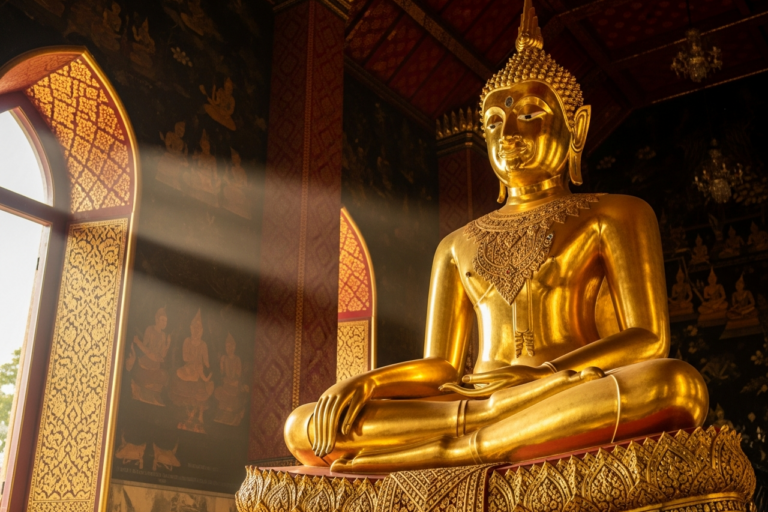
You can see this influence in thai art. The temples have unique designs. Buddha statues often have peaceful faces. Murals show stories from the life of the buddha. All these things come from deep reverence. The thai calendar also has many holidays and festivals. These celebrate events from the buddhist tradition.
In the past, temples were where people learned. Monks taught reading, writing, and how to be good. Today, there is a regular education system. Still, respect, discipline, and good behavior taught by buddhist teachings are part of how people learn in thai culture.
Religious Diversity and Minorities in Thailand
Buddhism is the main faith in Thailand. But there are also many other religious groups here. The Thai constitution gives people the right to practice the religion they want. This has helped make the country open to different religious beliefs. Because of this, Thai society has more depth.
Muslims, Christians, and followers of other faiths are a part of these smaller groups. They have built their own places for worship and made their own community ties. They keep their religious beliefs and also take part in the bigger Thai community. Let’s look at these groups more closely.
Islam and Its Thai Communities
Islam is the largest minority religion in Thailand, with Muslims making up about 5% of the population. The majority of Muslims are ethnically Malay and reside in the southernmost provinces bordering Malaysia, such as Pattani, Yala, and Narathiwat.
However, significant Muslim communities also exist in other parts of the country, including a diverse population in Bangkok. These communities are a mix of descendants from South Asia, China, and Cambodia. Community life for Thai Muslims often revolves around the mosque, which serves as a center for prayer, education, and social gatherings.
These communities have their own traditions and cultural practices, which they integrate with their Thai identity.
|
Region |
Predominant Muslim Ethnicity |
Key Characteristics |
|---|---|---|
|
Southernmost Provinces |
Malay |
Strong cultural and linguistic ties to Malaysia; community life centered around Islamic traditions. |
|
Bangkok and other cities |
Diverse (Thai, South Asian, Chinese) |
A mix of communities with a long history in the capital; engaged in various trades and professions. |
Christianity, Hinduism, and Other Faiths
Besides Buddhism and Islam, there are also other faiths in Thailand. Christianity makes up about 1% of the people living here, with both Catholics and Protestants. Many churches, like the Church of Christ in Thailand and the Evangelical Fellowship of Thailand, are found throughout the country. They also set up schools and hospitals to help the people.
Hinduism and Sikhism are smaller but important parts of the community. Most of these people come from Indian families. You can see bright Hindu shrines and Sikh gurdwaras in big cities like Bangkok. These places welcome their own people and make the city more interesting.
Some beliefs from China, such as Taoism, are followed by many Thai-Chinese families. All these faiths live side by side. Each group plays a part in making Thailand’s culture open and rich today.
Religious Customs, Traditions, and Festivals
The Thai calendar has many bright festivals and yearly events. These special days often come from old religious customs. Most of them follow the Buddhist lunar calendar. They give people a chance to see the spiritual side of the country. There is a lot of joy, respect, and a sense of community life during these times.
People come together during these thai traditions to worship, do merit-making, and have fun. Some festivals have big water fights, while others have quiet walks with candles. Each one is special in its own way. When you learn about these moments, you get to see how thai people show their faith in their community life. It helps you understand thai culture and the meaning of buddhist worship and reverence even more.
Major Buddhist Festivals and Celebrations
All year, the people in Thailand come together for many festivals. These are special days that line up with important moments on the Buddhist calendar. Festivals in Thailand are full of color, energy, and deep meaning. People in the community join together for these events.
One of the best-known festivals is Songkran. This is the Thai New Year. It happens in April. Many know it for water fights in the street. But it is also a time when families get together, worship at the temple, and pour water over Buddha statues and the hands of older folks. They do this to show respect and to get rid of what is not good.
There are other big festivals, too, that show how Thai people mix quiet devotion with lively parties. Each one has its own ways of worship and customs. People give food to monks, light incense for prayer, and do other things to mark the day.
-
Magha Puja: This takes place in February or March. It remembers a speech given by the Buddha. On this day, people walk with candles around their temple as an act of worship.
-
Visakha Puja: People follow this festival in May. This is the holiest day of all. It’s about the birth of the Buddha, his moment of enlightenment, and also his passing.
-
Loy Krathong: This comes in November. People make small floats from leaves and flowers. They set them on the river to honor the water
Multifaith Observances and Respect for Diversity
Thailand is known for being a place where different religions can live together in peace. People in Thailand follow buddhist teachings, and values like respect and compassion are very important. These beliefs help people from all religious groups get along well with each other. In Thailand, having many faiths is seen as a good thing.
Buddhism is a big part of thailand and how people there see themselves. Still, the Thai constitution says that everyone has the freedom to follow the religion they want. This law, along with the culture of peace and tolerance, makes it possible for people from different backgrounds to live side by side.
In everyday community life, you will see buddhist and other religious groups living and working together. They often celebrate important days together too. This way of living shows how strong those ideas of compassion from buddhist teachings are. It is a big reason why the community in Thailand stays peaceful and close.
Conclusion
Religion in Thailand plays a big role in daily life. It is a mix of history, culture, and feeling. Buddhism is at the center of it, but other faiths like Islam and Christianity are there too. People see religion in thai art, the way they learn, and at festivals. The rich customs and traditions during these festivals show there is big respect for different beliefs in thai society. By looking at how religion works in Thailand, you get to know more about what shapes people and how they live there. If you want to find out how these beliefs fit into modern Thailand, you can look closer and learn more.
Frequently Asked Questions
How free are people in Thailand to practice different religions?
Thailand’s constitution gives people the right to follow any religion they choose. The government mostly respects this right. Even though buddhism gets support from the state, all registered religious groups in thailand are allowed to work and grow. People are free to worship, build sites for their faith, and carry out their ways. This helps the country be a place where many kinds of faith can be found.
Has the role of religion changed in modern Thailand?
In Thailand today, daily life looks different because of the world around us, but religion still stays important. Many young people hold on to religious principles. Community life still centers on Buddhist temples and traditions. The values of faith help guide how people live and interact with others.
How do non-Buddhists live and practice their faith in Thailand?
People who are not Buddhist, like those who follow Islam and Christianity, practice their religious practices out in the open. These followers have their own places to pray, such as mosques and churches, along with community centers. They bring their religious practices into their everyday life and live at peace with the Buddhist majority. They often take part in both big and small events in the community.



